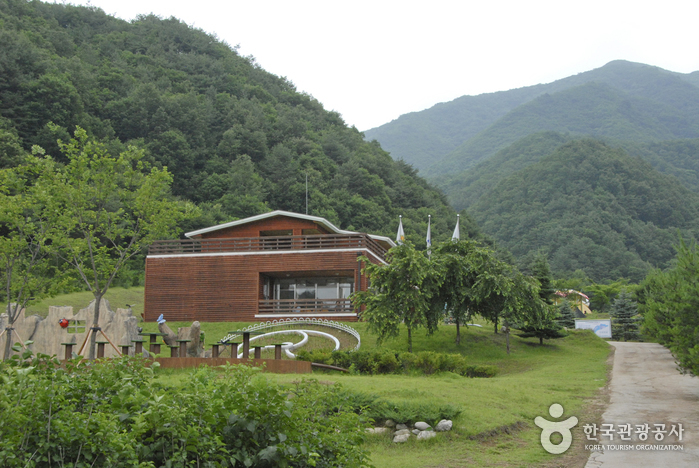
Yanggu Eco-Botanical Garden (양구생태식물원)
2022-08-18
169, Sumgol-ro 310beon-gil, Yanggu-gun, Gangwon-do
First opened in June 2004, Yanggu Eco-Botanical Garden was built on a total area of 189,141 ㎡. Nearly 3.1 billion Korean won (approximately 3 million USD) was spent on the construction and it was built to be developed into a South and North Korean ecosystem restoration center. Located in the northernmost region of South Korea, it houses more than 400 rare plants including plants that are Korean native species and protected by Korean Ministry of Environment.
The garden is divided into six parts by their features including a botanical garden, natural forest, and facilities zone. In the botanical garden, rare plants such as northern native plants and alpine plants that are naturally grown in the demilitarized zone (DMZ) and Yanggu area are displayed in one place.
There are also walking trails, a medicinal plants exhibition hall, plant nursery, and greenhouse. To add a natural and lively touch to the garden, a mountain stream zone and wetlands zone were prepared to provide people with the chance to enjoy the pleasant sound of running water.
![Jiktangpokpo Falls [National Geopark] (직탕폭포 (한탄강 국가지질공원))](http://tong.visitkorea.or.kr/cms/resource/70/1137370_image2_1.jpg)
Jiktangpokpo Falls [National Geopark] (직탕폭포 (한탄강 국가지질공원))
2021-09-25
94, Jiktang-gil, Cheorwon-gun, Gangwon-do
Jiktangpokpo Falls is location in the middle of Hantangang River, which runs through town of Dongsong-eup in Cheorwon. Unlike other falls, Jiktangpokpo Falls is not tall, but wide instead as the 3 meter-high falls stretch almost 60 meters from bank to bank. Widely known for its grandeur and beauty, Jiktangpokpo Falls is one of the 8 scenic wonders of Cheorwon. It is an ideal summer vacation spot and visitors can enjoy the savory maeuntang (spicy seafood stew) made with freshwater fish at one of the many restaurants located in the vicinity.
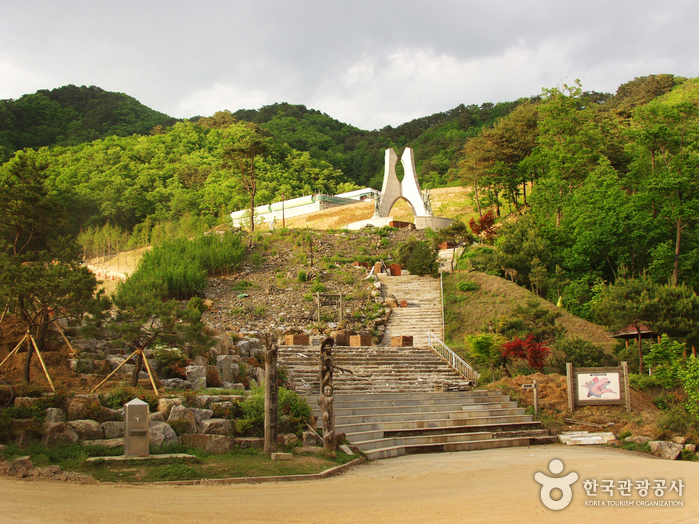
Hwacheon Bimok Park (화천 비목공원)
2021-08-18
3481-70, Pyeonghwa-ro, Hwacheon-gun, Gangwon-do
Peace Dam was built over a period of 15 months from February 1987 to May 1988 with funds donated by the general public in response to North Korea’s construction of Geumgangsan Dam and a potential flooding attack. The flood control dam has proved its worth during the floods of 1995, 1996, and 1999 and it has become a major tourist destination over the years. Located in the vicinity of Peace Dam is Bimok Park, which is the origin of the famous national song “Bimok.”
In addition to the war monuments inside the park, there are around a dozen wooden crosses with rusty iron helmets placed on top within the barbed wire entanglements around the hill, thereby reminding visitors of the national tragedy of the Korean War. The county of Hwancheon hosts the Bimok Cultural Festival from June 3 to June 6 every year at Bimok Park, Bungeoseom Island by the town’s riverside, and the surrounding areas. The four-day festival offers a variety of events such as a singing contest, memorial ceremony of poetry reading, bimok tree cutting contest, rice ball eating contest, army life experience, military music parade, and more.
Crossing over to Yanggu County from Peace Dam, there is a national security education place comprised of attractions like the 4th Underground Tunnel and Eulji Observatory. Paroho Lake Battlefield Tourist Park is also worth a visit after looking around Peace Dam. Also known as the “ocean within mountains,” Paroho is a manmade lake created as a result of the Hwacheon Dam construction in 1944. The lake is home to over 70 different species of freshwater fish such as mandarin fish and carp. It also holds the sorrowful history of the water burial of three whole divisions of the Chinese Forces in defending the lake during the Korean War. The name Paroho, meaning “enemy breaking lake,” was given after the late president of Korea, Rhee Syngman, visited the place and designated a plaque in his own handwriting in memory of obtaining victory in fierce battle. There is an observatory, a security hall, and a stone monument engraved with the poetry of Wolha Rhee Taegeuk (1913-2003).
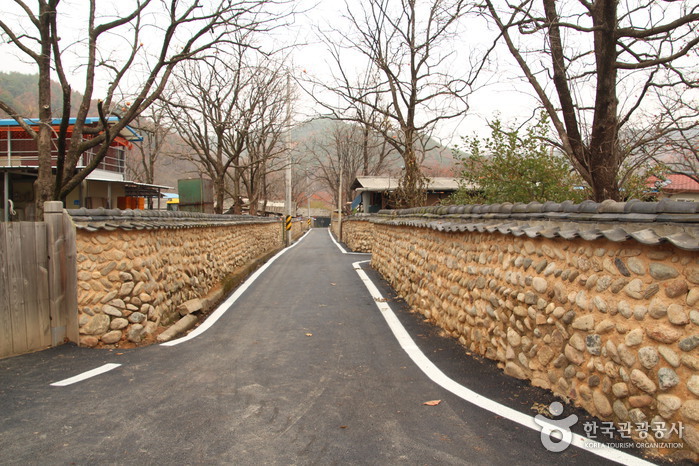
Old Walls of Jijeon Village in Muju (무주 지전마을 옛 담장)
2024-04-07
13, Gilbonji-gil, Muju-gun, Jeonbuk-do
The Old Walls of Jijeon Village in Muju were mostly all built to mark the dividing line between houses, rather than to keep people out. The walls started out using mud and natural stones, but later changed to more square-shaped stones held together with cement and topped with Korean roofing tiles. The wall blends in harmony with the traditional houses of the village and the slowly flowing Namdaecheon Stream.
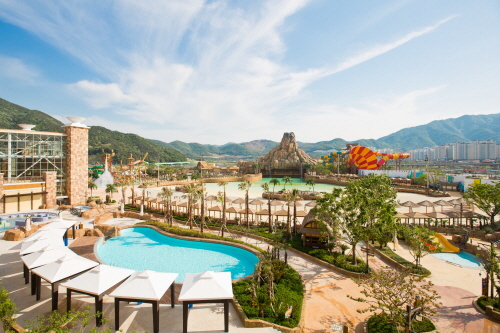
Gimhae Lotte Water Park (김해 롯데워터파크)
2025-05-19
555 Jangyu-ro, Gimhae-si, Gyeongsangnam-do
Gimhae Lotte Water Park is the largest water park in Korea, featuring a Polynesian theme with 17 types and 43 water attractions. It includes a giant volcano-shaped structure called Giant Volcano, along with indoor and outdoor water parks that can be enjoyed year-round, as well as Rapids River Zone and Torrent River Zone. Facilities include wave pool, lazy river pool, spa pool, swing slide, and more, making it a must-visit leisure destination in Busan.
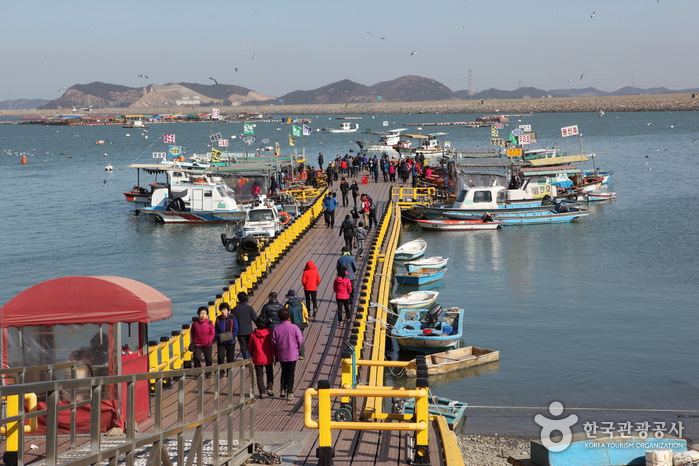
Samgilpohang Port (삼길포항)
2021-06-09
72-2, Samgilpo 1-ro, Seosan-si, Chungcheongnam-do
Samgilpohang Port is located in Seosan-si near the floodgate at the end of Daeho Seawall, connecting the area with Dangjin-gun. The 7.8-kilometer-long Daeho Seawall was completed on November 16, 1984 and is a popular drive course with a beautiful view of the sea dotted with large and small islands. The seawall is also a popular for fishing. Around Samgilpohang Port are a number of hoe (sliced raw fish) restaurants where visitors can enjoy fresh seafood with a great view in a tranquil atmosphere. Daeho Seawall is also known as paradise for winter migratory birds, so it attracts a number of birds, photographers, and birdwatchers every winter.
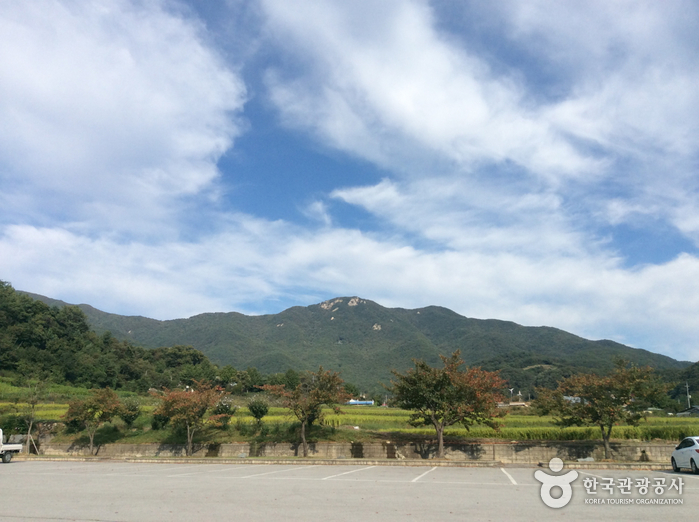
Seosan Gayasan Mountain (가야산(서산))
2022-11-17
Sansu-ri, Seosan-si, Chuncheongnam-do
Gayasan Mountain has easy and enjoyable hiking trails connecting Gayabong Peak, the main peak, with other peaks and mountains, namely Wonhyobong Peak (677 m), Ogyangbong Peak (621.4 m), Illaksan Mountain (521.4 m), Sujeongbong Peak (453 m), and Sangwangsan Mountain (307.2 m). The trails are as easy and suitable for all hikers including the elderly and young hikers. A distant view of the west sea is even visible from the top of the mountain. Gayasan Mountain offers amazing scenery all year round, most notably in spring when azaleas, royal azaleas, and an array of wildflowers are in full bloom.
The mountain also contains the Seosan Rock-carved Buddha Triad (National Treasure), which is considered the best rock-carved Buddha from the Baekje period. The mountain is also home to Bowonsa Temple Site, Gaesimsa Temple, and Illaksa Temple. With one National Treasure, six Treasures, and four cultural heritages preserved on the mountain, it is safe to say that Gayasan Mountain is the heart of Naepo Culture Zone (northwestern region of the province of Chungcheongnam-do), making the entire mountain a cultural asset.
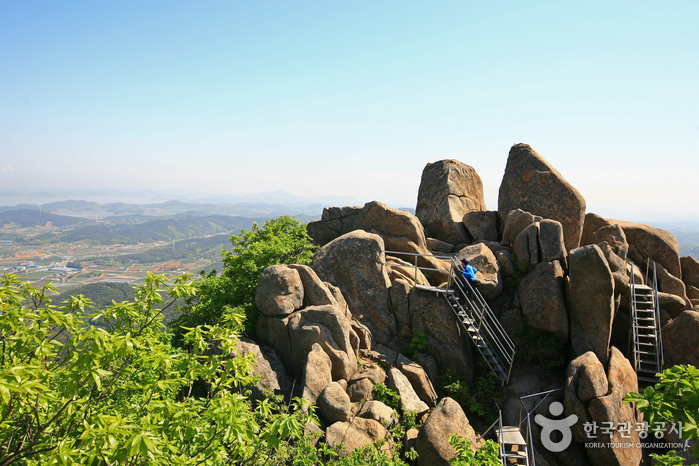
Seosan Palbongsan Mountain (팔봉산(서산))
2021-04-30
Yanggil-ri, Seosan-si, Chungcheongnam-do
+82-41-662-2004
Palbongsan Mountain stretches out like a folding screen and stands high with great spirit. It is known that the mountain was named Palbong (“eight peaks” in Korean) because of its eight peaks standing in a row. There are actually nine peaks, but the smallest was not included. Legend says the smallest weeps over its exclusion at the end of every December. The third peak is the highest, standing at 362 meters with a beautiful view and crisp air, making it ideal for hiking (3-hour course) and resting at the top. There is another mountain of the same name in Hongcheon, so this mountain is usually referred to as “Seosan Palbongsan.”
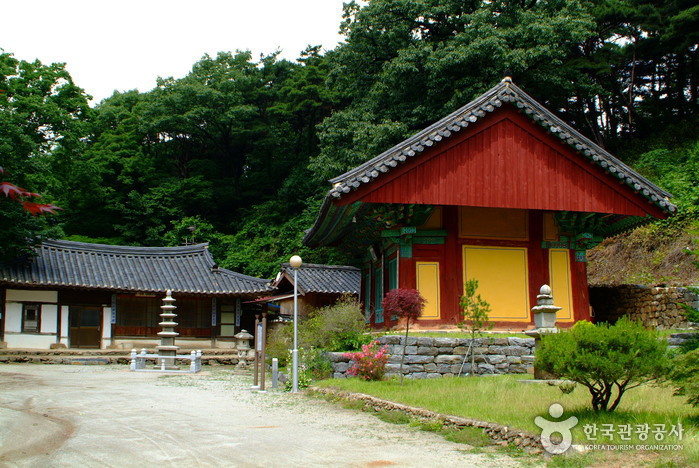
Seosan Munsusa Temple (문수사(서산))
2020-01-16
201, Munsugol-gil, Seosan-si, Chungcheongnam-do
+82-41-663-3925
The exact founding date of Munsusa Temple is unknown because there are no official records that have been discovered. The temple is estimated to date back to the Goryeo dynasty due to a prayer found in 1973 at the Gilt-bronze Seated Buddha in the temple’s Geungnaksiljeon Hall dated 1346. Around 600 items were discovered along with the prayer, including unbleached ramie cloth, a short-sleeved gown, rice, and barley. Munsunsa has the tranquil atmosphere of a mountain temple. When spring arrives, cherry blossom flowers and wild flowers bloom across the mountain and the nearby cattle farm call to mind a traditional Korean painting.
Munsusa Temple's Geungnaksiljeon Hall is a beautiful building constructed in the Jusimpo style (the column brackets placed only on top of the columns) combined with Dapo style (the column brackets placed between columns as well as on top of the columns). It is designated as Chungcheongnam-do Tangible Cultural Property No. 13. Inside the gorgeously and majestically carved hall are many relics including Gilt-bronze Seated Buddha, Samsebulsang statues (statues of Buddhas of Three Times (past, present and future)), Nahansang statues (statues of disciples of Buddha), and various portraits of Buddha.
The Gilt-bronze Seated Buddha (x_height: 70cm, length between knees: 50cm) was created in 1346. It is a fine example of late Goryo dynasty style Buddha statue along with Gilt-bronze Seated Bhaisajyaguru Buddha of Janggoksa Temple (Treasure No.337).
Seosan Gaesimsa Temple (개심사(서산))
2021-09-18
321-86, Gaesimsa-ro, Seosan-si, Chungcheongnam-do
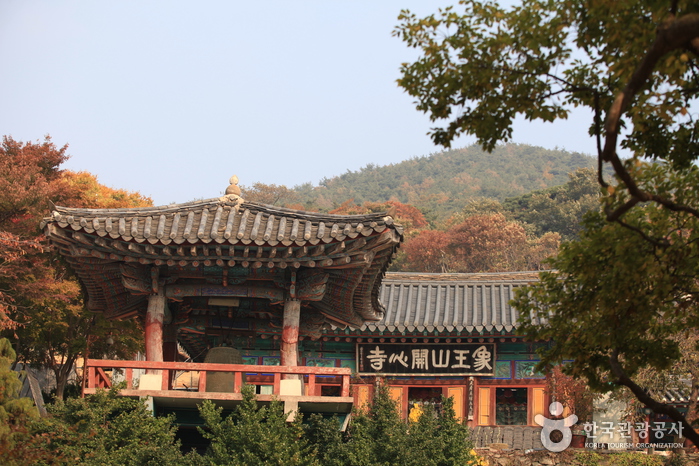
Situated in a dense forest in Sangwangsan Mountain and 6 kilometers away from Haemi-myeon, Gaesimsa Temple is one of the four major temples in Chungcheongnam-do. The path from the parking lot to the temple site is quite remote and curved, but beautiful especially in spring when cherry blossoms are in full bloom.
The temple was built in 1484 during the 15th year of King Seongjong and designated as a Treasure. The architecture of the temple stands out, as the buildings use bent tree trunks for pillars.
 English
 한국어
한국어 日本語
日本語 中文(简体)
 Deutsch
 Français
 Español
 Русский


