
Daewangam Park Suspension Bridge (대왕암공원 출렁다리)
11.8Km 2023-06-10
95 , Deungdae-ro, Dong-gu, Ulsan
Daewangam Park Suspension Bridge is the first suspension bridge in Ulsan and the first large-scale commercial tourism facility in Dong-gu. It was created with a length of 303 meters, connecting Hatgaebi and Surubang coastal trails in Daewangam Park. The bridge connects at once without intermediate supports, and currently, the span length is the longest among the suspension bridges in the country. Because it is a bridge over the sea, visitors can enjoy the exciting coastal scenery around Daewangam.
Bangeojin Port (방어진항)
11.9Km 2025-01-10
2 Seongkkeut-gil, Dong-gu, Ulsan
+82-52-209-3534
Bangeojin Port, designated as a national fishing port in 1971, is Ulsan's representative fishing port, with a large site for a fisheries cooperative's commission and an auction house. Various fish species, such as yellowtail, cutlassfish, Spanish mackerel, and anchovies, are caught. You can purchase fresh seafood from a nearby fish market or sashimi restaurant and enjoy it immediately.
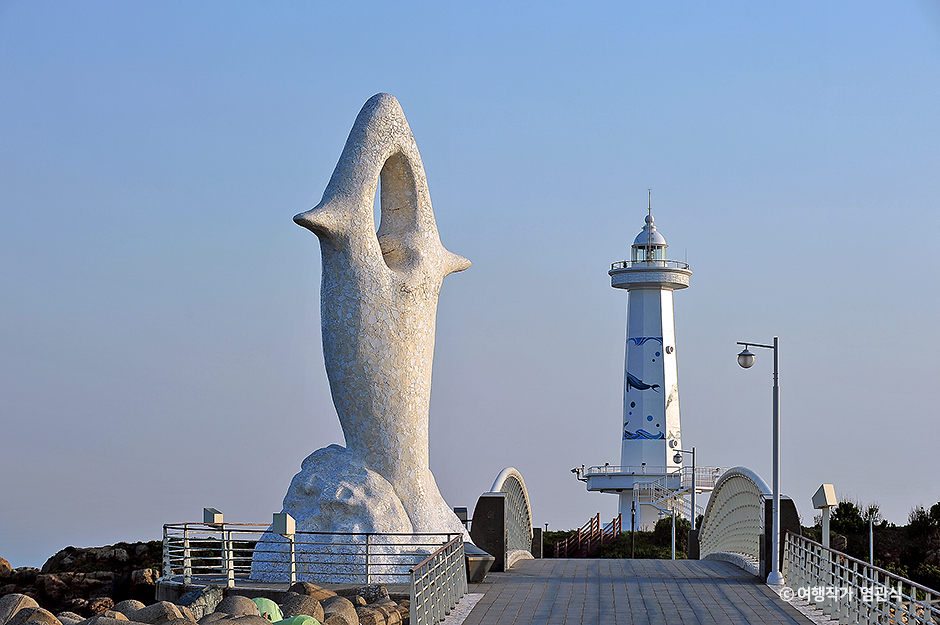
The promenade along the breakwater reaches Seuldo Lighthouse, an excellent photo spot, and the sea road leading to Bangeojin Port, Daewangam Park, Ulgi Lighthouse, and Ilsan Beach also boasts romantic scenery. Recently, to revitalize tourism resources, murals and floor designs for the northern breakwater, parking lots, etc., were developed, and a village museum, the Bangeojin Museum, was opened. It serves as a resting place for Ulsan citizens and provides many attractions for tourists.
Seuldo Island (슬도)
12.6Km 2023-01-03
Bangeo-dong, Dong-gu, Ulsan
+82-52-277-0101
Seuldo Island is located off the coast of Ulsan City in the southeastern part of the Korean Peninsula.
Its name, Seuldo ("seul" meaning the Korean stringed instrument geomungo), was given as the sound of wind and waves hitting the rock island is said to mimic the sound of geomungo. In fact, the sound of waves hitting the island is so good that it is called seuldomyeongpa or the resounding of waves.
The island is also known as Siruseom ("siru" meaning an earthenare steamer) for its resemblance to the upside down siru, and Gomboseom ("gombo" meaning pockmarks) for its stones with holes in them.
On the island, there is an unmanned lighthouse dating back to the late 1950s. The main economic activity on the island is fishery.
Gwanseong Solbat Beach (관성솔밭해변)
14.0Km 2021-08-12
68-24, Yangnam-ro, Gyeongju-si, Gyeongsangbuk-do
+82-54-779-6325
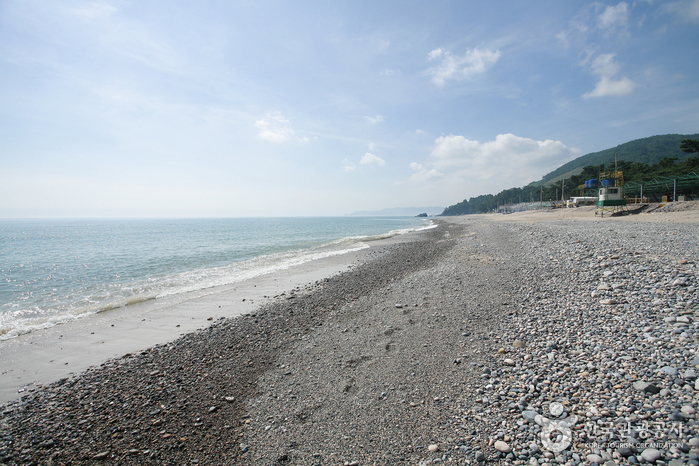
Gwanseong Solbat Beach, formerly Gwanseong Beach, is known for its extremely clean waters, and the connecting pine grove creates a gorgeous semi-circle shape. Nearby in Sindae-ri, Yangnam-myeon is Kolon Garden Golf Club, allowing visitors to enjoy many other leisure activities in the area. The driving course along the coastal road is also popular among visitors.
Olive Young - Ulsan Onsan Branch [Tax Refund Shop] (올리브영 울산온산점)
15.4Km 2024-06-26
251, Deoksin-ro, Onsan-eup, Ulju-gun, Ulsan
-
![Petroglyphs of Bangudae Terrace in Daegok-ri [UNESCO World Heritage] (울주 대곡리 반구대 암각화 [유네스코 세계유산])](http://tong.visitkorea.or.kr/cms/resource/29/2675629_image2_1.jpg)
Petroglyphs of Bangudae Terrace in Daegok-ri [UNESCO World Heritage] (울주 대곡리 반구대 암각화 [유네스코 세계유산])
15.5Km 2025-07-18
Daegok-ri, Eongyang-eup, Ulju-gun, Ulsan
In Daegok-ri, Eonyang-eup sits Bangudae Terrace, a picturesque spot where a ridge of Yeongosan Mountain extends to and stands tall to form quite a spectacle featuring uniquely shaped rocks and cliffs. The name, Bangudae, comes from how it resembles a turtle lying prone on the ground. Petroglyphs are paintings drawn by people from the prehistoric times carved on rocks and depicting various scenes and events in their daily lives. Petroglyphs were often drawn on enormous rocks and other sacred locations of groups, and it is believed that people gathered around them to hold various rituals.
Petroglyphs of Bangudae Terrace in Daegok-ri, Ulju-gun are estimated to have been drawn over several periods since the New Stone Age, and visitors can observe the differences in styles among various ages. Primary objects that were popularly carved include sea animals, land animals, humans and tools and, as our prehistoric ancestors actively engaged in hunting, the hope of abundance in game is believed to be the reason why these objects were frequently carved on rocks. Vividly expressing animals and hunting scenes and colorfully depicting outstanding traits of objects, these petroglyphs are a form of both hunting art and religious art, and they are considered as the greatest masterpieces that give a peek at the life and customs of the prehistoric ages. The petroglyphs on the Bangudae Terrace and the petroglyphs in Cheonjeon-ri, spanning three kilometers altogether along the Bangucheon Stream, have been inscribed on the UNESCO World Heritage List on July 12, 2025.
![Petroglyphs of Cheonjeon-ri [UNESCO World Heritage] (울주 천전리 명문과 암각화 [유네스코 세계유산])](http://tong.visitkorea.or.kr/cms/resource/14/3335114_image2_1.jpg)
Petroglyphs of Cheonjeon-ri [UNESCO World Heritage] (울주 천전리 명문과 암각화 [유네스코 세계유산])
15.9Km 2025-07-18
Cheonjeon-ri, Dudong-myeon, Ulju-gun, Ulsan
The petroglyphs (figures, pictures, and letters were made on the rocks along the mid-stream area of Naegokcheon Stream, which is a tributary of Taehwagang River. The upper and lower sides of the rocks contain petroglyphs that differ in the content and techniques used. The upper side contains petroglyphs made by means of chiseling. The inscriptions include geometric patterns, animals, and abstract human figures. There are concentric circles, with a round figure looking like the sun at the center, four running deer next to them, and several semi-human animals. The figures with simplistic expression and symbolism appear to have been made during the Bronze Age.
The lower side contains line-drawn picture mixed with Chinese characters. They include a procession of horse riders, animals including dragons, and boats. In particular, the procession of horse riders appears in three different places. The boats provide researchers with important information on the offshore activities carried out by people of the Silla dynasty. The 800-plus written characters are about the King and Queen’s visit to the place. They were presumed to have been inscribed on two occasions during the reign of King Beopheung (r. 514-540) of the Silla dynasty. The content on the official positions and the government system makes it a precious material for those studying Silla during or around the 6th Century. The petroglyphs were made by many people over an extended period of time, providing vivid information on the life and thoughts of people from prehistoric times to the Silla dynasty.
The petroglyphs in Cheonjeon-ri and petroglyphs on the Bangudae Terrace, spanning three kilometers altogether along the Bangucheon Stream, have been inscribed on the UNESCO World Heritage List on July 12, 2025.
(Source: Korea Heritage Service)
Ulsan Onggi Festival (울산옹기축제)
16.0Km 2025-07-11
36 Oegosan 3-gil, Onyang-eup, Ulju-gun, Ulsan
+82-52-980-2233
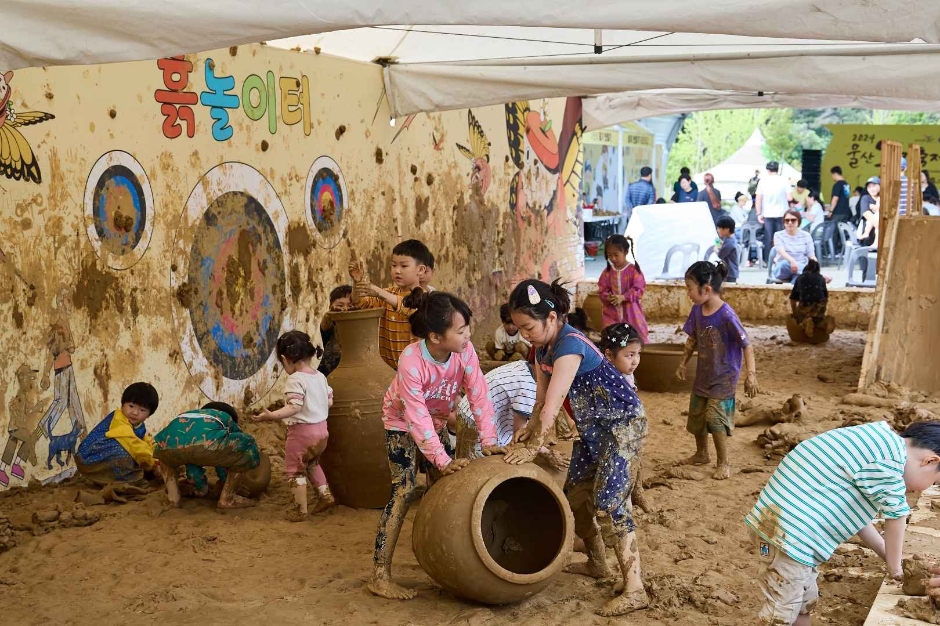
Ulsan Onggi Festival is held annually in early May in Oegosan Onggi Village in Ulju-gun, renowned for its traditional onggi (earthenware)-making techniques. The festival promotes the regional specialty, onggi, contributing to the spread of everyday onggi and the development of traditional industries. The main event, “Touch of the Onggi Master,” features demonstrations by master onggi artisans from Oegosan. There are various hands-on activities for children, including stepping on clay, playing with clay, and making and firing onggi. Visitors can also learn about the uses of onggi in food storage and fermentation, and view onggi from around the world. Don’t miss the opportunity to taste local specialties and foods from Ulju.
◎ Onggi
Onggi is a type of bowl crafted from soil, using water, fire, and wind. This traditional pottery has been produced since the Three Kingdoms period and is well-suited for long-term food storage due to its excellent ventilation and preservative capabilities.
Onggigol Ceramics (옹기골도예)
16.1Km 2025-03-28
18 Oegosan-gil, Ulju-gun, Ulsan
* Please be advised that this is located in one of the areas affected by the recent wildfire (as of March 27, 2025).
** For real-time wildfire information and emergency upates, visit the Korea Forestfire Information website and the National Disaster and Safety Portal.
Onggi Ceramics is the workshop of Heo Jin-gyu, a master onggi craftsman, and is located in Onggi Village in Ulsan, home to the largest production of onggi in the nation. Visitors can browse the items as well as purchase anything that piques their interest. The workshop also offers a range of exerience programs related to onggi, although advanced reservations are required to participate.
Oegosan Onggi Village (외고산옹기마을)
16.2Km 2025-03-28
36, Oegosan 3-gil, Ulju-gun, Ulsan
+82-52-237-7894
* Please be advised that this is located in one of the areas affected by the recent wildfire (as of March 27, 2025).
** For real-time wildfire information and emergency upates, visit the Korea Forestfire Information website and the National Disaster and Safety Portal.
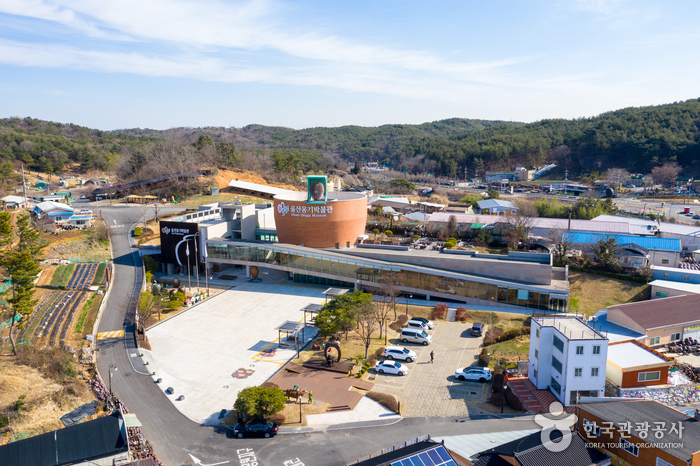
Oegosan Onggi Village was established when earthenware master Heo Deok-man settled in the area in 1975. The village today showcases a massive collection of various earthenware products, which creates a unique sight. Over 50% of the country's earthenware products are crafted at this village. The village also features several attractions for visitors to enjoy, such as the Ulsan Onggi Museum, which houses the largest earthenware pottery recognized by the Guinness Book of World Records; and the annual Ulsan Onggi Festival, with many diverse activity programs.
 English
 한국어
한국어 日本語
日本語 中文(简体)
 Deutsch
 Français
 Español
 Русский


