
She's Plastic Surgery Clinic (쉬즈성형외과의원)
13.4Km 2025-11-19
6th–8th Floors, 8-1 (She’s Building), Gudeok-ro, Jung-gu, Busan
Located on Gwangbok-ro in Busan, SHE'S Plastic Surgery Clinic has been a trusted destination for cosmetic procedures since its opening in 2000. Renowned for our expertise in eye and facial wrinkle surgeries, we have become a premier clinic specializing in wrinkle treatments, attracting patients not only from Korea but from around the world.
We offer a range of services tailored for our international patients:
On-site interpreters fluent in Japanese, Chinese, Russian, Vietnamese, Mongolian, and English
Comprehensive convenience services, including concierge support and accommodation reservations
Diverse medical tourism packages focused on skincare, in addition to our major surgical offerings
Tax-free shopping for added convenience
Transparent pricing, with the same costs for both foreign and Korean patients
Since beginning to attract international patients in 2009, SHE'S Plastic Surgery Clinic has become a welcoming and comfortable clinic for foreigners seeking high-quality treatment. This dedication to patient care was selected as a leading medical institution for attracting foreign patients in Busan for 2022-2025.
First Eye Clinic (퍼스트안과의원)
13.4Km 2025-09-23
6th–7th Floors, Eungwa & Medical Building, 5 Gudeok-ro, Jung-gu, Busan
Good Ideas for Your Eyes First eye department for your eye health. There are many places where vision correction surgery is performed, such as LASIK and LASEK. However, there are few ophthalmologists that can properly treat eye diseases such as retinal, glaucoma, cataract, and childhood progressive myopia. First Eye Clinic has increased treatment safety and precision by utilizing university hospital-level advanced equipment by medical staff with extensive experience and know-how in surgery for severe eye diseases.
Yongdusan Park (용두산공원)
13.4Km 2025-08-06
37-55 Yongdusan-gil, Jung-gu, Busan
+82-51-860-7820
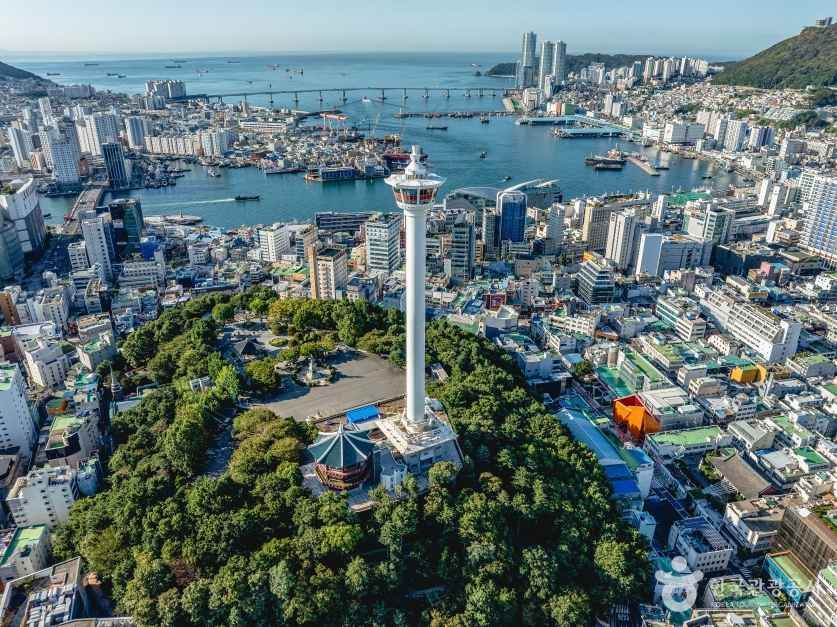
Situated at the heart of Busan, Yongdusan Park is famous for its escalators, which connect the Nampo-dong area with the park. The park has a great view of the Busan Port and the Yeongdo area. Notable sights in the area include the Busan Tower, the Statue of Admiral Yi Sunsin, a bell pavilion, a flower clock, and a sculpture of a dragon. The observatory on the Busan Tower offers an expansive view of Busan’s city center, the Busan Port, and the South Port at the distance. The view of the city at night is also not to be missed. Nearby tourist sites include many of Busan’s famous sights, from Gwangbok-dong Cultural & Fashion Street to Jagalchi and Gukje Markets.
Yeongdodaegyo Bridge (영도대교)
13.4Km 2023-04-22
46, Taejong-ro, Yeongdo-gu, Busan
+82-1670-8114
Yeongdodaegyo Bridge, connecting Nampo-dong and Yeongdo Island, was the first bridge to connect the mainland to one of the nearby islands in Busan. The bridge lifted to allow ships to pass between the south and north ports, and made a passage for ships anywhere from two to seven times in one day. When the bridge was first constructed, many people would gather to watch the strange spectacle of a bridge rising up to point to the sky. The bridge remains a famous landmark of Busan even to this day.
Busan Street Festa in Gwangbok (부산 스트릿 페스타 인 광복)
13.5Km 2025-11-05
72-1 Gwangbok-ro, Jung-gu, Busan
+82-70-4808-2875
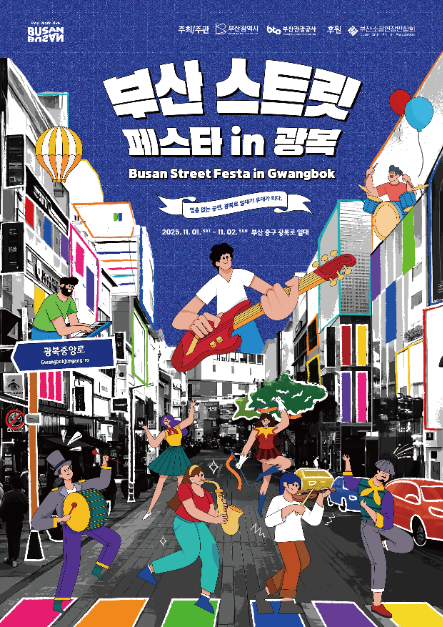
The Busan Street Festa in Gwangbok transforms everyday urban spaces into a festival stage through various programs such as music, dance, performance shows, local flea markets, and parades that unfold throughout the streets.
Yeongdo Haenyeo Culture Exhibition Hall (영도해녀문화전시관)
13.5Km 2024-12-27
+82-51-419-4505
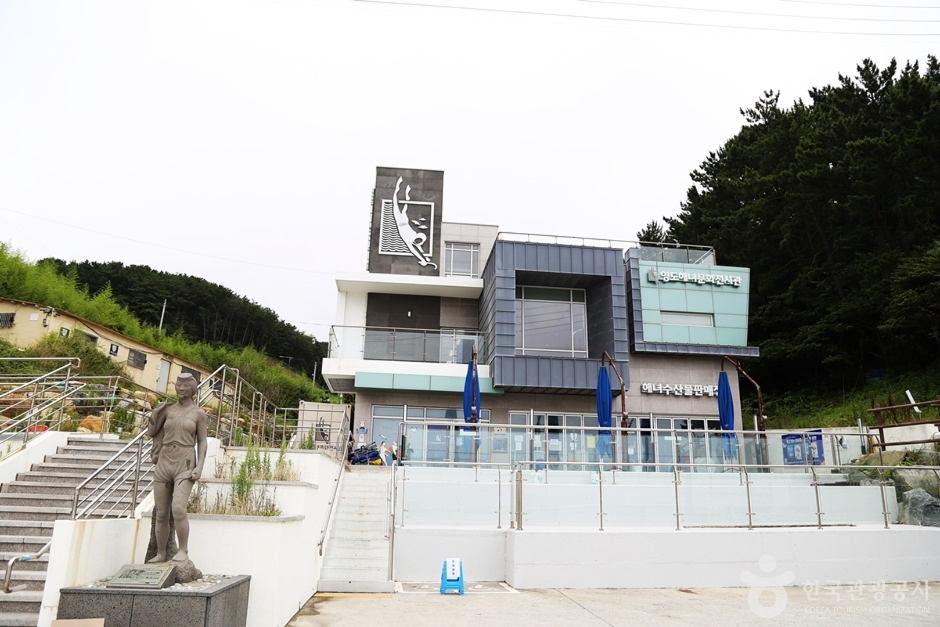
Yeongdo Haenyeo Culture Exhibition Hall is a two-story building with meaning and history Haenyeo on display. Haenyeo are women divers that dive for seafood without any equipments.
The tradition of Haenyeo has become a UNESCO Intangible Cultural Heritage of Humanity. First floor of the building consists Haenyeo seafood store that sells fresh seafood collected by the Haenyeos, while the second floor is an exhibition hall dedicated to Haenyeo.
Gwangbok-dong Cultural & Fashion Street (광복로문화패션거리)
13.5Km 2024-03-06
Gwangbok-ro, Jung-gu, Busan
+82-51-253-8253
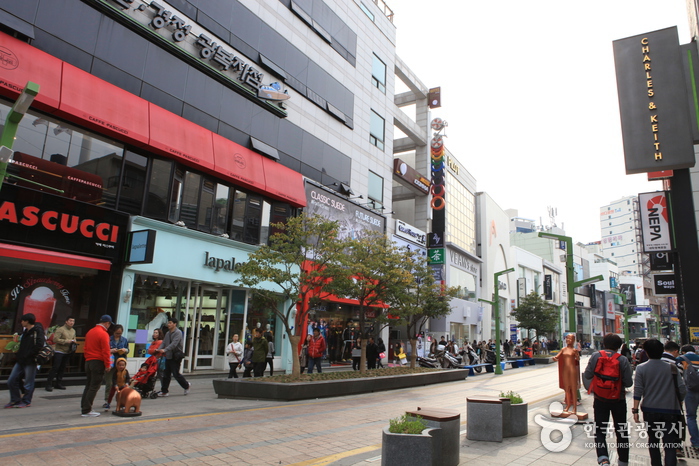
Gwangbok-dong Cultural & Fashion Street is about 600 m long from the entrance to Gukje Market. The street has historically featured many clothing shops, and it is quite crowded at night or on weekends. Every December, the area also hosts the Busan Christmas Tree Cultural Festival, which turns the street into a pedestrian-only area. There are plenty of good restaurants in the area, which is a great place to feel the vitality and energy of Busan’s youth.
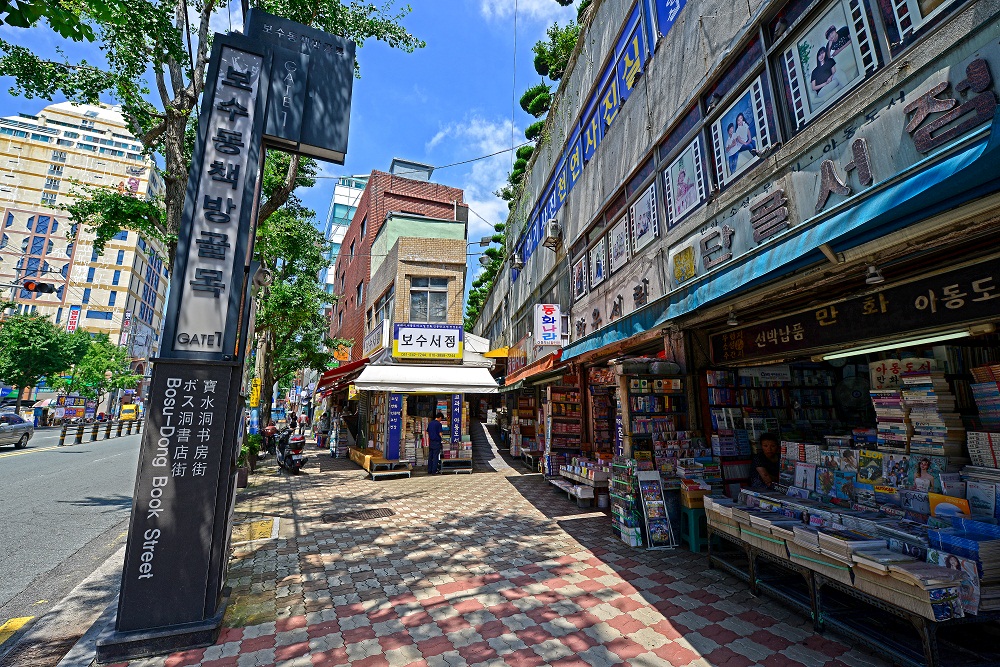
Bosu-dong Book Street Cultural Center(보수동 책방골목 문화관)
13.6Km 2023-01-09
8, Chaekbanggolmok-gil, Jung-gu, Busan
+82-51-743-7650
[The used bookstore that sells memories]
Bosu-dong Book Street has a unique background. It was formed after the independence of Korea (August 15) as a residential area in the empty place where the previous Gukje Market was demolished. Book stores began opening one-by-one and soon the street became known as Bosu-dong Book Street. The street is popular amongst booklovers for their used books as well as new books, and amongst travelers for the street’s unique atmosphere. Many young adults also frequent the street because there are many specialty shops for comic books. Every year, the Bosu-dong Culture Festival takes place and visitors can participate in events such as, make-your-own book cover, make-your-own book, and so on. The festival not only gives an opportunity to learn about the history of Bosu-dong Book Street, but have a good time as well.
Yeongdo Lighthouse (영도 등대)
13.6Km 2024-03-06
181, Jeonmang-ro, Yeongdo-gu, Busan
+82-51-405-1201
Yeongdo Lighthouse, first lit in 1906, stands at Taejongdae Park. It houses a maritime library, galleries, an observatory, and a café. From the observatory, on clear days, you can even see as far as the Japanese island of Tsushima Island. At the base of the lighthouse, there's a sculpture of a woman turned into stone, waiting for her husband who went out to sea. You can reach it by walking from Taejongdae Park or taking the Taejongdae Danubi Train.
Gukje Market (국제시장)
13.6Km 2025-10-23
Area of Sinchang-ro 4-ga, Jung-gu, Busan
+82-51-245-7389
The current marketplace of Gukje Market first formed after the liberation of Korea from the Japanese administration when people gathered to trade overseas products left by the Japanese and brought in by Koreans who came back from abroad. Following the Korean War, refugees who fled to Busan set up stalls in order to make a living by selling smuggled or imported products, which developed into Gukje Market (gukje meaning "international" in Korean) of today. Gukje Market is one of Korea’s largest markets and a testament to Korea's modern history. The market is divided into two wings, and first-timers to the market are advised to be careful not to get lost in the maze-like alleys and halls.
 English
 한국어
한국어 日本語
日本語 中文(简体)
 Deutsch
 Français
 Español
 Русский


