Skyline Luge Busan (스카이라인 루지(부산))
15.2Km 2025-04-15
205 Gijanghaean-ro, Gijang-gun, Busan
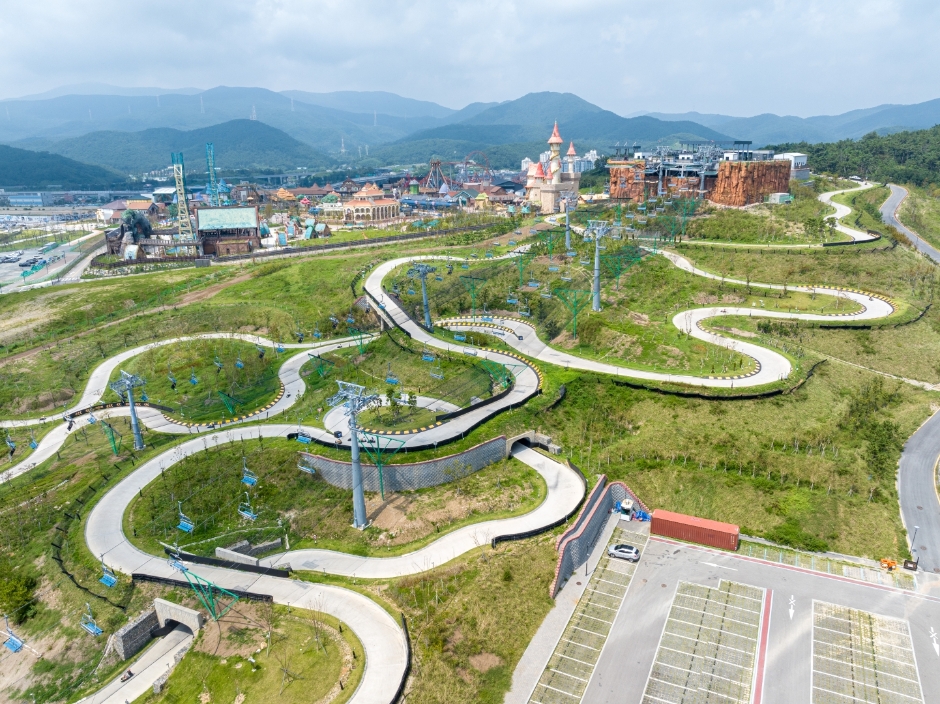
Skyline Luge was first invented 32 years ago in Rotorua, New Zealand. It is currently a popular sport, with over 40 million rides recorded worldwide. Now, lugin facilciities are operated in six regions worldwide, including Busan. Skyline Luge Busan is a representative outdoor experiential amusement facility at Osiria Theme Park in Dongbusan. It has various auxiliary facilities with the beautiful sea as a backdrop and is a popular activity for the whole family. Take the Skyride lift o the starting point, get on the specially designed luge cart for down riding, and enjoy a thrilling 2.4-kilometer ride down from four tracks.

Fisheries Science Museum (수산과학관 (부산))
15.3Km 2021-07-20
216, Gijanghaean-ro, Gijang-gun, Busan
+82-51-720-3061
The Fisheries Science Museum, Korea's first science institute of its kind, was established on May 26, 1997 in order to promote maritime science and technology to the public. The museum was opened after six years of effort by the National Fisheries Science Institute in preparing research and materials regarding marine resources, the fishing industry, fishery and fish farm technology and equipment, taxidermied fish specimens, sea life species, and others. There are a total of 15 separate areas with over 7,400 exhibition items, and even an actual right whale skeleton on display, as well as a room where visitors can learn how to operate a marine vessel.
Haedong Yonggungsa Temple (해동 용궁사(부산))
15.3Km 2025-10-23
86 Yonggung-gil, Gijang-gun, Busan
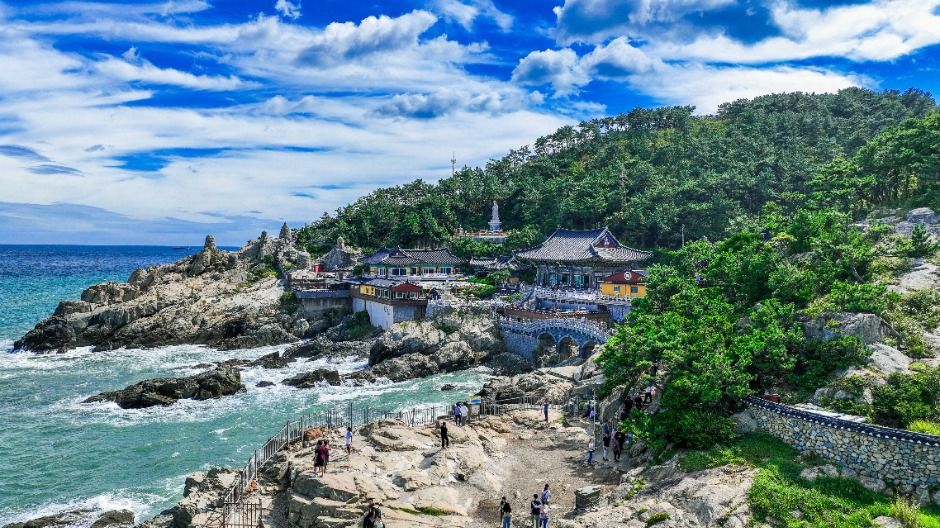
Haedong Yonggungsa Temple is situated on the coast of the north-eastern portion of Busan. This superb attraction offers visitors the rare find of a temple along the shore line as most temples in Korea are located in the mountains. Haedong Yonggungsa Temple was first built in 1376 by the great Buddhist teacher known as Naong during the Goryeo dynasty.
The temple was destroyed during the Imjin War, then rebuilt by Monk Ungang of Tongdosa Temple in the early 1930s. In 1974, Monk Jeongam became the abbot of the monastery with the duty to restore of the temple. During his 100-day prayer, he had a dream of Aalokitesvara Bodhisattva ascending to the heavens on a dragon's back, which became the origin of the temple's name.
Ananti at Busan Cove (아난티 앳 부산 코브)
16.0Km 2025-10-24
268-32 Gijanghaean-ro Gijang-eup, Gijang-gun, Busan
+82-51-509-1111
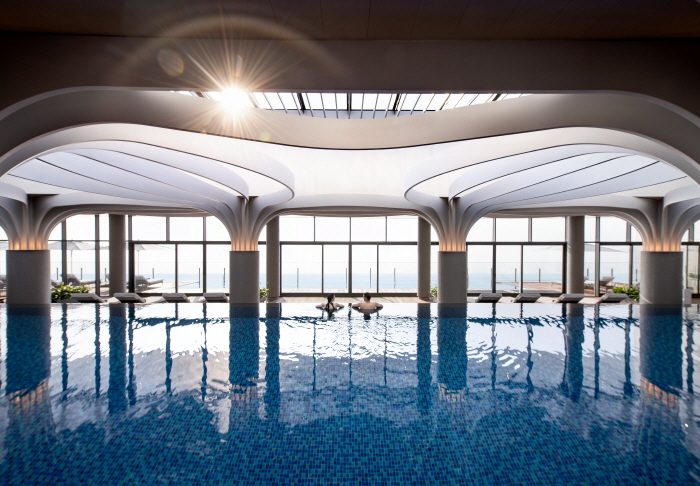
Various amenities including infinity pool
5-star hotel with various types of rooms. Ocean view and mountain view are all good choices but the most famous one is the view from the Ocean Infinity Pool toward the ocean.
Gijang Haenyeo Village (Yeonhwari Hoetchon Village) (기장해녀촌(연화리횟촌))
16.8Km 2023-02-06
184, Yeonhwa 1-gil, Gijang-gun, Busan
+82-51-409-4066
Yeonhwari Hoetchon Village is located within 5 minutes by car from Daebyeon Port. Around 50 hoe (sliced raw fish) restaurants are in business around Yeonhwa Port, where visitors can enjoy the superb view of Jukdo Island. In particular, raw fish is cut in different shapes depending on the meat, and redfish is usually made thicker than white fish. White fish should be thinly sliced and soaked in cold water to fully enjoy it; as the meat shrinks, the texture is amazing. The chef's generosity and eloquence make the fish taste even more delicious and memorable.
Busan Hongbeopsa Temple (홍법사(부산))
17.1Km 2022-12-27
202, Dugu-ro 33beon-gil, Geumjeong-gu, Busan
+82-51-508-0345
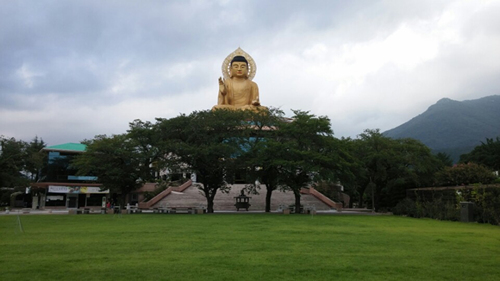
Hongbeopsa Temple is located in Geumjeong dugu-dong, Busan and is known for the largest bronze Amida Buddha Statue in Korea at 21 meters. Surrounded by Cheolmasan Mountain and Geumjeongsan Mountain, a beautiful scenery stretching out to Suyonggang River makes one feel as if you were in Yeonhwajang, an ideal world in Buddhism that is filled with lotus flowers.
The temple has training rooms for visitors to practice meditation as well as a bust statue of Gandhi, donated by the Government of India to celebrate the 40th anniversary of diplomatic relationship between Korea and India. The temple has a wealth of attractions that cannot be seen in other temples of Korea such as huge statue of Buddha, India Cultural Center, Jeokmyeolbogung Palace, and beautiful gardens, luring an increasing number of tourists every year.
Bunsanseong Fortress (김해 분산성)
17.7Km 2023-01-18
210-162, Gaya-ro 405beon-gil, Gimhae-si, Gyeongsangnam-do
+82-55-330-3925
Bunsanseong Fortress was constructed in the 3rd year of the reign of Goryeo's King U (1377) by Magistrate Park Wi to defend against foreign enemies, but it was destroyed during the Japanese invasion of 1592. The fortress we see today was reconstructed by Magistrate Jeong Hyeon-seok in the 8th year of the reign of Joseon's King Gojong (1871). However, it is estimated that it was first built during the days of Gaya. It is a temoe-style fortress with rocks piled up like a long band at the peak of Bunsan from which downtown Gimhae, Gimhae Plains, the Nakdonggang River and the South Sea are all in a single, panoramic view. Today, fortress walls remain stretching for some 900 meters on the slope towards the city and, inside the fortress, there are two gate sites in the south and north, an auxiliary gate on the west, a well site and several other building sites. The exact length of the remaining fortress walls is 929 meters and the average x_width is about 8 meters.
Inside the fortress lies Haeeunsa Temple, which was built to pay respects to Queen Heo of Garak who had come from the sea, according to stories. The temple also enshrines portraits of King Suro and Queen Heo that were painted during the Joseon dynasty. During the Japanese invasion of 1592, monk soldiers were stationed at this temple.
The fortress is more popularly called "Manjangdae" by Gimhae locals, and this name originated from the description, "A tall tower 10,000 (man) gil in x_height," granted by Daewongun in the Joseon dynasty for this advanced base that defeats Japanese invaders. A writing of "Manjangdae" written by Daewongun himself as well as his stamp are engraved on a rock behind a beacon that was restored in 1999.
Ahopsan Forest (아홉산숲)
17.8Km 2025-10-23
37-1 Midong-gil, Gijang-gun, Busan
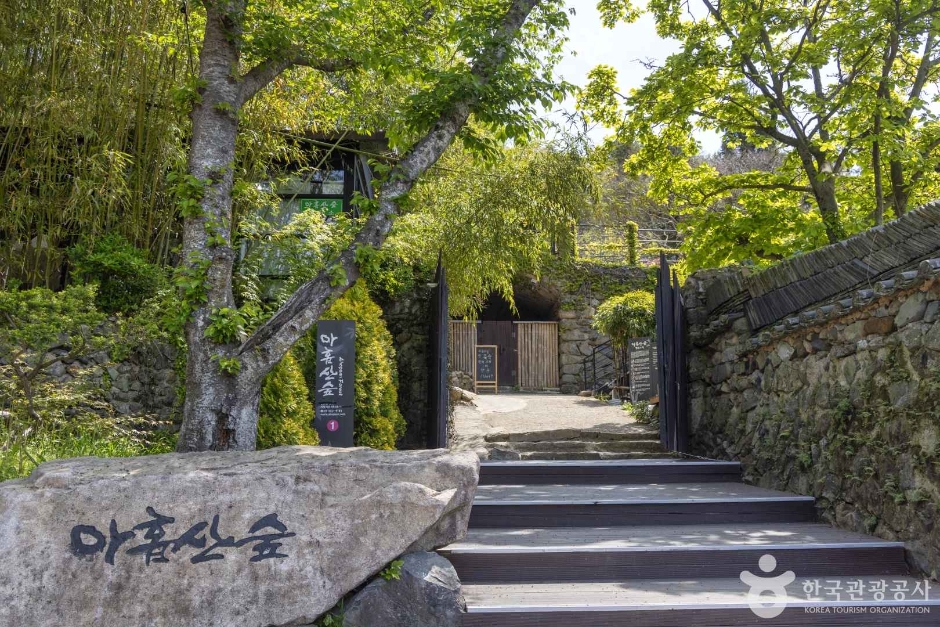
Ahopsan Forest is a forest located at the foot of Ahopsan Mountain in Cheolma-myeon, Gijang-gun, Busan. It is a place where visitors can meet the undamaged natural environment and ecology. Diverse forests ㅡsuch as bamboo forests, cypress forests, cedar trees, ginkgo trees, and natural forests, including Geumgang pine trees aged 100 to 300 years, make up Ahopsan Mountain. It is a private forest with a total area of 520,000 square meters and has been there for about 400 years. Only a limited number of people who have made a reservation in advance are allowed to enter for nature conservation. Unlike amusement parks and recreation areas, viewing is possible only within the limits that do not damage nature. However, forest experiences, activity programs for children, and forest explanation program are offered for visitors' entertainment.
Dongsang Market (동상시장)
17.8Km 2025-10-23
25 Guji-ro 180beon-gil, Gimhae-si, Gyeongsangnam-do
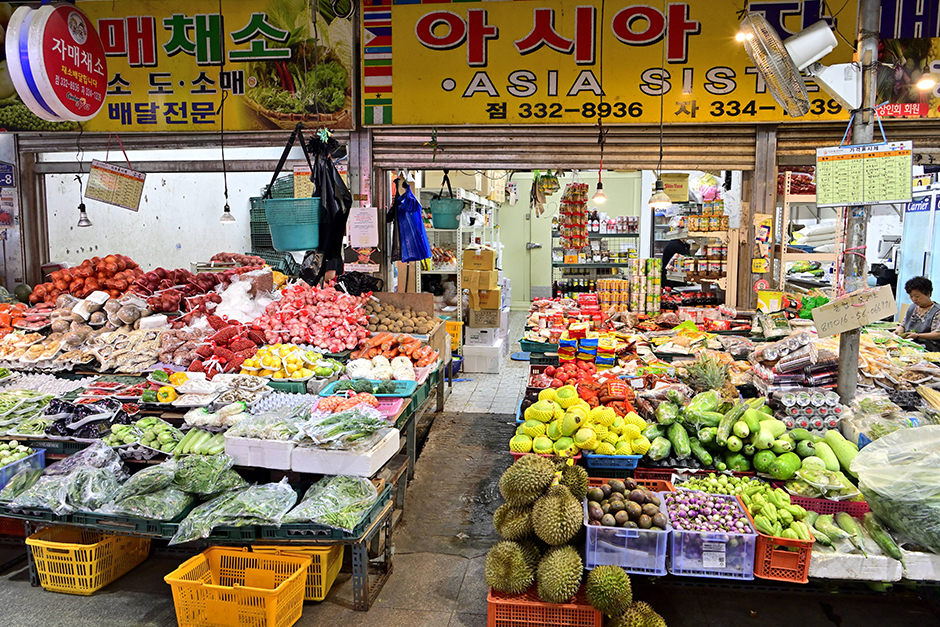
Formed in 1945, Dongsang Market is a lifestyle-centric traditional market that offers a slew of daily necessities like vegetables, fruits, rice cakes, fishery products, and side dishes, as well as a popular alley specializing in Kalguksu (noodle soup). Designated as a cultural tourism market in 2017, it has since evolved into a vibrant space where traditional Korean culture harmoniously coexists with diverse global cultures. As more foreign workers have begun frequenting the market in recent years, a number of Asian grocery stalls have opened. In particular, vegetables favored by Southeast Asian customers, ritual foods, and Kalguksu (noodle soup) have become local specialties.
Gimhae Gaya History Park (김해가야테마파크)
18.0Km 2025-10-23
161 Gaya thema-gil, Gimhae-si, Gyeongsangnam-do
+82-55-340-7900
Gimhae Gaya History Park is a resting area that provides comfortable relaxation in the daily lives of the busy people and also a cultural complex where you can experience various cultures with your family, lover and friends.
Interactive theme park combining Education + Entertainment Edutainment park where you can see, hear, touch and learn about the history of Gaya and the brilliant heritage of its people through plays, experiences and exhibits.
 English
 한국어
한국어 日本語
日本語 中文(简体)
 Deutsch
 Français
 Español
 Русский


