
First Eye Clinic (퍼스트안과의원)
475.1M 2025-09-23
6th–7th Floors, Eungwa & Medical Building, 5 Gudeok-ro, Jung-gu, Busan
Good Ideas for Your Eyes First eye department for your eye health. There are many places where vision correction surgery is performed, such as LASIK and LASEK. However, there are few ophthalmologists that can properly treat eye diseases such as retinal, glaucoma, cataract, and childhood progressive myopia. First Eye Clinic has increased treatment safety and precision by utilizing university hospital-level advanced equipment by medical staff with extensive experience and know-how in surgery for severe eye diseases.
Samsong Chobap (삼송초밥)
537.0M 2025-01-23
13 Gwangbok-ro 55beon-gil, Jung-gu, Busan
This is a Japanese restaurant that began in the early 1960s in Nampo-dong. While it is well-known for its Japanese-style gimbap called “gimchobap,” regular patrons consistently order its pufferfish dishes. The bokjiri (malgeuntang) is noted for its rich flavor, achieved by combining seasonal vegetables and pufferfish. The boksashimi (sliced raw pufferfish) menu offers a variety of options, including outer skin, inner skin, and shabu-shabu.
Gukje Market (국제시장)
597.2M 2025-10-23
Area of Sinchang-ro 4-ga, Jung-gu, Busan
+82-51-245-7389
The current marketplace of Gukje Market first formed after the liberation of Korea from the Japanese administration when people gathered to trade overseas products left by the Japanese and brought in by Koreans who came back from abroad. Following the Korean War, refugees who fled to Busan set up stalls in order to make a living by selling smuggled or imported products, which developed into Gukje Market (gukje meaning "international" in Korean) of today. Gukje Market is one of Korea’s largest markets and a testament to Korea's modern history. The market is divided into two wings, and first-timers to the market are advised to be careful not to get lost in the maze-like alleys and halls.
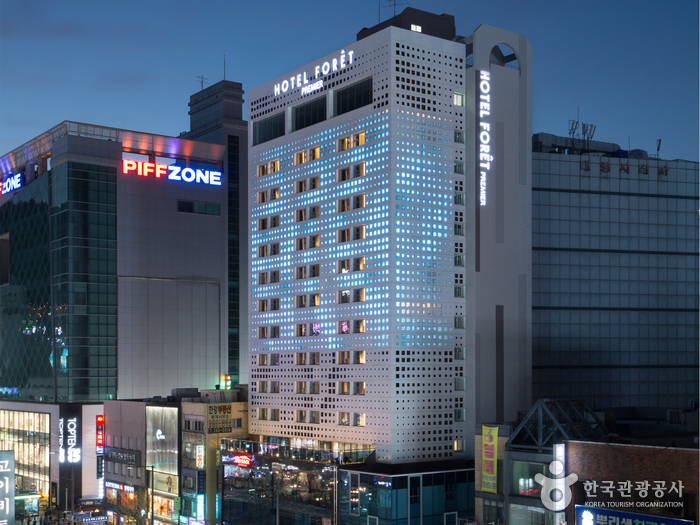
Hotel Forêt Premier Nampo (호텔포레 프리미어 남포)
625.9M 2024-12-22
54-1 , Gudeok-ro, Jung-gu, Busan
+82-51-242-2200
Hotel Foret Premier Nampo in Busan is located midway between Jagalchi and Nampo Stations on Busan Line 1, both of which are about 6 minutes away on foot. There are also many bus stops nearby, so transport is super-convenient. The rooms are equipped with air purifiers, bidets, and premium down pillows to help guests sleep soundly. There is a cafe over floors 1 and 2, a restaurant on floor 3, and a business center and meeting rooms for guests’ use. Nearby must-see places include Gukje Market, Jagalchi Market, and Yongdusan Park - all reachable on foot.
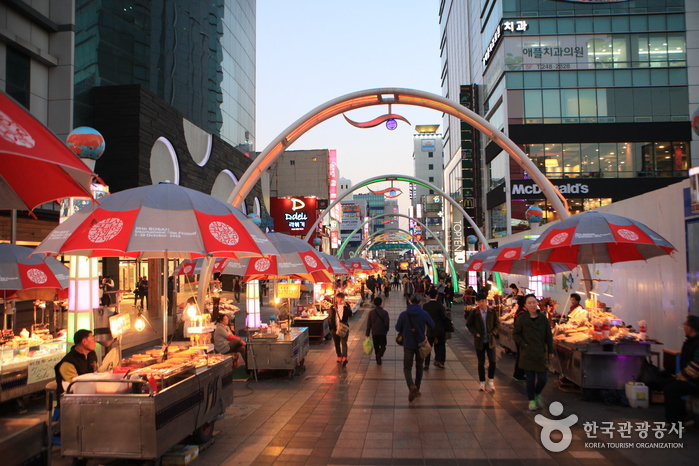
BIFF Square (BIFF 광장)
636.4M 2025-10-23
4 Nampo-gil, Jung-gu, Busan
+82-1688-3010
Busan’s modern movie district was originally little more than a pair of cinemas that were built following Korea’s liberation from Japanese colonial rule over half a century ago. However, major renovations took place ahead of the first Busan International Film Festival (BIFF), and the newly transformed district was named BIFF Square on September 13, 1996.
Having been remade into a cultural tourist attraction promoting the advancement of Korea’s film industry, BIFF Square has contributed to Busan’s status as an international cultural tourist city. The 428 meter-long street stretching from the Buyeong Theater in Nampo-dong to the overpass in Chungmu-dong was divided into “Star Street” and “Festival Street,” and on the eve of the festival each year the “BIFF Square Ground Opening” is held here. During the ceremony, events such as the hand printing of famous movie celebrities and Nunkkot Jeomdeung (snow-flower lighting) take place. A district such as BIFF Square, crowded with first-run theaters in a city is rare not only in Asia but Europe as well, and for this reason it holds great potential. In recent years, the square has grown into a more complex area, featuring not only movie theaters but also shops and leisure facilities, attracting growing numbers of young visitors and tourists.
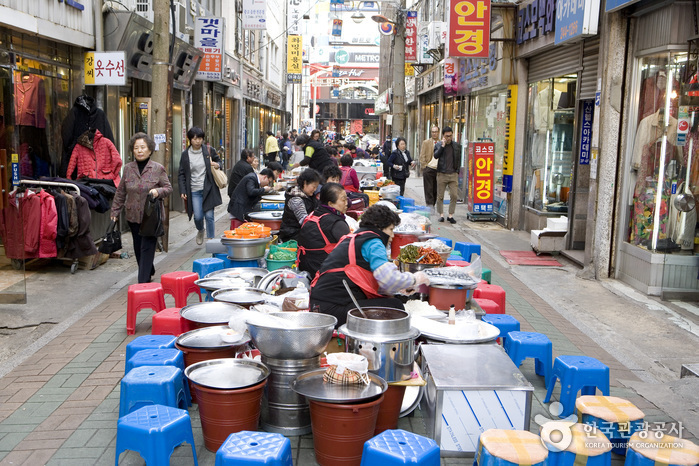
Gukje Market Food Street (국제시장 먹자골목)
646.4M 2024-03-06
36, Junggu-ro, Jung-gu, Busan
+82-51-245-7389
Gukje Market Food Street has more than 60 years of history as one of Busan's traditional markets' most famous food streets. It is known for a number of dishes, such as Chungmu gimbap served with sweet and sour squid salad, sweet-and-spicy tteokbokki, milmyeon (wheat noodles), dwaeji gukbap (pork and rice soup), sundae, patbingsu (shaved ice with red beans), and Busan’s iconic bibim dangmyeon (spicy glass noodles). These dishes are enjoyed on small stools next to the street stalls. The sight of the diners lining the stall is one of the defining views of traditional markets in Korea. Visitors can also find suitable clothing, shoes, and accessories here.
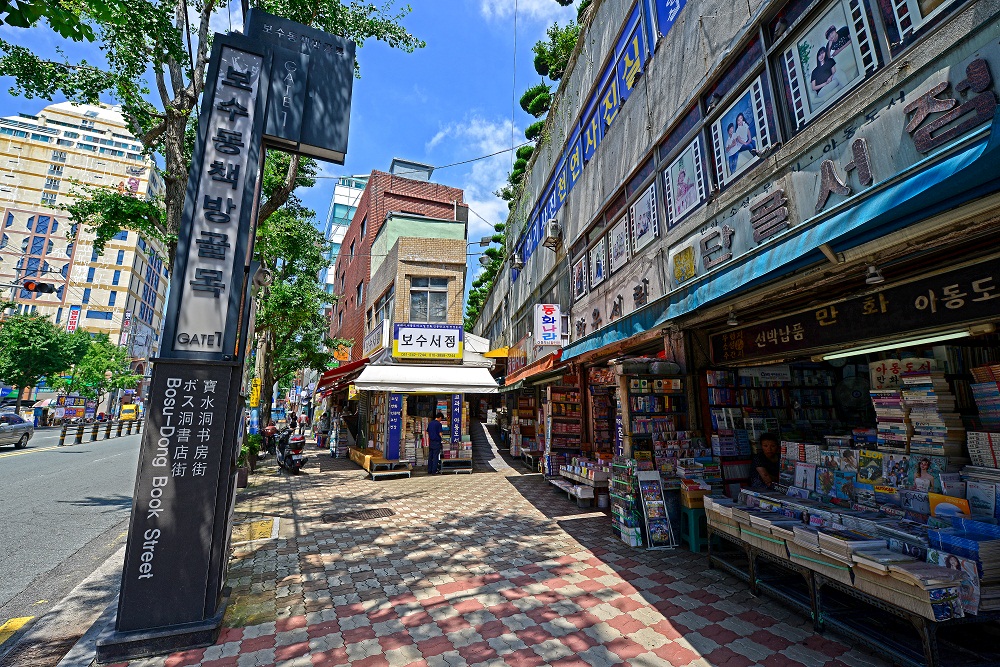
Bosu-dong Book Street Cultural Center(보수동 책방골목 문화관)
695.3M 2023-01-09
8, Chaekbanggolmok-gil, Jung-gu, Busan
+82-51-743-7650
[The used bookstore that sells memories]
Bosu-dong Book Street has a unique background. It was formed after the independence of Korea (August 15) as a residential area in the empty place where the previous Gukje Market was demolished. Book stores began opening one-by-one and soon the street became known as Bosu-dong Book Street. The street is popular amongst booklovers for their used books as well as new books, and amongst travelers for the street’s unique atmosphere. Many young adults also frequent the street because there are many specialty shops for comic books. Every year, the Bosu-dong Culture Festival takes place and visitors can participate in events such as, make-your-own book cover, make-your-own book, and so on. The festival not only gives an opportunity to learn about the history of Bosu-dong Book Street, but have a good time as well.
Busandaegyo Bridge (부산대교)
711.0M 2025-10-23
41 Namhang-ro 9beon-gil, Yeongdo-gu, Busan
+82-51-600-4000
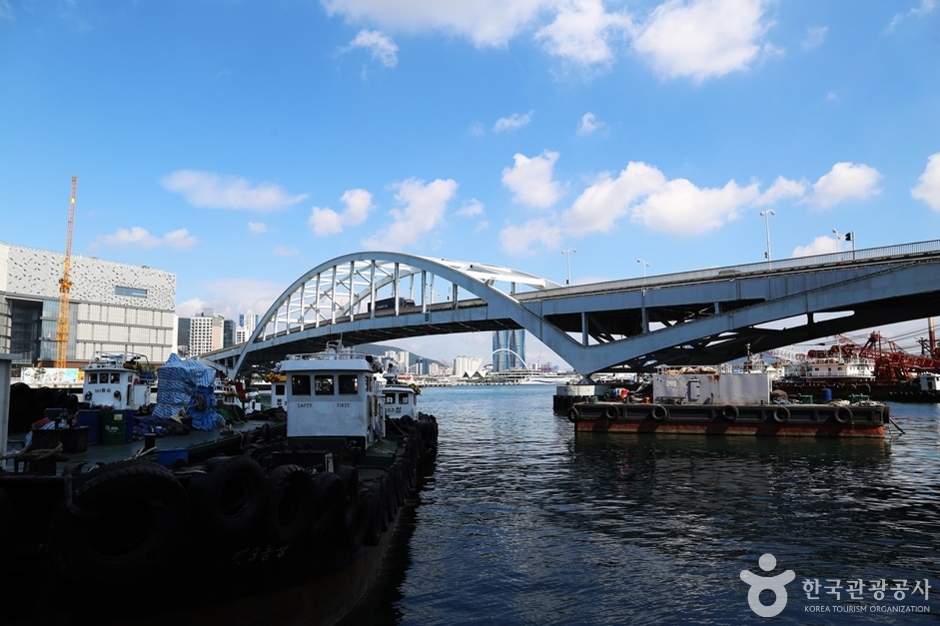
Built in 1980, Busandaegyo Bridge connects Yeongdo Island to the mainland. It serves as an industrial road that facilitates the transport of freight and cargo from Yeondong-gu District, the center of the shipbuilding industry and an emerging port.
Busandaegyo Bridge is 694 meters long and 20 meters wide, with 16 meters for cars and 2 meters of sidewalk on each side. Compared to other bridges built around the same time, Busandaegyo Bridge has a greater significance in the hearts of the citizens as it was built to commemorate the 100th anniversary of Busan Port and symbolizes the development of the city.
Jagalchi Market (부산 자갈치시장)
714.5M 2025-04-15
52 Jagalchihaean-ro, Jung-gu, Busan
+82-51-245-2594
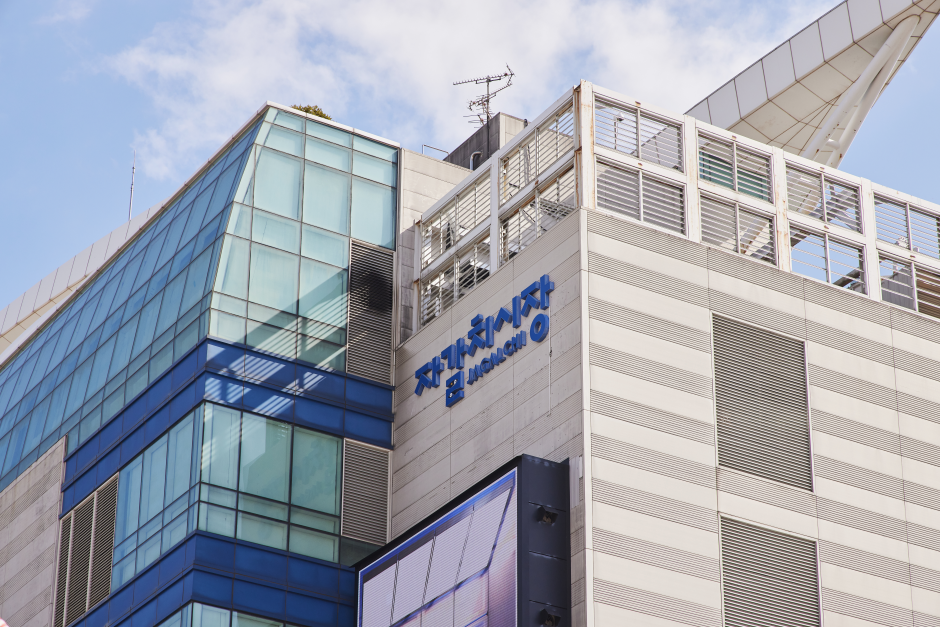
Jagalchi Market, located on the seaside road in Busan's Jung-gu, is one of the largest seafood markets in Korea, selling both live and dried fish. After the Korean War, the market solidified itself as a fish market. Most of the people who sell fish are women, so the vendors here are called Jagalchi Ajumeoni, "ajumeoni" meaning middle-aged or married woman in Korean.
This market represents Busan and is famous throughout the country. Visitors can eat fresh raw fish right at the market. Even nowadays visitors can see women selling mackerel, sea squirts (ascidians) and other seafood on wooden boxes along the road outside of the market and along the shore.
Urigeulbang (우리글방)
760.9M 2024-02-13
63 Daecheong-ro, Jung-gu, Busan
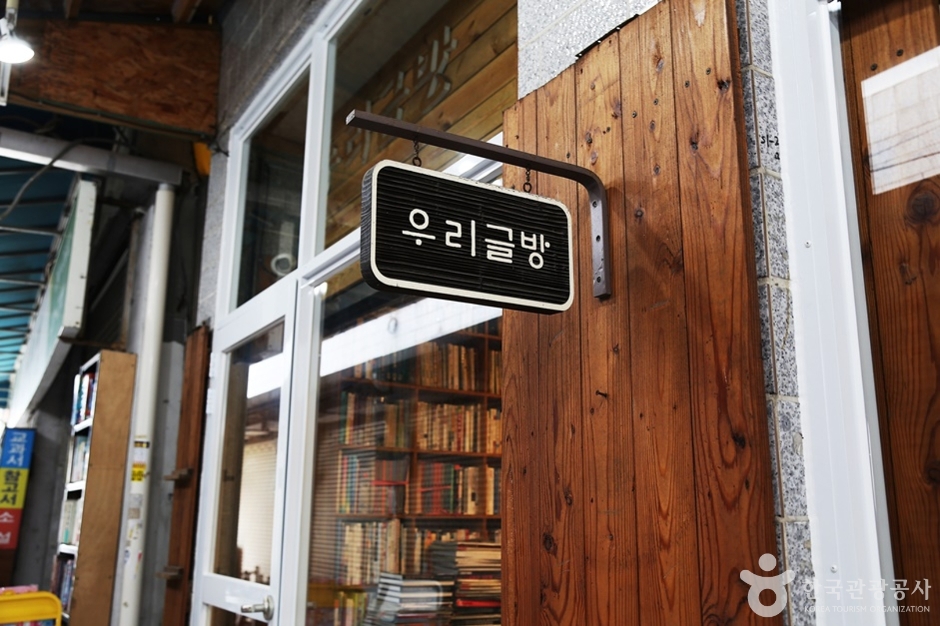
Urigeulbang, a venerable bookstore located in the renowned Bosu-dong Book Street in Busan, is celebrated for its trade in used books. This bookstore doubles as a book café, allowing visitors the unique experience of reading from its extensive collection while enjoying a cup of coffee or other beverages, without the obligation to purchase a book. The owner, an enthusiastic collector of used books, has amassed a vast array of old and rare editions, making it a treasure trove for bibliophiles. Adjacent to Urigeulbang is the Bosu-dong Book Street Cultural Center, where visitors have the opportunity to delve into the rich history of this unique bookstore alley.
 English
 한국어
한국어 日本語
日本語 中文(简体)
 Deutsch
 Français
 Español
 Русский


