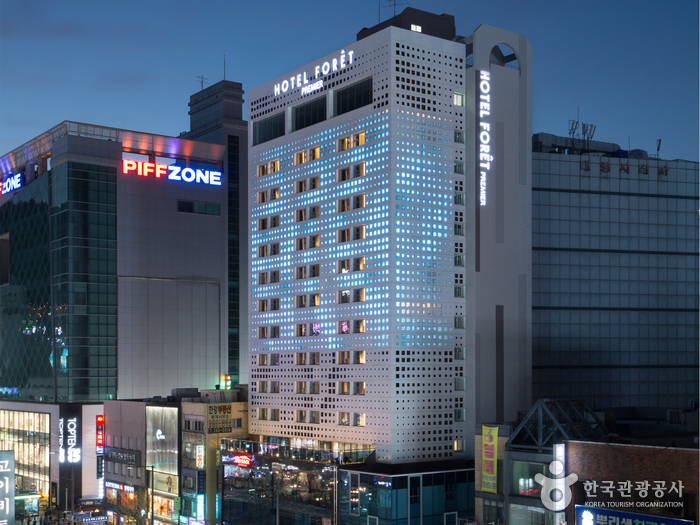
Hotel Forêt Premier Nampo (호텔포레 프리미어 남포)
1.7Km 2024-12-22
54-1 , Gudeok-ro, Jung-gu, Busan
+82-51-242-2200
Hotel Foret Premier Nampo in Busan is located midway between Jagalchi and Nampo Stations on Busan Line 1, both of which are about 6 minutes away on foot. There are also many bus stops nearby, so transport is super-convenient. The rooms are equipped with air purifiers, bidets, and premium down pillows to help guests sleep soundly. There is a cafe over floors 1 and 2, a restaurant on floor 3, and a business center and meeting rooms for guests’ use. Nearby must-see places include Gukje Market, Jagalchi Market, and Yongdusan Park - all reachable on foot.

Samsong Chobap (삼송초밥)
1.7Km 2025-01-23
13 Gwangbok-ro 55beon-gil, Jung-gu, Busan
This is a Japanese restaurant that began in the early 1960s in Nampo-dong. While it is well-known for its Japanese-style gimbap called “gimchobap,” regular patrons consistently order its pufferfish dishes. The bokjiri (malgeuntang) is noted for its rich flavor, achieved by combining seasonal vegetables and pufferfish. The boksashimi (sliced raw pufferfish) menu offers a variety of options, including outer skin, inner skin, and shabu-shabu.
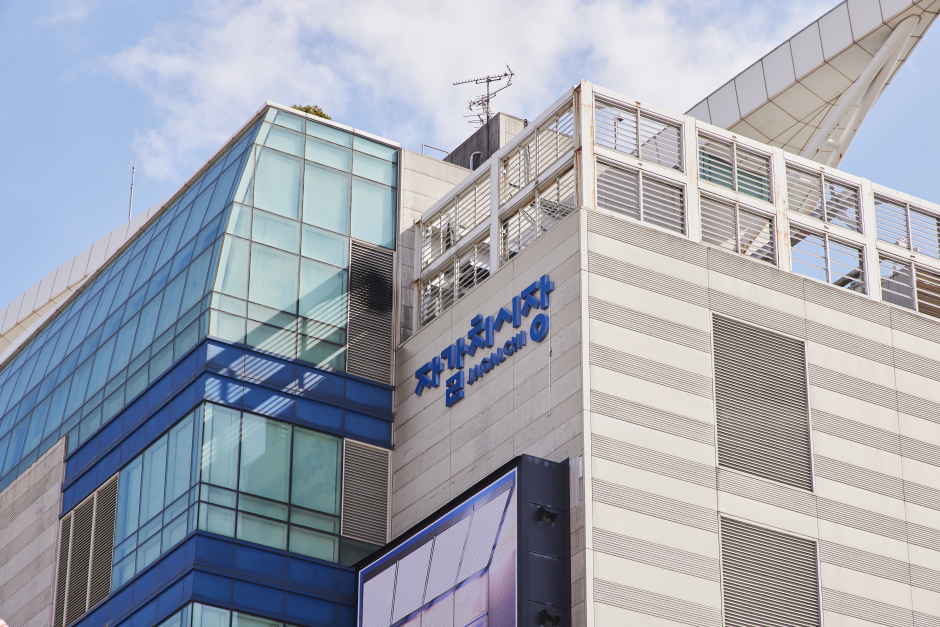
Jagalchi Market (부산 자갈치시장)
1.8Km 2025-04-15
52 Jagalchihaean-ro, Jung-gu, Busan
+82-51-245-2594
Jagalchi Market, located on the seaside road in Busan's Jung-gu, is one of the largest seafood markets in Korea, selling both live and dried fish. After the Korean War, the market solidified itself as a fish market. Most of the people who sell fish are women, so the vendors here are called Jagalchi Ajumeoni, "ajumeoni" meaning middle-aged or married woman in Korean.
This market represents Busan and is famous throughout the country. Visitors can eat fresh raw fish right at the market. Even nowadays visitors can see women selling mackerel, sea squirts (ascidians) and other seafood on wooden boxes along the road outside of the market and along the shore.
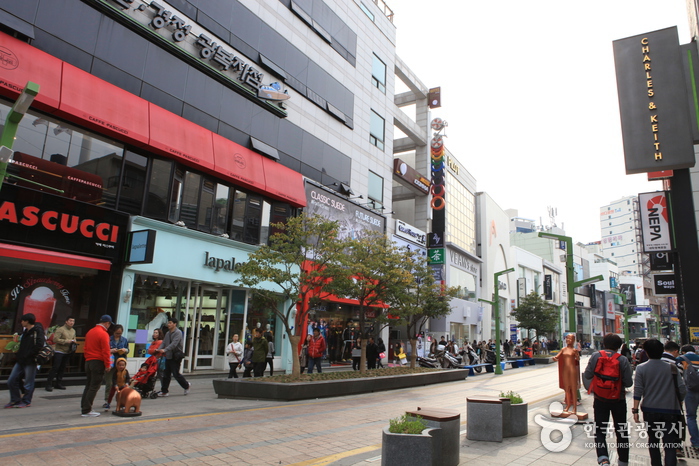
Gwangbok-dong Cultural & Fashion Street (광복로문화패션거리)
1.8Km 2024-03-06
Gwangbok-ro, Jung-gu, Busan
+82-51-253-8253
Gwangbok-dong Cultural & Fashion Street is about 600 m long from the entrance to Gukje Market. The street has historically featured many clothing shops, and it is quite crowded at night or on weekends. Every December, the area also hosts the Busan Christmas Tree Cultural Festival, which turns the street into a pedestrian-only area. There are plenty of good restaurants in the area, which is a great place to feel the vitality and energy of Busan’s youth.
Kosin University Gospel Hospital (고신대학교복음병원)
1.9Km 2025-10-23
262 Gamcheon-ro, Seo-gu, Busan
Kosin University Gospel Hospital practices the love of Jesus Christ by providing patient-centered care, spreading the gospel, and training medical students.
We are committed to the health and well-being of our patients.
Founded as Gospel Clinic in Yeongdo, Busan, in 1951 during the Korean War, we opened the region's first cancer center in 1978. For over 70 years, we have provided distinguished medical services guided by Christian values.
We lead the region’s healthcare industry, guided by our core values: innovation and self-direction, recovery and future orientation, communication and mutual trust, and love and goodness. As a tertiary hospital at the top of the healthcare delivery system, we treat severe diseases at our cancer center founded in 1978. We also opened the region's first advanced robotic surgery training center, inspired by Dr. Jang Gi-ryeo, to train both Korean and international medical professionals. Additionally, we are committed to innovative treatments by introducing AI-based medical technologies, aligning with the 4th Industrial Revolution.
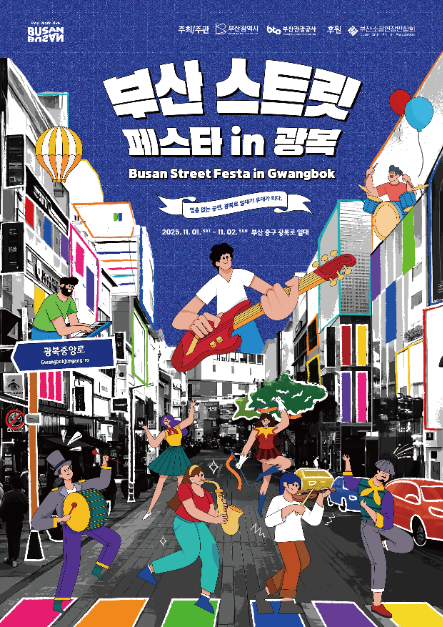
Busan Street Festa in Gwangbok (부산 스트릿 페스타 인 광복)
2.0Km 2025-11-05
72-1 Gwangbok-ro, Jung-gu, Busan
+82-70-4808-2875
The Busan Street Festa in Gwangbok transforms everyday urban spaces into a festival stage through various programs such as music, dance, performance shows, local flea markets, and parades that unfold throughout the streets.
Busan Tower (부산타워)
2.0Km 2025-08-06
37-30 Yongdusan-gil, Jung-gu, Busan
+82-51-601-1800
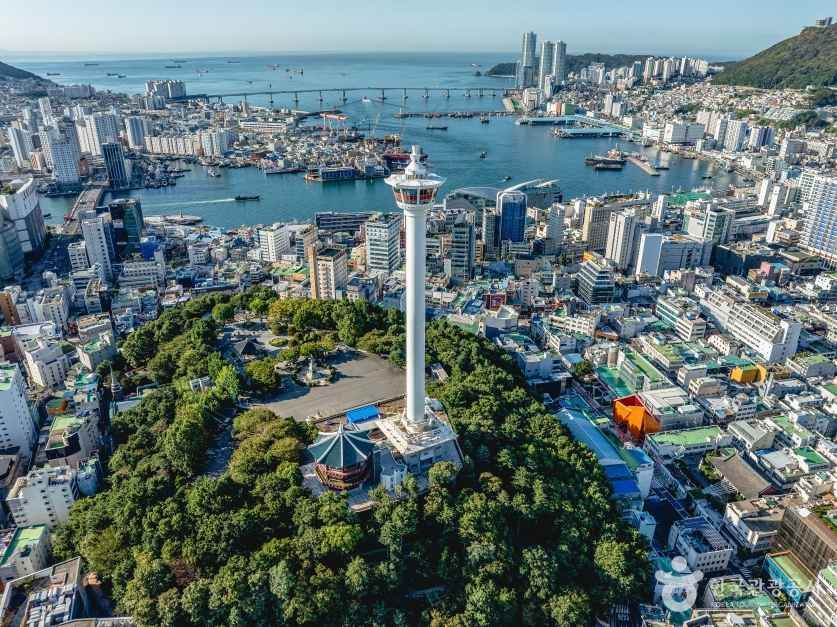
Busan Tower, standing at 120 meters tall, is an iconic observation tower situated in Busan's Yongdusan Park. This tower offers visitors panoramic views of Busan Port and Yeongdo Island. A highlight is the nightly fireworks mapping show, where graphical displays are projected onto the windows, creating a mesmerizing backdrop against the colorful night view of Busan Port Bridge. The lower floor of the tower is a haven of amusement, themed around a flying submarine. On the second floor, visitors will find a photo zone and rooms decorated with themes representing famous travel destinations in Busan.
Busan Jung-gu Pet Festival (부산중구반려동물축제)
2.0Km 2025-11-05
37-30 Yongdusan-gil, Jung-gu, Busan
+82-70-8893-2437
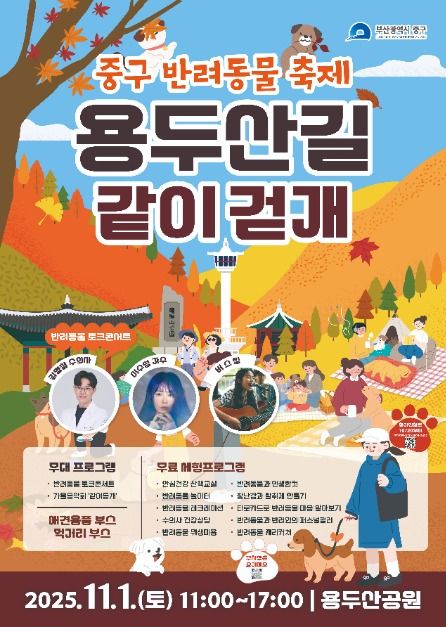
Busan Jung-gu Pet Festival is a pet cultural event featuring various programs such as walking programs, health consultations, and behavior training programs that pets and their owners can participate in together. The event aims to spread the culture of responsible pet ownership and revitalize the local pet industry.
Yongdusan Park (용두산공원)
2.0Km 2025-08-06
37-55 Yongdusan-gil, Jung-gu, Busan
+82-51-860-7820
Situated at the heart of Busan, Yongdusan Park is famous for its escalators, which connect the Nampo-dong area with the park. The park has a great view of the Busan Port and the Yeongdo area. Notable sights in the area include the Busan Tower, the Statue of Admiral Yi Sunsin, a bell pavilion, a flower clock, and a sculpture of a dragon. The observatory on the Busan Tower offers an expansive view of Busan’s city center, the Busan Port, and the South Port at the distance. The view of the city at night is also not to be missed. Nearby tourist sites include many of Busan’s famous sights, from Gwangbok-dong Cultural & Fashion Street to Jagalchi and Gukje Markets.
Busan Modern & Contemporary History Museum - Main Building (부산근현대역사관 본관)
2.0Km 2025-08-04
112 Daecheong-ro, Jung-gu, Busan
Busan Modern & Contemporary Museum showcases the evolving identity of Busan through various exhibitions and programs. Housed in the former Bank of Korea Headquarters building, the museum's main building is a first-generation Korean architectural building. It features exhibitions and performances by young artists on the basement floor, and houses the Bank of Korea archive room, a café, a lounge and a gift shop on the first floor. The second floor is dedicated to special exhibitions, while the third and fourth floors offer educational spaces and historical exhibitions that trace Busan’s changing identity from the turbulent colonial period to the present day, offering visitors a meaningful glimpse into modern Korean history.
 English
 한국어
한국어 日本語
日本語 中文(简体)
 Deutsch
 Français
 Español
 Русский


