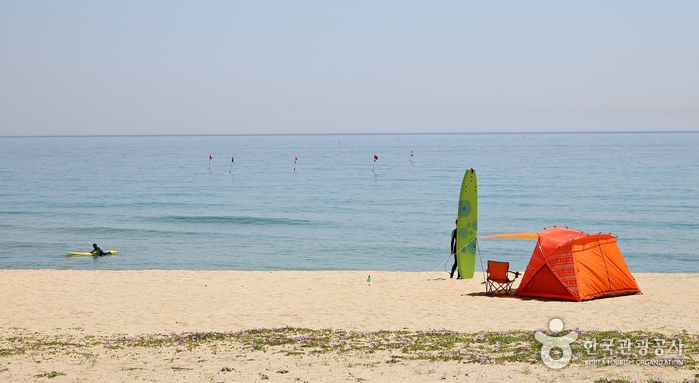
Geumjinhaebyeon Beach (금진해변)
18.2Km 2024-03-18
176-2 Geumjin-ri, Okgye-myeon, Gangneung-si, Gangwon-do
Located to the south of Gangneung, Geumjinhaebyeon Beach stretches over 900 meters in length and covers an area of 63,000 square meters. It is known for its fine white sand beach and shallow waters with a gentle slope, making it a favorite spot for family visitors. Surfing enthusiasts can take advantage of surfing lessons offered at the beach. Additionally, while in the area, visitors can also explore the nearby Geumjin Hot Springs.

Jumunjin Beach (주문진해변)
18.9Km 2023-10-16
210, Jumunbuk-ro, Gangneung-si, Gangwon-do
+82-33-640-5422
Jumunjin Beach is located in the northernmost part of Gangneung, and is a great place for summertime family vacations due to the beach's shallow water. The sound of calm waves will chase the heat away, while the dense pine forest provides cool shade against the sun. Visitors can take advantage of the amenities along the beach as well, such as the forest fitness park, family hotels, and the nearby campsite.
BTS Bus Stop (주문진읍 BTS 앨범사진 촬영지 (버스정류장))
19.2Km 2024-08-05
Hyangho-ri, Jumunjin-eup, Gangneung-si, Gangwon-do
The BTS Bus Stop is located next to Jumunjinhaebyeon Beach in Gangneung and was created specially for album jacket filming. While the original bus stop was pulled down after filming, the popularity of BTS on an international scale led the city to reinstall the bus stop as a tourist attraction.
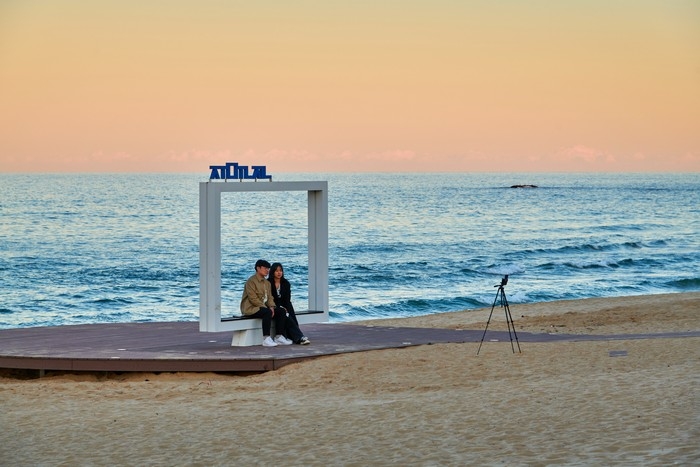
Hyanghohaebyeon Beach (향호해변)
19.2Km 2025-11-05
Hyangho-ri, Jumunjin-eup, Gangneung-si, Gangwon-do
Hyanghohaebyeon Beach is a white sandy beach backed by pine forest complete with a campground. The beach is connected to Jumunjinhaebyeon Beach and has become a must-visit attraction in Gangneung after featuring on BTS' "Spring Day" album jacket. The bus stop was made for filming, but remains as a photo zone.
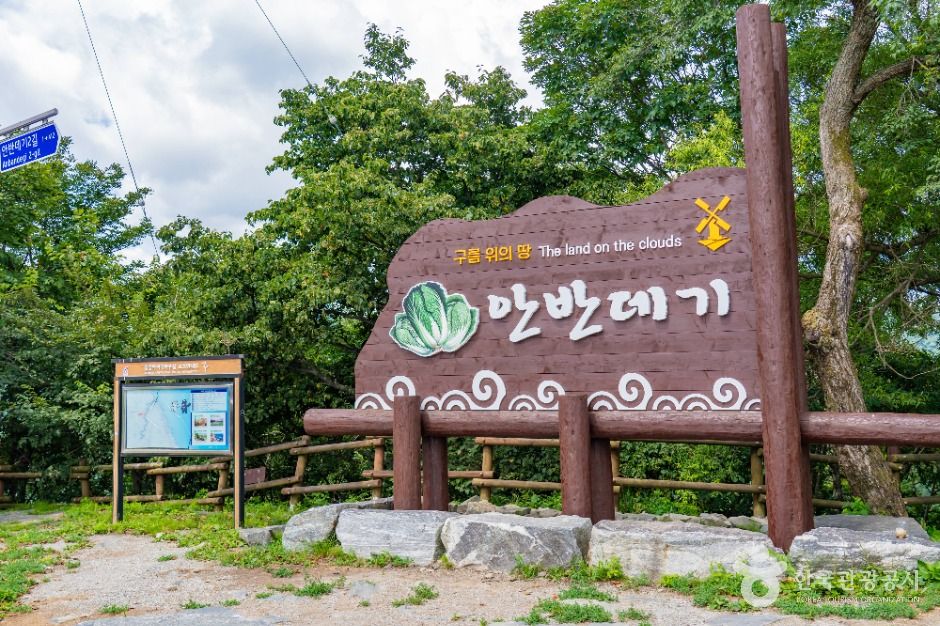
Anbandegi Village (안반데기 마을)
19.7Km 2025-11-05
428 Anbandegi-gil, Wangsan-myeon, Gangneung-si, Gangwon-do
Anbandegi Village is a mountainside village located at an elevation of 1,100 meters. The village name is a combination of the words "anban," which refers to the large and oval wooden platform used when pounding rice cakes, and "degi," which means flat land. Most of the village lands are covered with cabbage farms formed along the mountain slope. The steep slopes make it impossible to use farm machinery, which means all the cabbages farms are the result of manual work by the villagers.
 English
 한국어
한국어 日本語
日本語 中文(简体)
 Deutsch
 Français
 Español
 Русский


