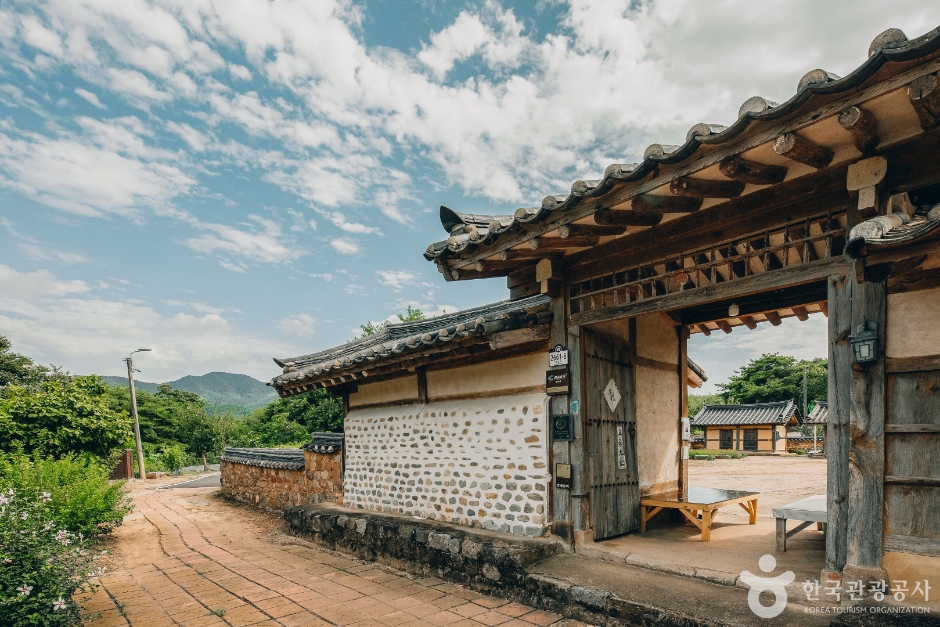
Jeongjae Head House (정재종택)
16.5Km 2024-12-20
2661-8 , Gyeongdong-ro, Andong-si, Gyeongsangbuk-do
+82-54-822-6205
Jeongjae Head House is the head house of Joseon scholar Jeongjae Ryu Chi-myeong, a colleague of the famous Toegye Lee Hwang. The house overlooks Imha Lake in Andong-si, Gyeongsangbuk-do, and is 300 years old. The long endurance of the stone foundations, roof tiles and wooden beams and porch gives the place a solid, calming feel. The house consists of a daemunchae (gate house) jeongchim (square-shaped building), haengnangchae (servants’ quarters), sadang or shrine, and a pavilion called Manujeong which houses a lecture hall but can also be used for lodging. Guests can learn how to brew songhwaju spirit and tarak fermented milk liquor, and listen to gayageum or folk song performances.

Yekki Village (예끼마을)
16.6Km 2024-05-30
14 Seonseong-gil, Dosan-myeon, Andong-si, Gyeongsangbuk-do
Yekki Village is an artistic village in Andong. The alleyways are decorated with colorful murals, the galleries feature work from local artists, and visitors can experience a hanok experience. The biggest charm of the village is the Sunseong Susang-gil Waterway, a floating path across the lake.
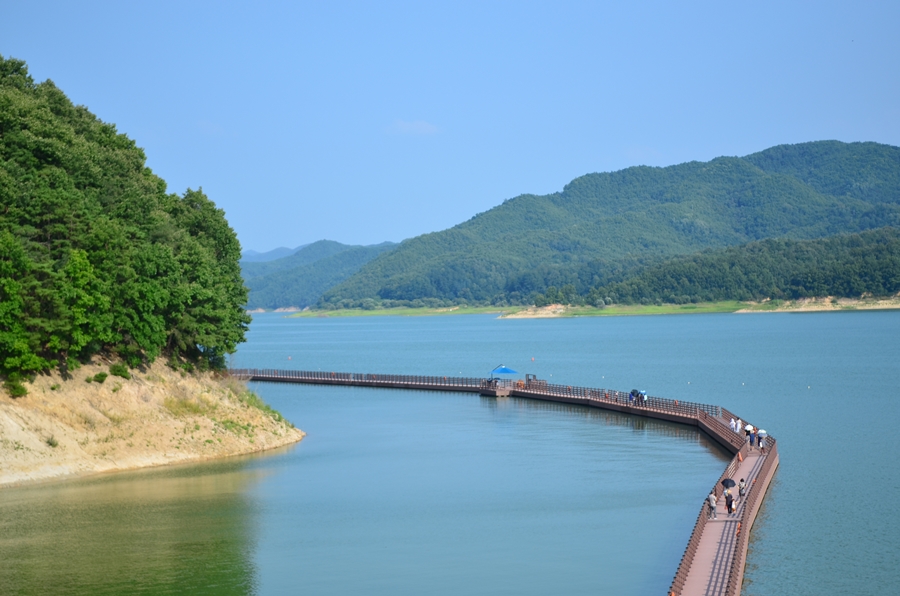
Sunseong Susang-gil Waterway (선성수상길)
16.6Km 2024-05-30
14 Seonseong-gil, Dosan-myeon, Andong-si, Gyeongsangbuk-do
Sunseong Susang-gil Waterway is a 1-kilometer-long floating pathway that connects Sunseonghyeon Culture Complex with Andong Lakeside Park. Because the pathway floats on the water, it rocks with each step one takes, creating the feeling of truly walking on water. At the halfway point of the waterway is an exhibition of black-and-white photos and materials from Yean Elementary School, lost to the formation of the lake following the construction of Andong Dam in 1974.
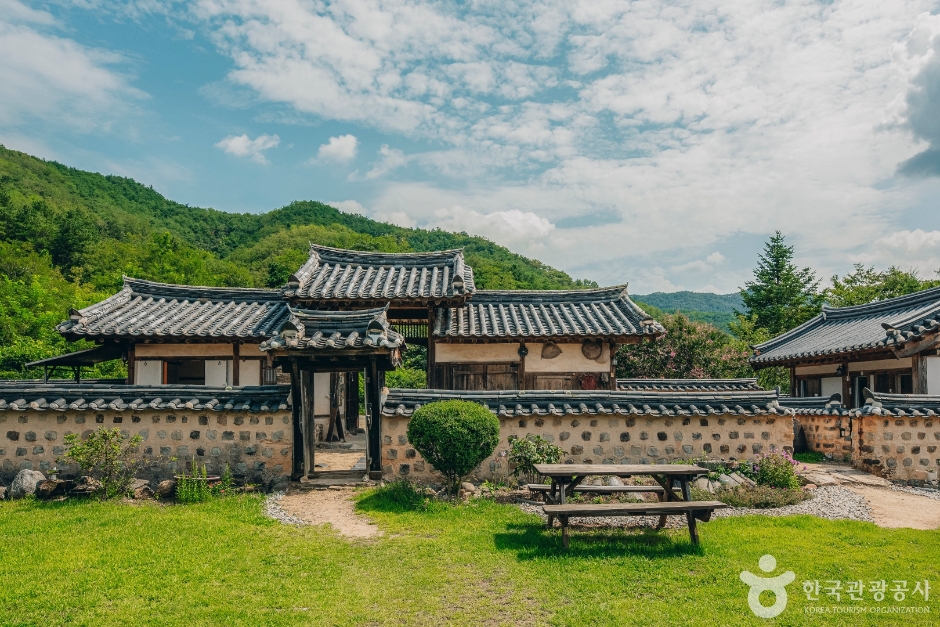
Suaedang (안동 수애당)
17.2Km 2024-12-20
1714-11 , Sugogyonggye-ro, Andong-si, Gyeongsangbuk-do
+82-54-822-6661
Suaedang House in Andong, Gyeongsangbuk-do, was built in 1939 by independence activist Soo Ae Yu Jin-geol, and is a Gyeongsangbuk-do cultural asset. The hipped-and-gabled pavilion and the ㄱ-shaped gobangchae (female servants’ quarters) face each other across the courtyard, and the house has a 10-metre lofty gate. Suaedang was moved to its current location in 1987 due to the construction of the Imha Dam. The room and Daecheongmaru are red clay-walled and natural painted. The view of the lake from Suaecang is very beautiful.
Hakgasan Recreational Forest (학가산자연휴양림)
17.4Km 2021-06-15
210, Hyuyangnim-gil, Yecheon-gun, Gyeongsangbuk-do
+82-54-652-0114
Hakgasan Recreational Forest is located in a valley on the northern side of Hakgasan Mountain, known for its clean air. The recreational forest has log cabins that harmonize with the nearby trees, creeks, and rocks, making visitors feel as if they are resting at a luxury villa. It is an ideal vacation destination for those who want to get closer to nature. There is a hiking path leading to the summit of Hakgasan Mountain from the forest, taking around 2 hours. Additional amenities within the forest include campfire pits, an outdoor stage, children's playground, exercise equipment, water play area, a lecture hall, and more.
![Andong Hahoe Village [UNESCO World Heritage] (안동 하회마을 [유네스코 세계유산])](http://tong.visitkorea.or.kr/cms/resource/38/3421438_image2_1.jpg)
Andong Hahoe Village [UNESCO World Heritage] (안동 하회마을 [유네스코 세계유산])
18.0Km 2025-10-23
186 Jeonseo-ro, Pungcheon-myeon, Andong-si, Gyeongsangbuk-do
+82-54-852-3588
Hahoe Village is one of the most famous folk villages in Korea. Surrounded by the Nakdonggang River, the village is home to descendants of the Ryu clan of Pungsan, which still makes up 70 percent of the villagers. The village became even more famous after Queen Elizabeth of England visited on April 21, 1999, and President George H. Bush of the U.S.A. in 2005.
The village has many cultural treasures and important cultural materials, earning the village the designation of National Folklore Cultural Heritage in 1984. Hahoe Masks, a National Treasure, is also an important feature of the village.
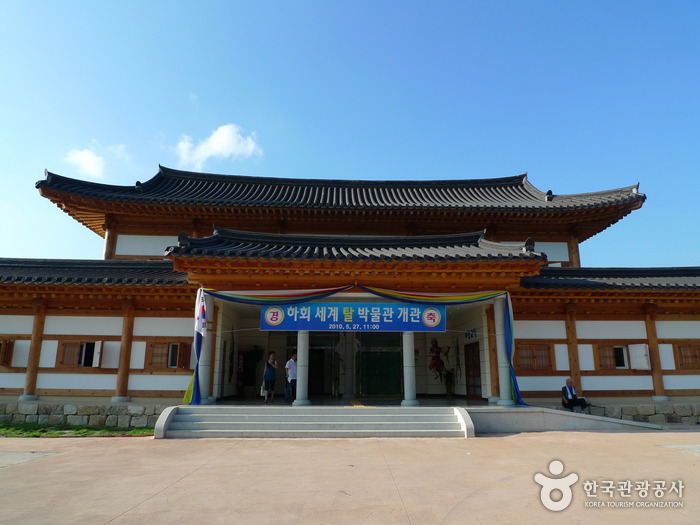
Hahoe Mask Museum (하회세계탈박물관)
18.1Km 2024-05-29
206 Jeonseo-ro, Pungcheon-myeon, Andong-si, Gyeongsangbuk-do
+82-54-853-2288
Hahoe Mask Museum is located in Andong Hahoe Village, a representative traditional Korean folk town that is the home of the Hahoe Mask (National Treasure) and the Byeolsin Gut Mask Dance (Important Intangible Cultural Property). The museum displays not only Hahoe masks, but also other traditional masks from all over the world.
The museum consists of five permanant exhibition halls and one special exhibition hall, housing a wide range of masks from all over the world along with Hahoe masks. The museum also offers activity programs such as wearing a mask, mask trick art, photo zone, and more.
Hahoe Byeolsingut Tallori (Mask Dance Drama of Hahoe) (하회별신굿탈놀이 상설공연)
18.5Km 2025-12-04
3-15, Hahoejongga-gil, Andong-si, Gyeongsangbuk-do
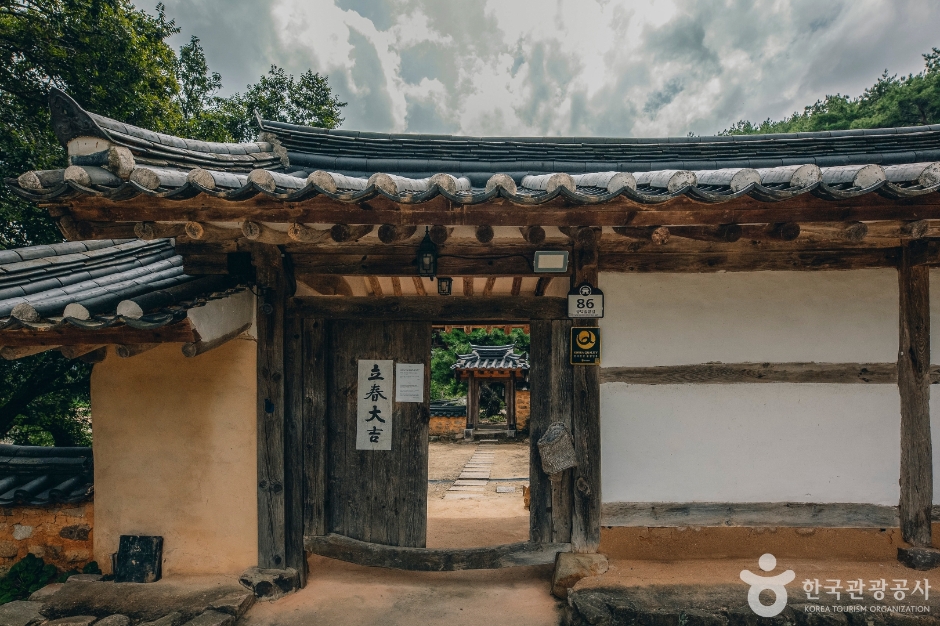
Okyeon pavilion (옥연정사)
19.0Km 2024-12-20
86 , Gwangdeoksolbat-gil, Andong-si, Gyeongsangbuk-do
+82-54-854-2202
Okyeonjeongsa Temple in Hahoe Village, Andong, Gyeongsangbuk-do, was built by Joseon scholar Seoae Ryu Seong-ryong for the purpose of living quietly with the help of his philosophy, after losing his house in Hahoe in a great flood of the Nakdong River. Wonrakjae is a detached house with a 460-year-old pine tree in the yard and a view of Hahoe Village in the background, while Sesimjae is the building Seoae used as a private school.
Buyongdae Cliff (부용대)
19.0Km 2025-10-23
72 Gwangdeoksolbat-gil, Andong-si, Gyeongsangbuk-do
Buyongdae Cliff is about 64 meters high, situated where the Taebaek Mountain Range ends. From the summit, one can get a bird’s-eye-view of Hahoe Village in Andong. The name was taken from the ancient name of the village in Chinese. Meaning lotus, Buyong is said to have been the name of Hahoe Village, given its configuration of houses spread out like a lotus flower. Thus, one can get the best view of the village from the cliff. Located near Buyongdae are Ogyeonjeongsa House, Gyeomamjeongsa House, and Hwacheonseowon Confucian Academy.
◎ Travel information to meet Hallyu’s charm - variety show"I Am Solo"
This spot featured in the show as a date spot. The participants sat on mats laid out by the Nakdonggang River and took pictures in pairs with Buyongdae Cliff in the background. You can also head to the top of the cliff to get a great view of Hahoe Village, one of Andong’s most famous tourist sites.
 English
 한국어
한국어 日本語
日本語 中文(简体)
 Deutsch
 Français
 Español
 Русский


