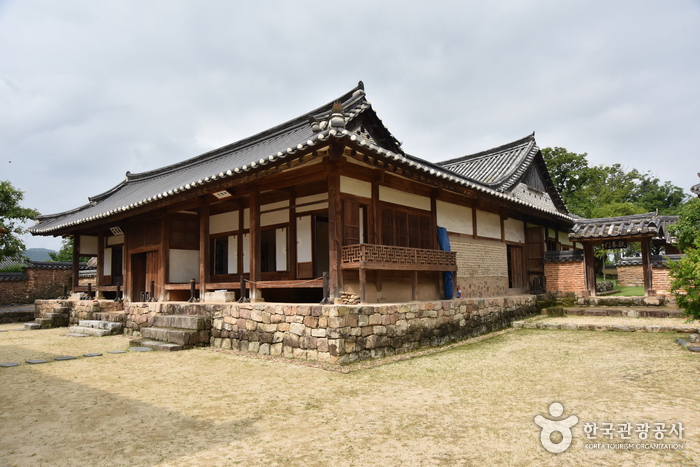
Bukchondeak (하회 북촌댁)
19.1Km 2024-08-05
7 , Hahoebukchon-gil, Andong-si, Gyeongsangbuk-do
Hahoe Bukchon House is the largest house in Hahoe, Andong, Gyeongsangbuk-do, and was first built by Joseon civil official Ryu Sa-chun in the reign of King Jeongjo. Guestrooms include the former sarangbang (studies) called Bukchonyugeo, Sarang and Susinwa, as well as attic rooms and kitchens. In the yard is an exquisite 300-year-old pine tree resembling the curve the Nakdong River makes round Hahoe village. The house contains valuable relics, including a 17th century map showing Dokdo and Gando as Korean territory, and a painting of flowers given to Ryu by the king.
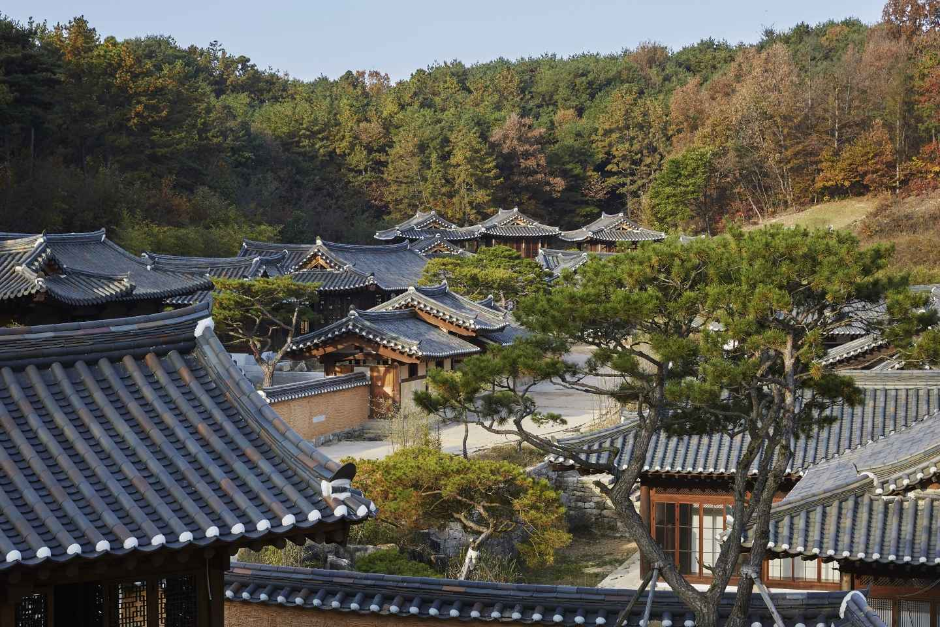
RakKoJae Andong(Hahoe) (락고재 안동(하회))
19.1Km 2024-10-17
51 , Hahoegangbyeon-gil, Andong-si, Gyeongsangbuk-do
Rakkojae is a guest house by the ferry over the Nakdong River in Hahoe Village, Andong, Geyongsangbuk-do. It consists of four buildings, each with one or two guest rooms. All rooms have a private bathroom, and one incorporates a sauna. Starlit and moonlit evenings in Hahoe refresh both mind and body, and by crossing the river by ferry boat and climbing Buyongdae Cliff, visitors can enjoy panoramas of the historic village and beautiful Nakdong valley. Another ‘must see’ is the nearby Mansongjeong Pine Forest - one of Korea’s Natural Monuments.
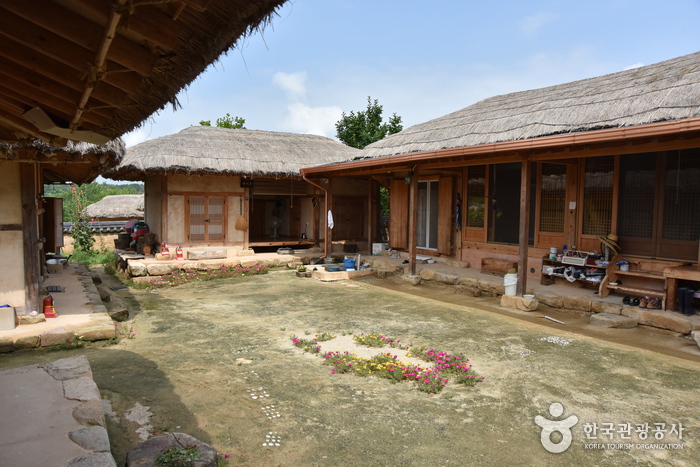
Ga Gyeong Jae (가경재)
19.1Km 2024-12-20
69-5 , Hahoenamchon-gil, Andong-si, Gyeongsangbuk-do
Gagyeongjae is a thatched hanok on the edge of Hahoe Folk Village in Andong, Gyeongsangbuk-do. There are five guestrooms altogether. The main house or Anchae has a wooden porch while the Sarangchae (men’s house) shares a central living space. Windows are lined in the traditional way with hanji paper, and opening them lets in a cooling breeze and reveals the beautiful surrounding landscape. The wood-fired Red Clay sauna room is very popular, but visitors need to make a reservation at least two days in advance to get the furnace started. Rooms have AC installed (additional fees in summer).
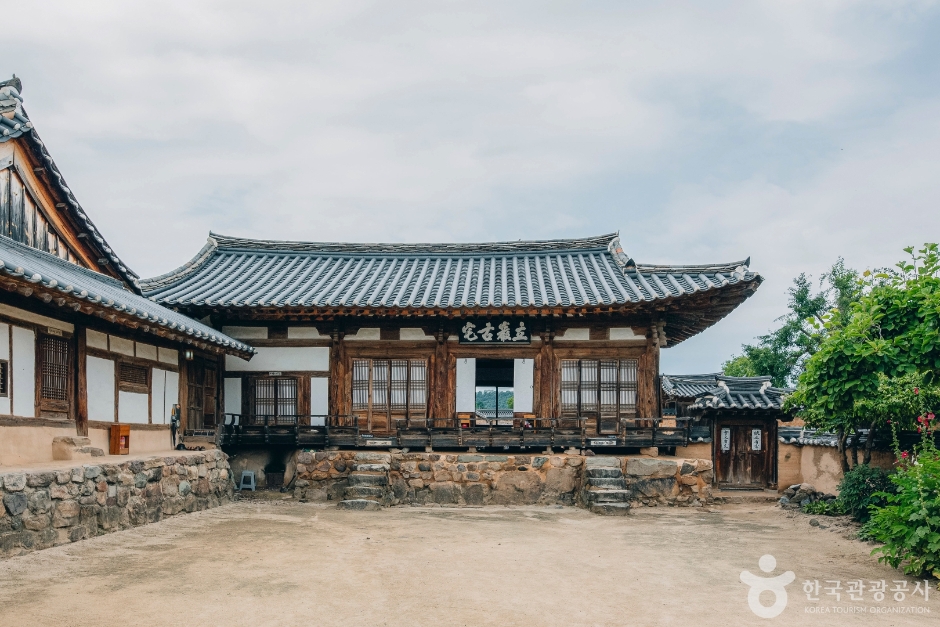
Yangjindang/ 하회 양진당
19.2Km 2025-03-05
68 , Hahoejongga-gil, Andong-si, Gyeongsangbuk-do
Hahoe Yangjindang, in Hahoe Village in Andong, Gyeongsangbuk-do, is the head house of the Ryu Clan of Pungsan. Also known as Ipam Old House, it’s a designated national cultural treasure. An unusual feature is the incorporation of two different architectural styles: the sarangchae is in the Goryeo style, while the anchae is in the Joseon style. The rooms are simple and elegant, with antique mother-of-pearl cupboards, tableware cabinets, and ceramics placed here and there add to the old-time charm. Guests can enjoy traditional folk games, or have a go at home-brewing or making rice cakes and sweets.
Pungsongjae (풍송재)
19.2Km 2024-12-13
53-4 , Hanongmaeul 1-gil, Andong-si, Gyeongsangbuk-do
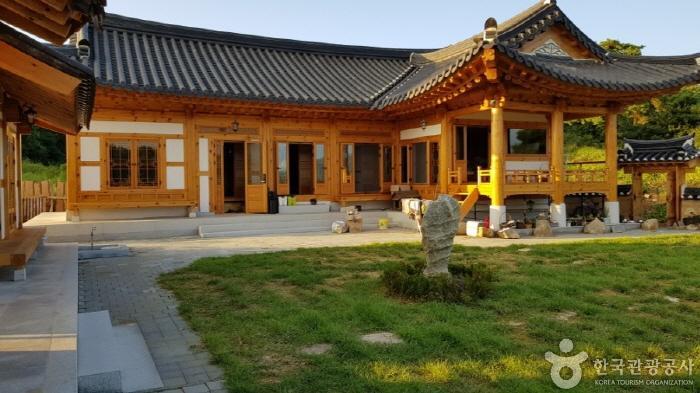
Pungsongjae is a Hanok stay made from high-quality Korean red pines from Bonghwa located in Andong, Gyeongsangbuk-do. While retaining the traditional elegance of Hanok, each room is equipped with a bathroom for added convenience. As soon as you enter the gate, you are greeted by a wide-open grassy lawn, and the numaru (balcony-style raised veranda), Punsongjae's central space, offers a panoramic view of the pine grove beyond the antique Hanok building and wall. There are three rooms, Sarangbang, Songsil, and Pungsil, in which cooking is allowed. Nearby tourist attractions include Hahoe Village and Byeongsan Seowon.
Garam Choyeonjae (가람초연재)
19.2Km 2024-08-01
76-6 , Hahoejongga-gil, Andong-si, Gyeongsangbuk-do
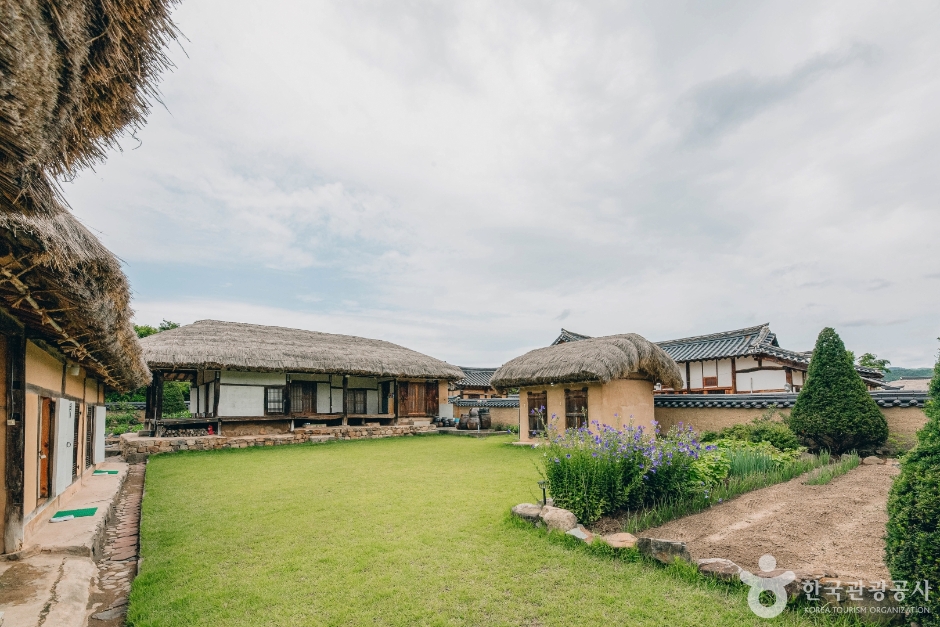
Garam Choyeonjae stands within Hahoe Traditional Village in a loop of the beautiful Nakdonggang River in Andong, Gyeongsangbuk-do. Among Hahoe’s tile-roofed old houses, this one’s thatched roof stands out. ‘Garam’ was the pen name of the owner’s grandfather - a descendant of the Joseon scholar Seoae Ryu Seong-ryong - while ‘Choyeonjae’ means a thatched house where swallows live. The swallows’ nest is still there under the eaves, and sunset views from the wooden terrace of the sarangchae (men’s house) are a dreamy experience. Visitors can also learn about traditional technologies such as treadmills and millstones.
 English
 한국어
한국어 日本語
日本語 中文(简体)
 Deutsch
 Français
 Español
 Русский


