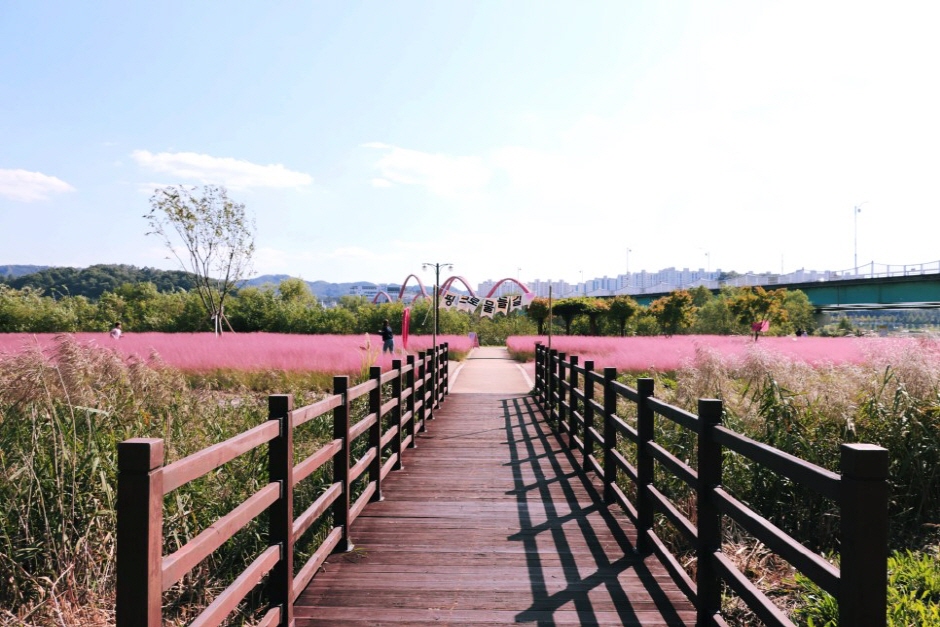
Grasswon Park (그라스원)
12.5Km 2023-07-10
273, Yuksa-ro, Andong-si, Gyeongsangbuk-do
Grasswon Park is located on the banks of the Nakdonggang River as it cuts through downtown Andong. The park, north of Yeonggadaegyo Bridge, features walking trails thorugh a variety of flowers and grasses. The park is attractive all year round, but is especially popular in fall when the muhly grass turns the whole field into a lovely shade of pink. The walking and bicycle paths also connect with Baekjo Park to the south of the bridge, making this the perfect place to enjoy the pure environment of the Nakdonggang River.

Andong Hospital (안동병원)
12.5Km 2025-10-23
11 Angsil-ro, Andong-si, Gyeongsangbuk-do
Founded in 1982 in Andong-si, Andong Hospital is a general hospital and a member organization of Andong Medical Group Hospital.
We operate several specialized centers designated or certified by the Korean Ministry of Health and Welfare (e.g., Regional Emergency Center, Air Ambulance Helicopter, Integrated Cancer Center, Regional Cardio-Cerebrovascular Disease Center (RCDC), Spine and Joint Center, Clinical Trial Center, and Robotic Surgery Center).
Within the Andong Medical Foundation are Andong Hospital, Andong Nursing Hospital, Yongsang Andong Hospital, and Andong Hospital Specialized Care Center so that patients can receive connected care at general acute care hospitals, nursing hospitals, and nursing homes.
Andong Medical Group Hospital oversees Andong Hospital, Andong Convalescent Hospital, and Yongsang Andong Hospital. This allows patients to receive coordinated care at general acute care hospitals, convalescent hospitals, and nursing homes.
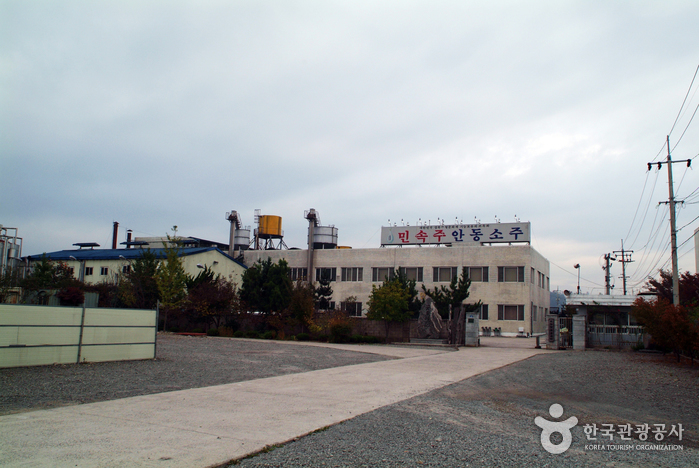
Andong Soju & Traditional Food Museum (안동소주·전통음식 박물관)
12.5Km 2021-12-01
71-1, Gangnam-ro, Andong-si, Gyeongsangbuk-do
+82-54-858-4541
Andong Soju & Traditional Food Museum was established in 1995 to promote and pass down the history and cultural characteristics of Andong Soju (Gyeongsangbuk-do Intangible Heritage). Andong Soju is a liquor distilled from wheat with 45 percent ABV that originated during Silla period. This regional liquor became widely known outside of Andong when the Korean government strongly supported the development of regional liquors in anticipation of the Asian Games in 1986 and Seoul Olympic Games in 1988.
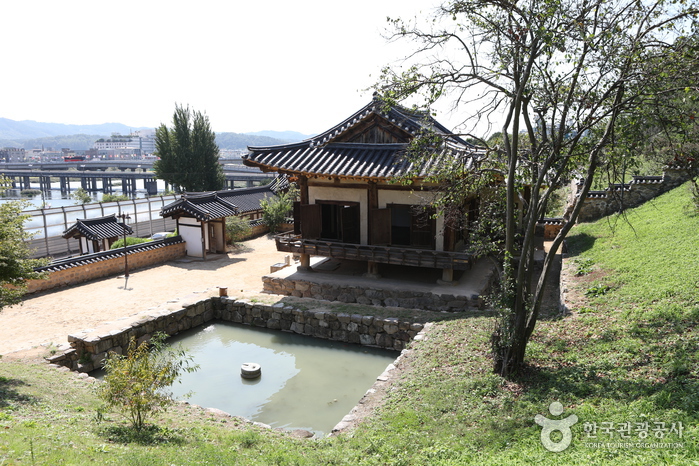
Imcheonggak House (안동 임청각)
12.6Km 2021-11-09
63, Imcheonggak-gil, Andong-si, Gyeongsangbuk-do
+82-54-859-0025
Imcheonggak House is the largest remaining household from the Joseon dynasty, holding a history of over 500 years. The house was built for one aristocratic family’s love of the scenic beauty in the surrounding area. It was originally built with a total of 99 kan (traditional measurement of space between pillars) but only 70 remain. The most famous structure on this property is the annexed pavilion, Gunjajeong. An autograph of the famous Confucian scholar Lee Hwang can be found hanging outside the pavilion.
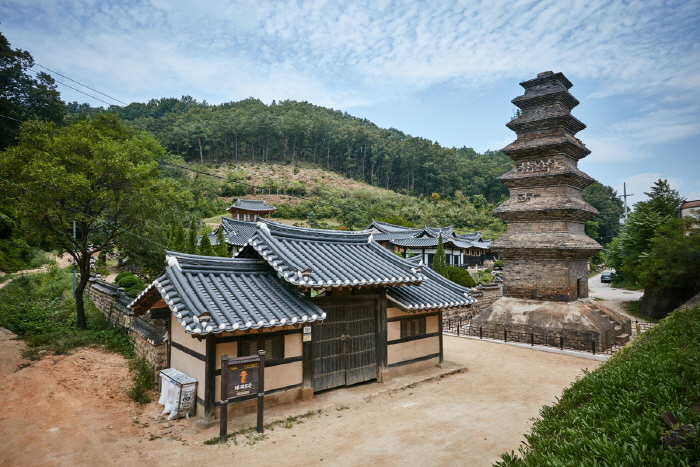
Head House of the Tapdong Branch of the Goseong Yi Clan (법흥동 고성이씨탑동파종택)
12.6Km 2022-12-21
103, Imcheonggak-gil, Andong-si, Gyeongsangbuk-do
+82-54-840-5225
Head House of the Tapdong Branch of the Goseong Yi Clan, located in Andong, serves as a residential house of the Yi descendents even to this day. Constructed in 1685, this house has all of the beautiful features that represent Joseon-style architecture. After this period, additional structures were added periodically. Across from the house is the Seven-story Brick Pagoda at Beopheungsa Temple Site.
Sinsedong Chilcheung Jeontap - Sinsedong 7 stories Brick Pagoda (안동 법흥사지 칠층전탑)
12.6Km 2021-07-13
Beopheung-dong, Andong-si, Gyeonsangbuk-do
+82-54-840-5225
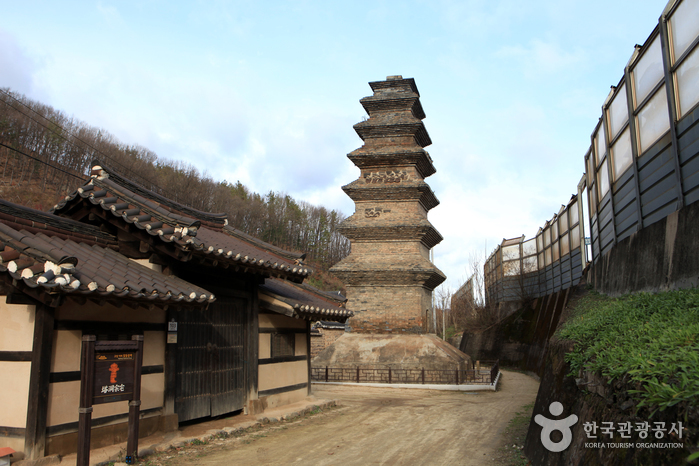
Designated National Treasure No.16, Sinsedong Chilcheung Jeontap is Korea's oldest and largest stone pagoda.
The pagoda measures 16.8 meters high with a x_width of 7.75 meters. The pagoda was originally built at Beopeungsa Temple during the eighth century of the Unified Silla Kingdom [654-935] and is the only remaining relic from the temple.
The pagoda is presently located on the estate of the head house of the Goseong Lee family. The sangryunbu, the ornamental top portion of the pagoda, has been totally lost, but the lower tiered portions are intact with beautiful carvings of Buddhist tutelary deity. Traces of tiled roof were found on each story of the tower. Historical records show that the tower was rebuilt in 1487 and that around the same period, three parts of the temple remained.
Andong Folk Village (안동민속촌)
12.7Km 2024-05-30
Seonggok-dong, Andong-si, Gyeongsangbuk-do
+82-54-852-6800
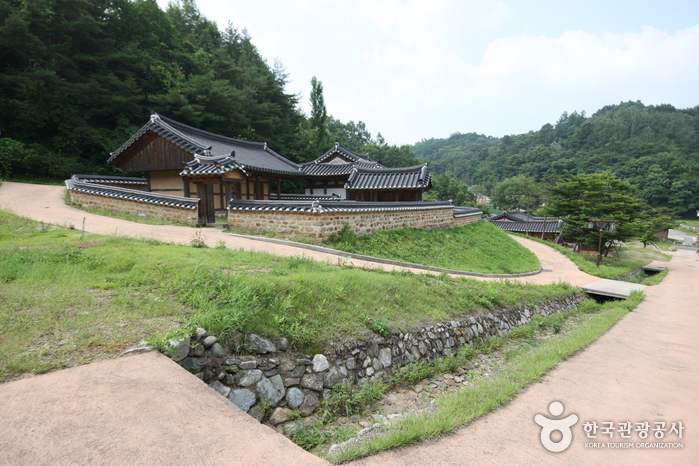
On the other side of the subsidiary dam of Andong Dam, thatched houses can be sparsely seen on a hilltop. The area is practically an outdoor museum, displaying traditional houses that were moved to safety prior to the construction of Andong Dam. Two jangseung (traditional Korean totem poles) are raised at the entrance of the outdoor museum, followed by a monument inscribed with the poem of famous Andong poet and democracy activist, Lee Yuk-sa. On the monument, his most noted work “Gwangya” (Wild Plain) is carved.
Nearby attractions include Andong Museum, Lee Yuk-sa Monument, a filming site of “Taejo Wang Geon (2000)," and Andongho Lake.
Andongho Lake (안동호)
12.7Km 2021-01-29
Hoban-ro, Andong-si, Gyeongsangbuk-do
+82-54-856-3013
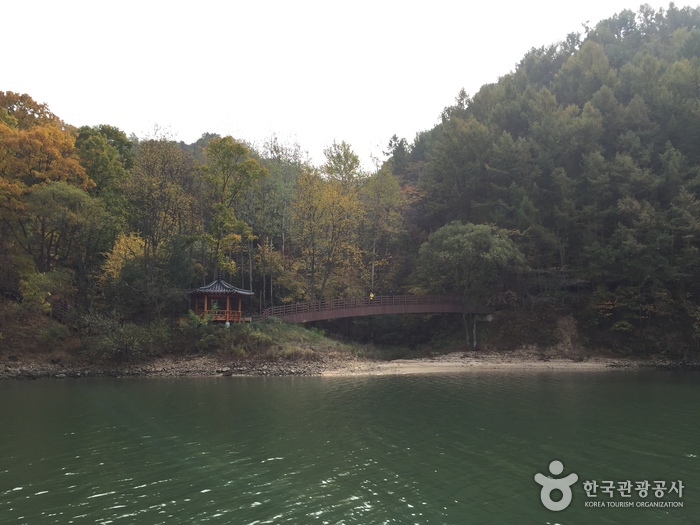
Known as a popular fishing spot and recreation site, Andongho Lake is an man-made lake created by obstructing the upper stream of the Nakdonggang River as part of the government’s Four Major Rivers Restoration Project. Andong Dam is the second largest dam in Korea, following Soyanggang Dam. The x_height of the dam is 83 meters and the length is 612 meters.
The landscape surrounding Andongho Lake is nothing short of magnificent. There is a dock for boats on the lake, which is also popular as a fishing destination. Bass caught here are especially strong and tasty. An international bass fishing tournament is held here every year. There are also tourist attractions nearby such as the Dosanseowon Confucian Academy and Andong Hahoe Village.
Andong Folk Museum (안동민속박물관)
12.8Km 2021-07-01
13, Minsokchon-gil, Andong-si, Gyeongsangbuk-do
+82-54-821-0649
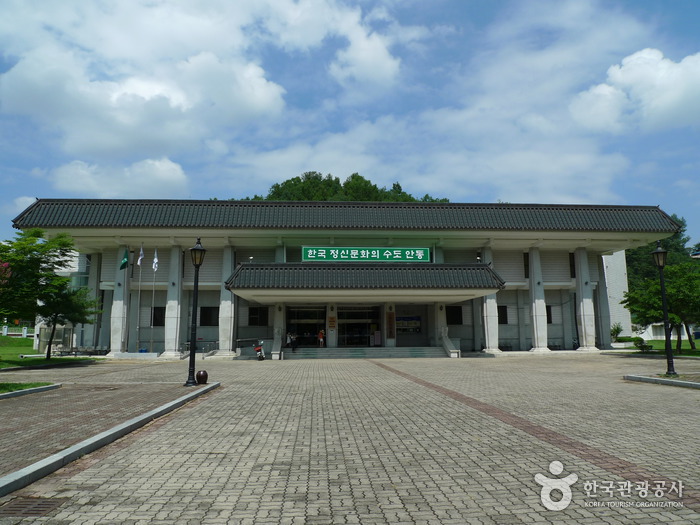
Andong Folk Museum is located within the Andong Dam Folk Village, a collection of houses and items collected before being submerged after the creation of the dam. The museum preserves and educates visitors on folk, Buddhist, and Confucian cultures. The museum is divided into an indoor section and an outdoor section. The indoor section in particular focuses on the unique cultural aspects of Andong through various exhibitions, as well as in the video screening room. The outdoor section features nearly 20 traditional structures, including hanok houses and old ice storage rooms, providing a closer look at the lifestyle of the past.
Andong Gunja Village (안동 군자마을)
12.8Km 2024-02-23
29 Gunjari-gil, Waryong-myeon, Andong-si, Gyeongsangbuk-do
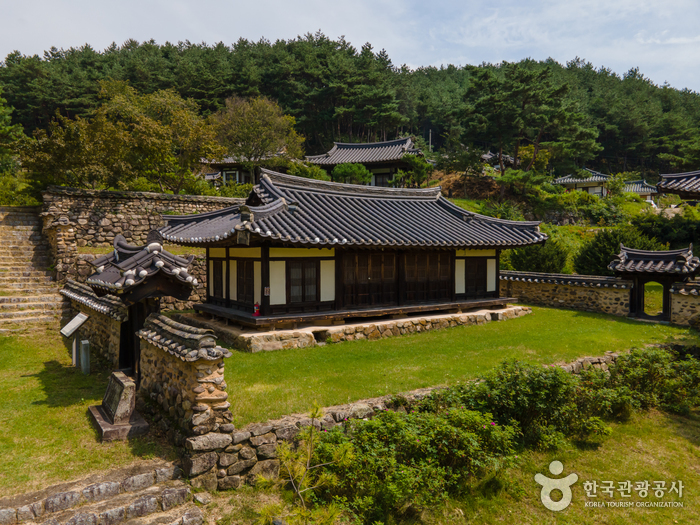
Andong Gunja Village, established 600 years ago, was relocated 2 kilometers from its original site due to submergence during the construction of Andong Dam. The village's tradtional houses and pavilions were meticulously moved to preserve their historic value. Known as Gunja Village, it derives its name from a remark by the Joseon-era civil servant Jeong Gu, who noted, "There is no one in the village who is not a Gunja (gentleman)". The village is home to over 20 ancient houses, including the Hujodang Head House and Takcheongjeong Pavilion, maintained in their original state. Moreover, the village archives over 1,000 documents detailing adoption, property ownership, and labor distribution.
 English
 한국어
한국어 日本語
日本語 中文(简体)
 Deutsch
 Français
 Español
 Русский


