Keimyung University Dongsan Hospital (계명대학교 동산병원) - Area information - Korea travel information

Keimyung University Dongsan Hospital (계명대학교 동산병원)

16.1Km    2025-10-23

1035 Dalgubeol-daero, Dalseo-gu, Daegu

Established in 1899 as Daegu's first Western medical institution, Keimyung University Dongsan Hospital is a cutting-edge, eco-friendly facility offering 37 specialties. It features top centers for cancer, robotic surgery, cardiocerebrovascular diseases, and organ transplants. In 2023, it won the Medical Korea Award for cancer care. The International Healthcare Center has been providing personalized services to international patients since 1967.

Dalseong Marsh (대구 달성습지)

16.5Km    2025-06-10

88 Gura 1-gil, Hwawon-eup, Dalseong-gun, Daegu

Dalseong Marsh is located in the meeting point of Nakdonggang River, Geumghogang River, Jincheoncheon Stream, and Daemyeongcheon Stream. Spanning an area of 2 ㎢, the marsh comprises wetlands and freshwater lake where various seasonal aquatic plants are grown. It is also home to several different species of migratory birds.

Dalseong Korea-Japan Friendship Center (달성 한일우호관)

16.7Km    2022-12-29

206, Urok-gil, Dalseong-gun, Daegu
+82-53-659-4490

The Dalseong Korea-Japan Friendship Center opened in 2012 to highlight the philanthropy of General Kim Chung-seon (Japanese name Sayaka, 1571-1642) and promote friendship between Korea and Japan. Kim Chung-seon was a Japanese general who defected to Korea during the Imjin War. Shortly after arriving on Korean soil as a commander of a Japanese army, Kim, together with his soldiers, defected to Korea, a choice that has been traditionally attributed to his respect for Korean culture. He transferred the technology of manufacturing rifles to the Korean army and contributed greatly in battles in Gyeongju and Ulsan.
A great number of tourists visit the center to learn about history, including students and their parents, as well as numerous Japanese tourists who visit to commemorate the spirit of General Kim. The center features exhibition rooms, a 3D theater, a tea ceremony room, relics, manifestations of traditional games in Korea and Japan, documents from Wakayama prefecture in Japan, and a site for experiencing archery, all of which can be utilized free of charge.

Nokdongseowon Confucian Academy (녹동서원)

16.7Km    2024-02-06

218 Urok-gil, Gachang-myeon, Dalseong-gun, Daegu
+82-53-659-4490

Nokdongseowon Confucian Academy was built in 1789 in honor of General Kim Chung-seon (1571-1642), who contributed greatly to Korea's defense during the Imjin War (1592-1598). The academy was shut down in 1868, and reinstated in 1885. Then, in 1971, it was moved to its current location. Today, General Kim's tablet is enshrined in this hall, where a memorial service is held every March. Nearby attractions on the grounds of Nokdongseowon include Nokdongsa Temple, Sunguidang Shrine, Hyangyangmun Gate and memorial stones.

Hwawon Park (화원동산)

17.1Km    2024-04-08

40-14 , Samunjin-ro 1-gil, Dalseong-gun, Daegu
+82-53-659-4465

Hwawon Park, a vast park beside the Nakdonggang River, is steeped in history. The river, once bustling with Samunjin Quay, where ships laden with goods frequented, now features Samunjin Ferries. Visitors can access Dalseong Marsh Ecological Park via a floating walkway across the river. In the vicinity, the Samunjin Jumakchon Village offers traditional beverages and delicacies, including makgeolli (unrefined rice wine) and pajeon (green onion pancake). With well-maintained walking trails, cafés, and picnic spots, the park serves as an ideal destination for family outings.

Samunjin Jumakchon Village (사문진 주막촌)

17.5Km    2023-11-09

40-12 Samunjin-ro 1-gil, Hwawon-eup, Dalseong-gun, Daegu

Samunjin was the location of a ferry dock on the Nakdonggang River in the past. During the Japanese occupation, the area was turned into a recreation ground, which saw many people coming to enjoy leisure strolls. In November 2013, three hanok jumak (traditional dining establishment) were built at the site of the old dock and the current Samunjin Jumakchon Village was opened.  The jumak serve a range of foods that were enjoyed in the past, such as makgeolli, gukbap, and buchujeon (chives pancake). The village is well-known as a place to enjoy the sunset.

Yeongcheon Eunhaesa Temple (은해사 (영천))

Yeongcheon Eunhaesa Temple (은해사 (영천))

17.5Km    2021-12-21

951, Cheongtong-ro, Yeongcheon-si, Gyeongsangbuk-do
+82-54-335-3318

Eunhaesa Temple, located on Palgongsan Mountain in Yeongcheon city, Gyeongsangbuk-do, is one of two major temples on the mountain along with Donghwasa Temple.

The temple was founded by Monk Hyecheol and was given the name Haeansa Temple in the first year of King Heondeok’s reign during the Silla Kingdom (AD 809), but was moved to the current site in the Joseon dynasty in 1546 (the first year of King Myeongjong). Upon its relocation, King Injong of Joseon dynasty was commemorated with a new lecture hall along with a memorial stone plaque where the king's umbilical cord was buried and sealed. It was then when the temple was also given its current name, Eunhaesa Temple.

The temple houses the main shrine, Bohwaru pavilion, Seolseondan Hall, Shimgeondang Hall, eight small hermitages, as well as Baegeungam Temple, Jungangam Temple, and a professional Buddhist education institution, the Eunhaesa Buddhist University. Eunhaesa Temple is home to a National Treasure, Geojoamyongsanjeon Hall, and Treasure, Baekheungamgeukrakjeon Hall. It also contains Treasure, the Sunidan Buddha Platform; Treasure, the Wunbuamcheongdongbosal Seated Buddha Statue; and Treasure, the Eunhaesa Temple Gwaebultaeng hanging Buddha picture. The area is also close to the Seongbu Museum, which exhibits cultural assets from Eunhaesa Temple and the neighboring areas, as well as popular tourist attractions such as Geukrakgul grotto of Jungangam temple (Hwaeomgul Grotto), Geondeul Rock, Manyeonsong Pine Tree, Ganggunsu Waters, and Anheungpokpo Falls of Gigiam Temple.

The ARC Communication Space (디아크문화관)

17.6Km    2024-02-29

57 Gangjeongbon-gil, Dasa-eup, Dalseong-gun, Daegu
+82-53-585-0916

The ARC Communication Space features exhibition halls and art galleries on the underground floor, and Circle Theater on the first and second floors, all centered around the theme of water. The name "ARC" stands for Architecture of River Culture and Artistry of River Culture, showcasing themes such as the relationship between rivers and people, rivers and music, rivers and literature, the birth of life, and the rise of civilization.

Palgongsan National Park (Eunhaesa Temple Section) (팔공산국립공원 - 은해사지구)

18.0Km    2025-04-08

Geojo-gil, Yeongcheon-si, Gyeongsangbuk-do
+82-54-852-8031

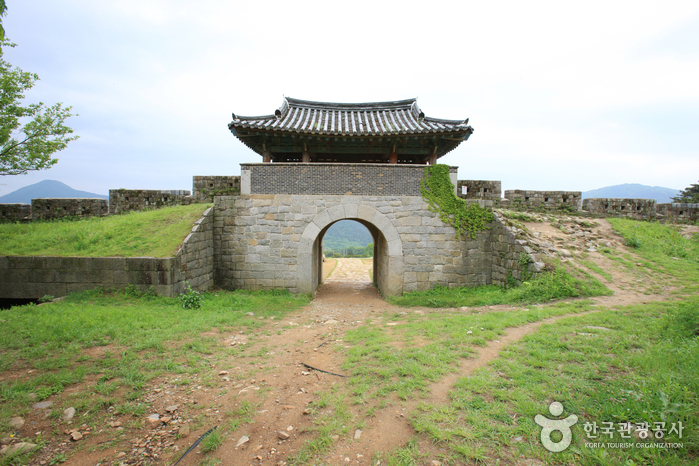
Located east of Daegu downtown, Palgongsan Mountain (1,192.3m) was called both Jungaksan and Buaksan Mountain during the Silla period. The mountain has many ancient temples and historical sites such as the Gatbawi Stone Buddha, Wonhyosa Temple, Cheonseongsa Temple and Bulgulsa Temple.
St. Mary's Pine Forest Village (성모솔숲마을)

18.1Km    2024-02-08

166 Songnae-gil, Gakbuk-myeon, Cheongdo-gun, Gyeongsangbuk-do

St. Mary's Pine Forest Village, a serene retreat house under the Catholic Archdiocese of Daegu, was initially established as a haven for the sick and those seeking spiritual retreats. However, it is now open to all, regardless of their reason for visiting. A mass is celebrated at eleven every morning in the church, welcoming both Catholics and non-Catholics alike. Visitors who are not of the Catholic faith are also encouraged to explore the church, or enjoy a peaceful stroll through the surrounding pine forest. The village comprises several facilities, including the Pine Forest Church, the Way of the Cross, a restaurant, a café, and the Yedam Gallery, which is located within the café.