
Daegu Modern History Museum (대구근대역사관)
3.7Km 2025-08-11
67 Gyeongsanggamyeong-gil, Jung-gu, Daegu
Located in Pojeong-dong, Jung-gu, Daegu, the Daegu Modern History Museum was officially opened on January 24, 2011. The museum is housed in a building that is rich in history. First built by Japan in 1932 as a bank, the building was once a symbol of repression and exploitation during the Japanese colonial rule. Today, the building stands proudly as an educational site and bears the title of ‘Cultural Property No. 49’ in recognition of its historical and cultural significance.
The two-story museum (1,971 square meters) houses a permanent exhibition (1F), featured exhibition (2F), and a hands-on exhibition room and classroom for diverse cultural activities and lectures. The history exhibition features the lifestyle of Daegu citizens, local customs, and education of the late 19th century and the early 20th century.
Dongsan Cheongna Hill (동산청라언덕)
3.7Km 2025-10-24
2029 Dalgubeol-daero, Jung-gu, Daegu
Cheongna Hill is the place where Christian missionaries resided during the early 20 century, planting many ivies along the site. It is also called Dongsan Cheongna Hill for being on the eastern side of Daegu's center. There are many attractions in this beautiful garden including Chamness’ House, Switzer’s House, Blair’s House, 90 stairs, Daegu 3.1 Independence Movement Road, Daegu's first western apple tree, a memorial stone inscribed with the song "Thinking of My Friend” , and the cemetery of the missionaries and their family. Cheongna Hill is also the starting point of Daegu's Street Tour Course 2 as well as a popular drama film location.
House of Missionary Switze (선교사스윗즈주택)
3.7Km 2024-08-05
2029 Dalgubeol-daero, Jung-gu, Daegu
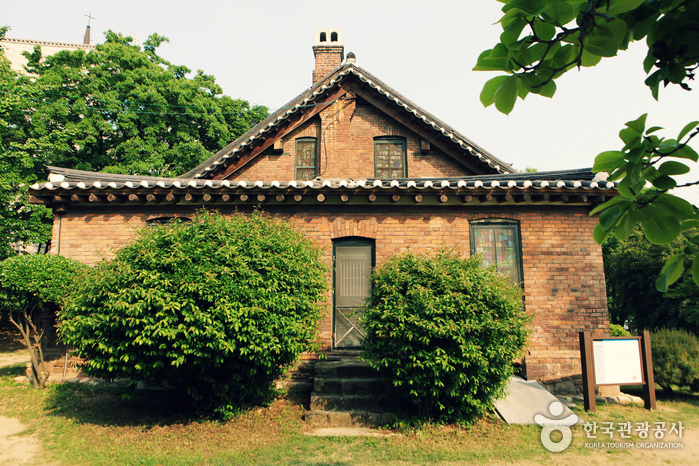
The House of Missionary Switze served as home for a host of American missionaries. Built between 1906 and 1910, the home is a Western-style structure with two above-ground floors and one basement level. In 1981, the house was used as company housing for doctors at the nearby Dongsan Hospital, at which point changes were made to the interior and exterior of the house. It was later changed into a missionary museum, displaying items used by the missionaries who lived in.
Daegu Gyesan Cathedral (대구 계산동성당)
3.7Km 2024-07-31
10 Seoseong-ro, Jung-gu, Daegu
Daegu Gyesan Cathedral is one of Daegu's main churches, designed by Father Poisnel, who also designed Myeongdong Cathedral and imported stained glass for the windows directly from France. Being located in the city center, the cathedral is especially beautiful when seen at night.
Daegu Modern History Streets (Tour of Modern Streets) (대구 근대골목(근대로의 여행))
3.8Km 2023-10-27
66, Gukchaebosang-ro 102-gil, Jung-gu, Daegu
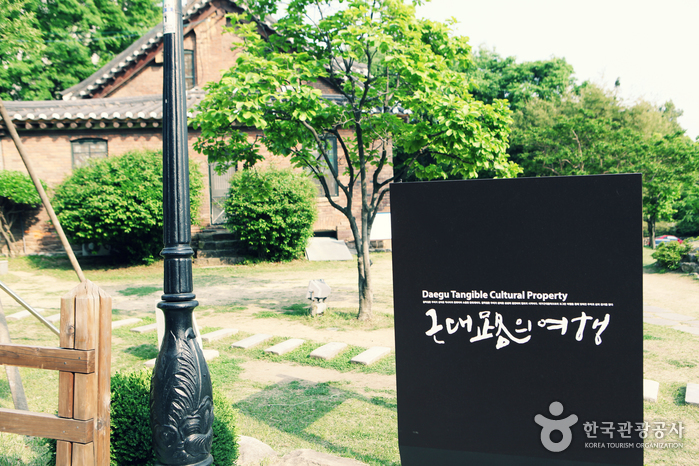
Daegu Modern History Streets is an experiential tour that brings the participants across Daegu’s alleyways and living history. During the Korean War, Daegu was much less damaged than other regions. Because of that, the city retains the changes in lifestyles before and after the war relatively well.
There are 13 courses in total, run by regional self-governance groups in Daegu, defined according to different themes and areas. The most popular among them is Course 2, the Modern Cultural Street, which takes visitors on a tour of major sites associated with Daegu’s modernity. Follow the retro aesthetics and the history of Daegu and Korea along places like Kyesan Catholic Church, Jeil Church, old houses, and the former Chinese Elementary School.
Note that multilingual tours are offered to international visitors in English, Japanese, and Chinese, in regular tours (14:00 every Saturday) and on-demand tours (available for groups of more than 5). Reservations are offered on the official website.
House of Yi Sang-hwa (이상화 고택)
3.8Km 2023-01-06
6-1, Seoseong-ro, Jung-gu, Daegu
Yi Sang-hwa was a nationalist poet, who resisted the Japanese colonialism. This was his house from 1939 until his death in 1943. His house was neglected after he died, until a citizens' movement in 1999 to preserve the house urged the Military Mutual Aid Association to purchase it, and donate it to the City of Daegu on October 27, 2005. It has been restored and opened to the public, serving as the center for education of the poet's brave spirit and work.
Daegu Jeil Church (대구제일교회)
3.8Km 2024-10-11
50, Gukchaebosang-ro 102-gil, Jung-gu, Daegu
Daegu Jeil Church is the oldest Protestant Church in Gyeongsangbuk-do Province. Initially established in 1898 over four tile-roofed houses, Daegu Jeil Church was rebuilt in 1933 with traditional and Western architectural designs. Subsequently, Deacon Lee Ju-Yeol dedicated a 33m bell tower in 1937, whlie the church underwent an interior renovation in 1969, and an expansion in 1981.
In conjuction with its physical development, which was at the forefront of the nation's architectural modernization, the church contributed largely to modernization and expansion of Christianity in the region as well as in Korea. In addition, by introducing modern medicine and education to the citizens of Daegu, the founders of Daegu Jeil Church stimulated social development in the region.
Gyonam YMCA (교남YMCA)
3.8Km 2023-01-20
22, Namseong-ro, Jung-gu, Daegu
Established in December 1921, the Gyonam YMCA Hall served as a gateway to the modern movement in Daegu. During the Japanese colonial period, it was a meeting place and a base for Christian national movements such as the Product Promotion Movement, the Christian Rural Movement, and the Singanhoe Movement. This hall is a two-story red brick building built by the American missionary Blair in 1914. It retains the characteristics of the 1910s and '20s masonry construction, such as decorating the first and second floors with cornices and securing a square window with arches. In the early days, it was used as a place for students' education, evening classes, and lectures.
Daegu Yangnyeongsi Museum of Oriental Medicine (대구약령시 한의약박물관)
3.8Km 2023-01-06
49, Dalgubeol-daero 415-gil, Jung-gu, Daegu
Yangnyeongsi Museum of Oriental Medicine continues to provide an opportunity to experience the 350-year-old traditions of Oriental medicine and medicine markets through multiple exhibitions and various hands-on experience programs. The museum provides graphics and animation shows in four languages as well as approximately 300 items on display. The first floor also houses the nation’s only wholesale market of traditional medicinal herbs.
Hyangchon Cultural Center (향촌문화관)
3.9Km 2021-07-20
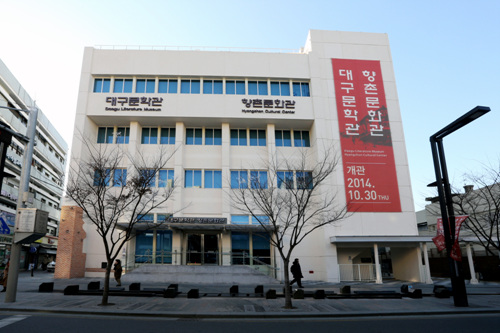
Hyangchon Cultural Center opened on October 30, 2014 in what was previously the Daegu branch of Commercial Bank, and was founded to promote the revitalization of the local economy. During the refugee period in the 1950s, Hyangchon-dong served as a hometown to many cultural artists. The cultural center replicated the old looks of Hyangchon-dong, making the cultural space even more special. Moreover, in the basement of the building, is the original location and still running "Nokhyang," the oldest classical music hall in the nation, which opened in 1946.
 English
 한국어
한국어 日本語
日本語 中文(简体)
 Deutsch
 Français
 Español
 Русский


