Hanbando Electric Kart Experience Center (한반도 전기카트 체험장)
15.8Km 2024-01-09
63-33 Ansaenae-gil, Hanbando-myeon, Yeongwol-gun, Gangwon-do
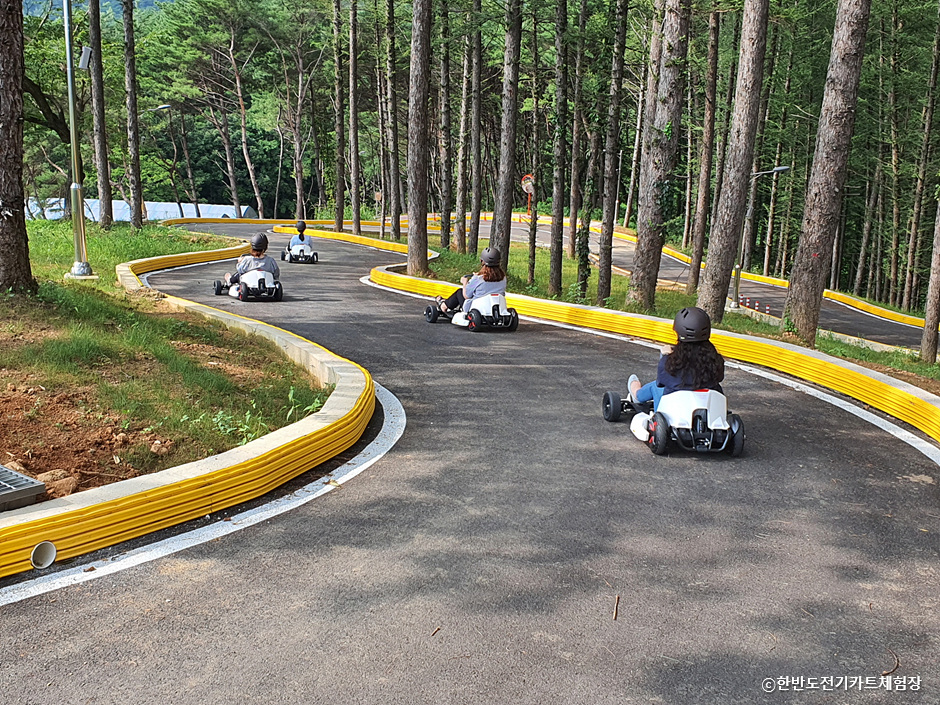
Hanbando Electric Kart Experience Center is Korea's first outdoor electric go-kart experience center using renewable energy. It is located in a pine forest in Sincheon-ri, Hanbando-myeon. All facilities and tracks, including helmets and karts, are kept clean and safe, allowing anyone to enjoy driving once they follow simple operation methods and precautions. Stretched pine trees lining up next to the winding track double the speed and coolness. Solar power, a renewable energy source, was installed in the experience center to preserve the pristine wetlands and pine forests. Feel the dynamic eco-friendly speed in clean nature!<Br> * Minimum driver x_height is 130 cm

Ondal Tourist Area (온달관광지)
16.2Km 2024-02-26
23, Ondal-ro, Yeongchun-myeon, Danyang-gun, Chungcheongbuk-do
Ondal Tourist Area is the site of a battle between Goguryeo and Silla in the 6th Century over the control of the Hangang River. It is home to Ondal Exhibition Hall, the Ondal Open Film Set, Ondalsanseong Fortress, and Ondaldonggul Cave, inspired by the story of Goguryeo general Ondal and Princess Pyeonggang. Many Korean historical shows have been filmed in the Ondal Open Film Set. Ondaldonggul Cave was formed by the dissolution of limestone created during the Paleozoic period.
Danyang Ondaldonggul Cave (단양 온달동굴)
16.2Km 2025-12-15
23 Ondal-ro, Yeongchun-myeon, Danyang-gun, Chungcheongbuk-do
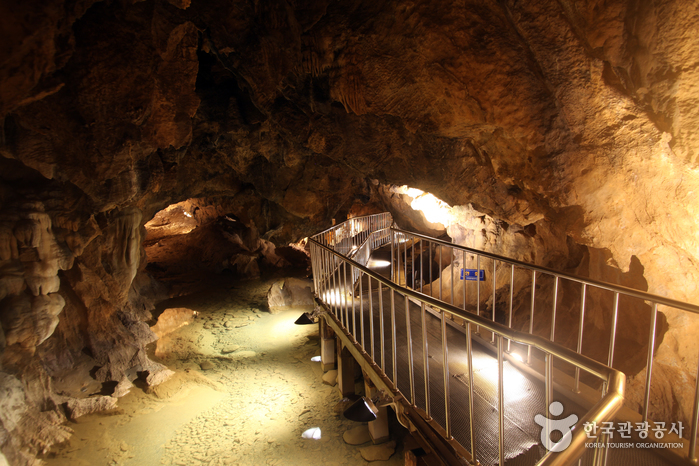
Ondaldonggul Cave is located underground at the foot of Seongsan Mountain, where Ondalsanseong Fortress is situated. It is a natural limestone cave that is estimated to have begun forming around 450 million years ago. The total 760 meter-long cave covers an area of 349,485 square meters. The cave mouth is two meters high, while the cave itself is 5 to 10 meters high and about 5 meters wide. The cave features stairway structure and contains an abundance of beautiful stalagmites and stalactites. The average temperature of the cave maintains 14 degrees Celsius in summer and 16 degrees Celsius in winter, making it a perfect all-year-round attraction. The cave is rich in underground water resources and there is a 0.8 to 1 meter-deep cave river flowing at the bottom of the cave floor. The cave also has over 40 small ponds that are inhabited by a variety of living organisms like fish and insects.
Situated on top of the mountain peak to the left of the cave is Ondalsanseong Fortress. The fortress has been preserved in its original form throughout some 1,400 years and shows the advanced building skills of Goguryeo Era (37 BC-668 AD). The annual Ondal Culture Festival is held every October around Ondaldonggul Cave and Ondalsanseong Fortress in memory of the legendary love story between General Ondal and Princess Pyeonggang. Other attractions in the area include a theme park and Jangseung (Korean traditional totem poles) Park.
Kim Satgat Historic Site (난고 김삿갓 유적지)
16.3Km 2024-02-16
216-22 Gimsatgat-ro, Gimsatgat-myeon, Yeongwol-gun, Gangwon-do
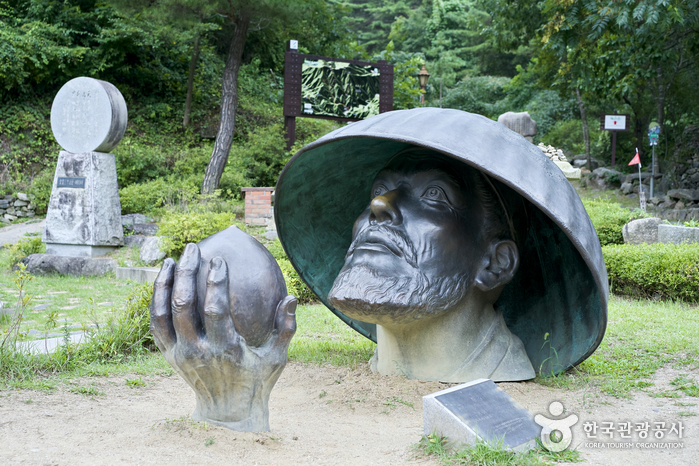
Nango Kim Satgat (1807-1863) was a prominent literary figure who traveled extensively across the Korean Peninsula, leaving behind a rich legacy of literary works. His sobriquet “Satgat” originated from his habitual wearing of a “satgat” (a traditional Korean hat) and his preference for introducing himself by this name. The historic site dedicated to him includes several key features: the house where he once lived, his tomb, a literary museum that showcases his life and works, and a sculpture of the poet.
Yeongwol Seopdari Village (영월섶다리마을)
17.9Km 2024-02-16
Panun-ri, Jucheon-myeon, Yeongwol-gun, Gangwon-do
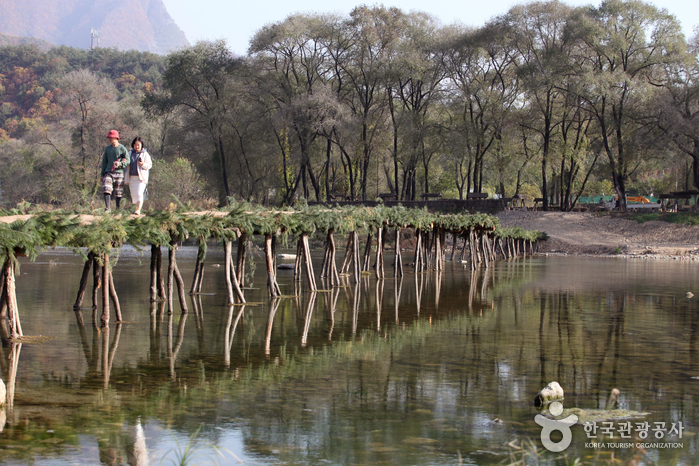
This village is renowned for its crystal-clear waters and vibrant greenery. Adding to its charm is the Seopdari Bridge, a unique structure crafted from wood and other plant materials, which becomes a highlight in wintertime. The bridge is installed in October when the river level decreases, and it remains in place until the onset of rainfall the following year. One of its most distinctive features is the Y-shaped pier, which, along with the bridge's unique design, creates a striking silhouette against the stunning natural backdrop of Yeongwol.
Namcheongyegok Valley (남천계곡)
18.3Km 2024-02-26
375, Namcheongyegok-ro, Yeongchun-myeon, Danyang-gun, Chungcheongbuk-do
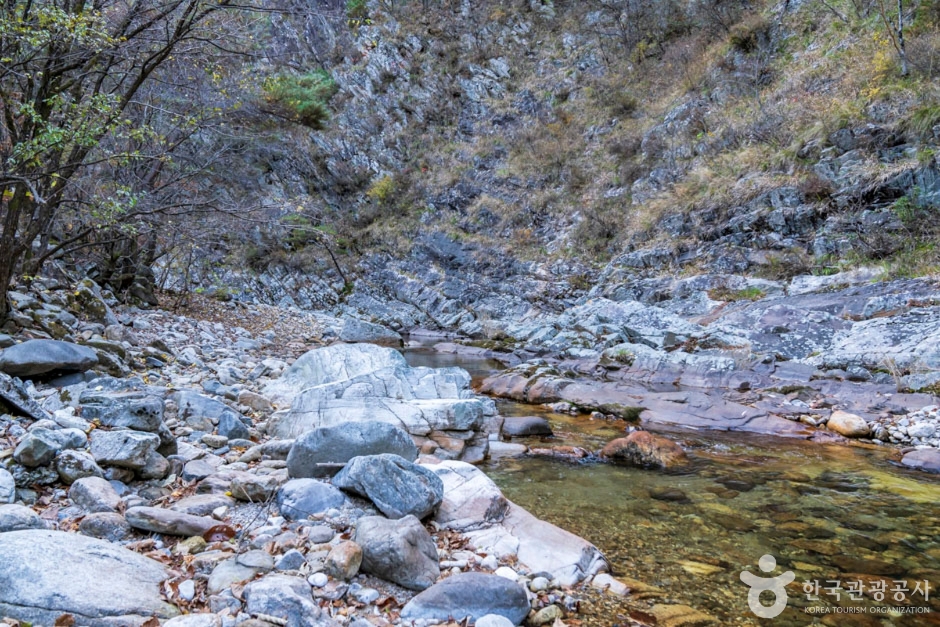
Namcheongyegok Valley is located on the northern side of Sobaeksan National Park. The forest is preserved quite well because the valley is located deep within the mountain. Freshwater fishes can be found within the clear water of the valley. The lush plants and clear water in summer and the fall foliage in autumn present a beautiful view. Follow the small trails to find the Namcheon Campground, where one can enjoy camping deep in the forest.
Danyang Bobaljae Pass (단양 보발재)
19.4Km 2024-02-26
San 26-7, Baekja-ri, Yeongchun-myeon, Danyang-gun, Chungcheongbuk-do
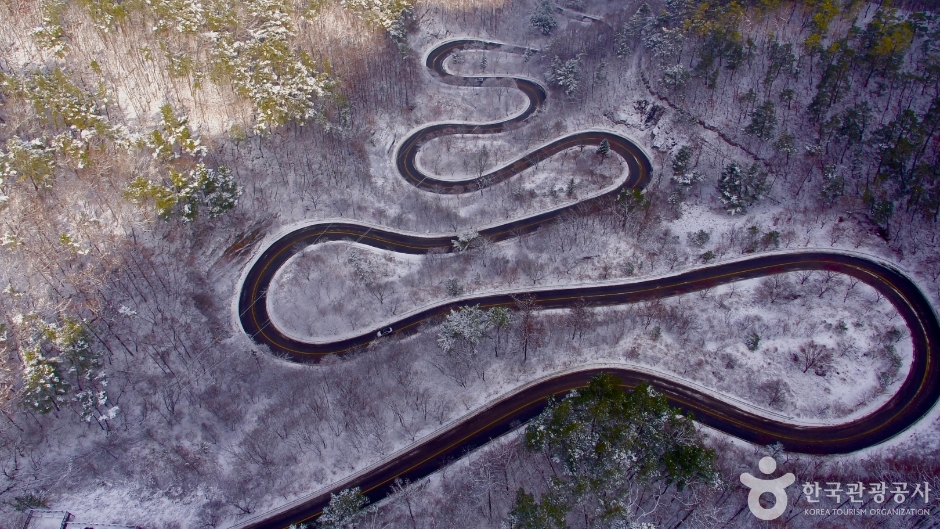
Bobaljae Pass is located 540 m above sea level on the northern side of Sobaeksan Mountain. It is also known as Godeuneomijae Pass. The S-shaped curve is known for wildflowers in spring and fall foliage in autumn, so one can either take a leisurely drive along the road or park one’s car at the observatory and get some pictures. Guinsa Temple and Ondal Tourist Area nearby are also good to visit.
Maguryeong Pass / Gochiryeong Pass (마구령/고치령)
19.6Km 2024-02-23
[Maguryeong Pass] Imgok-ri, Buseok-myeon, Yeongju-si, Gyeongsangbuk-do
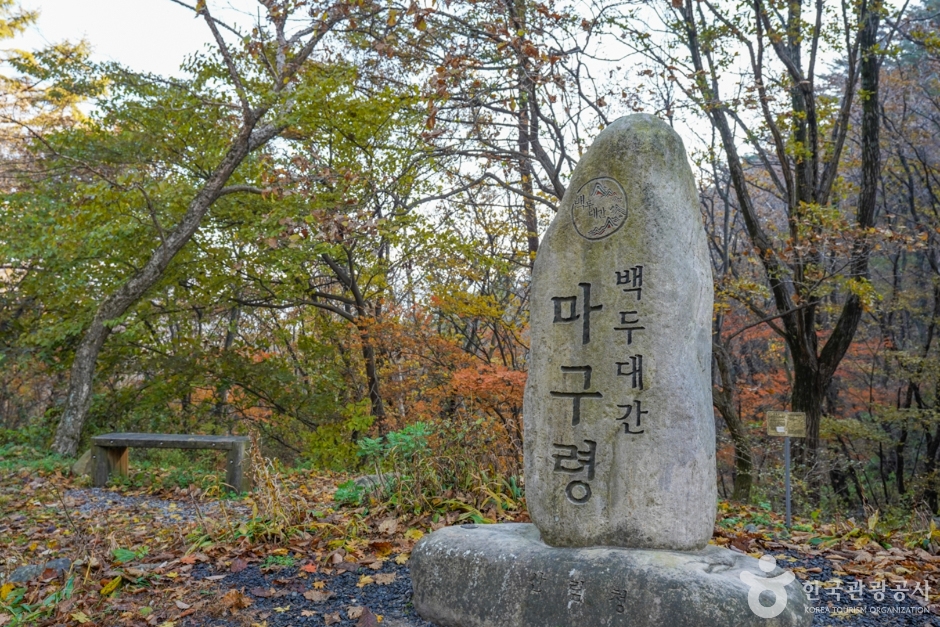
Maguryeong Pass and Gochiryeong Pass stand as iconic hills of Sobaeksan Mountain. They are known for their historical significance as rugged pathways where people and goods traversed during the Goryeo and Joseon dynasties. Situated on the easternmost edge of Sobaeksan Mountain, Maguryeong Pass derives its name from its function: "Magu" meaning "harness" and "Ryeong" meaning "pass" in Korean, highlighting its past as a route where merchants commonly traveled on horseback. Meanwhile, Gochiryeong Pass served as a vital transport link to the Gwandong and Hoseo regions. In the Silla dynasty, this pass was earmarked for palace construction at the base of the hill, which led to its name "Gochiryeong" – "Go" indicating "old", "Chi" representing "hill", and "Ryeong" meaning "pass" in Korean – effectively translating to "old hill pass".
Guinsa Temple (Danyang) (구인사(단양))
19.6Km 2024-03-15
73 Guinsa-gil, Yeongchun-myeon, Danyang-gun, Chungcheongbuk-do
 English
 한국어
한국어 日本語
日本語 中文(简体)
 Deutsch
 Français
 Español
 Русский


