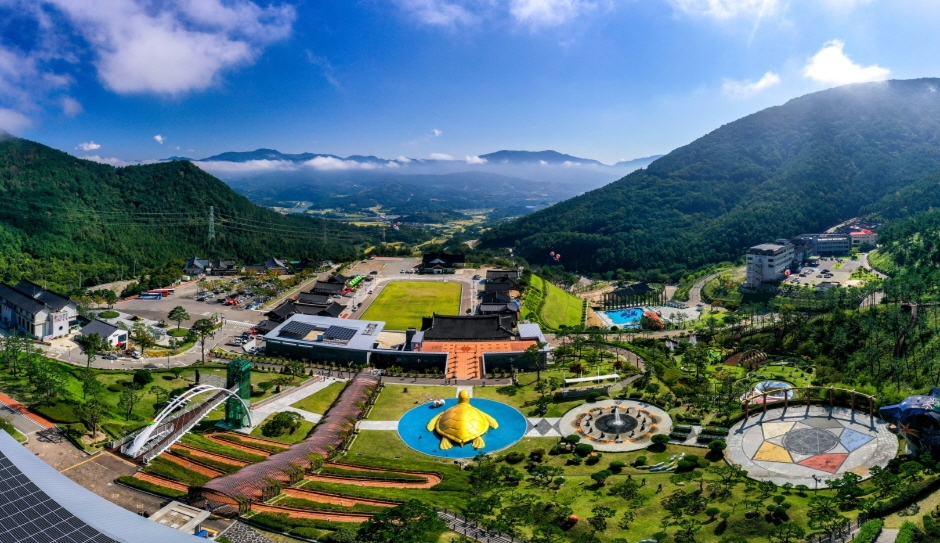
Sancheong Donguibogam Village (산청 동의보감촌)
12.1Km 2025-10-27
45-6, Donguibogam-ro 555beon-gil, Geumseo-myeon, Sancheong-gun, Gyeongsangnam-do
Enjoy various traditional Korean medicine in one place!
Sancheong Donguibogam Village is home to the Museum of Sancheong Korean Medicine, Korea's first traditional Korean medicine-themed museum created in 2007; the Korean Medicine Theme Park; the Sancheong Medicinal Herb Hall; the 'Ki' Experience Hall; the Korean Medicine Recreational Forest and the Korean medical clinics. The village allows you to experience 'healing' moments through traditional medicine. Here, you can learn diverse knowledge about traditional Korean medicine, organized by Heo Jun, the author of Donguibogam (medical encyclopedia). If you are suffering from chronic stress, look no further than Sancheong Donguibogam Village.
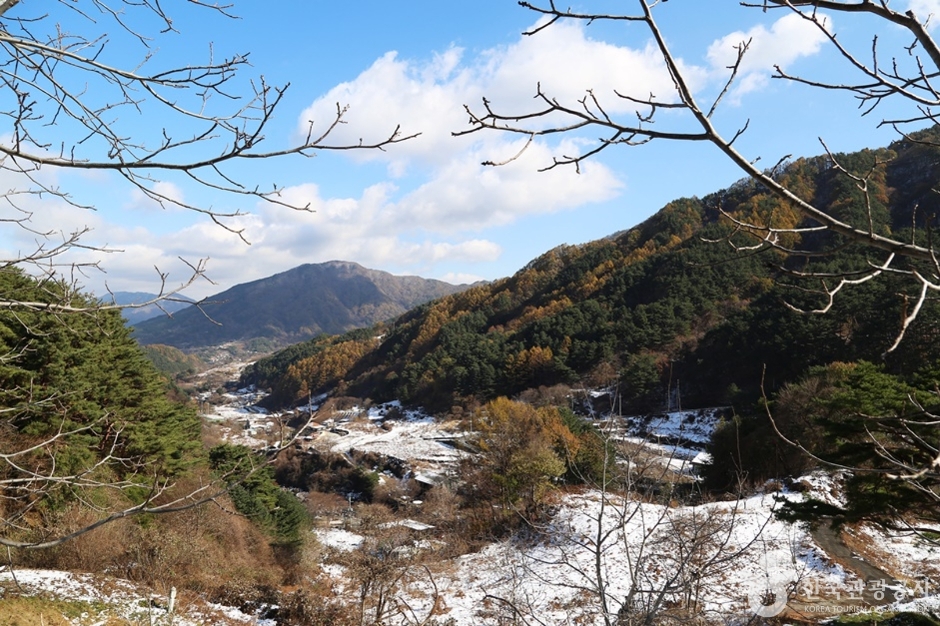
Jirisan Recreational Forest (국립 지리산자연휴양림)
12.5Km 2024-02-23
152 Eumjeong-gil, Macheon-myeon, Hamyang-gun, Gyeongsangnam-do
Jirisan Recreational Forest safeguards the splendid natural beauty of Jirisan Mountain. Positioned 600 to 700 meters above sea level, the region surpassing 700 meters is designated as a national park. The forest features a range of amenities including accommodations, a forest student camp, various trails, a forest park, and a suspension bridge. The significant temperature variation in the area contributes to the breathtaking display of autumn foliage.
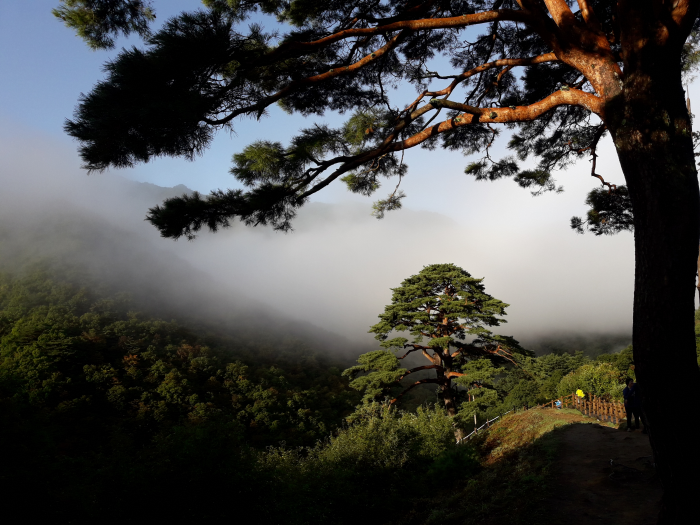
Baemsagol Waun Village (뱀사골 와운마을)
12.6Km 2024-04-07
249 Waun-gil, Namwon-si, Jeonbuk-do
Baemsagol Waun Village is located deep in the heart of Jirisan Mountain, being almost impossible to find if one didn't know the pathway in the past. The village is located within a 14 kilometer-long valley with many strangely shaped rocks. The village is home to an old pine tree (Natural Monument) that is lovely referred to as "Grandmother Tree."
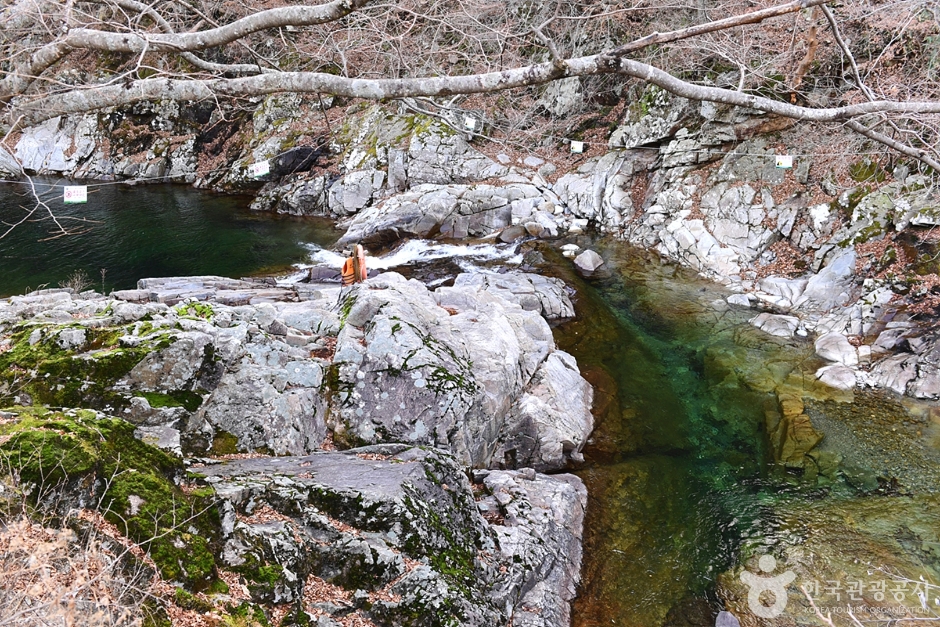
Dalgunggyegok Valley (달궁계곡)
13.1Km 2024-04-07
Jirisan-ro, Sannae-myeon, Namwon-si, Jeonbuk-do
Dalgunggyegok Valley is a valley located within the Jirisan National Park. It spans 6 kilometers from Dalgung Village to Simwon Village. Surrounded by dense primeval forests, it showcases the pristine beauty of an untouched valley where human hands have yet to reach. The combination of the valley and cliffs creates stunning scenery. Nearby Dalgung Village also preserves remnants of ancient Mahan palaces.
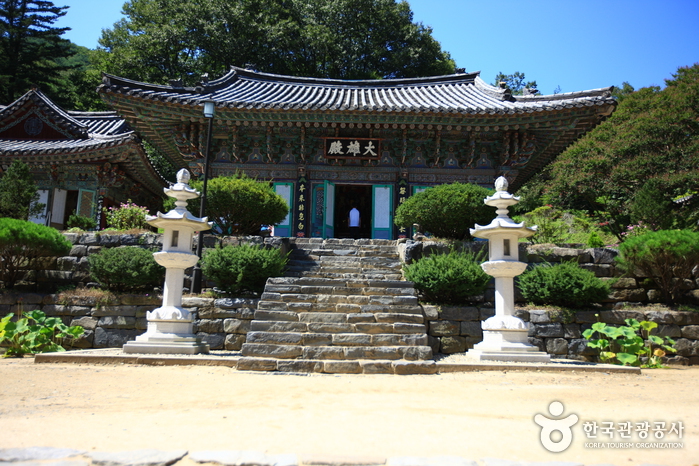
Sancheong Daewonsa Temple (대원사(산청))
13.9Km 2021-08-13
453, Pyeongchonyupyeong-ro, Sancheong-gun, Gyeongsangnam-do
Located at the eastern foot of Jirisan Mountain, Daewonsa Temple was first built in 548 during the Silla dynasty, but it remained closed for over thousand years until it was renovated and made bigger with the name Daewon. Unfortunately, the entire premises were lost to a big fire during the night of January 12, 1914, and all the halls and pavilions, including Yosachae, totaling 184 rooms in 12 buildings, were rebuilt in 1917. However, they were damaged once again during the Korean War and were abandoned until the war ended where the temple was rejuvenated and made even bigger. Located nearby are Geoyeonjeong and Gunjajeong Halls that are believed to have been the studying venue of scholars.
* Daewonsa Valley
The two-kilometer-long valley that stretches from the parking lot at the entrance to Daewon Temple to the temple itself is surrounded by high hills and curious-looking rocks. The clean water that oozes out through craters between the rocks generates unusual scenery. Associated with Yongso Pond is the legend that a dragon lived in it for hundreds of years before it finally flew away. Somakgol Valley is known to be the place where the last king of Garak Kingdom came to feed his cows and horses.
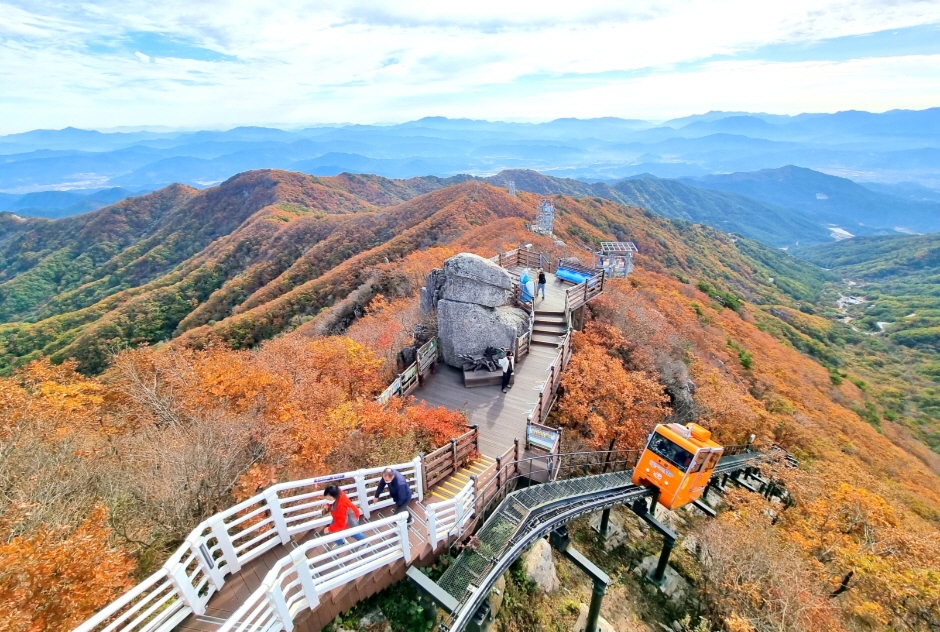
Hamyang Daebong Mountain Valley Resort (함양대봉산휴양밸리)
14.2Km 2025-01-17
331 Byeonggokjigok-ro, Byeonggok-myeon, Hamyang-gun, Gyeongsangnam-do
Hamyang Daebong Mountain Valley Resort is a recreation and tourism complex at the foot of Daebongsan Mountain in Hamyang. This resort boasts an array of attractions, including a mountain monorail and a zipline, offering exhilirating experiences amidst natural beauty. Addtionally, guests can enjoy various accommodation and and camping facilities, along with a forest park, blending adventure and relaxation seamlessly. The zipline itself, positioned 1,200 meters above sea level, spans an impressive length of 3.27 kilometers, providing an unforgettable aerial journey over the landscape.
![Namgyeseowon Confucian Academy [UNESCO World Heritage] (남계서원 [유네스코 세계문화유산])](http://tong.visitkorea.or.kr/cms/resource/63/2996963_image2_1.jpg)
Namgyeseowon Confucian Academy [UNESCO World Heritage] (남계서원 [유네스코 세계문화유산])
14.4Km 2024-01-08
8-11 Namgyeseowon-gil, Sudong-myeon, Hamyang-gun, Gyeongsangnam-do
Namgyeseowon Confucian Academy was established in 1552 as the second Confucian academy in Korea after the Sosuseowon Confucian Academy located in Yeongju, Gyeongsangbuk-do. Seowon refers to a private educational institution of the Joseon period founded to perform Confucian rituals and nurture talent. “Namgye” is named after the Namgyecheon Stream flowing in its front. It was destroyed by in 1597 during the Imjin War (1592-1598) and rebuilt in 1612. Located on a low hill, it provides an open view of Gaepyeong Hanok Village beyond the field and the stream.
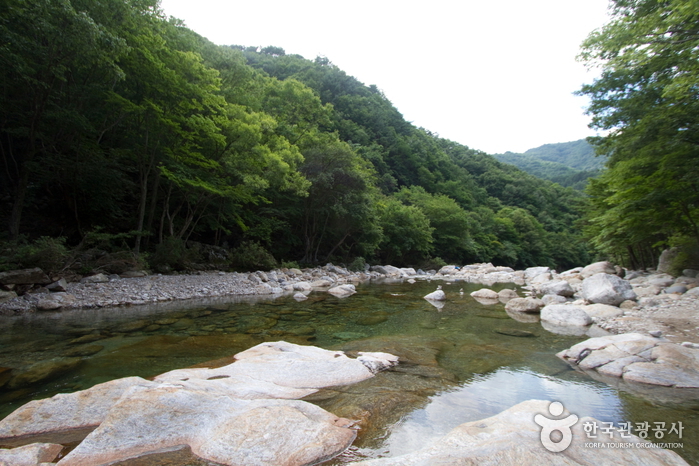
Baemsagolgyegok Valley (뱀사골 계곡)
14.7Km 2024-04-07
Buun-gil, Namwon-si, Jeonbuk-do
Located in Namwon, Jeollabuk-do, Baemsagolgyegok is a 9-km grand valley, situated at the northern foot of Jirisan Mountain. Stretching from Banyabong Peak and Tokkibong Peak toward Sannae-myeon of Namwon-si, the valley is renowned for its beautiful autumn foliage.
Baemsagolgyegok Valley is popular as a summer vacation destination because there’s always an abundance of water and trees. In the fall, the hills become ablaze with autumn tints, small streams flow over rock beds, and small pools of clear water from under the rocks create a beautiful sight. Other notable places nearby include Seonindae, Seoksil, Yoryongdae, Tagyongso, Byeongso, Byeongpungso, Jeseungdae and Ganjangso.

Jirisan Taegojae (Jeongilpum Farm) (지리산태고재 (정일품농원))
15.2Km 2024-01-08
39-2 Gaepyeong-gil, Jigok-myeon, Hamyang-gun, Gyeongsangnam-do
Located on a hill overlooking Gaepyeong Hanok Village, this place is popular as it serves as a filming location for many movies and dramas, including "Mr. Sunshine (2018)." It is a unique traditional hanok (traditional Korean house) complex with tile-roofed houses and thatched houses, presenting guests with a quiet night stay at hanok. It consists of Jeongilpum, Traditional Room, Hakseondang, and Chwiundang, with a total of 10 rooms. In particular, thatched houses are a traditional architectural form that is difficult to find elsewhere, so staying over at least once is recommended. It is also famous for its Korean table d’hote restaurant. The traditional Korean food made with seasonal ingredients is served only to in-house guests.
Gaepyeong Hanok Village (개평한옥마을)
15.3Km 2024-01-31
59 Gaepyeong-gil, Jigok-myeon, Hamyang-gun, Gyeongsangnam-do
Gaepyeong Hanok Village is where more than 60 large and small hanok (traditional Korean house) buildings with over 100 years of history are located within a traditional atmosphere. The village was named Gaepyeong using the letter gae (meaning “stuck between") as it is situated between Deokgaecheon Stream and Silgaecheon Stream. Visitors can observe the typical form of Gyeongsang region's yangban (aristocrat) house in this village, known as the hometown of scholars and writers since ancient times. The historical House of Ildu, which stands out first when entering Jigok-myeon where Gaepyeong Hanok Village is located, was also used as a filming location for dramas such as "Mr. Sunshine (2018)" and "Toji, the Land (2004)." The scenery of the stone walls, in harmony with the antique hanok, offers a calming sensation. In addition, visitors can participate in various experience programs, such as pressed flower craft, dasik (tea confectionery) making, and walking on trails held throughout the village, as well as gochujang (red chili paste) making at Roh's Old House of Gaepyeong-ri, which has the oldest anchae (women’s quarters) in the village.
 English
 한국어
한국어 日本語
日本語 中文(简体)
 Deutsch
 Français
 Español
 Русский


