Myeongmun Jegwa (명문제과) - Area information - Korea travel information

Myeongmun Jegwa (명문제과)

Myeongmun Jegwa (명문제과)

17.7Km    2024-04-07

56 Yongseong-ro, Namwon-si, Jeonbuk-do

Myeongmun Jegwa is a bakery that has been situated in its current location for nearly 40 years. It is so famous that people from all over the country come to Namwon to taste the bread here. A line of people can be seen here all day, regardless of weekdays or weekends. Signature bread items include a Korean streusel bun filled with whipped cream, honey almond bread, and homemade ham bread. Fresh bread is available at 10:00, 13:30, and 16:30, and order tickets are handed out before the bread comes out. It is located near major tourist attractions in Namwon, such as Gwanghalluwon Garden and Chunhyang Theme Park, making it a good place to add in the itinerary.

Gwanghallu Pavilion (광한루)

Gwanghallu Pavilion (광한루)

17.8Km    2024-04-07

1447, Yocheon-ro, Namwon-si, Jeonbuk-do
+82-63-620-6172

Rebuilt in 1638 (the 16th year of King Injo), Gwanghallu Pavilion is one of the Joseon dynasty’s most exemplary structures. The pavilion was constructed in 1419 by Hwang Hui, a noted prime minister in the early Joseon dynasty, during his exile to Namwon. The name of the pavilion at that time was Gwangtongnu. In 1434, while the pavilion was undergoing reconstruction, scholar and politician Jeong In-ji called it Gwanghallu after Gwanghancheongheobu, the mythical palace on the moon. Designated as Treasure No. 281, the pavilion is one of four major pavilions known for excellent craftsmanship, along with Yeongnamnu Pavilion (Miryang), Chokseongnu Pavilion (Jinju), and Bubyeoknu (Pyeongyang). Gwanghalluwon Garden, which consists of Gwanghallu Pavilion, a pond, Bangjangjeon Pavilion, and Yeongjugak Pavilion form Historic Site No. 33.

Gwanghalluwon Garden (광한루원)

Gwanghalluwon Garden (광한루원)

17.8Km    2025-10-23

1447 Yocheon-ro, Namwon-si, Jeonbuk-do

Originally known as Gwangtongnu, Gwanghalluwon Garden was built by Hwang Hui Jeongseung in 1419 during the reign of Joseon dynasty’s King Sejong. Because of its outstanding beauty, Governor Jeong In-ji gave the garden the name "Gwanghallu" in 1444, comparing it to a garden from the palace on the moon. It is famous as the location where Lee Mong-ryong and Chunhyang (two lovers from a well-known Korean folk story) first met. In the 1920s Chunhyangsa Temple was established in the neighboring area and a portrait of Chunhyang was hung in a place of honor. The garden is the venue of the Chunhyangjae Festival every spring, celebrating the deep and lasting love of the famous couple. The area around Gwanghalluwon Garden is full of many attractions, including Ojakgyo Bridge, symbolizing the bridge connecting Chilseok and Gyeonwu from the traditional story of Chilseok; and Chunhyang Hall, Wolmae-jip (house of Chunhyang's mother), Wanwoljeong Pavilion, Yeongjugak Pavilion, Samsinsan and many other traditional buildings.

Namwonyechon by Kensington (남원예촌)

Namwonyechon by Kensington (남원예촌)

17.8Km    2024-12-24

17 , Gwanghanbuk-ro, Namwon-si, Jeonbuk-do
+82-63-636-8001

Namwonyechon in Namwon, Jeollabuk-do, combines the beauty of traditional hanok with the convenience of a hotel. In summer, rooms with daecheongmaru are popular, and in winter, you can cozy up to an oakwood fire. A hanbok experience, pansori and gayageum performances, and a traditional games experience are provided free of charge. Residents get a free entry pass with mapae(a certificate to allow officials to use horses) to nearby Gwanghalluwon Garden, Chunhyang Theme Park, and Baekdudaegan Ecological Education Center. Room minibars are also free of charge.

Dosimdawon (도심다원)

18.0Km    2025-10-23

51-2 Sinchondosim-gil, Hadong-gun, Gyeongsangnam-do

Hadong's tea fields, which are known as the thousand-year-old tea fields, are characterized by being wild rather than cultivated. Among the many tea gardens in Hadong, the one with the most beautiful and peaceful scenery is Dosimdawon. In “House on Wheels,” actor and singer Yim Si-wan and Girls' Generation Yoona sat in a pavilion and sipped green tea while looking out at the green tea fields stretched out below. Tea utensils and tea leaves in a picnic basket are available for rent so that you can brew your own tea.

Samseonggung (삼성궁)

18.3Km    2024-02-21

86-15 Samseonggung-gil, Cheongam-myeon, Hadong-gun, Gyeongsangnam-do

Samseonggung is a Taoist shrine located at 850 meters above sea level on Jirisan Mountain. It serves as a spiritual hub for practicing Sinseondo, embodying traditional Korean culture. In 1983, Kang Min-ju (Taoist Priest Hanpul), along with his disciples, restored the sodo, a sacred altar from the Gojoseon period. This shrine stands as a revered sanctuary, honoring the primal ancestors of the Korean people: Hwanin (Lord of Heaven), Hwanung (Supreme Divine Regent), and Dangun (legendary founder of Gojoseon).

The Face Shop [Tax Refund Shop] (더페이스샵)

The Face Shop [Tax Refund Shop] (더페이스샵)

18.4Km    2024-04-22

385-16, Nammun-ro, Namwon-si, Jeollabuk-do

-

Ssangsanjae (쌍산재)

18.6Km    2025-10-23

3-2 Jangsu-gil Masan-myeon, Gurye-gun, Jeollanam-do

It is a 300-year-old old house where you can feel the traditional beauty and atmosphere of a Hanok, and 15 large and small Hanoks are scattered on a site of 16,500㎡. The top and bottom are divided around a bamboo forest stretching toward the sky, and over 100 types of trees and plants are harmonized with the building like a picture. For an entrance fee, coffee or tea is provided, so you can take a seat wherever you like and have a cup of tea while looking around the inside. While enjoying the quiet atmosphere, let's fully look around various points such as the detached house, bamboo forest, Hoseojeong, and Gyeongamdang.

Shiri Pension (쉬리펜션)

Shiri Pension (쉬리펜션)

18.6Km    2024-10-30

4310-46 , Seomjingang-daero, Gurye-gun, Jeollanam-do
+82-10-4583-8255

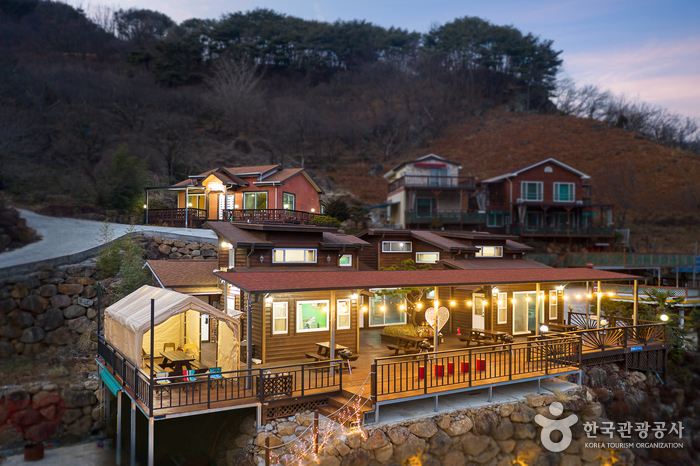
Shiri Pension consists of two floors with a total of six rooms where guests can take in the picturesque landscape of Jirisan Mountain while viewing the Piagol Valley and the Seomjingang River. Prugio and Haebichi are detached pensions, and Haebichi has an open-air bath. Individual tents are set up in front of each room so that you can enjoy a barbecue in the comfort of a camping environment. From the spacious terrace, you can enjoy an open view of the surrounding landscape.
Gurye Unjoru Historic House (구례 운조루 고택)

Gurye Unjoru Historic House (구례 운조루 고택)

19.1Km    2025-10-23

59 Unjoru-gil, Gurye-gun, Jeollanam-do
+82-61-780-2431

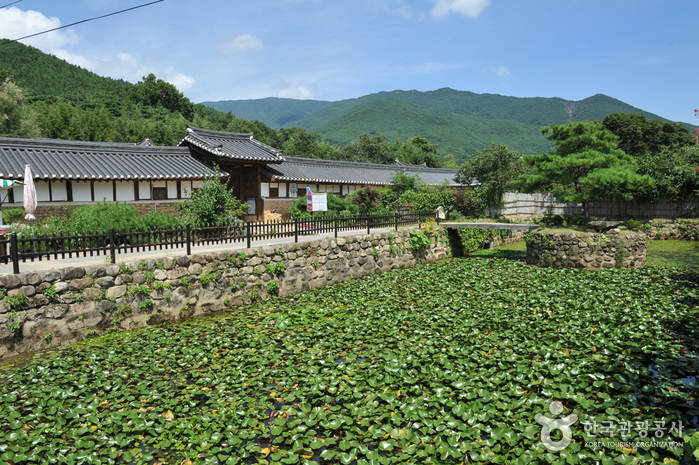
Unjoru Historic House was built in 1776 by Ryu I-Ju, a high government official of the Sam-su Department during the reign of King Yeong-jo. Of the house's original 99 kan (traditional building measurement), only 73 remain today. The name Unjoru means "a hidden house like a bird in the clouds," which was inspired from an old poem written by poet Tao Yuan Ming.