
Daedunsan Provincial Park (Jeollabuk-do Section) (대둔산도립공원(전북))
.0M 2024-04-07
611-34, Sanbuk-ri, Wanju-gun, Jeonbuk-do
+82-63-263-9949
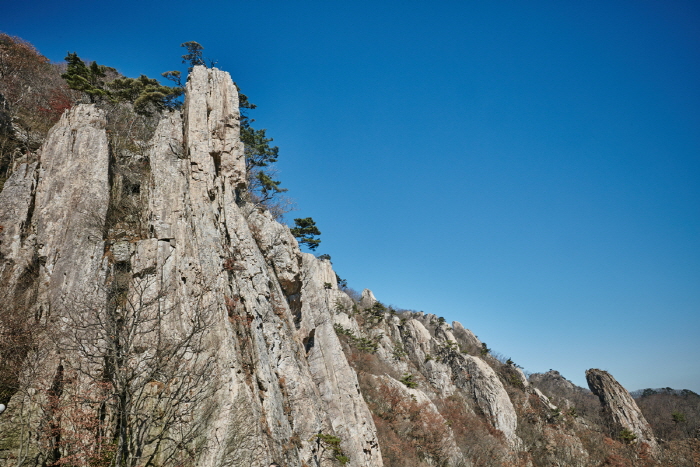
Daedunsan Mountain is defined by the grandiose rock peaks of Macheondae Summit, Chilseongbong, Janggunbong, and Ambong Peaks, as well as surrounding strange rocks and lush trees that fill the area including Samseonbawi Rock, Yongmungol Valley and Geumgangmun Gate. The area spanning from Macheondae Peak to Nakjodae Peak along the northern ridge offers a magnificent view, especially of the sunrise and sunset from Nakjodae.
Since its designation as a provincial park in 1977, Daedunsan Provincial Park has served as a scenic site equipped with recreational facilities including a cable car and Geumgang Suspension Bridge. A 5-minute cable car ride followed by a walk up the steep stairs leads to the suspension bridge, stretching 50 meters from Imgeumbawi Rock to Ipseokdae Pedestal. The park is also home to historic temples including Taegosa Temple of Jinsan, Ansimsa Temple of Unju, and Sinsounsa Temple of Byeolgok.
Daedunsan Provincial Park (Geumsan Section) (대둔산도립공원 (금산))
2.3Km 2025-01-13
2, Daedunsan-ro, Geumsan-gun, Chungcheongnam-do
+82-41-750-3411
While the Wanju section of Daedunsan Provincial Park is more developed and rather larger than the Geumsan section, Geumsan has the distiction of being home to Taegosa Temple, the most important hertiage of the mountain. Daedunsan Mountain features many unique rock formations and small peaks with a clean environment. There are lush forests and beautiful valleys that turn crimson with the arrival of fall. Additional attractions of the park include a battlefield from the Imjin War (1592-1598), and Seokmun Gate, a stone gate before Taegosa Temple.
Daedunsan Provincial Park (Nonsan Section) (대둔산도립공원 (논산))
3.9Km 2024-07-09
Surakgyegok-gil, Nonsan-si, Chungcheongnam-do
+82-41-746-6156
Daedunsan Mountain offers spectacular views and various scenic spots like Gunjigyegok Valley, Surakpokpo Falls, Macheondae Seonnyeopokpo Falls, Nakjodae Peak, Surakgyegok Valley, and more. In particular, the one-kilometer-high cliff and the unique rock formations at Surakpokpo Falls provide great scenery.
Surakpokpo Falls and Gunjigyegok Valley are at the entrance of the hiking trail that leads up to Daedunsan Mountain. It is about a two-hour hike from Surakgyegok Valley to Macheondae Peak on Daedunsan Mountain.
Surakgyegok Valley (수락계곡)
3.9Km 2024-02-21
116 Surak-ri, Beolgok-myeon, Nonsan-si, Chungcheongnam-do
Surakgyegok Valley is a valley located in the northern part of Daedunsan Provincial Park. Enveloped by forests and flowing streams, it offers opportunities for forest bathing, and its moderate temperatures even in the summer make it suitable for leisure activities. Throughout the valley, visitors can find waterfalls such as Surakpokpo Falls and Seonnyeopokpo Falls. A notable feature of this area is the steep iron staircase nestled between cliffs, leading from the valley to the summit of Daedunsan Mountain, which is a highlight of the area.
Wanju Hwaamsa Temple (화암사(완주))
7.1Km 2024-04-07
271 , Hwaamsa-gil, Wanju-gun, Jeonbuk-do
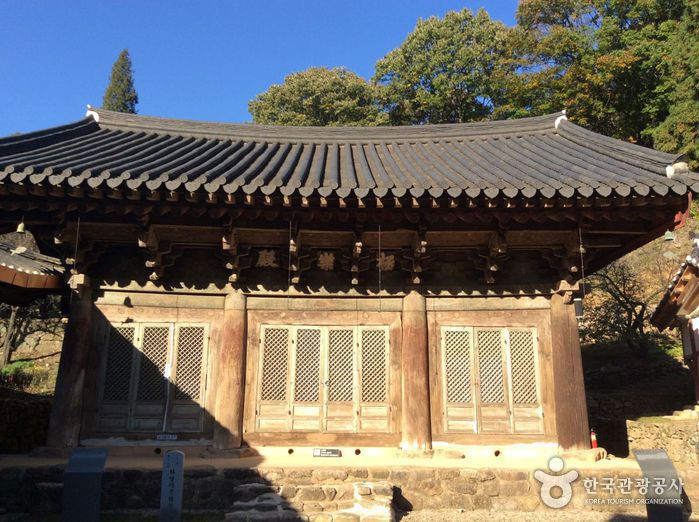
The temple was founded by National Preceptor Ilgyo in the 3rd year of King Hyoso of Silla (694), and it is said that Seolchong once studied here. Geuknakjeon Hall was built in 1425 with the benefactor of Seong Dal-saeng. Uhwaru is also designated as a treasure as a building that shows the characteristics of ancient architecture. The bronze bell made during the reign of King Gwanghaegun was cast by Hoyeong, and it is called the alarm clock because it made a sound when something unfortunate happened to the temple or the country to inform of the emergency. Hwaamsa Temple is surrounded by the primeval forest of Myeongsan Mountain like a folding screen and has a valley with clear water flowing.
* Major cultural assets: Hwaamsa Uhwaru (Treasure), Hwaamsa Geuknakjeon (National Treasure), Hwaamsa Bronze Bell (Local Tangible Cultural Property), Hwaamsa Reconstruction Monument (Local Tangible Cultural Property)
Jangtaesan Recreational Forest (장태산자연휴양림)
10.9Km 2024-12-02
461 Jangan-ro, Seo-gu, Daejeon
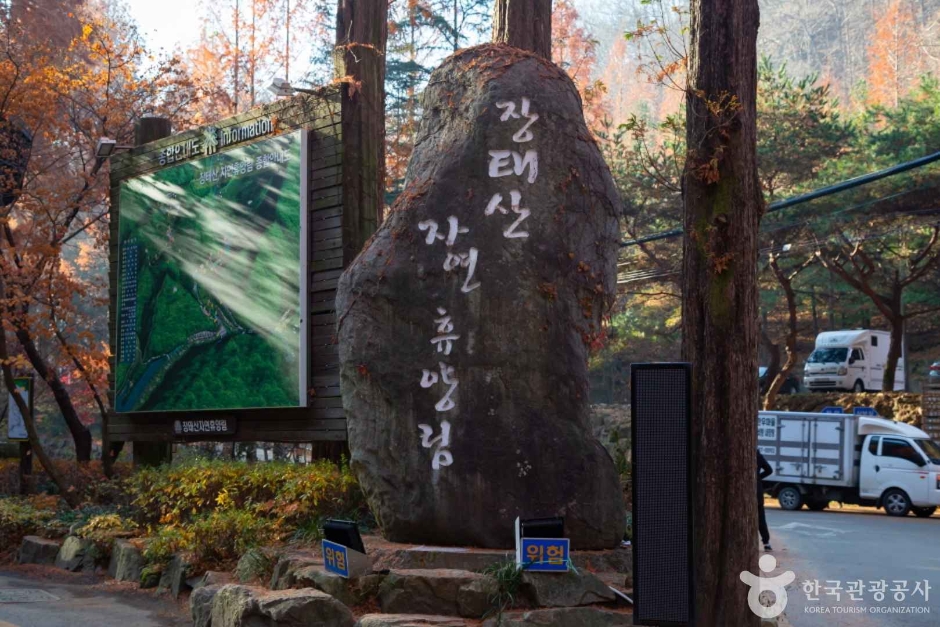
Jangtaesan Recreational Forest consists of a dense forest of ginkgo trees and bald cypress. Lush valleys nearby make for a great getaway during summer vacation. Yongtaeul Reservoir, located at the entrance, gives beautiful views as well. Inside the natural recreation forest, various facilities including walking paths, physical activity facilities, a botanical garden and bare-foot walking paths are available for visitors.
Doejae Catholic Church (되재성당)
11.0Km 2024-04-07
477 , Seungchi-ro, Wanju-gun, Jeonbuk-do
Doejae Catholic Church, built in 1895, is the second Catholic church to be completed after Yakhyeon Catholic Church in Seoul and is known as the first Hanok Catholic church. The building was completely destroyed during the Korean War and was restored in 2008. The name 'Doejae' refers to a pass located in Seungchi-ri, Hwasa-myeon, Wanju-gun. Doejae Catholic Church is unique in that it has an entrance for each toenmaru. The left side is for men and the right side is for women. In addition, the gates of children, middle-aged, and elderly are classified according to the funeral will.
Tomb of Seven Hundred Patriotic Martyrs (Geumsan) (금산 칠백의총)
14.1Km 2022-09-13
50, Uichong-gil, Geumsan-gun, Chungcheongnam-do
+82-41-753-8701
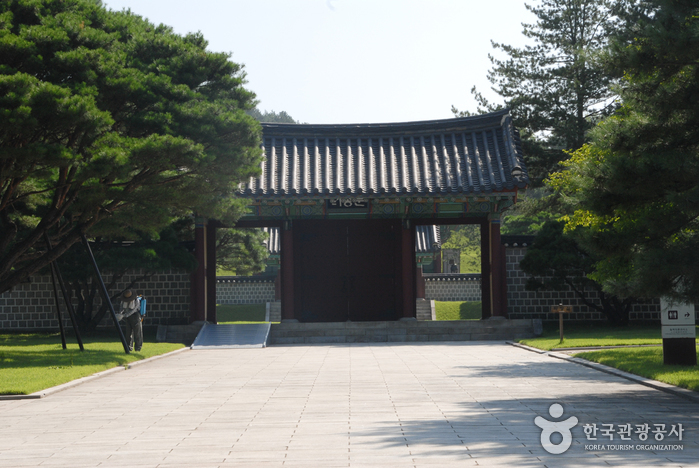
The Tomb of Seven Hundred Patriotic Martyrs is a renowned historical attraction located in Geumsan, Chungcheongnam-do. This holy site is interred with 700 patriots who died in a battle against 15,000 Japanese soldiers in Geumsan during the Imjin War in 1592. Among the deceased is the leader, Jo Heon.
Shrines and monuments were built in memory and respect of the patriotic spirit of those who died in the battle. The site is especially popular among families with children as an attraction as visitors can learn a valuable history lesson as well as enjoy a relaxing walk around the area. In addition, the Cultural Heritage Administration of Korea hosts an annual ceremonial rite every year on September 23 at 15:00, offering more to see for visitors.
Maninsan Recreational Forest (만인산 자연휴양림)
14.2Km 2023-02-09
106, Sannae-ro, Dong-gu, Daejeon
Maninsan Recreational Forest sits on the border between Daejeon and Geumsan-gun, Chungcheongnam-do, and is located approx. 17 kilometers away from Daejeon Station on National Route 17. It consists of Maninsan, the main peak, as well as Bongsuregol, Keunbaegol, and Jageunbaegol, and, because of its beautiful landscape, it even enshrined the figures of King Taejo and his princes during the Joseon Dynasty. Pure water constantly flows in the valleys and broadleaf trees form a thickly wooded forest. This recreational forest located close to the city has utilized natural ridges and is divided into the family recreation district, youth district, and picnic district to provide a pleasant resting area for citizens. Maninsan Service Area is a convenience facility of the recreational forest built with private capital in 1990 and, at the time of its construction, it utilized the natural valleys as they were without damaging any part of the forest. Decks were installed in the valleys, and the structure itself was built with one semi-underground floor and two ground floors. The main framework was made of reinforced concrete and wood was used as the primary material for construction. Also, a pond was created in front of the rest area to harmonize with the natural landscape. As a result, it is widely praised by experts as the most beautifully constructed rest area in Korea, and it is becoming a place that citizens frequently visit to relax. There are comfortable benches and resting spots situated throughout for visitors to relax while enjoying the views and, in particular, Manillugak is a symbolic recreational facility of Maninsan and a representative pavilion structure. It was built in the architectural style of Segeomjeong Pavilion located on Bugaksan in Seoul while employing reinforced concrete for the main framework. It applies a two-story, wooden tile roof to maintain as much beauty of Korean traditional architecture as possible with the consideration of maintenance.
Yetteo Folk Museum (옛터민속박물관)
14.4Km 2025-02-04
321-35 Sannae-ro, Dong-gu, Daejeon
The Yetteo Folk Museum showcases traditional folk artifacts that reflect the daily life of the Daejeon region. Inside the exhibition hall, visitors can view items such as knives, tray tables, water droppers, cups, and oil lamps. The outdoor exhibition area features stone mortars, troughs, and grinding stones. The museum also includes a traditional jar exhibition hall, a Korean restaurant, and a traditional teahouse. Visitors can engage in hands-on experiences like natural dyeing, hanji paper crafts, and knot-making, or relax and enjoy a campfire.
 English
 한국어
한국어 日本語
日本語 中文(简体)
 Deutsch
 Français
 Español
 Русский


