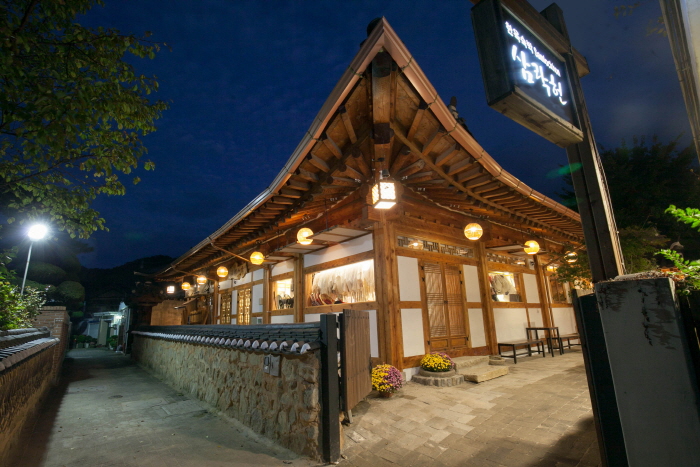
Samrockhon (삼락헌)
3.5Km 2024-12-23
47-8 , Eunhaeng-ro, Wansan-gu, Jeonju-si, Jeonbuk-do
Samrakheon is a traditional lodging in Jeonju Hanok Village, Jeollabuk-do, and sister hanok to Bukyeongdang. Samrakheon is a spacious old house containing duplex rooms equipped with toilets. In the shared mini-kitchen, simple breakfasts are provided, with coffee, tea, and toast. Guests can sample traditional crafts skills such as Korean paper-making, Injeolmi rice cake making and pottery - and can also get discounts on hanbok wearing and traditional bike riding experiences. Local tourist information is available.
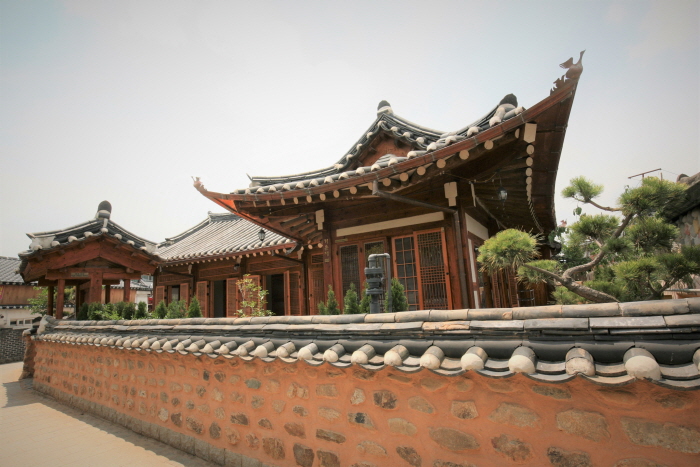
GaEunChae2 (가은채2)
3.6Km 2024-12-23
100-20 , Hanji-gil, Wansan-gu, Jeonju-si, Jeonbuk-do
Gaeunchae 2 is the sister hanok of Gaeunchae in Jeonju Hanok Village, Jeollabuk-do. It’s a traditional red clay-walled hanok with ondol underfloor heating, exposed roof beams and hanji wallpaper and flooring - creating a beautiful and distinctive hanok interior. It has a small hallway which is good for storing luggage or just to sit and chat. In the garden are sculpted stone lanterns and tigers. Local attractions such as Jeondong Cathedral and Gyeonggijeon Shrine are a short walk away.
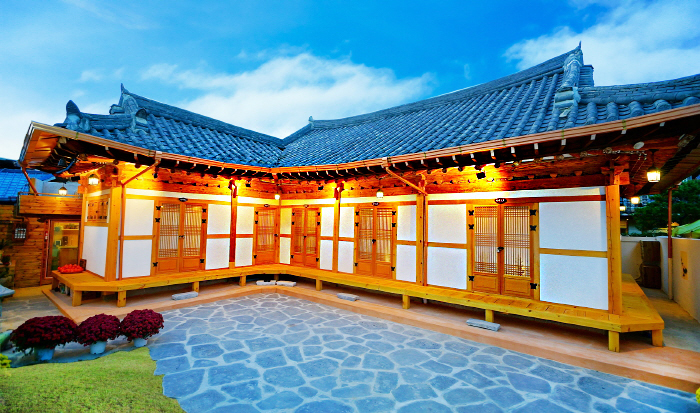
Jeonju hanok house (전주 한옥숙박체험관)
3.6Km 2024-08-05
56-1 , Eunhaeng-ro, Wansan-gu, Jeonju-si, Jeonbuk-do
Jeonju Hanok stands at the end of a quiet alley off Eunhaeng-ro in the center of Jeonju Hanok Village, and so is a good base for exploring the village. All guest rooms are ondol-heated and have a loft space that’s popular with children. Water purifiers are installed, and a breakfast of toast, fruit and tea or coffee is provided. The outdoor yard has a table where visitors can relax in good weather.

Omokdae and Imokdae Historic Sites (오목대와 이목대)
3.7Km 2025-07-22
55 Girin-daero, Wansan-gu, Jeonju-si, Jeonbuk-do
Omokdae Historic Site is located on top of a steep hill and is one of the places where Yi Seong-gye, who later became King Taejo, the first king of the Joseon dynasty, stopped to celebrate his victory on his way home from a war against the Japanese army at Unbong Peak of Hwangsan Mountain. Across the bridge from Omokdae is Imokdae Historic Site, situated at the foot of Seungamsan Mountain. Approximately 80 meters downhill from Imokdae are memorial stones and a building where Mokjo, the great-great-grandfather of King Taejo, once used to live. The engraved letters on the stones are the handwritings of Emperor Gojong. Mokjo moved to Hamgyeongdo as a result of a dispute with the then minister of Jeonju, an incident which King Taejo believed to have laid the foundation for him to shape the Joseon dynasty.
Jaman Mural Village (자만벽화마을)
3.7Km 2024-04-07
1-10, Jamandong 1-gil, Wansan-gu, Jeonju-si, Jeonbuk-do
Jaman Mural Village is located in the ridge between Omokdae and Imokdae along the foot of Seungamsan Mountain’s Jungbawi Rock. Jeonju Hanok Village is also visible from the wide street. Although it is a fairly steep walk up to Jaman Village, visitors will be able to enjoy colorful murals painted on the buildings and walls along the way.
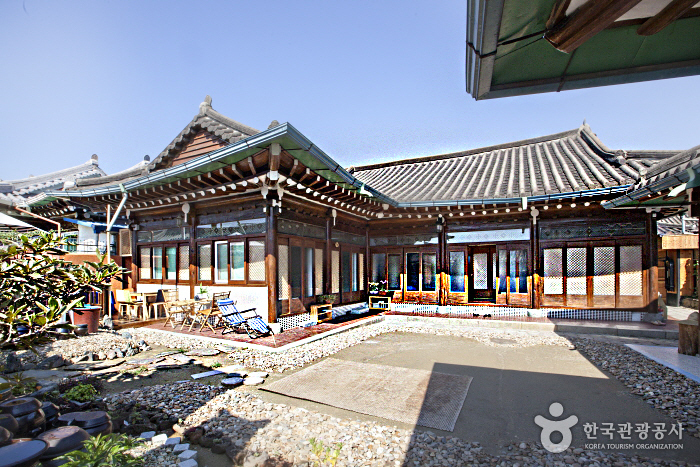
The Hanok (더 한옥)
3.8Km 2024-12-23
68-15 , Eunhaeng-ro, Wansan-gu, Jeonju-si, Jeonbuk-do
The Hanok, located in Jeonju, Jeollabuk-do, is a large hanok guesthouse built of beautiful tradition materials - cypress wood, red clay, and traditional hanji paper. The largest of the 7 rooms (Gwibin - ‘Special Guest’) has a king-size bed, ondol underfloor heating, and a massage bed, making it suitable for two families. One room has an attic, one has an red clay bed, and one has a bunk bed made of re-used traditional materials. In the spacious yard, guests can enjoy delightful moonlight tea parties.
Jeonju Pungnammun Gate (전주 풍남문)
3.8Km 2024-05-27
1 Pungnammun 3-gil, Wansan-gu, Jeonju-si, Jeonbuk-do
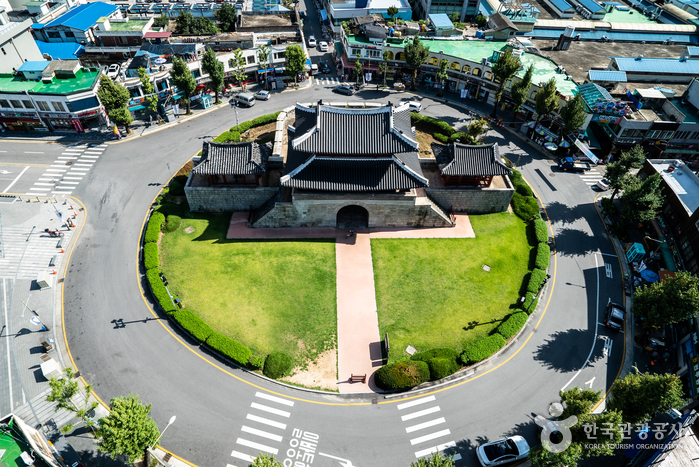
Pungnammun Gate was built during the Joseon dynasty in 1734 and is a designated Treasure. Pungnammun Gate was the southernmost gate among the four city gates of Jeonju. The structure was severely damaged by fire in 1767, followed by the restoration of the gate tower afterward. The gate was burnt down once again during the Imjin War and was restored to the gate that is seen today.
Gyodonggaon (교동가온)
3.8Km 2024-08-05
73-1 , Eunhaeng-ro, Wansan-gu, Jeonju-si, Jeonbuk-do
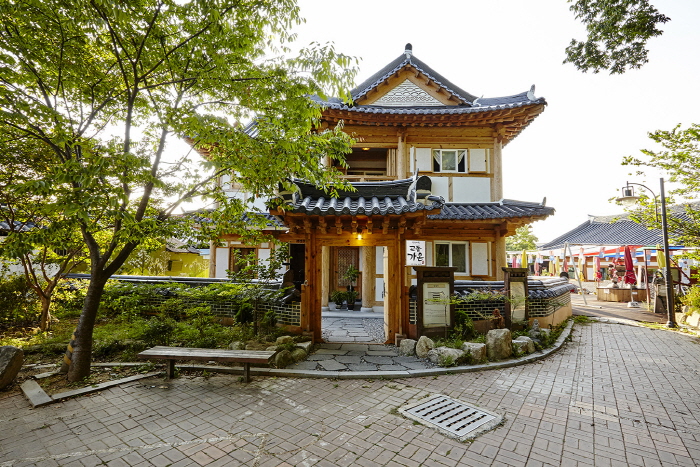
Gyodong Gaon is a two-story hanok stay on the main street of Jeonju Hanok Village, Jeollabuk-do. The yard contains a small garden, a jangdokdae (jar stand), a furnace and a mural that has become a popular place for photos. The upper floor guestroom Numaru (‘Loft’) offers a panorama of the village. The first floor Meomulda (‘Lodging’) guestroom has a door between bedroom and living room. Nanuda (‘Sharing’) on the 2nd floor is the largest room, while Damda (‘Contain’) and Ggumggu (‘Dreaming’) both have attics. Finally, Geurida (’Drawing’) is a room with a fine view. Traditional games such as Hoops and Tuho can be played without charge.
Veteran Kalguksu (베테랑칼국수)
3.8Km 2025-10-28
135 Gyeonggijeon-gil, Wansan-gu, Jeonju-si, Jeonbuk-do
Veteran Kalguksu, located in Jeonju Hanok Village, has been operating since 1977, attesting to the great taste of their broth, made using sesame, meal, and eggs. The noodles are also cut much thinner than other restaurants, while maintaining their chewy texture. Another popular menu at the restaurant is their kongguksu.
◎ Travel information to meet Hallyu’s charm
The restaurant was a favorite spot for the cast of the drama “Twenty Five Twenty One.” Lead actress Kim Tae-ri, who played Na Hee-do, even visited for breakfast during her vlog shoots. She drew attention for enthusiastically finishing a bowl of noodles down to the last strand. Nearby is the private rental house “2521,” which was featured as Hee-do’s home in the drama, making it worth visiting after enjoying a meal at the restaurant.
Neulbomstay (늘봄스테이)
3.8Km 2024-12-23
74-11 , Eunhaeng-ro, Wansan-gu, Jeonju-si, Jeonbuk-do
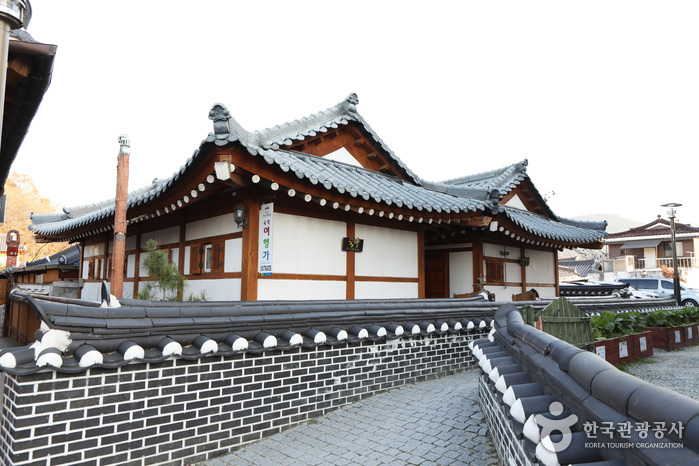
The Traveler, located in Jeonju, Jeollabuk-do, is a pleasant place to stay for families in particular. Apart from the charm of staying in a hanok, visitors can experience traditional games of chance like the Twelve Bridges Game and the Pumpkin Wheel Game. Each room is equipped with a bathroom/toilet, and residents can use the kitchen in the main house to prepare meals.
 English
 한국어
한국어 日本語
日本語 中文(简体)
 Deutsch
 Français
 Español
 Русский


