Bukyungdang (부경당)
298.2M 2024-12-23
99-5 , Hanji-gil, Wansan-gu, Jeonju-si, Jeonbuk-do
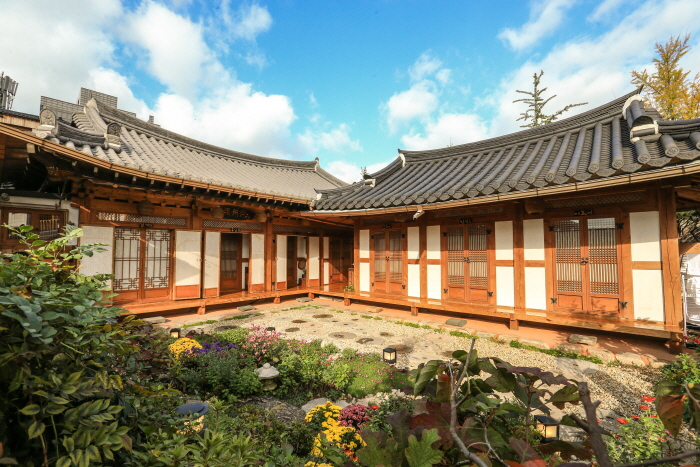
Bukyeongdang is a traditional hanok with a beautiful garden in the center of Jeonju Hanok Village, Jeollabuk-do. Traditional roof tiles and wooden porch, jar stands next to stone walls, and a small flower garden all express characterist hanok charm. Simple cooking is possible in the shared kitchen. Visitors can store their luggage before check-in and after check-out, and tourist information is provided. The hanok is close to major tourist attractions such as Imokdae (where Joseon founder Taejo once lived) Gyeonggijeon Shrine, Jeondong Cathedral, and the Jeonju Hyanggo Confucian school).
Ihwa Gotaek (이화고택)
318.0M 2024-12-23
91 , Hanji-gil, Wansan-gu, Jeonju-si, Jeonbuk-do
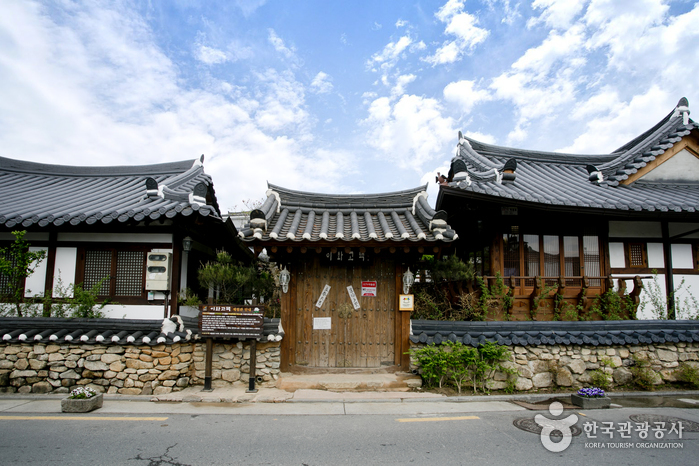
Ihwa Old House in Jeonju Hanok Village, Jeollabuk-do, is a charming hanok stay with a more than 100-year history, which preserves the traditional hanok pattern of connected wood-floored spaces called Numaru, Toenmaru and Jjongmaru. There are eight guestrooms, all equipped with a toilet. All new guests are welcomed with a glass of home-made sikhye (sweet rice drink) or patbingsu (shaved ice red bean desert), while for breakfast bibimbap or rice-cake soup will be served in Korean brass bowls. Guests can have a go at traditional crafts such as pansori, the tea ceremony, natural dyeing, and hanji making.
Jeonju Pungnammun Gate (전주 풍남문)
332.6M 2024-05-27
1 Pungnammun 3-gil, Wansan-gu, Jeonju-si, Jeonbuk-do
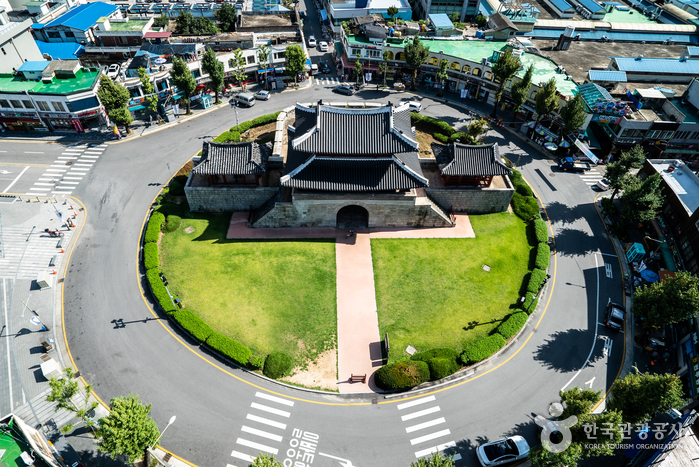
Pungnammun Gate was built during the Joseon dynasty in 1734 and is a designated Treasure. Pungnammun Gate was the southernmost gate among the four city gates of Jeonju. The structure was severely damaged by fire in 1767, followed by the restoration of the gate tower afterward. The gate was burnt down once again during the Imjin War and was restored to the gate that is seen today.
PoongNamheon (풍남헌)
338.3M 2024-08-05
35 , Eunhaeng-ro, Wansan-gu, Jeonju-si, Jeonbuk-do
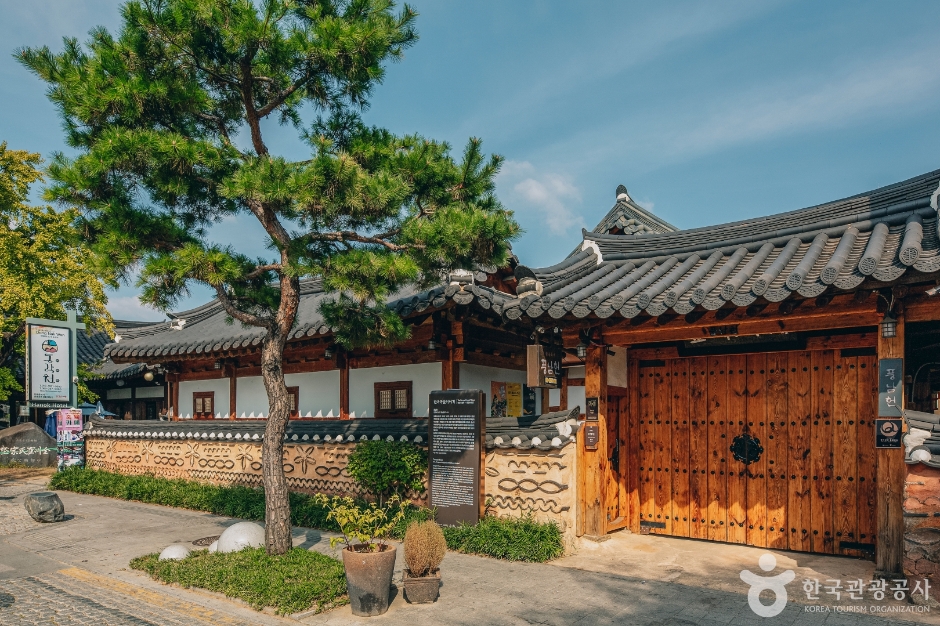
Pungnamheon is a hanok stay in a traditional nobleman's house in Jeonju, Jeollabuk-do. Next to the house stands a 600-year-old ginkgo tree, the guardian spirit of Jeonju Hanok Village. Two unusual features of this hanok is that there is no wood-floored hall or daecheong, and the toenmaru wooden porch is extra wide, and has a window. The floors are finished with laquered hanji (Korean paper), and the roof tiles were made in Goryeong. Old folding screens and Korean paintings complete the atmosphere of a traditional yangbang house. Guests have a chance to taste wild green tea gathered and made by the owner.
Dongnagwon House (동락원)
347.9M 2025-03-20
33-6, Eunhaeng-ro, Wansan-gu, Jeonju-si, Jeonbuk-do
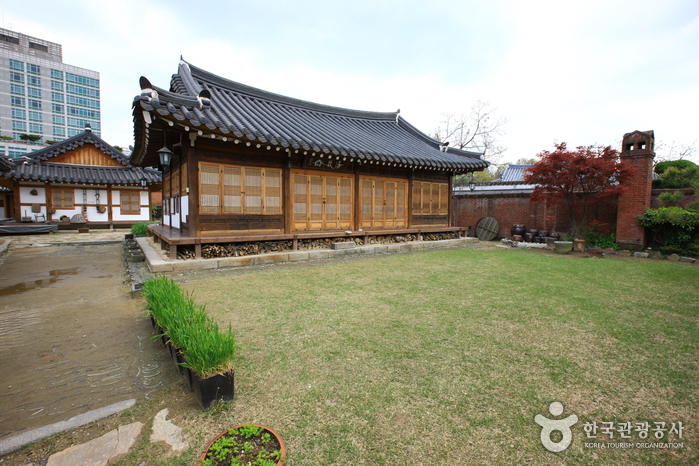
The Dongnagwon House in Jeonju Hanok Village provides a getaway to experience hanok stay and traditional Korean life. Affiliated with Jeonju Kijeon College, Dongnagwon is also a memorial hall dedicated to W. M. Junkin, who came to Korea as a missionary from the South Presbyterian Church of the United States in 1892. Dongnagwon is a reproduction of the old hanok houses in Jeonju from the time when W. M. Junkin was doing his missionary work in the area. It is
comprised of three buildings: Anchae (main hall), Sarangchae (guest house), and Haengnangchae (servants’ quarters).
Visitors to Dongnagwon can learn and experience traditional Korean culture such as music, crafts, and dance while inhabiting traditional lodging. In addition to providing accommodation for individual guests, Dongnagwon is also used for group accommodations or activities such as seminars, conferences, and family events. For groups of 30 or more, it is possible to rent out the entire venue (in addition to all facilities, including Seungdokdang, Seunghwadang, Cheongyuje, and the front yard).
Dong Nak Won / 동락원
352.8M 2025-03-05
33-6 , Eunhaeng-ro, Wansan-gu, Jeonju-si, Jeonbuk-do
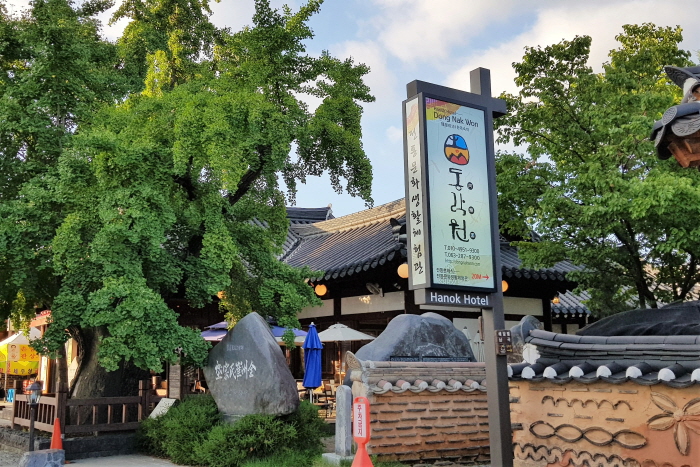
Dongnagwon is a hanok hotel in Jeonju Hanok Village, Jeollabuk-do. It was built as a memorial hall for the missionary William Junkin, who founded a school mission in Jeonju in 1895. Now refurbished as a hotel and venue for traditional performances, wedding ceremonies and seminars, visitors will find old-style interiors with antique furniture and folding screens. Guests can play traditional games in the yard, and there is a red clay room to relieve the fatigue of travel, free of charge. Mountain bikes can be borrowed to ride around the Hanok Village or on the banks of the Jeonjucheon Stream.

Jeonjuhyanggyo Local Confucian School (전주향교)
377.3M 2025-07-22
139 Hyanggyo-gil, Wansan-gu, Jeonju-si, Jeonbuk-do
Jeonjuhyanggyo is a local Confucian school that was established during the Joseon dynasty (1392-1910) and is a designated Historic Treasure. This was a national education center during the Joseon period. The school was originally located at the Gyeonggijeon Shrine site, but was relocated in 1603. The mortuary tablets of seven Chinese Confucian scholars and 18 Korean scholars are enshrined in the main building of Daeseongjeon Hall. The site is popular for its 400-year-old ginkgo tree in the front yard, and is the most beautiful in fall.
Jeonju Traditional Liquor Museum (전주 전통술박물관)
380.3M 2024-05-28
74 Hanji-gil, Wansan-gu, Jeonju-si, Jeonbuk-do
Jeonju Traditional Liquor Museum offers visitors the unique chance to explore the world of traditional Korean liquor and engage in related hands-on experience programs. At the museum, visitors can see the tools, machines, and the process used in the making of home-made traditional liquor and even taste them. Guests can also try their hand at making homemade wine and rice wine after making a reservation.
Jeonggahanog / 정가한옥
381.6M 2025-03-05
78-3 , Girin-daero, Wansan-gu, Jeonju-si, Jeonbuk-do
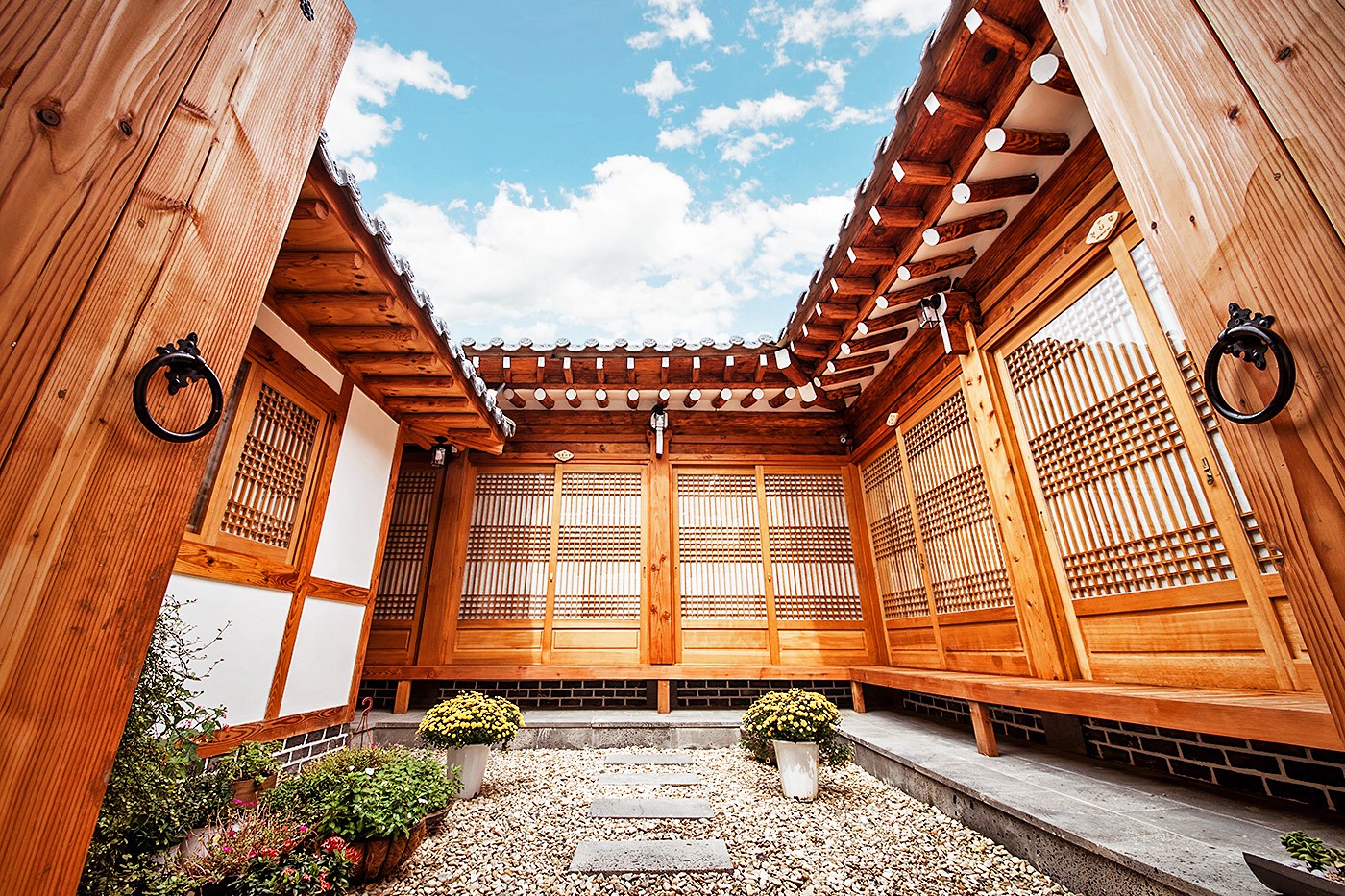
Jeongga Hanok, standing right across the road from Jeonju Hanok Village, Jeollabuk-do, is a newbuild hanok combining traditional style with modern comfort. Guestrooms are cypress-walled and red clay-grounded. Thus the Cypress room has walls and ceilings of cypress wood. The Maple room and the Gingko room both have attics. Nearby tourist attractions, which can all be reached on foot, include Gyeonggijeon Hall, Jeondong Cathedral, Jeonju Hyanggyo Confucian School, Jaman Mural Village - and of course Jeonju Hanok Village.
GaEunChae (가은채)
382.8M 2024-12-23
68-13 , Hanji-gil, Wansan-gu, Jeonju-si, Jeonbuk-do
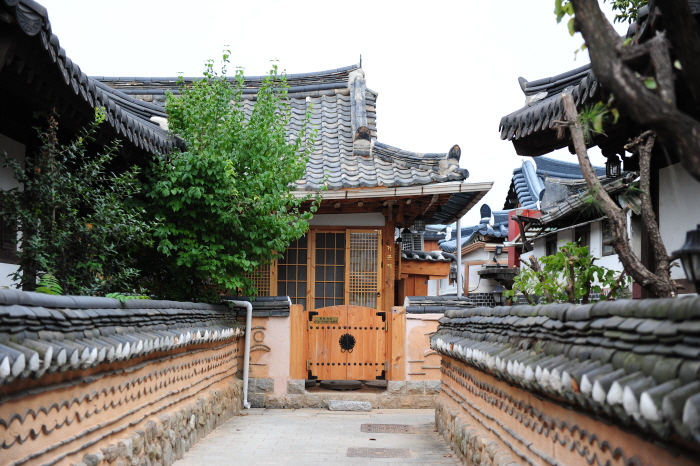
Gaeunchae is a hanok stay in Jeonju Hanok Village, Jeollabuk-do, constructed of wood in the traditional way without using nails. The location is ideal for local sightseeing as it’s close to Jeonju Craft Masters Hall, the Traditional Wine Museum, Seunggwangjae (home of the last Joseon prince Yi Seok), and Dakjong Hanji Doll Workshop. The exceptionally scenic alleyways around Gaeunchae are part of a Village tour. In the yard visitors will see different types of stone used as paving or decoration: granite, mica, and other local stones, all hand-trimmed by our ancestors.
 English
 한국어
한국어 日本語
日本語 中文(简体)
 Deutsch
 Français
 Español
 Русский


