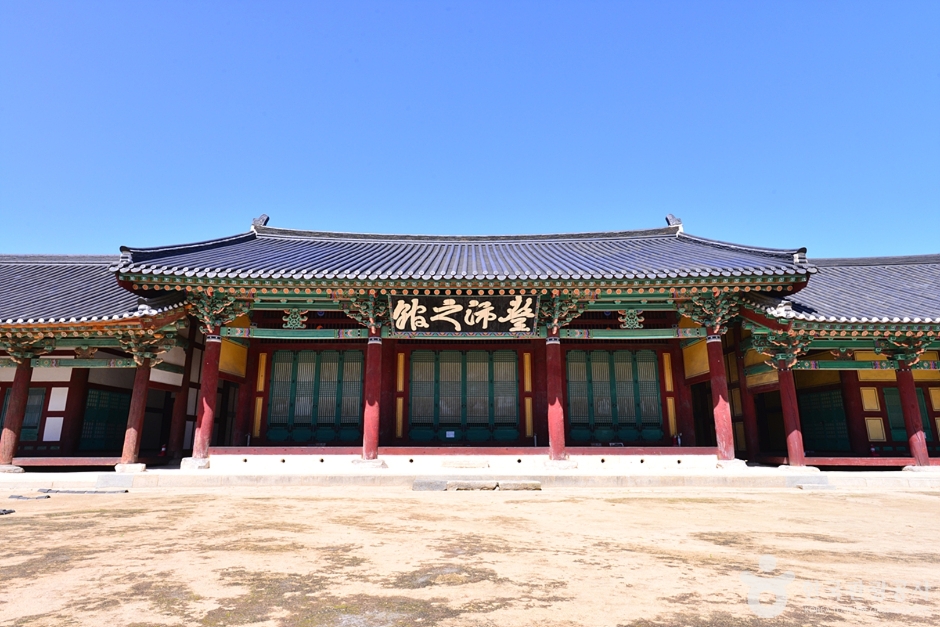
Jeonju Pungpaejigwan Guesthouse (전주 풍패지관 (전주객사))
338.5M 2024-05-27
59 Chunggyeong-ro, Wansan-gu, Jeonju-si, Jeonbuk-do
During the Joseon dynasty, officials and envoys visiting Jeonju stayed here. Today, it is open for anyone to see. The long and spacious maru (wooden central space) is open to the public, making it a comfortable resting place for citizens and tourists. Located in downtown Jeonju, it is easy to find and close to Jeonju Hanok Village.
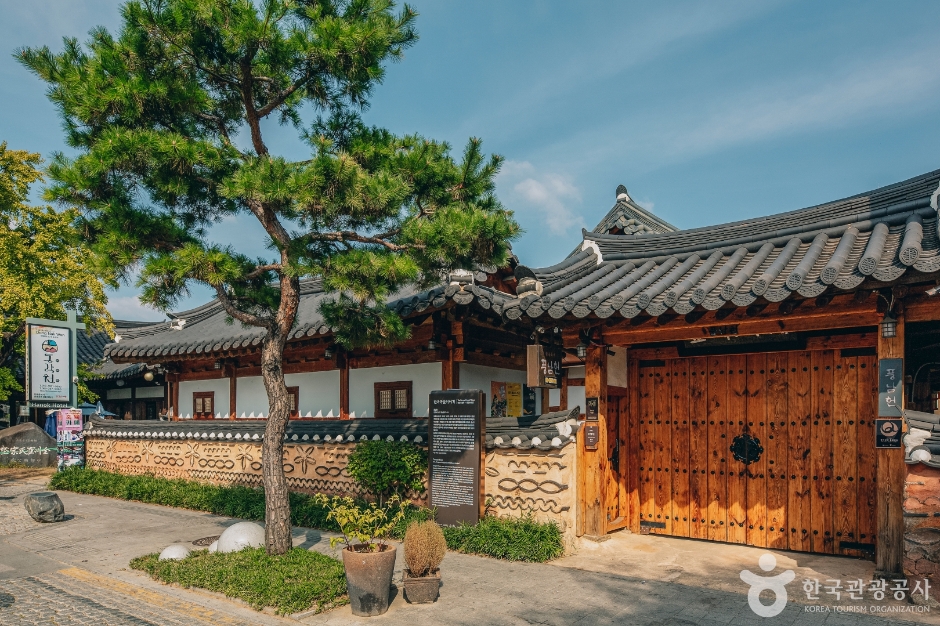
PoongNamheon (풍남헌)
363.6M 2024-08-05
35 , Eunhaeng-ro, Wansan-gu, Jeonju-si, Jeonbuk-do
+82-63-286-7673, +82-10-2757-7673
Pungnamheon is a hanok stay in a traditional nobleman's house in Jeonju, Jeollabuk-do. Next to the house stands a 600-year-old ginkgo tree, the guardian spirit of Jeonju Hanok Village. Two unusual features of this hanok is that there is no wood-floored hall or daecheong, and the toenmaru wooden porch is extra wide, and has a window. The floors are finished with laquered hanji (Korean paper), and the roof tiles were made in Goryeong. Old folding screens and Korean paintings complete the atmosphere of a traditional yangbang house. Guests have a chance to taste wild green tea gathered and made by the owner.
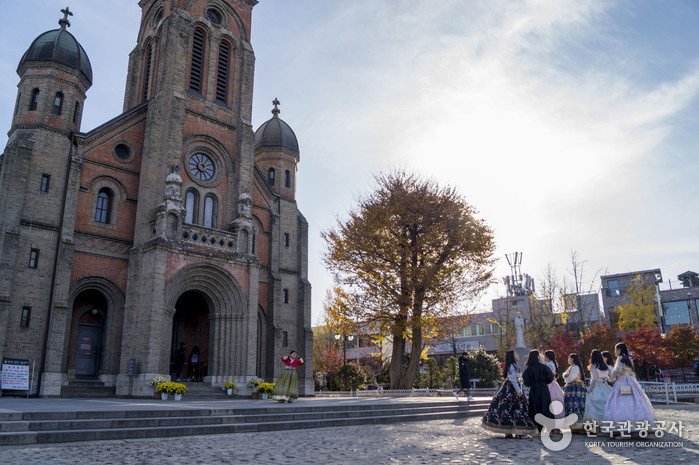
Jeonju Jeondong Catholic Cathedral (전주전동성당)
367.5M 2024-05-27
51 Taejo-ro, Wansan-gu, Jeonju-si, Jeonbuk-do
Jeondong Catholic Cathedral in Jeonju was built in honor of Roman Catholic martyrs of the Joseon dynasty on the very same spot the martyrs lost their lives. The land was purchased by French Priest Baudenet in 1891 (28th year of King Gojong), but construction of the church did not begin until 1908. Construction was completed in 1914, a time during which Korea was under Japanese rule. Though originally built just outside of Pungnammun Gate, the site of the martyrs, the church was later moved to its current location for expansion.
The first Romanesque building in the Honam region, Jeondong Catholic Cathedral is made of gray and red bricks and bears a striking resemblance to the Myeongdong Cathedral in Seoul, also designed by Priest Poinel. Not only considered one of the most beautiful Catholic churches in Korea, some even go so far as to say it is one of the most beautiful structures in all of Korea, citing the church’s unique combination of Byzantine and Romanesque architectural styles. The rectangular building is topped with three Byzantine bell towers (to the right, center, and left) and boasts arched ceilings, several of which meet in the form of a cross.
It is interesting to note that some of the bricks used in construction of the church were made using materials from the Jeonjueupseong Walled Town, which was torn down by the Japanese. It is also said that the cornerstone of the church came from a wall of Jeonjueupseong Walled Town near Pungnammun Gate.

Song Song Gong Jak So - Jeonju Branch [Tax Refund Shop] (송송공작소 전주점)
382.1M 2024-04-22
21, Eunhaeng-ro, Wansan-gu, Jeonju-si, Jeollabuk-do
-
Ggol - Jeonju Branch [Tax Refund Shop] (꼴 전주점)
382.1M 2024-04-19
21, Eunhaeng-ro, Wansan-gu, Jeonju-si, Jeollabuk-do
-
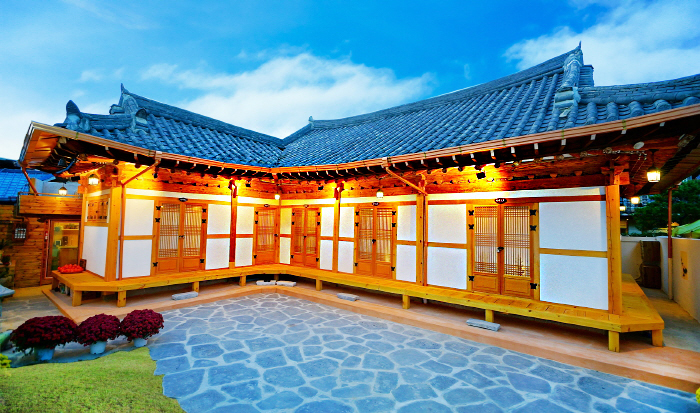
Jeonju hanok house (전주 한옥숙박체험관)
389.1M 2024-08-05
56-1 , Eunhaeng-ro, Wansan-gu, Jeonju-si, Jeonbuk-do
+82-10-8669-6700
Jeonju Hanok stands at the end of a quiet alley off Eunhaeng-ro in the center of Jeonju Hanok Village, and so is a good base for exploring the village. All guest rooms are ondol-heated and have a loft space that’s popular with children. Water purifiers are installed, and a breakfast of toast, fruit and tea or coffee is provided. The outdoor yard has a table where visitors can relax in good weather.
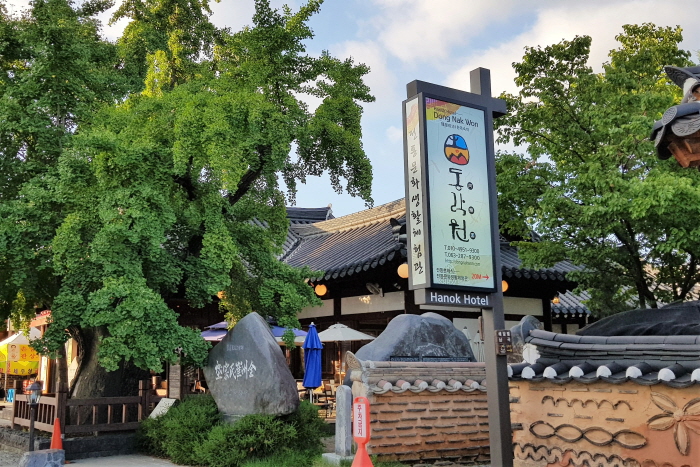
Dong Nak Won / 동락원
396.1M 2025-03-05
33-6 , Eunhaeng-ro, Wansan-gu, Jeonju-si, Jeonbuk-do
+82-63-287-9300, +82-10-4951-9300
Dongnagwon is a hanok hotel in Jeonju Hanok Village, Jeollabuk-do. It was built as a memorial hall for the missionary William Junkin, who founded a school mission in Jeonju in 1895. Now refurbished as a hotel and venue for traditional performances, wedding ceremonies and seminars, visitors will find old-style interiors with antique furniture and folding screens. Guests can play traditional games in the yard, and there is a red clay room to relieve the fatigue of travel, free of charge. Mountain bikes can be borrowed to ride around the Hanok Village or on the banks of the Jeonjucheon Stream.
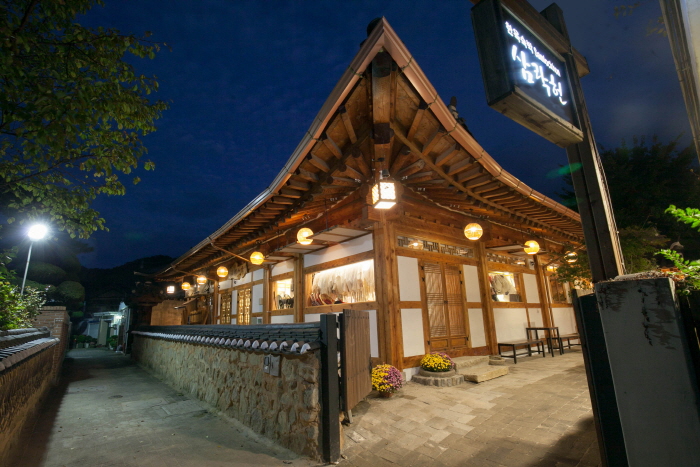
Samrockhon (삼락헌)
409.2M 2024-12-23
47-8 , Eunhaeng-ro, Wansan-gu, Jeonju-si, Jeonbuk-do
+82-10-2604-7358
Samrakheon is a traditional lodging in Jeonju Hanok Village, Jeollabuk-do, and sister hanok to Bukyeongdang. Samrakheon is a spacious old house containing duplex rooms equipped with toilets. In the shared mini-kitchen, simple breakfasts are provided, with coffee, tea, and toast. Guests can sample traditional crafts skills such as Korean paper-making, Injeolmi rice cake making and pottery - and can also get discounts on hanbok wearing and traditional bike riding experiences. Local tourist information is available.
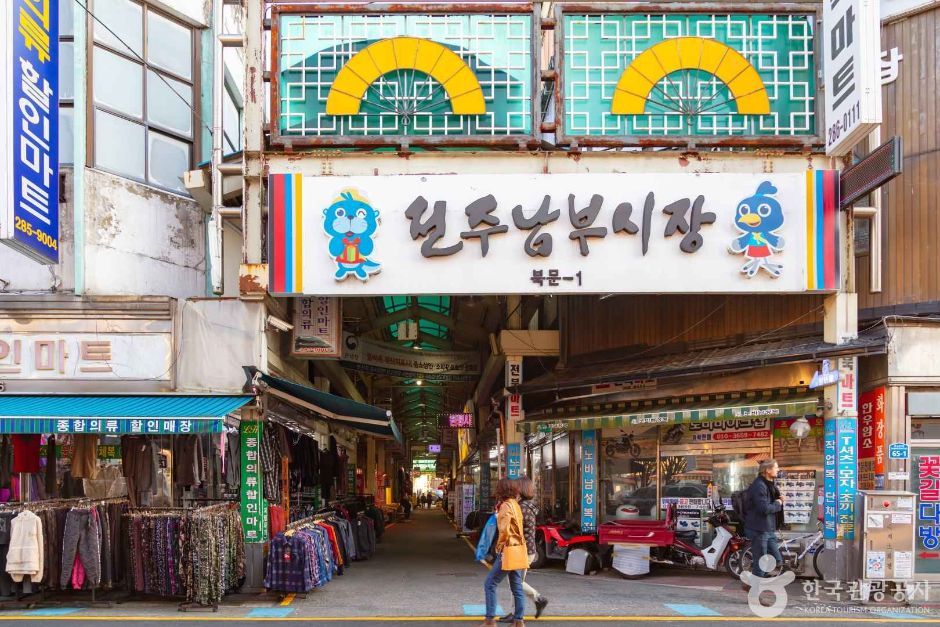
Jeonju Nambu Traditional Market (전주 남부시장)
414.8M 2025-07-22
19-3 Pungnammun 1-gil, Wansan-gu, Jeonju-si, Jeonbuk-do
+82-63-284-1344
Jeonju Nambu Traditional Market opened as a regular public market in 1905 at the site of the Joseon-era Nammunbakk Market, located just outside the Southern gate to the city. Currently the market is comprised of about 800 stores with 1,200 workers selling vegetables, fruits, food, dried fish, furniture, silk goods, and general goods.
The market was revitalized with the creation of the Youth Market, located in the previously empty shops on the second floor of 6-dong. An influx of young shopkeepers and entrepreneurs has given the marketplace an exciting vibe like that found in Hongdae or Samcheong-dong.
The night market held on Fridays and Saturdays also draws in many visitors with a multitude of delicious treats, ranging from traditional dishes such as nokdujeon (mung bean pancake) to fusion treats like bibimbap served in rice paper like a spring roll.
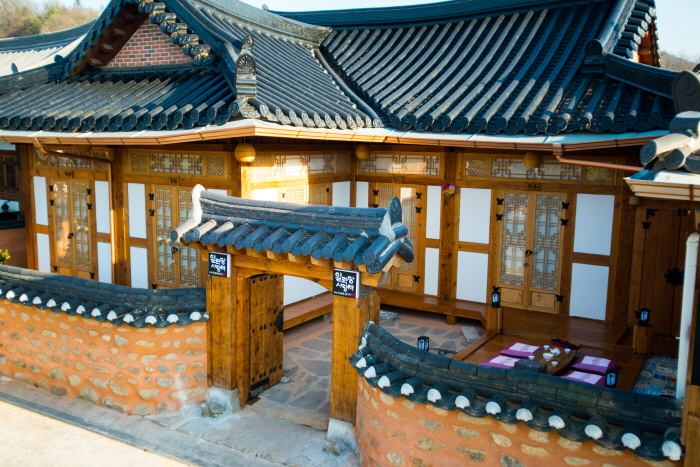
Ilrakdang sarangchae (일락당사랑채)
415.0M 2024-12-23
15, Choemyeonghui-gil, Wansan-gu, Jeonju-si, Jeonbuk-do
+82-10-3084-6679
A must visit place for tourists in Jeonju, Ilrakdang Sarangchae is located in the middle of the traditional Korean house village of Jeonju. The very first of three enjoyments for noble man, as indicated by Menicus, the existence of parents and brothers with no troubles is what the place is named after. Standing in the garden, you can easily see the stone walls of Gyeonggijeon and also you are within the range of walking distance to Jeondong catholic church, Omokdae, Southern market, Jeonju Hyanggyo, and the wall painting village of Jaman.
The rooms are called, Haengbokchae, Sarangbang, Mitum band, Monday, Tuesday, Wednesday, Thursday, Friday, Saturday, Sunday and so on. Haengbok room 1/2, a living room with furnace, a big sized attic above the living room are shared together, which makes it most suitable for big families or a small group of tourists. The Monday/Tuesday/Friday/Saturday/Sunday rooms all have a small, cozy attic and in every guest room’s wall, column and doors are mainly made of woods which makes them feel very warm. On every morning, in the shared kitchen, simple breakfasts mainly consisting of toasts, jams, coffee and juice are served. All guests are provided with discounts on Korean costume rental(30%), motor bikes(30%) and waengi bean sprout soup with rice (1000KRW). Besides, there are various services such as introduction to tasty restaurants in partnerships with traditional Korean house villages, as well as discounts, and try out of Korean rice cake making experiences and so on.
 English
 한국어
한국어 日本語
日本語 中文(简体)
 Deutsch
 Français
 Español
 Русский


