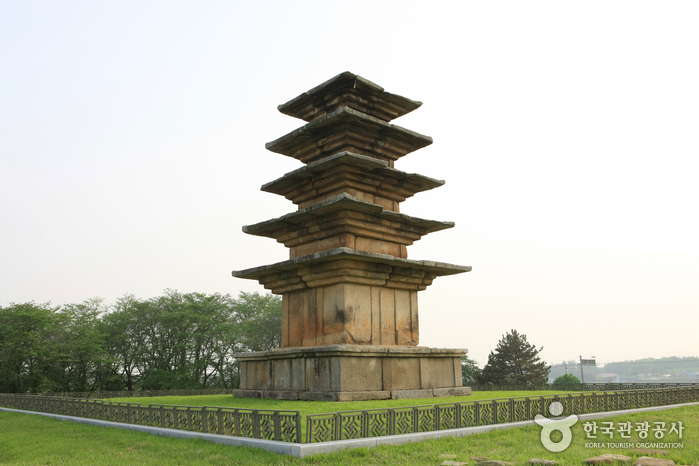
Wanggung Five-story Stone Pagoda (익산 왕궁리 오층석탑)
15.2Km 2024-04-07
San 80-1, Wanggung-ri, Wanggung-myeon, Iksan-si, Jeonbuk-do
+82-63-859-5708
The Wanggung Five-story Stone Pagoda is located on a hill about 2 kilometers south of Wanggung-myeon in Iksan, which is believed to have been the capital of the nation during the Mahan Era. The pagoda stands tall at 8.5 meters and was officially designated as a National Treasure. Relics from the Goryeo dynasty that were found inside the pagoda were designated as a National Treasure and are currently housed in the National Museum of Korea. Of the excavated relics, the most famous; the Sarijangeomgu, a magnificent container of Buddha’s Sarira; the green glass Sarira bottle topped with a lotus-shaped stopper; and the Sungeumgeumganggyeongpan, which contains the 19 golden plates of the Diamond Sutra.
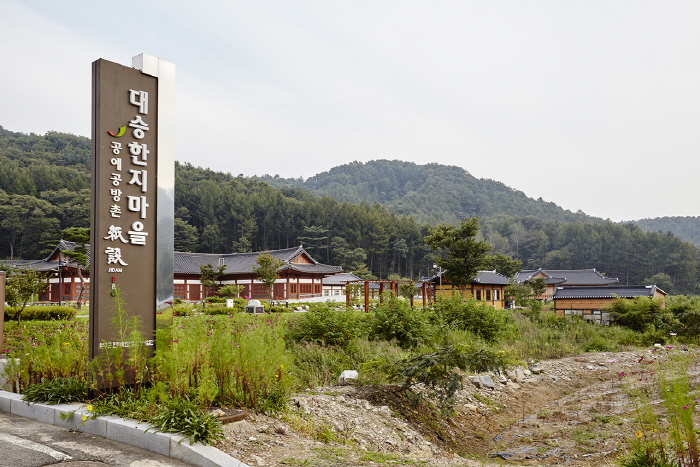
Daeseung Hanji Village & Hanok Traditional Culture Experience Center (대승한지마을한옥전통문화체험관)
15.3Km 2024-08-05
18-4 , Bogeom-gil, Wanju-gun, Jeonbuk-do
+82-63-242-1001
Daeseung Hanji Village in Wanju-gun, Jeollabuk-do, is where the famous Goryeoji (‘Goryeo Paper’) was first made in Goryeo 1,000 years ago. All guestrooms in the village are equipped with toilets, AC and water purifiers, plus pillows made of Korean paper and comfortable blankets. The dining hall kitchen can be used by guests, there is a large (60 sq metre) seminar room, and a yard where traditional games such as Geunae (swing) and Tuho (arrows) are played. The village runs a Hanji Experience Center, where you can learn about hanji history, manufacture and calligraphy.
Iksan Godori Standing Stone Buddha (익산 고도리 석조여래입상)
15.9Km 2024-04-07
Donggodo-ri, Geumma-myeon, Iksan-si, Jeonbuk-do
+82-63-859-5792
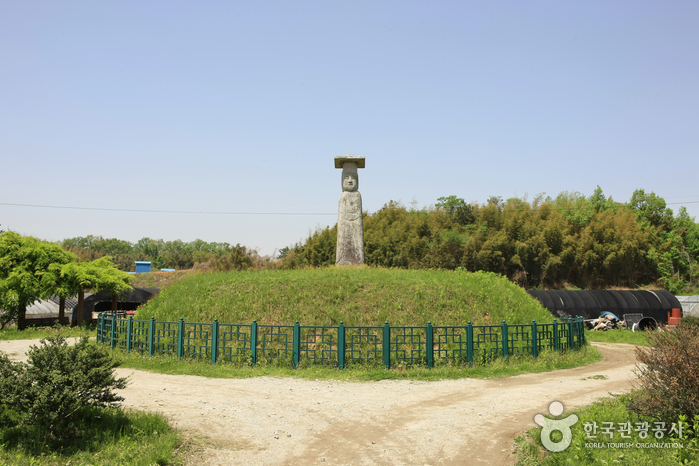
Iksan Godori Standing Stone Buddha is Treasure No. 46. The two Buddha statues (each measuring 424 cm) stand face-to-face at a distance of 200 meters apart and tell the story of an eternal, but unrequited love.
According to legend, the two Buddhas (one male, one female) are lovers that can only meet for one night in the twelfth month of the lunar calendar. After the sunset on that special day, the lovers are allowed to meet, but must return to their respective positions before the rooster crows at dawn.
The two statues are very representative of the Goryeo era, which produced many stone statues with minimal expression of the physical body. True to the era, each Buddha has almost no curves and is depicted with plain clothing and barely distinguishable arms.
On their heads, the Buddhas wear a crown topped with another square hat. With their square faces, small eyes, pug noses, and small lips, the Buddhas are reminiscent of guardian deities typically placed at the entrance of villages.

Gosan Recreational Forest (고산자연휴양림)
16.2Km 2024-04-07
246, Gosanhyuyangnim-ro, Wanju-gun, Jeonbuk-do
+82-63-263-8680
Located in Osan-ri, Gosan Recreational Forest is a popular family destination throughout all four seasons. Full of thick groves of larch trees, Korean white pines, rigida pines, and plenty of broad-leaved trees, the forest and its streams offer a cool and refreshing retreat. In spring, the forest is beautiful with wildflowers, azaleas and wild cherry blossom trees. In summer, families flock to the streams shaded by the thick forest canopy. As summer turns into fall, the whole area transforms into a rainbow of bright yellow, red, and orange. With the coming of winter, the snow covers the trees and blankets the ground, turning the forest in a winter dreamland.
Iksan Ssangneung (익산 쌍릉)
16.7Km 2024-04-07
Seogwang-dong, Iksan-si, Jeonbuk-do
+82-63-859-5792
The Ssamgneung (Twin Tombs) in Iksan are stone chamber tombs that were unearthed during an academic excavation survey in 1917. At the time of the survey it was discovered the tombs had already been illegally excavated, most likely during the reign of King Chungsukwang of the Goryeo dynasty. Though looters had stripped the tombs of any burial accessories, the wooden coffins were found to be relatively intact.
The coffins were severely damaged in the aftermath of the Korean War, but were later restored by the Jeonju National Museum. When they were first found, the twin tombs measured 3.1 meters high and 0.5 kilometers wide, but some of the original wood was lost during the tombs’ tumultuous history and the restoration that followed. The larger of the restored tombs now measures 30 meters in diameter and 5 meters in x_height while the smaller tomb measures 24 meters in diameter and 3.5 meters in x_height. On January 21, 1963 the tombs were designated Historic Site No. 87.
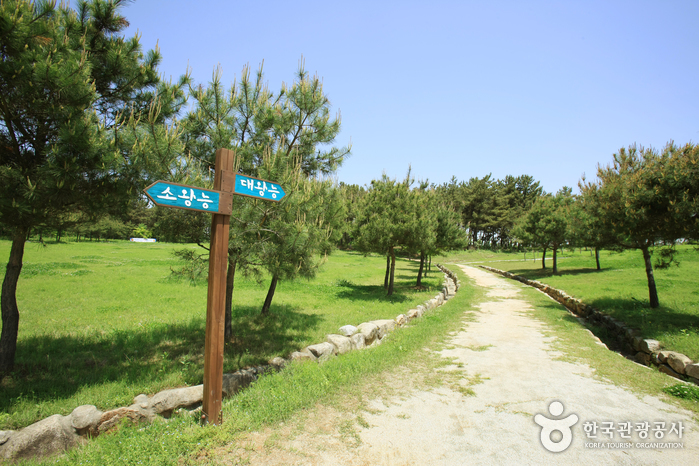
The Twin Tombs are roughly 200 meters apart, with the tomb in the east called Daewangmyo (big royal tomb) and the one in the west Sowangmyo (small royal tomb). The interiors of the tombs are done in the same style as the stone chamber tombs found in the tomb cluster of Neungsan-ri, Buyeo. Considering that the nearby Mireuksaji Temple Site was built during the reign of King Mu of Baekje dynasty, it is highly likely that the Twin Tombs are those of King Mu and his wife, Queen Seonhwa.
Seodong Park (서동공원)
18.0Km 2024-04-07
41-14, Godo 9-gil, Geumma-myeon, Iksan-si, Jeonbuk-do
+82-63-859-3818
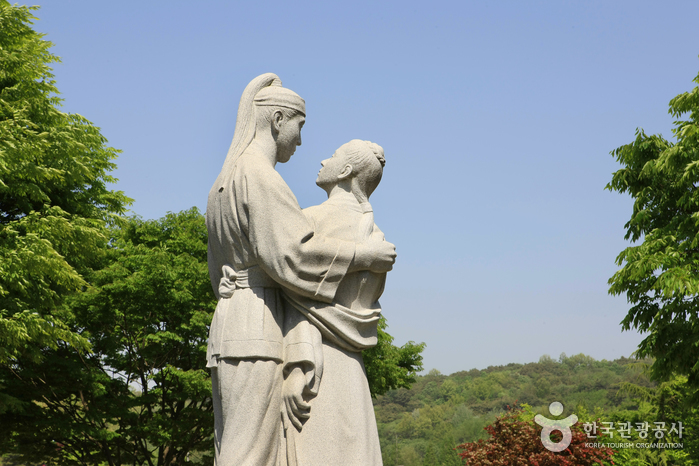
Built alongside the Geumma Reservoir, Seodong Park traces its origins to ancient records from the 600 AD with historical figures (Princess Seonhwa and Seodong, King Mu). More than 100 works of art can be found in the park, including twelve Chinese zodiac animal statues and sculptures of Princess Seonhwa and Seodong. The central plaza features a statue of King Mu, and various amenities such as the Mahan Museum, a children's forest playground, a picnic area, a fountain, and a riverside plaza enrich the experience for visitors.
Geumma Reservoir (금마저수지)
18.1Km 2024-04-07
Donggodo-ri, Geumma-myeon, Iksan-si, Jeonbuk-do
+82-63-859-3818
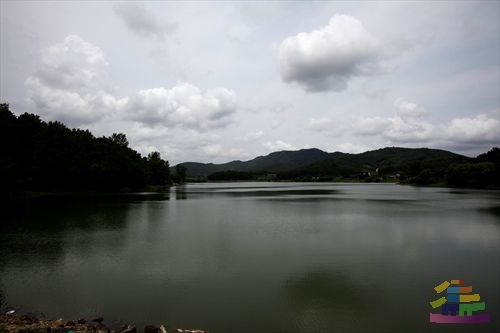
Looking towards the south from the top of Mireuksan Mountain, one can see Geumma Reservoir. The reservoir is shaped like the Korean peninsula. Hence it is also referred to as Jido Yeonmot, or Map Pond. The terrain is especially beautiful when viewing it through the fog in the early mornings.
The water comes from Mireuksan Mountain, ensuring a steady supply of water throughout the year. There are no factories or other contaminants nearby so the water quality is of the highest grade. Near the reservoir, one can find Seodong Park and Mahan Hall. Seodong Park is a sculpture park displaying various sculptures such as a bronze statue of Baekje’s King Muwang of Baekje and a statue of Seodong’s Princess Seonhwa. Mahan Hall showcases the lifestyle and culture of Mahan, a tribal confederation during the Samhan period. The park also features various facilities such as an observatory, fishing spot and a promenade.
Gimje Munsusa Temple (문수사(김제))
18.4Km 2024-04-07
158, Hwangsan 5-gil, Gimje-si, Jeonbuk-do
+82-63-547-0972
Munsusa Temple, located in Hwangsan-dong, Gimje, is a branch temple of Geumsansa Temple. The temple is located in the heart of nature atop Bonghwangsan Mountain (alt. 100 meters), which is surrounded by the seemingly endless Mangyeong Plains. The temple was built by the great monk Hyedeok Seonsa in the 25th year of King Mu of Baekje after he was visited in his dreams by Munsu Bosal (a Buddhist Saint). The temple was named ‘Munsu’ after ‘Munsugol,’ the original name of the neighborhood in which the temple is located.
In front of the temple stands an ancient zelkova tree whose giant girth measures well over 5 meters. The tree, which is called gwimok (meaning holy, miraculous tree), was recently designated a specially protected tree and is now the focus of preservation efforts. Every January 14th (according to the lunar calendar), local lovernment of Gimje holds a sacred ritual for the tree while the temple holds a ritual to honor the mountain spirit.
Wonkwang University Hospital (원광대학교병원)
19.5Km 2025-10-23
895 Muwang-ro, Iksan-si, Jeonbuk-do (54538)
WONKWNAG UNIVERSITY HOSPTIAL leads the advancement of medical care in Jeollabuk-do by centering on excellent medical personnel and introducing the latest medical equipment.
We are the first in the Jeonbuk State to receive the KAHF (Korean Accreditation Program for Hospitals serving Foreign Patients). Our hospital is a tertiary hospital equipped with a Jeonbuk Regional Cardiocerebrovascular Disease Center, Trauma Center, Regional Emergency Medical Center, and a multi-person hyperbaric oxygen therapy chamber.
As a renowned cancer specialist, we have consistently attained the highest level, Grade 1, in all four major cancer care assessments (colon cancer and stomach cancer for 7 consecutive years, and breast cancer and lung cancer for 6 consecutive years) conducted by the Health Insurance Review and Assessment Service (HIRA). With a team of specialists dedicated to developing cancer treatments, it provides specialized cancer management service. In particular, we have established a collaborative treatment system essential for patients with severe cancer through multidisciplinary integrated treatment by internal medicine, surgery, rehabilitation medicine, and oriental medicine hospitals together, and performed cancer surgeries with a high degree of difficulty on a large number of patients every year.
Gosan Changpo Village (창포마을)
19.8Km 2025-10-23
385 Daeajeosu-ro Gosan-myeon, Wanju-gun, Jeollabuk-do
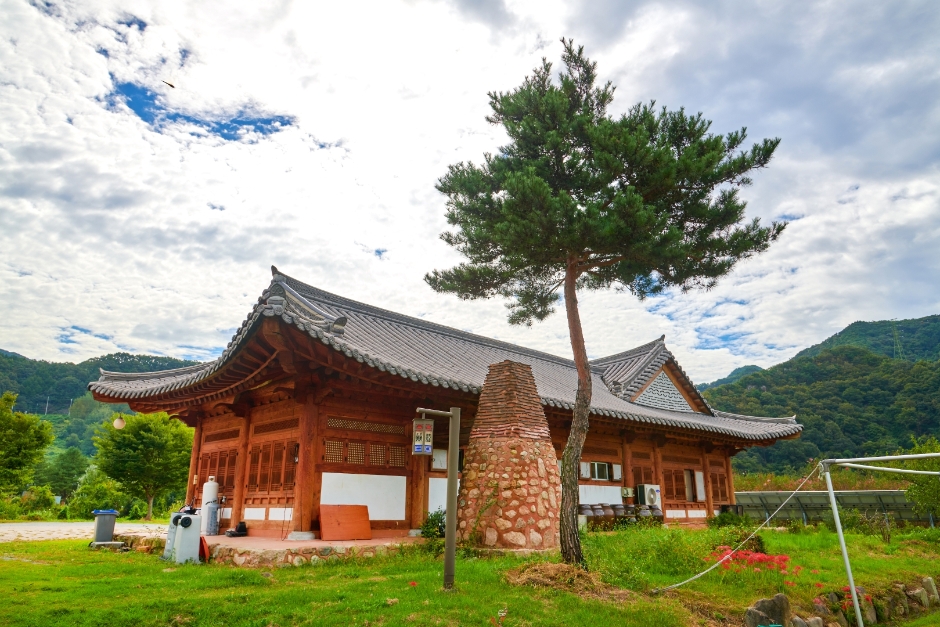
Since there is a colony of irises (Changpo), it is a quiet rural village that produces traditional handmade products using irises. Various experiences such as making natural shampoo and soap are available. It is essential to take a picture in a pose like a pictorial at the rustic concrete bridge where the BTS members sat, and the old shop Yongam Sanghoe where you can feel the years.
 English
 한국어
한국어 日本語
日本語 中文(简体)
 Deutsch
 Français
 Español
 Русский


