
Hanbyeok Tunnel (한벽터널)
10.2Km 2025-11-05
2 Girin-daero, Wansan-gu, Jeonju-si, Jeonbuk-do
A number of romanic and heartwarming scenes were filmed in the Hanbyeok Tunnel surrounded by ivy in the drama series "Twenty-Five Twenty-one." This place often appeared in scenes where to two main protagonists encouraged each other or soothed pain. It also appeared in the scene where the two broke up.
Hanbyeokdang Pavilion (한벽당)
10.2Km 2024-05-28
2 Girin-daero, Wansan-gu, Jeonju-si, Jeonbuk-do
+82-63-281-5139
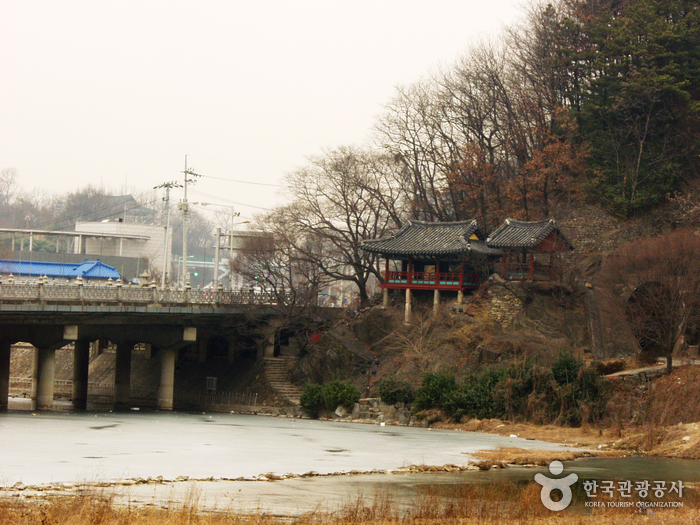
Located in Jeonbuk State, Hanbyeokdang Pavilion has been designated as a Tangible Cultural Property. The pavilion was built as part of a country house for a civil official from the Joseon dynasty. In the past, many writers often sought out Hanbyeokdang Pavilion to find inspiration in their writing. The pavilion is well known for the vista it offers of the beautiful surrounding mountains, thus making it one of the eight scenic beauties of Jeonju.

Gajok Hoegwan (가족회관)
10.2Km 2024-04-07
17 Jeollagamyeong 5-gil, Wansan-gu, Jeonju-si, Jeonbuk-do
Gajok Hoegwan is a restaurant specializing in Jeonju bibimbap. The restaurant opened in the 1970s, and its signature menu is Jeonju bibimbap, which is light and flavorful with a combination of freshly cut vegetables, meat, bean sprouts, and eggs. The restaurant is built in a hanok, giving it a traditional Korean atmosphere. It's a favorite among locals and tourists alike.
Gaeksa-gil (객사길)
10.2Km 2024-04-07
10-1 Jungang-dong 2(i)-ga, Wansan-gu, Jeonju-si, Jeonbuk-do
+82-63-282-1330
Gaeksa, which was installed in every town during the Goryeo and Joseon periods, was a type of accommodation where foreign envoys or government officials from other regions stayed. Gaeksa can still be seen today in downtown Jeonju and there's a "Gaeksa-gil Street" at the main street of the old city center. The street features countless roadside shops and franchise restaurants so both Jeonju locals and tourists frequently visit the area. Also, Jeonju Gaeksa-gil is where the Jeonju International Film Festival is held every year. Considered as one of the three main Korean film festivals, the Jeonju International Film Festival primarily presents independent films and has discovered many hit movies and new actors. On one side of Gaeksa-gil, you can also find Jeonju Cine Complex and several movie theaters, which is why it is called the "Film Street." In the back of the Film Street, restaurants, cafes and clothing shops attract movie fans to form so-called "Gaengnidan-gil."
Omokdae and Imokdae Historic Sites (오목대와 이목대)
10.2Km 2025-07-22
55 Girin-daero, Wansan-gu, Jeonju-si, Jeonbuk-do
+82-63-281-2114
Omokdae Historic Site is located on top of a steep hill and is one of the places where Yi Seong-gye, who later became King Taejo, the first king of the Joseon dynasty, stopped to celebrate his victory on his way home from a war against the Japanese army at Unbong Peak of Hwangsan Mountain. Across the bridge from Omokdae is Imokdae Historic Site, situated at the foot of Seungamsan Mountain. Approximately 80 meters downhill from Imokdae are memorial stones and a building where Mokjo, the great-great-grandfather of King Taejo, once used to live. The engraved letters on the stones are the handwritings of Emperor Gojong. Mokjo moved to Hamgyeongdo as a result of a dispute with the then minister of Jeonju, an incident which King Taejo believed to have laid the foundation for him to shape the Joseon dynasty.
Han Kook Jib (한국집)
10.2Km 2024-12-26
119, Eojin-gil, Wansan-gu, Jeonju-si, Jeonbuk-do
+82-63-284-0086, 2224
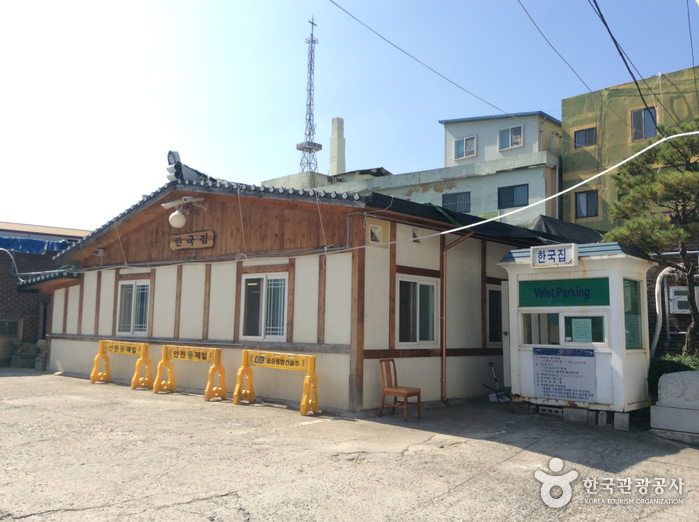
Opened in 1952, Han Kook Jib has upheld its tradition for three generations. It is housed in a renovated hanok with a beautiful courtyard. Han Kook Jib is conveniently located near major tourist sites in Jeonju, such as Jeonju Hanok Village and Gyeonggijeon Shrine.
Dokkom [Tax Refund Shop] (도꼼)
10.2Km 2024-04-19
14-3, Taejo-ro, Wansan-gu, Jeonju-si, Jeollabuk-do
-
Royal Portrait Museum (어진박물관)
10.2Km 2024-04-07
44, Taejo-ro, Wansan-gu, Jeonju-si, Jeonbuk-do
+82- 63-231-0090
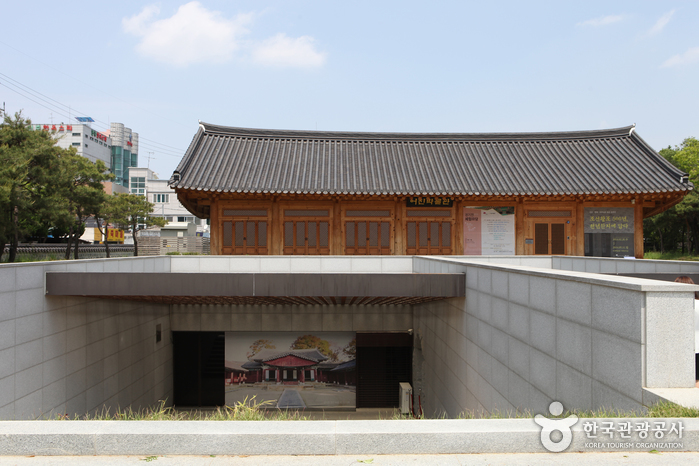
Opened on November 6, 2010, the Royal Portrait Museum is one of the newest attractions of Jeonju, located within the Gyeonggijeon Shrine. Royal Portrait Museum is a valuable museum as a new tourism resource of Jeonju as well as Gyeonggijeon Shrine and the Portrait of King Taejo, as well as other various high-class exhibitions to preserve, manage, and enhance the glorious cultural assets of Joseon royal family. The museum is comprised of one above-ground level and one underground level with an area of 1,193.71 square meters. The Portrait of King Taejo and six other king’s portraits (Portrait of King Sejong, King Yeongjo, King Jeongjo, King Cheoljong, King Gojong, and King Sunjong) are exhibited on the first floor. The portraits are preserved in temperature- and humidity-controlled cases. In addition, the museum houses History Hall, Palanquin Hall, a planned exhibition hall, resting area, management office and storage room for relics. Palanquin Hall exhibits Hyangjeong (Palanquin for Incense Burner and Case), Sinyeon (Palanquin for Royal Portrait and Palanquin for Mortuary Tablet), Chaeyeo (Palanquin for High Officials), Gagyo (Palanquin for Ritual Items) featuring Korea’s sole preserved palanquin. History Hall houses approximately 80 relices related to Gyeonggijeon Shrine and Jogyeong Shrine, ancestral ritual ceremony, building, and others relics. Since the museum's opening, it makes continual efforts to become a central place for Jeonju residents to fulfill their cultural feelings. The museum operates various program like exploring famous historic sites in Gyeonggijeon Shrine, hands-on programs such as a guard experience to protect the shrine, and duplicating Gyeonggijeon Shrine’s relics using traditional portrait-making techniques.
Baramssoeneun-gil Road (바람쐬는길)
10.2Km 2024-04-07
21 Baramssoeneun-gil, Wansan-gu, Jeonju-si, Jeonbuk-do
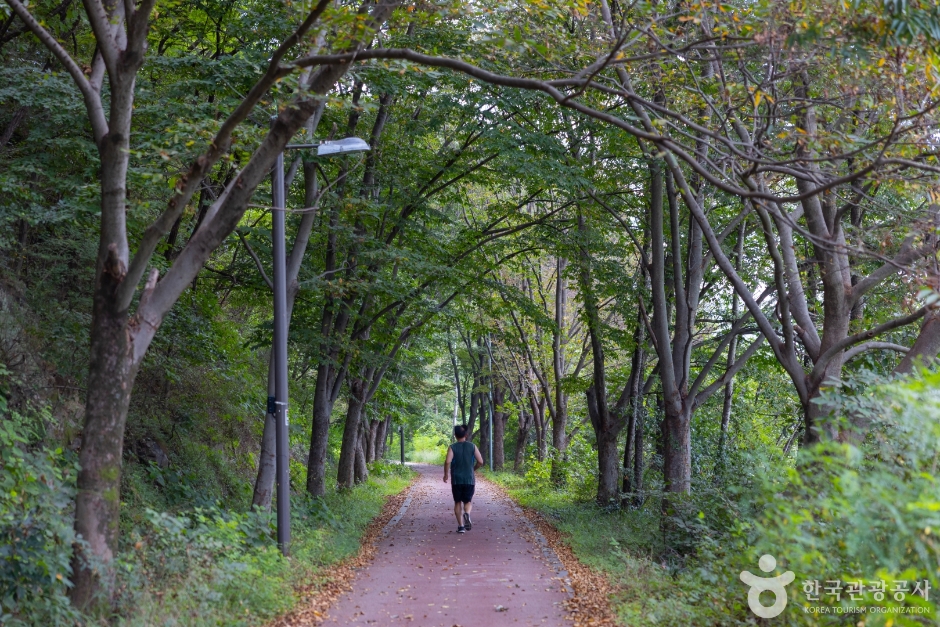
Baramssoeneun-gil Road is the name of the path leading from Jeonju Eco Museum to Hanbyeok Tunnel. The pathway's name comes from the breeze that blows along the way, making it great for taking a walk. The road was also selected by the Korea Tourism Organization as one of the locations great for traveling with pets. There is also a bicycle rental station located along the road. Hanbyeok Tunnel at the end of the path is famous as a filming site for the drama "Twenty-five Twenty-one (2022)," with many people taking photos here as the main characters.
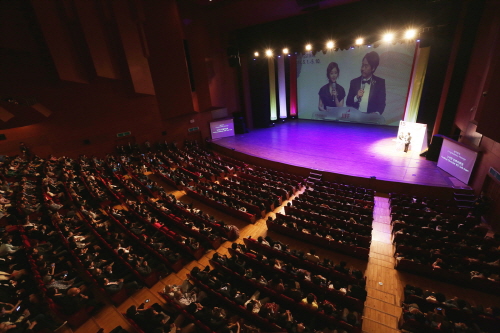
Jeonju International Film Festival (전주국제영화제)
10.2Km 2025-07-11
22 Jeonjugaeksa 3-gil, Wansan-gu, Jeonju-si, Jeonbuk-do
+82-63-288-5433
Jeonju International Film Festival features an exciting combination of fun and films for people to enjoy.
 English
 한국어
한국어 日本語
日本語 中文(简体)
 Deutsch
 Français
 Español
 Русский


