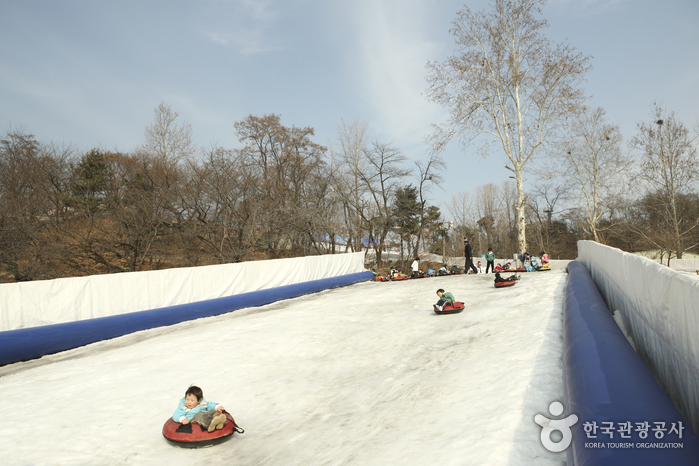
Korean Children’s Center Snow Sledding Field (어린이회관 눈썰매장)
2.4Km 2021-02-10
441, Gwangnaru-ro, Gwangjin-gu, Seoul
+82-1800-5309
The Korean Children's Center has a many subsidiary facilities as well as its excellent snow sledding field. The center has something for the entire family, offering various performances and recreation activities.

The North Face - Guui Branch [Tax Refund Shop] (노스페이스구의점)
2.4Km 2024-04-19
81, Jayang-ro, Gwangjin-gu, Seoul
-
![Olive Young - Gangdong-gu Office Branch [Tax Refund Shop] (올리브영 강동구청)](http://tong.visitkorea.or.kr/cms/resource/95/2878895_image2_1.jpg)
Olive Young - Gangdong-gu Office Branch [Tax Refund Shop] (올리브영 강동구청)
2.4Km 2024-04-18
19, Seongnae-ro, Gangdong-gu, Seoul
-
Asan Medical Center (서울아산병원)
2.5Km 2025-10-23
(Pungnap-dong), 88 Olympic-ro 43-gil, Songpa-gu, Seoul
Opened in June 1989, Asan Medical Center is the largest tertiary hospital in Korea with 2,764 beds. In 2023, we treated an average of 13,260 outpatients and 2,539 inpatients per day, and performed 70,892 surgeries throughout the year.
With three specialty hospitals–Cancer Institute, Heart Institute, and Children's Hospital–and more than 50 specialized centers, we lead the world in cancer, organ transplantation, and cardiac care. In recognition of our efforts, we have topped the list of Korea's Most Admired Hospitals for 18 consecutive years and ranked NO. 1 in Korea for six consecutive years in U.S. Newsweek's World's Best Hospitals.
As a "quarternary hospital" serving critically ill patients from Korea and abroad who come to us as their last hope, Asan Medical Center treats more than 20,000 international patients from around 100 countries, including the United States, United Arab Emirates, and Mongolia. Medical professionals from developed countries visit us to learn our advanced medicine. Over the past decade, more than 3,700 professionals from nearly 90 countries have visited us to learn the latest medical techniques.
Junggok-dong Furniture Street (중곡동 가구거리)
2.6Km 2025-03-17
Cheonho-daero, Gwangjin-gu, Seoul
010-5508-0089
Junggok-dong Furniture Street stretches between Achasan Subway Station and Gunjagyo Bridge, hosting a concentration of furniture stores on either side of the main road. This area accommodates a diverse range of furniture stores, featuring well-known domestic and international brands alongside smaller and medium-sized furniture shops. It serves as a convenient destination for customers to compare and purchase various furniture items, including beds, sofas, dining tables, wardrobes, chairs, and interior accessories, all within close proximity. The accessibility to Gunja Subway Station makes it easily reachable via public transportation.
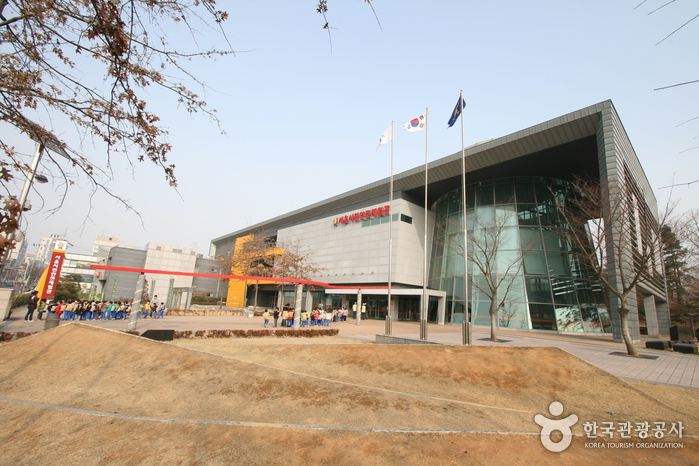
Gwangnaru Safety Experience Center (광나루안전체험관)
2.6Km 2025-03-29
238, Neungdong-ro, Gwangjin-gu, Seoul
+82-2-2049-4061
Gwangnaru Safety Experience Center was founded in 1999 after two fire accidents in which many children lost their lives. These tragedies emphasized the necessity of establishing a disaster training center for common citizens.
Gwangnaru Safety Experience Center is a three-story building with one basement floor, covering an area of more than 5,000 m². The basement floor includes a small theater. The first floor is set up for natural disaster training and consists of an orientation hall, storm simulation training room, earthquake simulation room, computer tests on fire safety knowledge and others. The second floor is a place for artificial catastrophe training. It consists of a smoke escape training room, fire extinguisher training room, first-aid (CPR) training room and practice place for calling 119. The third floor is used for rescue training and consists of a rescue training room, screening room, training for professionals and video examples of the five biggest disasters that have occurred in Seoul. Overall there are about 20 training areas established, so citizens can experience the imitation of a disaster by themselves and learn easily and in an interesting way how to cope with a disaster.
Amsa-dong Prehistoric Site Museum (암사동선사유적박물관)
2.6Km 2023-12-22
875 Olympic-ro, Gangdong-gu, Seoul
The archaeological sites in Amsa-dong, Seoul, were a collective settlement where people lived during the Neolithic Age about 6,000 years ago and became known to the world after the sand dunes along the Hangang River caved in during the great flood of 1925, exposing numerous pieces of comb-patterned pottery. The area designated as a historic site in 1979, and excavation of the site took place from 1981 to 1988. The cultural heritage protection area was expanded to a total area of 78,133㎡. Currently, nine Neolithic dugout huts and one experiential dugout hut have been restored. The exhibitions currently open to the public are Exhibition Hall 1, which displays a restoration of a Neolithic Age dugout, and Exhibition Hall 2, which displays various panels and models to help understand the prehistoric era as a whole.
![Olive Young - Gunja Station Branch [Tax Refund Shop] (올리브영 군자역)](http://tong.visitkorea.or.kr/cms/resource/96/2878796_image2_1.jpg)
Olive Young - Gunja Station Branch [Tax Refund Shop] (올리브영 군자역)
2.6Km 2024-04-23
548, Cheonho-daero, Gwangjin-gu, Seoul
-
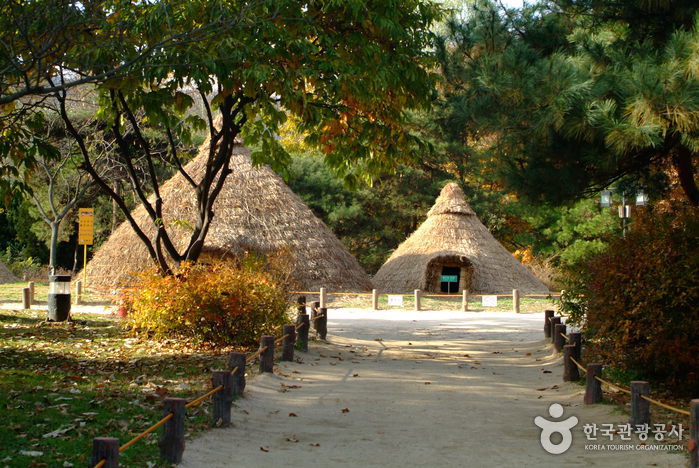
Archaeological Site in Amsa-dong, Seoul (서울 암사동 유적)
2.6Km 2021-07-27
875, Olympic-ro, Gangdong-gu, Seoul
+82-2-3425-6520
The Archaeological Site in Amsa-dong reproduces the lifestyle of the Neolithic Era. Even the entrance gate is shaped like a huge dolmen and the trash cans are ancient diagonal-line patterned earthenware. Archaeological Site in Amsa-dong was excavated in 1925 when a flood washed away the soil on the banks of the Hangang River and exposed a large number of diagonal-line patterned earthenware. After several excavations, the Archaeological Site in Amsa-dong was established.
The site was a location for a massive colony, thus many ancient buildings, stone axes and stone arrows have been uncovered as well as countless diagonal-line patterned earthenware. The housing site is round with a spot in the center for fire. The site is colossal and possesses nine mud huts, two exhibition halls displaying ancient artifacts and an open mud hut where visitors can experience life in the Neolithic Era. The site offers many attractions such as mud huts and promenades. Archaeological Site in Amsa-dong is also very educational for children and families who want to learn and experience the Neolithic Age.
![JDX - Gangdong Station Branch [Tax Refund Shop] (강동역점JDX)](http://tong.visitkorea.or.kr/cms/resource/91/2878891_image2_1.jpg)
JDX - Gangdong Station Branch [Tax Refund Shop] (강동역점JDX)
2.7Km 2024-04-22
1084, Cheonho-daero, Gangdong-gu, Seoul
-
 English
 한국어
한국어 日本語
日本語 中文(简体)
 Deutsch
 Français
 Español
 Русский


