![Beanpole - Hyundai Pangyo Branch [Tax Refund Shop] (빈폴 현대 판교점)](http://tong.visitkorea.or.kr/cms/resource/86/2881686_image2_1.jpg)
Beanpole - Hyundai Pangyo Branch [Tax Refund Shop] (빈폴 현대 판교점)
13.4Km 2024-04-23
20, Pangyoyeok-ro 146beon-gil, Bundang-gu, Seongnam-si, Gyeonggi-do
-

Cartier - Hyundai Pangyo Branch [Tax Refund Shop] (까르띠에 현대 판교점)
13.4Km 2024-04-23
20, Pangyoyeok-ro 146beon-gil, Bundang-gu, Seongnam-si, Gyeonggi-do
-
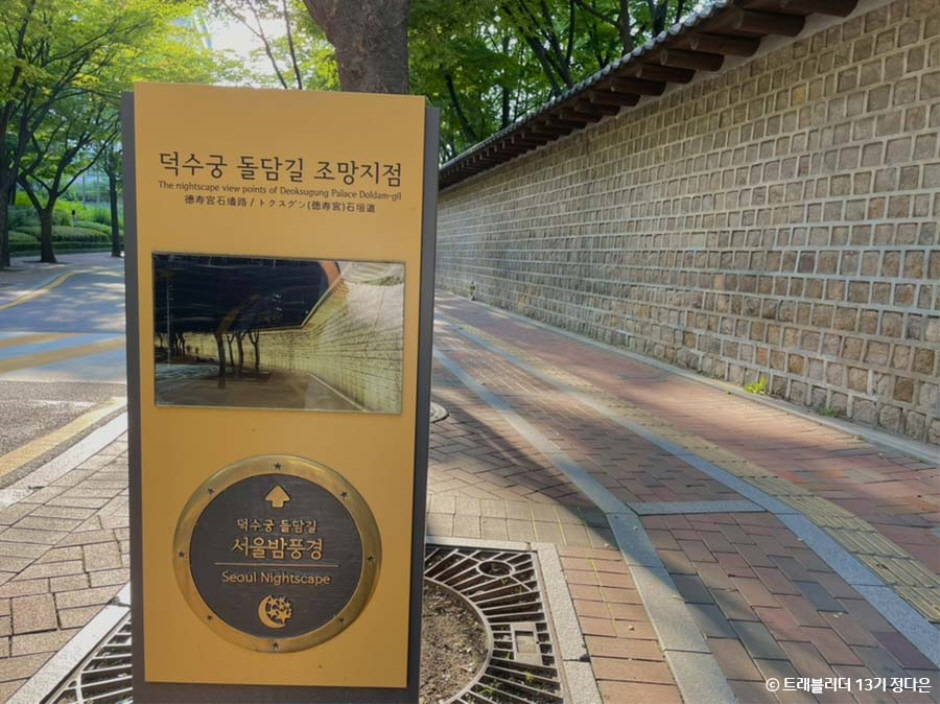
Jeongdong-gil Road (정동길)
13.4Km 2024-06-19
2-1 Jeongdong-gil, Jung-gu, Seoul
Jeongdong-gil Road is one of Seoul's most famous walking paths, stretching from the intersection in front of Jeongdong Church to Saemunan-gil Road. The street holds importance in Korea's modern history, with the surroundings serving as a living museum of this. During the Joseon dynasty, the area developed into a residental space for distant members of the royal family, with a palace and royal tombs in the area. In 1999, the pedestrian walking area was expanded by turning the two-way road into a one-way road. Since then, the road has earned many awards and honors.
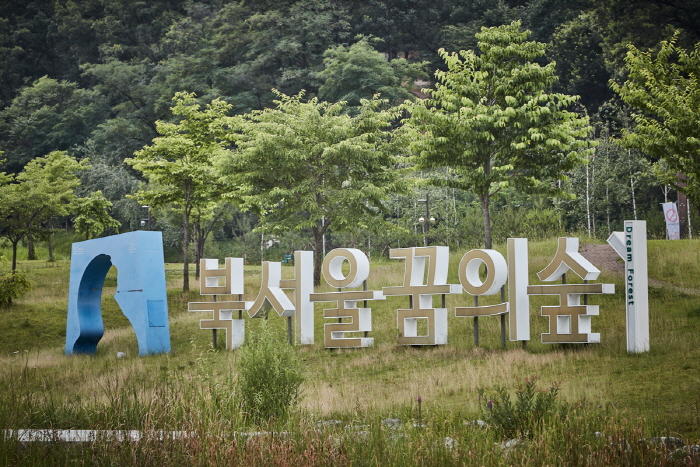
Dream Forest (북서울 꿈의숲)
13.4Km 2023-10-19
173 Wolgye-ro, Gangbuk-gu, Seoul
+82-2-2289-4000
Dream Forest, previously known as Odong Neighborhood Park, is located in Gangbuk-gu, Seoul. The park is surrounded by cherry blossom trees, and the northern section is filled with maple trees, making the park especially attractive in spring and fall. The Changnyeongwigung Ritual House (Registered Cultural Heritage) has been restored with traditional landscaping such as a pond, pavilion and waterfall created nearby to double the genuine beauty of a traditional Korean park. Major attractions of the park include Wolyeongji Pond, Grass Square, Wolgwangpokpo Falls, Aewoljeong Pavilion, Chilbokji Falls, Event Garden, Children’s Gallery, Wild Grass Garden, Deer Ranch, Exploring Path, Forest Rest, and a water park. The slanted hillside which served as sledding slopes is now a complex cultural space with Buk-Seoul Art Center that houses a fantastic-looking observatory, performance hall, book café, gallery, restaurant, jumping fountain, and children’s playground.
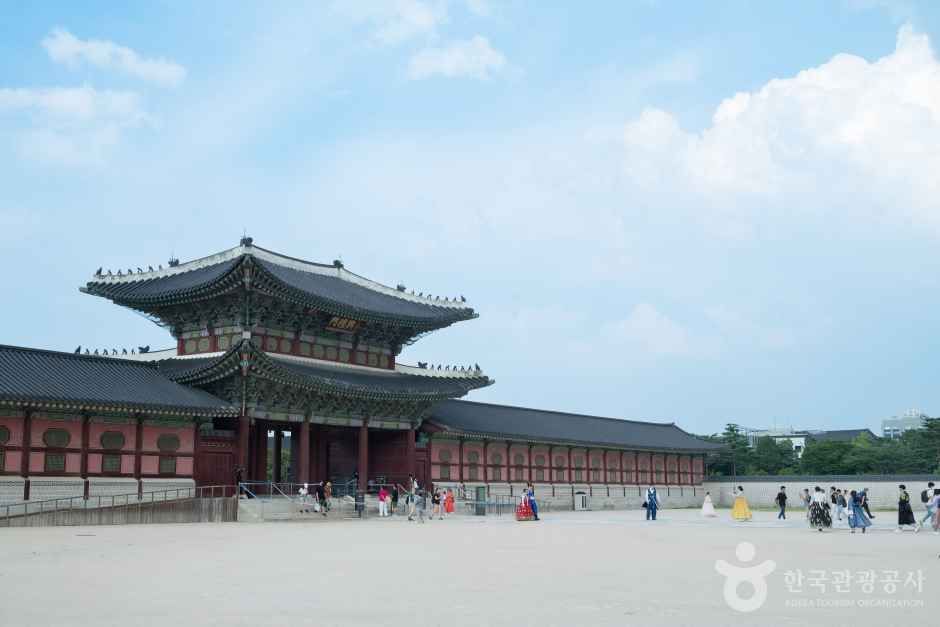
Gyeongbokgung Palace (경복궁)
13.4Km 2025-10-23
161 Sajik-ro, Jongno-gu, Seoul
+82-2-3700-3900
Gyeongbokgung Palace was built in 1395 as the official palace of the Joseon dynasty by Yi Seong-gye, the future King Taejo and founder of the new regime. Gyeongbokgung Palace is commonly referred to as the Northern Palace because of its location to the north, comparied to Changdeokgung Palace in the east and Gyeonghuigung Palace in the west. Gyeongbokgung Palace is arguably the most beautiful and is the largest of all five palaces. Many Joseon kings were crowned here. The premises were once destroyed by fire during the Imjin War (1592-1598). However, all of the palace buildings were later restored under the leadership of Heungseondaewongun during the reign of King Gojong. The assassination of Empress Myeongseong, however, resulted in Gyeongbokgung Palace losing its function as a royal palace, eventually witnessing the downfall of the Joseon dynasty. Gyeongbokgung Palace retains the original Gyeonghoeru Pavilion, a prime example of Joseon architecture, and the Hyangwonjeong Pavilion and pond. The sculptures in the Geunjeongjeon Hall exemplify Joseon-era sculpture techniques. The west side of the area outside Heungnyemun Gate is occupied by the National Palace Museum of Korea, while the eastern side of Hyangwonjeong Pavilion within the Gyeongbokgung Palace is occupied by the National Folk Museum of Korea.
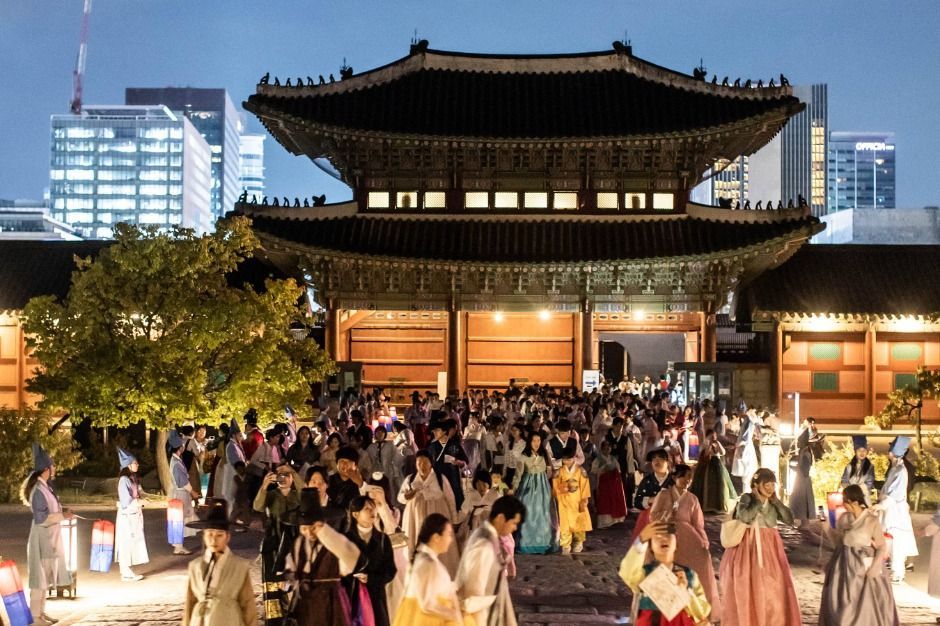
K-Royal Culture Festival (궁중문화축전)
13.4Km 2025-07-29
161 Sajik-ro, Jongno-gu, Seoul
+82-1522-2295
The K-Royal Culture Festival is held at the five Royal Palaces and Jongmyo Shrine. The festival first began in 2014 and provides visitors with first-hand knowledge of these important cultural heritages through unique performances, exhibitions, experiences and programs. The festival expanded in 2021 to be hosted twice a year, in spring and in fall.
Samcheong Sujaebi (삼청동수제비)
13.4Km 2024-03-04
101-1 Samcheong-ro, Jongno-gu, Seoul
+82-2-735-2965
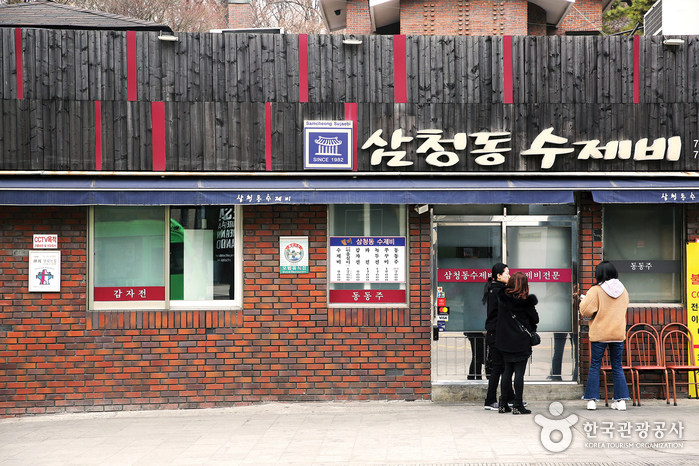
Samcheong Sujaebi is a handmade sujebi (hand-pulled dough soup) specialty restaurant located in Samcheong-dong. Sujebi is a dish made by tearing hand-pulled dough into pieces and boiling it in anchovy broth, among other broths. The signature menu features sujebi with sliced pumpkin, clams, and potatoes, all boiled together and served in a pot. Another specialty is the potato pancake made exclusively from 100% potatoes. Nearby attractions include Bukchon Hanok Village, the National Museum of Modern and Contemporary Art, and Gyeongbokgung Palace.
Danha(단하)
13.4Km 2025-11-05
39-7 Palpan-gil, Jongno-gu, Seoul
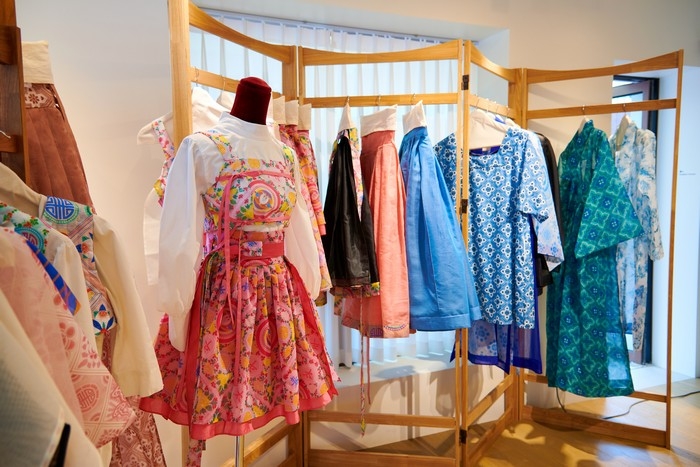
BLACKPINK's “HOW YOU LIKE THAT” music video created a sensation, reaching 100 million views within 32 hours of its release. The most noteworthy part of the music video was the hanbok they wore. Danha, which was in charge of making the costumes, improved the traditional hanbok and completely recreated it as a stage costume, garnering attention from all over the world. Danha is famous for designing hanboks using traditional patterns. The patterns engraved on the clothes in the BLACKPINK music video used the phoenix design pattern of the royal cloth. Danha's hanbok can be purchased through the online shop, and if you want to have it custom-made, you can visit Danha Maison after making a reservation.
![Olive Young - Jeongdong Branch [Tax Refund Shop] (올리브영 정동)](http://tong.visitkorea.or.kr/cms/resource/11/2888011_image2_1.jpg)
Olive Young - Jeongdong Branch [Tax Refund Shop] (올리브영 정동)
13.5Km 2024-04-22
26, Saemunan-ro, Jung-gu, Seoul
-
Korean National Police Heritage Museum (경찰박물관)
13.5Km 2021-12-21
41, Saemunan-ro, Jongno-gu, Seoul
+82-2-3150-3681
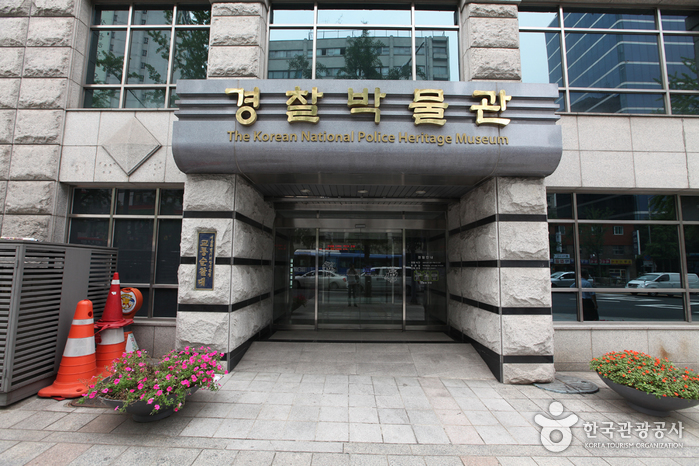
The police museum opened on October 14, 2005 to give a better understanding of the job of the police and to offer a formal education to children who wish to become police officers in the future. The history hall of the museum is designed for visitors to learn about the history of Korean police at a glance, exhibiting information on the police force from the Joseon dynasty up until current times.
Visitors to the museum can pretend to be police officers by touching actual equipment and learning about an officer's daily tasks. Visitors can also get in patrol cars, wear a police uniform, experience shooting a gun through a simulation, and learn self-defense martial arts and arrest techniques. Visitors can also go to the museum jail.
 English
 한국어
한국어 日本語
日本語 中文(简体)
 Deutsch
 Français
 Español
 Русский


