![Olive Young - City Hall Station Branch [Tax Refund Shop] (올리브영 시청역)](http://tong.visitkorea.or.kr/cms/resource/77/2878577_image2_1.jpg)
Olive Young - City Hall Station Branch [Tax Refund Shop] (올리브영 시청역)
10.7Km 2024-04-22
1, Sejong-daero 16-gil, Jung-gu, Seoul
-

Kai Plastic Surgery [Tax Refund Shop] (카이성형외과의원)
10.7Km 2024-04-23
3F, 830, Seolleung-ro, Gangnam-gu, Seoul
-
Asan Medical Center (서울아산병원)
10.7Km 2025-10-23
(Pungnap-dong), 88 Olympic-ro 43-gil, Songpa-gu, Seoul
Opened in June 1989, Asan Medical Center is the largest tertiary hospital in Korea with 2,764 beds. In 2023, we treated an average of 13,260 outpatients and 2,539 inpatients per day, and performed 70,892 surgeries throughout the year.
With three specialty hospitals–Cancer Institute, Heart Institute, and Children's Hospital–and more than 50 specialized centers, we lead the world in cancer, organ transplantation, and cardiac care. In recognition of our efforts, we have topped the list of Korea's Most Admired Hospitals for 18 consecutive years and ranked NO. 1 in Korea for six consecutive years in U.S. Newsweek's World's Best Hospitals.
As a "quarternary hospital" serving critically ill patients from Korea and abroad who come to us as their last hope, Asan Medical Center treats more than 20,000 international patients from around 100 countries, including the United States, United Arab Emirates, and Mongolia. Medical professionals from developed countries visit us to learn our advanced medicine. Over the past decade, more than 3,700 professionals from nearly 90 countries have visited us to learn the latest medical techniques.
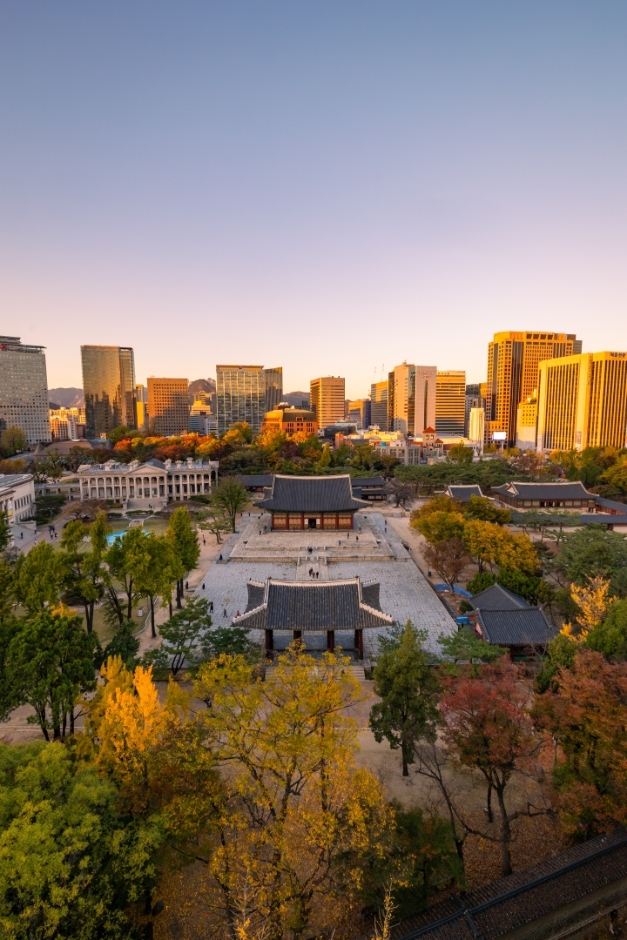
Deoksugung Palace (덕수궁)
10.7Km 2025-06-25
99 Sejong-daero, Jung-gu, Seoul
Registered as a Historic Site, Deoksugung Palace was initially not a royal palace, but the residential home of Grand Prince Wolsan (1454-1488), the older brother of King Seongjong (1469-1494) of the Joseon dynasty. It wasn't until 1593 that the palace was used as a temporary palace of the royal family after their home was burned down during the Imjin War. King Seonjo also stayed at Deoksugung Palace after returning to the city. It became a proper palace when Gwanghaegun (1575-1641) ascended to the throne and gave this royal residence the name Gyeongungung Palace in 1611. Over the following decades, the palace alternated between being an official palace and a temporary residence. The name did not change officially to Deoksugung Palace, meaning the “palace of virtuous longevity,” until 1907. While the palace once encompassed a vast area with many buildings, the current palace grounds are just a small shadow of the prior splendor, with very few structures remaining.
![LG Best Shop - Gangdong Main Branch [Tax Refund Shop] (엘지베스트샵 강동 본점)](http://tong.visitkorea.or.kr/cms/resource/84/2878884_image2_1.jpg)
LG Best Shop - Gangdong Main Branch [Tax Refund Shop] (엘지베스트샵 강동 본점)
10.7Km 2024-04-19
1449, Yangjae-daero, Gangdong-gu, Seoul
-
![Worksout - Apgujeong Branch [Tax Refund Shop] (웍스아웃 압구정)](http://tong.visitkorea.or.kr/cms/resource/33/2879533_image2_1.jpg)
Worksout - Apgujeong Branch [Tax Refund Shop] (웍스아웃 압구정)
10.7Km 2024-04-22
20-4, Seolleung-ro 157-gil, Gangnam-gu, Seoul
-
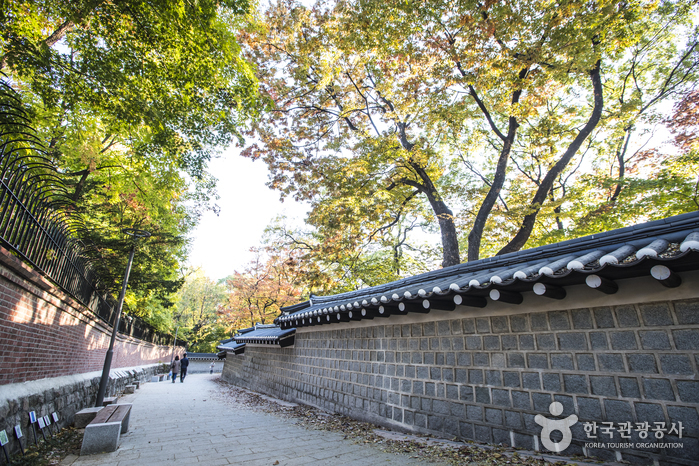
Deoksugung Stone Wall Path (덕수궁 돌담길)
10.7Km 2025-01-10
24 Sejong-daero 19-gil, Jung-gu, Seoul
The Deoksugung Stone Wall Path runs along the wall of Deoksugung Palace. It is beautifully lit and landscaped, giving it a romantic atmosphere even at night. There are street performances and flea markets, and the area boasts many famous cafes and restaurants along Jeongdong street. In autumn, the ginkgo trees and walls form a stunning scene. Close to major cultural facilities such as the Seoul Museum of Art and Seoul Museum of History, it attracts numerous visitors come for a stroll.
![Lush Korea - Spa Branch [Tax Refund Shop] (㈜러쉬코리아 스파)](http://tong.visitkorea.or.kr/cms/resource/25/2879525_image2_1.jpg)
Lush Korea - Spa Branch [Tax Refund Shop] (㈜러쉬코리아 스파)
10.7Km 2024-04-22
868, Eonju-ro, Gangnam-gu, Seoul
-
![Burberry - Cheongdam Branch [Tax Refund Shop] (버버리 청담)](http://tong.visitkorea.or.kr/cms/resource/94/2887994_image2_1.jpg)
Burberry - Cheongdam Branch [Tax Refund Shop] (버버리 청담)
10.7Km 2024-04-22
459, Dosan-daero, Gangnam-gu, Seoul
-
Good Morning Eyewear [Tax Refund Shop] (굿모닝안경)
10.7Km 2024-04-22
61, Namdaemunsijang-gil, Jung-gu, Seoul
-
 English
 한국어
한국어 日本語
日本語 中文(简体)
 Deutsch
 Français
 Español
 Русский


