![Homeplus Express - Myeongnyun Branch (No. 2) [Tax Refund Shop] (홈플러스익스프레스 명륜2호)](http://tong.visitkorea.or.kr/cms/resource/80/2878180_image2_1.jpg)
Homeplus Express - Myeongnyun Branch (No. 2) [Tax Refund Shop] (홈플러스익스프레스 명륜2호)
8.2Km 2024-04-18
5, Hyehwa-ro 3-gil, Jongno-gu, Seoul
-
![Olens - Myeong-dong Embassy Branch [Tax Refund Shop] (오렌즈 명동대사관점)](http://tong.visitkorea.or.kr/cms/resource/05/2878605_image2_1.jpg)
Olens - Myeong-dong Embassy Branch [Tax Refund Shop] (오렌즈 명동대사관점)
8.2Km 2024-04-22
50, Myeongdong 2-gil, Jung-gu, Seoul
-

Myeongdong Yeongyang Center (명동 영양센터)
8.2Km 2024-03-11
52, Myeongdong 2-gil, Jung-gu, Seoul
+82-2-776-2015
Myeongdong Yeongyang Center specializes in roasted chicken and ginseng chicken soup. The jeongi gui tongdak (rotisserie chicken) is light and juicy with just the right amount of fat, and the crispy skin is excellent. The vinegar-marinated radishes are a must-have side dish. Samgye tang (ginseng chicken soup) is also the signature dish of the restaurant. The lunch special, Tongdak set menu (Roasted chicken set menu), features roasted chicken, chicken soup, nutritional bread, and vegetables, offering a satisfying ensemble.
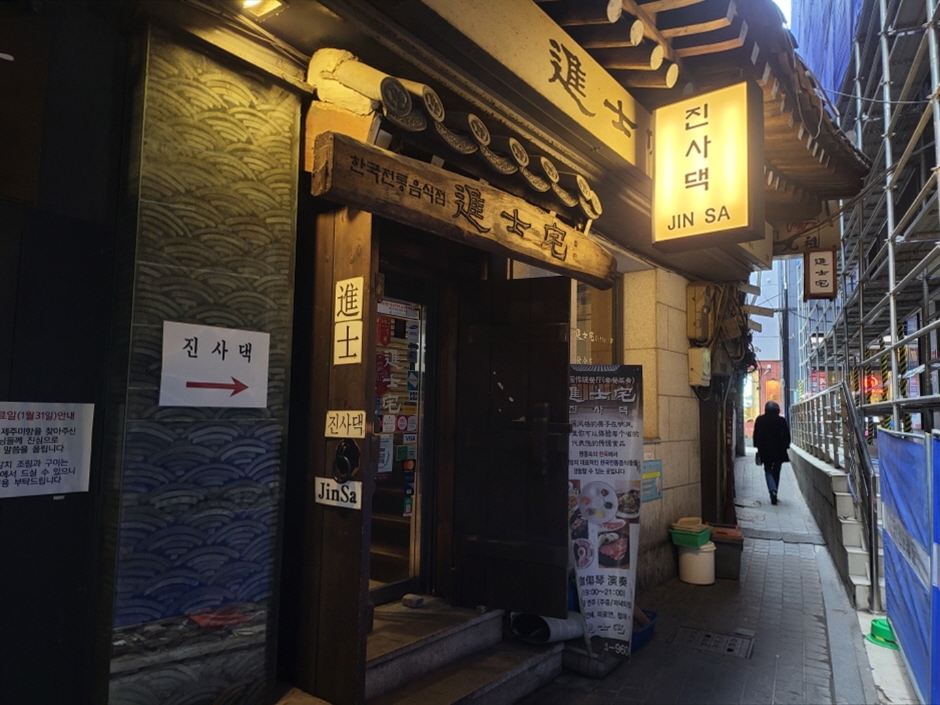
Jinsadaek (진사댁)
8.2Km 2024-03-15
30-1 Myeongdong-gil, Jung-gu, Seoul
+82-2-774-9605
Jinsadaek is a traditional Korean restaurant located near Myeongdong Cathedral. It specializes in serving high-end Korean table d'hote prepared with ingredients such as beef, abalone, fish, soybean paste, blue crabs, and japchae. Additionally, they offer specialties like bori gulbi jeongsik (barley-aged dried yellow croaker set menu), ganjang gejang jeongsik (soy sauce marinated crab set menu).
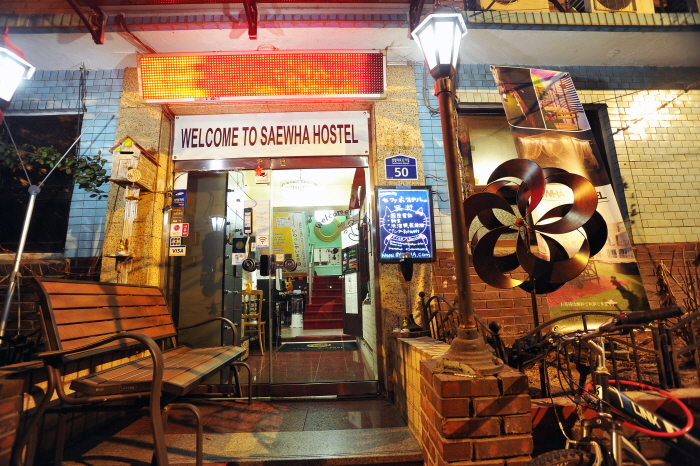
SAEWHA HOSTEL(세화호스텔)
8.2Km 2024-06-20
50 , Samil-daero 32ga-gil, Jongno-gu, Seoul
+82-10-3780-5988
Located in Jongno, in the heart of Seoul, Saehwa Hostel offers a variety of guest rooms, including ondol rooms and bedrooms, for up to 3 people. There’s a bathtub in each room. Shared PCs, massage chairs, microwave ovens, washing machines and dryers are all available free of charge. A simple free breakfast is provided, plus a free international phone service and a foreign language guidance service. Seoul Station is 15 minutes away by subway, and the airport limousine bus stops at Jongno 3-ga station. Changdeokgung Palace, Jongmyo Shrine, and downtown shopping streets are all reachable on foot.
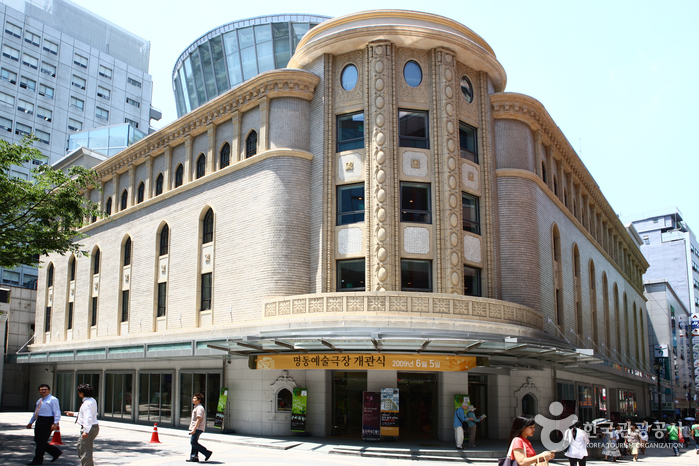
Myeongdong Theater (명동예술극장)
8.2Km 2021-06-09
35, Myeongdong-gil, Jung-gu, Seoul
+82-1644-2003
Myeongdong Theater is an exclusive theatrical performance center, located in what was originally the National Theater of Korea. From 1934 to 1973, the National Theater of Korea pioneered Korean arts and culture, serving as a movie theater, performance hall and art theater. Though it closed its doors in 1975, it was reopened on June 5, 2009 after 3 years of renovation under the name of Myeongdong Theater. The exterior of the theater was left untouched, while the interior was completely updated for a modern design. The theater has a mid-sized performance hall with state-of-the-art stage equipment and a seating capacity of 588 seats. The close proximity of the seats and the stage offers great views as well as allows the audience to share the passion of the performers on stage. The theater presents a range of performances such as theatrical plays, experimental plays, non-verbal performances, and musicals. In addition, the place is a popular venue for diverse events like acting contests, theater festivals and performance festivals.
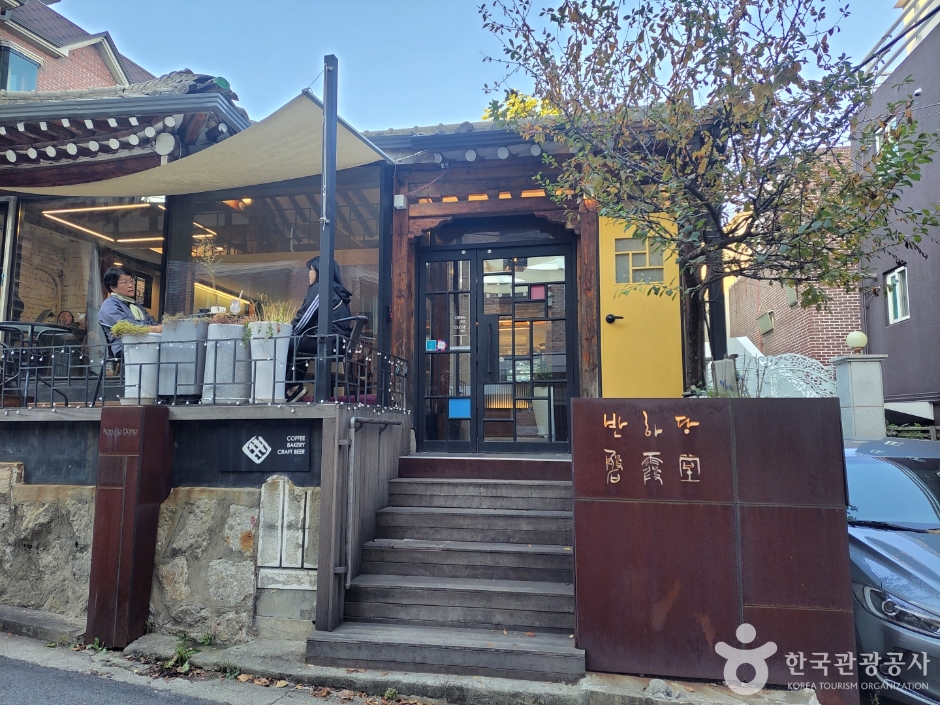
Banhadang (반하당)
8.2Km 2024-02-15
36 Seongbuk-ro 5-gil, Seongbuk-gu, Seoul
Banhadang is a café located 20 minutes from the UNESCO World Heritage site Changdeokgung Palace. Renovated from a hanok, it preserves the charm of hanok with open spaces, leaving only the pillars of the original structure. The signature menu includes a Strawberry latte made with homemade strawberry syrup and milk. During the summer season, the jeontong pat bingsu (traditional shaved ice with red beans), made with domestically sourced jujube and red bean, is also popular.
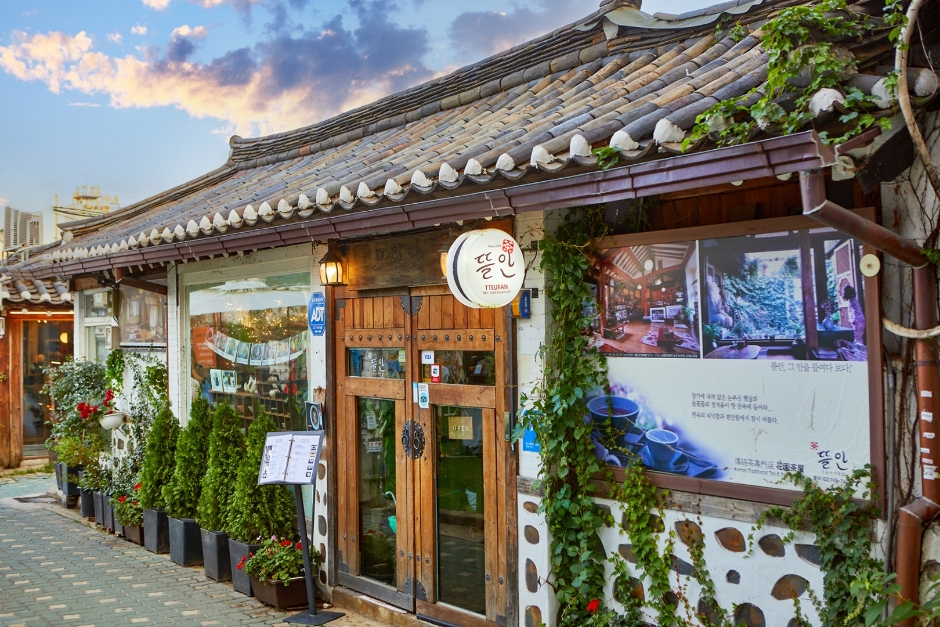
Tteulan Teahouse (뜰안)
8.2Km 2024-12-10
Tteulan Teahouse is a cafe that really allows one to feel the tradition and flair of Korea. Tteulan has two entrances: one facing the wide alley and the other facing the smaller one. The smaller entrance is decorated like a garden, so it feels as if one is stepping into a land of fairy-tales. The café has a floor seating tables with traditional items like gadari soban (a table with legs that curve like a dog's legs), and jogakbo (a textile woven from several pieces of scrap cloth), all of which add to the traditional Korean aesthetic. The menu features ssanghwacha (medicinal herb tea known to help the immune system), a favorite among middle-aged and elderly Koreans; omija tea (omija is a tart berry that grows in East Asia known to be good for lung and bronchial health and boosts immunity); citrus tea (usually made with yuzu which is rich in vitamin C and said to help mitigate fatigue); and pour-over coffee. Traditional desserts include mugwort rice cake (rice cake with mugwort added for herbal flavor, best enjoyed with malt syrup), pumpkin rice cake, and roasted grain powder (a nutritious beverage made with a variety of powdered grain). It can be hard to find seating in the afternoon, so visitors are advised to avoid these hours if they seek to enjoy their drink in peace.
 English
 한국어
한국어 日本語
日本語 中文(简体)
 Deutsch
 Français
 Español
 Русский


