
Aēsop - Samcheong Branch [Tax Refund Shop] (이솝 삼청)
8.7Km 2024-04-17
58-3, Samcheong-ro, Jongno-gu, Seoul
-
![Olive Young - Yongsan Richensia Branch [Tax Refund Shop] (올리브영 용산리첸시아)](http://tong.visitkorea.or.kr/cms/resource/84/2889184_image2_1.jpg)
Olive Young - Yongsan Richensia Branch [Tax Refund Shop] (올리브영 용산리첸시아)
8.7Km 2024-04-22
Store #103, #104, #105, #112, 341, Baekbeom-ro, Yongsan-gu, Seoul
-
Bukjeong Village (북정마을)
8.7Km 2024-02-15
132-3 Seongbuk-ro 23-gil, Seongbuk-gu, Seoul
Bukjeong Village, situated along the slopes of Seongbuk-dong, offers a glimpse into Korea's old alleyways. The village expanded as refugees from the Korean War (1950–1953) and people from various regions settled, building houses under the collapsed walls of Hanyang doseong (Seoul City Wall). Presently, the village is home to young artists, and the broad street in front of the village bus stop hosts various community events.
Bukchon Museum (북촌생활사박물관)
8.7Km 2022-08-30
90, Bukchon-ro 5na-gil, Jongno-gu, Seoul
+82-2-736-3957
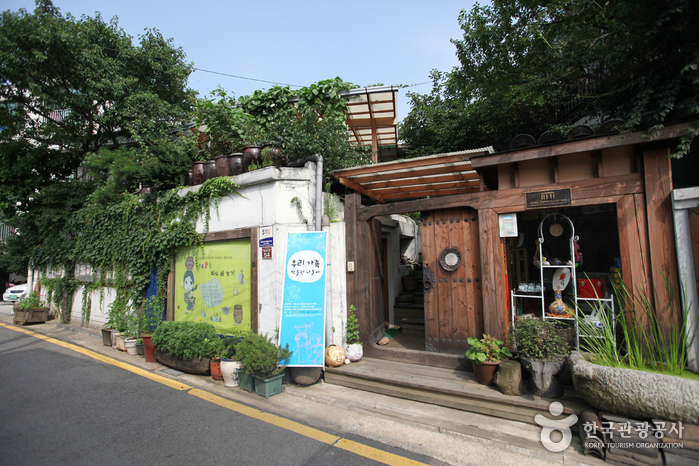
The Bukchon Museum displays items that have been collected from Bukchon, a historical village that was once home to the nation’s nobility. The museum was founded to observe urban development that took place in the recent decades through collected and preserved veryday household items that were used by Bukchon residents. Visitors are even allowed to touch items on display to better be able to imagine life in Korea before industrialization.
Seoul Hiking Tourism Center - Bugaksan Branch (서울도심등산관광센터(북악산))
8.7Km 2024-03-05
88 Samcheong-ro, Jongno-gu, Seoul
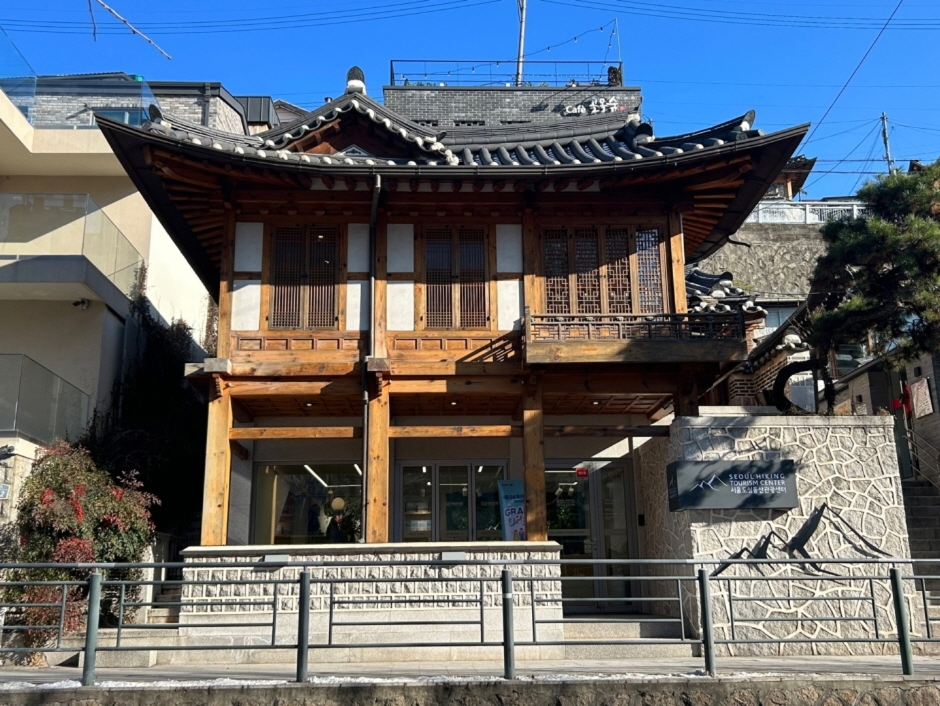
The Bugaksan branch of Seoul Hiking Tourism Center is located on Samcheong-dong Culture Street and provides various services to hikers. It provides hiking course guidance and information (available in Korean, English, Chinese, and Japanese) about the mountains of Seoul, including Bukhansan, Bugaksan, and Inwangsan Mountains, as well as promotional materials such as Seoul hiking tourism guidebooks and maps. Also, it operates hiking tour programs with various themes every week for foreigners and offers hiking gear rental services such as hiking boots, hiking attire, trekking poles, gloves, and crampons for foreigners. (Koreans accompanied by foreigners can also rent the gear.) In addition, there is a storage locker and lounge for visitors, so they can pack up and rest before hiking.
La:ppland [Tax Refund Shop] (라플란드)
8.7Km 2024-04-16
Bldg. Ga. 1F, 83, Samcheong-ro, Jongno-gu, Seoul
-
Gwanghwamun Gate (광화문)
8.7Km 2024-12-04
161 Sajik-ro, Jongno-gu, Seoul
+82-2-3700-3900
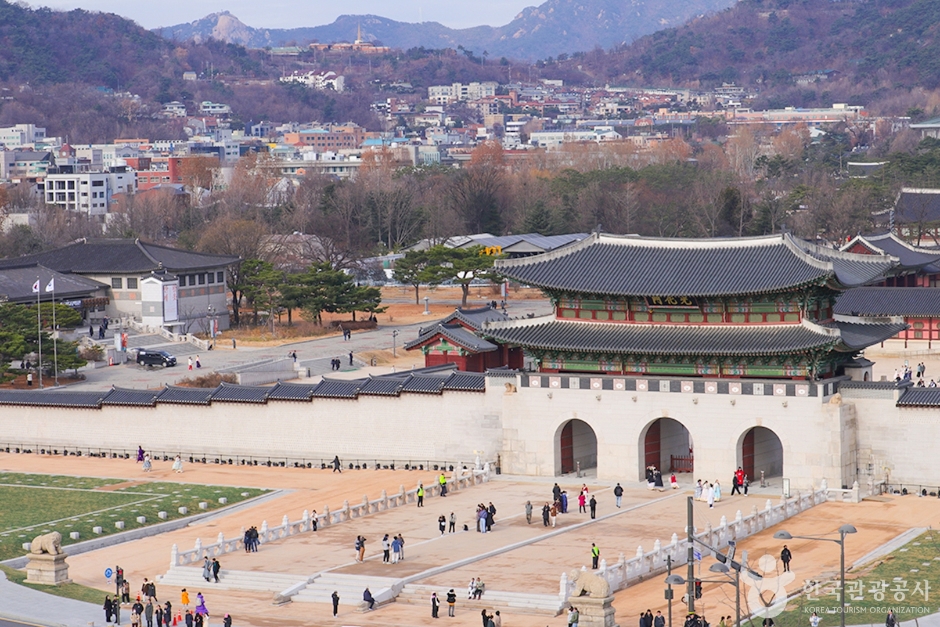
Built in 1395 under the reign of King Taejo, the first king of the Joseon dynasty, Gwanghwamun Gate is the southern gate of Gyeongbokgung Palace. It is also the main gate of the palace, therefore larger and fancier in comparison to the other gates. Gwanghwamun Gate consists of three arched gates; the center gate was used by the king, while the other two were used by the crown prince and royal officials. The tall granite walls of the gate serve as a platform for the wooden gate tower that watches over the city. The gate has a sign with its name written at the top center of the gate tower.
Gwanghwamun Gate went through several damages and restorations over the course of history. It was first severely damaged during the Imjin War (1592-1598) and was not restored until the reconstruction of Gyeongbokgung Palace in 1864. Under the Japanese administration, the gate was demolished and relocated to the north of the palace's eastern gate, followed by series of damages during the Korean War (1950-1953). In 1968, Gwanghwamun Gate was relocated back to the south of the palace and was rebuilt using concrete; however, the gate’s position was shifted a few meters away from its original location. In 2006, a major reconstruction project took place to restore Gwanghwamun Gate to its original state and location, disassembling the structure completely and replacing concrete with granite and wood. After three years and eight months of construction, Gwanghwamun Gate was fully restored to its original form and was open to the public on August 15, 2010.
Dal Café (달 카페)
8.8Km 2024-03-18
94-1 Samcheong-ro, Jongno-gu, Seoul
+82-2-735-7355
Dal Café is a café located in Bukchon Hanok Village, housed within a traditional Korean hanok. "Dal" means "moon" in Korean. The café is designed with lighting fixtures that give the impression of the moon hanging on the wall, making it a perfect spot for photography. The signature menu item here is the traditional Korean shaved ice with topping served in a traditional pot.
Kumho Art Hall (금호아트홀)
8.8Km 2021-05-28
76, Saemunan-ro, Jongno-gu, Seoul
+82-2-6303-1977
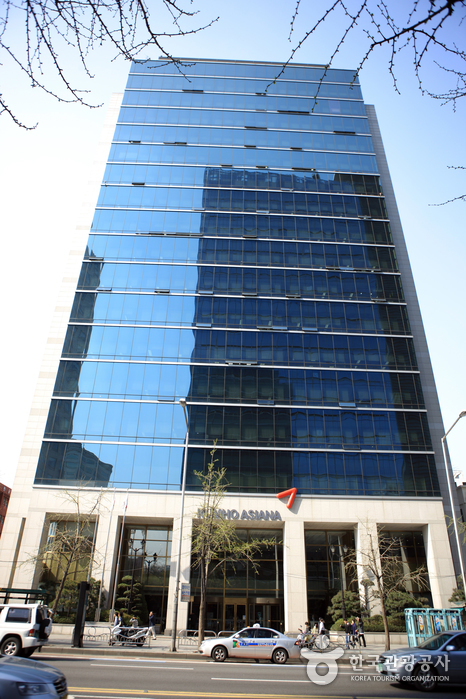
Kumho Art Hall was built in 2000 exclusively for classical music concerts, with 390 seats, the perfect structure for chamber concerts. All seats are recital hall chairs and the wide spacing between rows of chairs helps the audience to have a pleasant time. Upon entering the theater, all cell phones will turn off automatically. This helps all visitors to enjoy the concert without being interrupted by ringing cell phones. The interior is cozy and luxurious, and the stage is made of maple.
Beodeul Maru - Korea Cultural Heritage Foundation Branch [Tax Refund Shop] (한국문화재재단 버들마루)
8.8Km 2024-10-15
37, Samcheong-ro, Jongno-gu, Seoul
-
 English
 한국어
한국어 日本語
日本語 中文(简体)
 Deutsch
 Français
 Español
 Русский


