
Daejanggeum (대장금)
3.9Km 2024-11-29
300, Olympic-ro, Songpa-gu, Seoul
Daejanggeum serves traditional Korea meals, reinterpreting royal dishes from the Joseon dynasty. Daejanggeum faithfully uses only the best local ingredients to make all their food, from the soybeans used for soy sauce and soybean paste, to kimchi. In addition to the food, guests can enjoy dining with lacquerware from Korea's Holder of Intangible Heritage, Mr. Yi Jin-ho, and forged works by 5th generation blacksmith, Cha Ingyu.
Lotte World Tower SEOUL SKY (롯데월드타워 서울스카이)
3.9Km 2024-11-28
300 Olympic-ro, Songpa-gu, Seoul
SEOUL SKY is located on floors 117-123 of Lotte World Tower, the nation's tallest and the world's fifth tallest building. The observatory offers a panoramic view of the entire capital city, beautiful both day and night. SEOUL SKY is comprised of an exhibition zone, observation deck, sky deck, dessert cafe, sky terrace, lounge, and more.
To get to Seoul Sky, visitors have to take the Sky Shuttle, a double-deck elevator that reaches a speed of 600 meters per minute. The one-minute ride feels quite short while watching the videos playing on the walls and ceiling. While waiting for the elevator up, visitors can enjoy art in the exhibition zone in basement levels 1-2. The exhibition includes artwork displaying the history, culture, and pride of Korea's foundation and success over the centuries. Visitors can also purchase Seoul Sky merchandise from the gift shop to remember their trip or give as a souvenir.
The observation deck has two story-high glass windows for an uninterrupted view. The Sky Deck, located at 478 meters, holds the Guinness World Record as the highest glass-floored observatory in the world. On days when visibility is limited, visitors can still enjoy a clear sky through the Sky Theater. The 120 floor holds the Sky Terrace, open to the elements.
Visitors looking for refreshments can enjoy the one-of-a-kind menu served at the dessert cafe Sky Friends Cafe on level 119, or refreshing wine sold at the premium lounge on floor 123. This cozy space is the highest lounge in Seoul and is perfect for taking in the view in a relaxing ambiance.
Frientrip Co., Ltd. (주식회사 프렌트립)
4.0Km 2025-11-28
#G704, HEYGROUND, 115 Wangsimni-ro, Seongdong-gu, Seoul
Frientrip is a wellness-based medical tourism service that integrates travel with personalized health management. It partners with certified medical institutions and trusted wellness providers to offer a seamless journey that combines check-ups, beauty and healthcare programs, and recovery experiences. KareTrip enables customers to conveniently schedule medical services while enjoying travel, providing tailored itineraries and on-site support as a comprehensive end-to-end service.

Gilsang Ceramics (길상도예)
4.1Km 2025-11-05
15-9 Gangnam-daero 39-gil, Seocho-gu, Seoul
The pottery workshop experienced by BTS
It is a famous pottery workshop for ARMY as a place where BTS experienced in ‘RUN BTS’. Jimin made cups for V, Jin for Jung kook, and V for SUGA. You can design and make cups, vases, plates, water bottles, etc. with a potter's wheel and handbuilding. It's also fun to make it after the works of BTS members.
Yonsei GoodDay Dental Clinic Yangjae Office (연세굿데이치과의원 양재점)
4.2Km 2026-01-02
5th–6th Floors, 206 Gangnam-daero, Seocho-gu, Seoul
This is Yonsei Good Day Dental Clinic where English is available. Specialists from university hospitals with more than 10 years of experience gather and treat by field. We provide a wide range of treatment services, including affiliated hotels and tax refund. Experience pain-free dental treatment with painless anesthesia and sleep anesthesia.
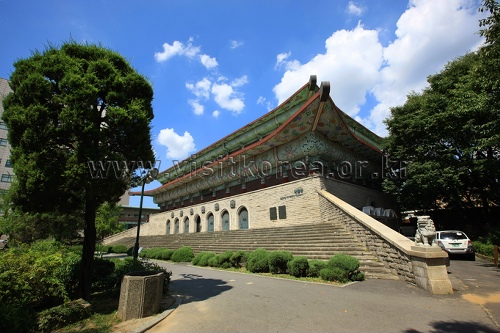
Sejong University Museum (세종대학교 박물관)
4.2Km 2022-09-16
209, Neungdong-ro, Gwangjin-gu, Seoul
Sejong University Museum exhibits folk art, wooden crafts, clothing, accessories, pottery, paintings and calligraphy collected for over 40 years by the couple who founded the present day Sejong University, Dr. Ju Young-ha and Dr. Choi Ok-ja. This museum has its origins in the Soodo Gallery, which was built in Chungmuro, the campus’ original location, in 1959. Needing more space to house additional artifacts, the museum moved to its current location, which first opened on May 5, 1973 in a four-story concrete building inspired by traditonal tower design from the Baekje era. This building was later expanded on May 20, 1977.
After the university’s name was changed to Sejong University in 1979, the museum was also renamed the Sejong University Museum. The museum showcases unique artifacts to both scholars and students from home and abroad in contribution to the research of Korea’s culture, arts, and archeology.
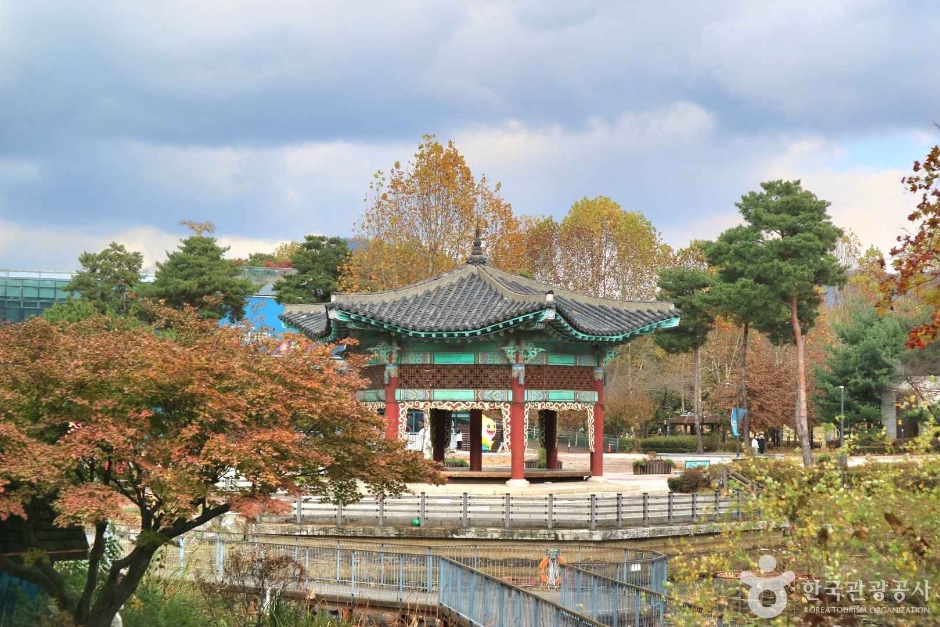
Seoul Children's Grand Park (서울어린이대공원)
4.2Km 2024-11-28
216 Neungdong-ro, Gwangjin-gu, Seoul
Opened in May 1973, Seoul Children’s Grand Park is a theme park situated among green forests and fields with a total area of 56,552㎡. It contains a zoo, arboretum, amusement park, and performance venues. Seoul Children’s Grand Park has been a beloved part of Seoul, a paradise for children and a living venue for education. For grown-ups, it functions as an area of refuge and culture within the city. The Grand Park offers facilities that everyone in the family can enjoy, so everyone can find their own fun in the Grand Park.
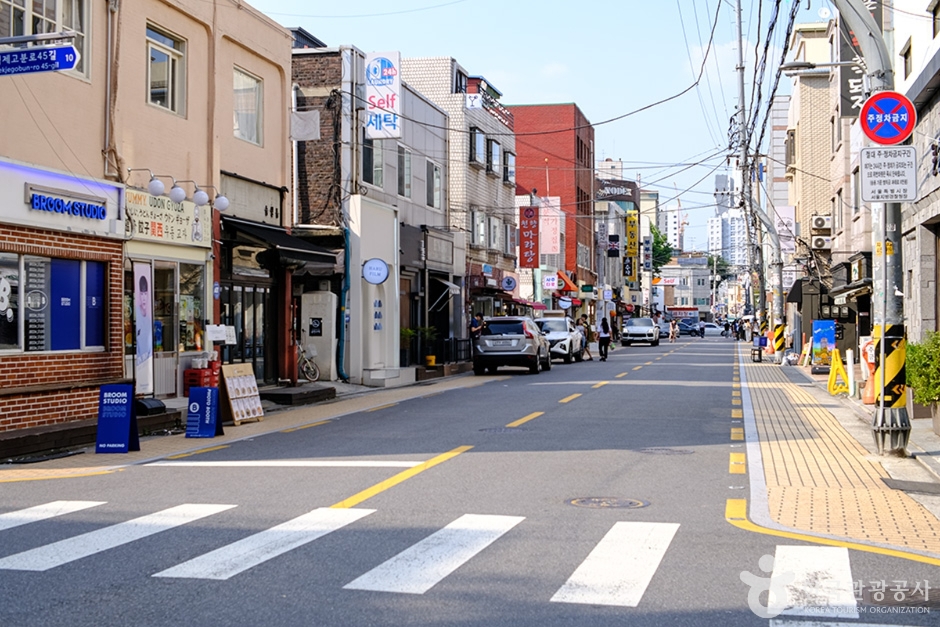
Songnidan-gil Street (송리단길)
4.3Km 2025-01-23
Baekjegobun-ro 43-gil, Songpa-gu, Seoul, and surrounding areas
Located south of the eastern side of Seokchon Lake, this street is home to numerous restaurants and cafes. Its name comes from the combination of Songpa-dong and Gyeongnidan-gil Street in Itaewon, Seoul, meaning the “Gyeongnidan-gil Street of Songpa-dong.” This street began as an otherwise unremarkable street that faced the eastern side of Seokchon Lake. Today’s “Songnidan-gil Street” came to be as cafes moved into the neighborhood, followed by restaurants and photography studios. Songnidan-gil Street is a popular hangout for young Seoulites in the southeastern side of Seoul, so on weekends, one can often find them conversing in cafes, going for drinks in bars, or waiting in line for the hottest restaurants in the neighborhood.
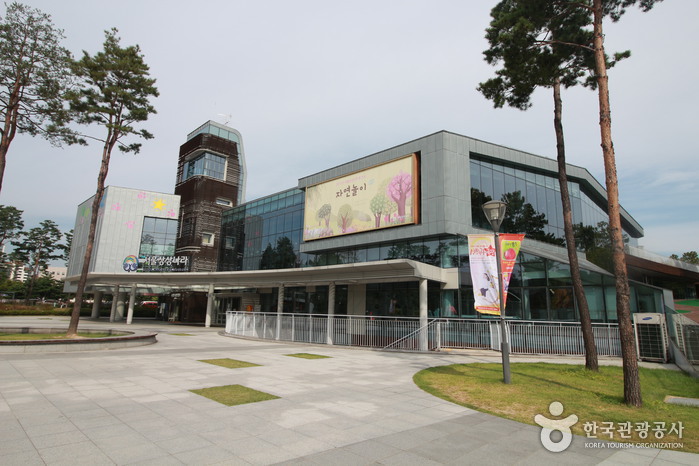
Seoul Children's Museum (서울상상나라)
4.3Km 2024-03-07
216 Neungdong-ro, Gwangjin-gu, Seoul
Seoul Children's Museum is a multifaceted cultural space established in 2013 to foster children's creativity and imagination. Spanning from the basement floor to the third floor, it boasts over a hundred interactive exhibits. These exhibits cover a wide range of areas including art, imagination, thought, and physical play, organized into ten distinct zones. It's a popular destination where children can learn and expand their imagination through play. Advanced booking is required, and reservations can be made through the website.
Gwangnaru Safety Experience Center (광나루안전체험관)
4.3Km 2025-03-29
238, Neungdong-ro, Gwangjin-gu, Seoul
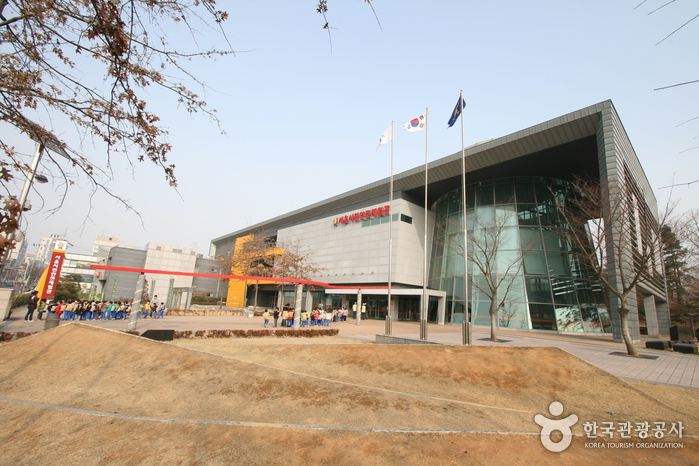
Gwangnaru Safety Experience Center was founded in 1999 after two fire accidents in which many children lost their lives. These tragedies emphasized the necessity of establishing a disaster training center for common citizens.
Gwangnaru Safety Experience Center is a three-story building with one basement floor, covering an area of more than 5,000 m². The basement floor includes a small theater. The first floor is set up for natural disaster training and consists of an orientation hall, storm simulation training room, earthquake simulation room, computer tests on fire safety knowledge and others. The second floor is a place for artificial catastrophe training. It consists of a smoke escape training room, fire extinguisher training room, first-aid (CPR) training room and practice place for calling 119. The third floor is used for rescue training and consists of a rescue training room, screening room, training for professionals and video examples of the five biggest disasters that have occurred in Seoul. Overall there are about 20 training areas established, so citizens can experience the imitation of a disaster by themselves and learn easily and in an interesting way how to cope with a disaster.
 English
 한국어
한국어 日本語
日本語 中文(简体)
 Deutsch
 Français
 Español
 Русский


