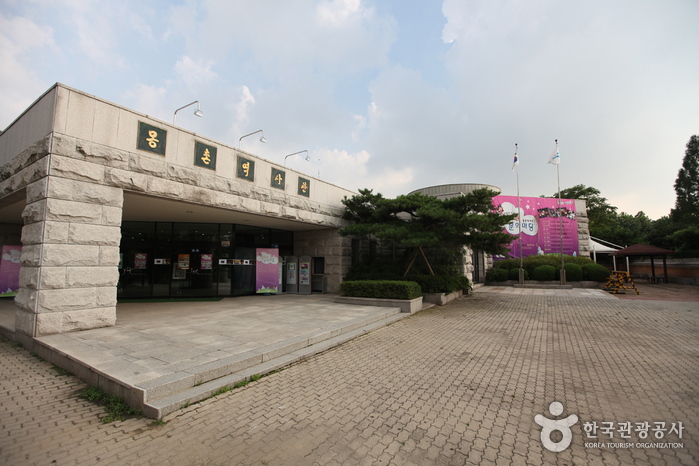
Mongchon Museum of History (몽촌역사관)
5.7Km 2021-08-13
424, Olympic-ro, Songpa-gu, Seoul
The Mongchon Museum of History, located within Olympic Park, displays artifacts from the excavations of Mongchontoseong Fortress, such as earthen fortifications as well as other artifacts of the Baekje Kingdom period, offering a glimpse into Baekje culture. A model of a Baekje dugout hut site reveals ancient dwelling patterns. Also, the facility displays a perfectly preserved model of ancient houses and tombs, giving visitors the feel of traveling back to prehistoric ages.

Hangaram Art Museum in Seoul Arts Center (예술의전당 한가람미술관)
5.7Km 2022-12-16
2406, Nambusunhwan-ro, Seocho-gu, Seoul
Hangaram Art Museum, located in the left wing of the Seoul Arts Center, displays a unique exhibition of formative arts. Established in 1990, the museum has a total area of 15,540 ㎡ and contains 6 exhibition halls (including one for oversized artwork), a storage area, and an art shop. The building features a lighting system that controls the humidity and temperature and is equipped with a luminous ceiling system that captures natural sunlight and feeds it into the museum, allowing visitors to enjoy a brightly lit viewing area.
The Art Square in front of the museum houses a wide range of exclusive artwork and serves as a venue for various events such as the Cloz Art Market. Visitors may also enjoy the open-air café right in front of the building or dine at “Yehyang,” a traditional Korean restaurant right down the stairs.
Some Sevit (세빛섬)
5.8Km 2022-12-16
2085-14, Olympic-daero, Seocho-gu, Seoul
Some Sevit is a culture complex made up of three man-made floating islands near the southern end of Banpo Bridge. The islands were created with the theme of "flowers of the Hangang River" and represent the view, life, and the earth, as well as a flower in various stages of life. The largest island, 'Some Gavit' symbolizes the view and takes the form of a flower in full bloom. It is a multi-functional cultural facility that can be used as a venue for performances, international conferences, exhibitions, and more. The second island, 'Some Chavit' looks like a flower bud, an image of life. A range of cultural experiences and event zones including Beat Square, Youth Woods, and restaurants using 3D to bring themes to life are located here. The third and smallest island, 'Some Solvit' takes the form of a seed planted in the earth. This island has water sports facilities and an outdoor garden from which you may enjoy the picturesque scenery of the Hangang River. Around the floating islands are LED lights that create a fantastic night view under the theme of "a gleaming light in the mist."
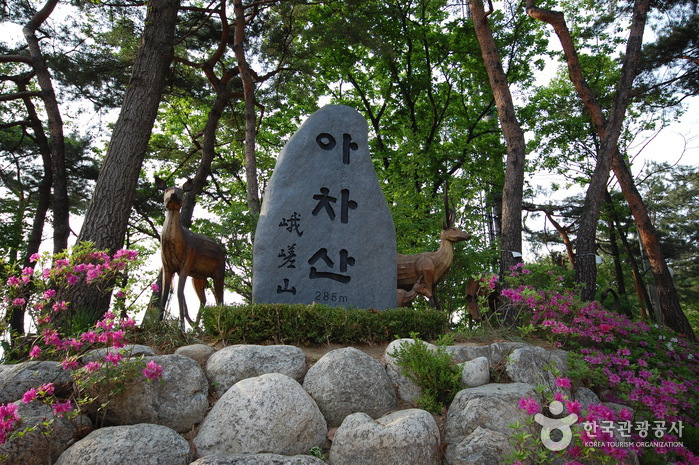
Achasanseong Fortress (아차산성)
5.8Km 2023-04-05
Gwangjang-dong, Gwangjin-gu, Seoul-si
Achasanseongseong Fortress boasts magnificent views of the Hangang River and skyline. The 200m-high mountain fortress wall was built to face southeast, towards the Hangang River. It is also called Janghan-seong or Gwangjang-seong. A fierce battle was once fought here among Gogury, Baekje and Silla because of its strategic location during the period of the Three Kingdoms. King Gae-Ro of Baekje (r. 455-475) died in the war by the Goguryeo forces sent by King Jang-Su (r. 413-491) and General Ondal of Goguryeo was also killed in a battle with the Silla army in 590.
Achasan Mountain is popular as a citizens’ resting place with a historical trail and a natural park including various facilities such as walkway, mountain walkway, a badminton court, a wrestling range, an archery range, various amusement facilities for children, benches, and pavilion.
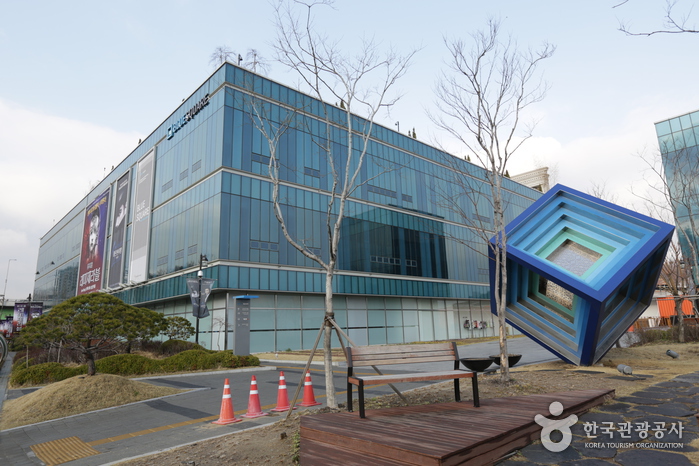
Blue Square (블루스퀘어)
5.9Km 2024-03-05
294, Itaewon-ro, Yongsan-gu, Seoul
Blue Square is a multipurpose performance venue located in Hannam-dong. It includes Shinhan Card Hall, a performance hall dedicated to musicals with 1,776 seats, and Mastercard Hall, a multipurpose performance hall with 1,400 seats. Blue Square also includes the Book Park, which has a collection of nearly 75,000 books, and a café with a terrace that looks toward the Namsan Mountain. Many visitors come to the Blue Square to see its collection of popular musicals and other performances.
Seorae Village (서래마을)
5.9Km 2022-12-16
Banpo-dong, Seocho-gu, Seoul
Seorae Village is located in between Banpo 4-dong and Bangbaebon-dong in Seocho-gu, Seoul. Seorae Village took its form as a French neighborhood when French residents moved to the area after Ecole Francaise de Seoul, a school for French residents in Korea, was established here in 1985. According to 2008 census, about half of the total 1,000 French citizens residing in Korea were registered to be living in Seorae Village. The area naturally took shape as a global neighborhood as many international residents settled at Seorae Village much thanks to the strong presence of French residents. In addition to its convenient location near the central district area as well as Gangnam area and Hangang River Park, Seorae Village serves as a pleasant environment space for all.
Many shops and restaurants in Seorae Village are small in size and rather charming, resembling those in Europe. A bakery that makes traditional French baguettes using ingredients directly imported from France can be found here. In recent years, Seorae Village has undergone several changes, gaining much attention as one of the most modern and fanciest regions found in Seoul.
![Heolleung and Illeung Royal Tombs [UNESCO World Heritage] (서울 헌릉(태종,원경왕후)과 인릉(순조,순원왕후) [유네스코 세계문화유산])](http://tong.visitkorea.or.kr/cms/resource/42/1985242_image2_1.jpg)
Heolleung and Illeung Royal Tombs [UNESCO World Heritage] (서울 헌릉(태종,원경왕후)과 인릉(순조,순원왕후) [유네스코 세계문화유산])
5.9Km 2021-07-24
36-10, Heonilleung-gil, Seocho-gu, Seoul
Heolleung and Illeung Royal Tombs house the mounds for two kings of the Joseon dynasty (1392-1910) and their wives: King Taejong (1401-1418) and Queen Wongyeong, along with King Sunjo (1800-1834) and Queen Sunwon. Together, the tombs are referred to as Heonilleung Royal Tomb. The site possesses numerous stone statues and vestiges, and is a good place to experience the culture of the Joseon dynasty.
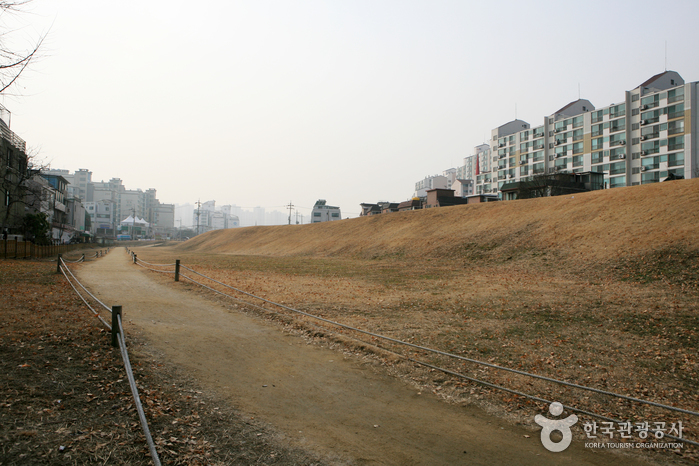
Pungnap-dong Toseong Fortress (서울 풍납동 토성)
5.9Km 2025-01-10
Pungnap-dong, Songpa-gu, Seoul
Onjo, the progenitor of Kingdom Baekje, first settled in Wiryeseong Hanam. But exact location is still unknown. One thing for sure, however, is that Pungnaptoseong Fortress, Mongchontoseong Fortress, Bangidong Ancient Tombs of Baekje, Seokchondong Stone Mound Tomb of Early Baekje are the remains of Baekje. Pungnaptoseong Fortress faces Hangang River to its west and connects to Mongchontoseong Fortress to the south. To the northwest faces Achasanseong Fortress over Hangang River and far to the southeast is Namhansanseong Fortress.
Pungnaptoseong Fortress, located at the south end of Cheonhodaegyo Bridge over Hangang River, is one of the remains of Early Baekje. Originally, the fortress was 4km in circumference, but due to massive overflowing of Hangang River during flood season in 1925, most of the fortress was lost and only 2.7km of it remains. To the east of the fortress are 4 vestiges of the fortress gates. The remains from the prehistoric era through the Samguk (Three States) era have been unearthed, indicating that this place was a residential area well before the Baekje Era. Through vigorous excavation, some people suggest that there used to be a palace located here during the Baekje Era.
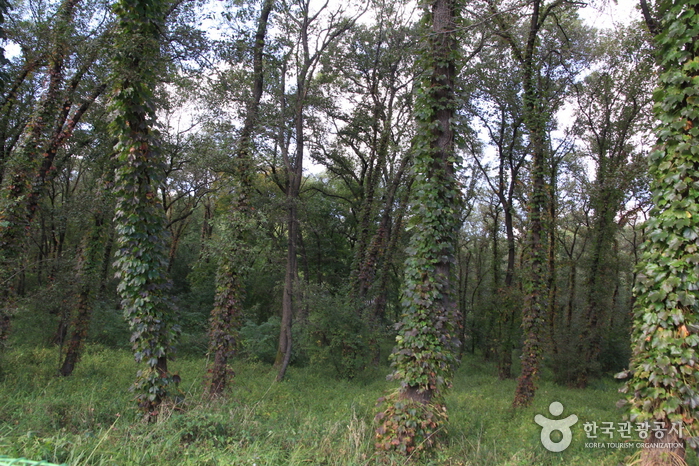
Heoninneung Royal Tombs Ecological Preservation Area (Alder Tree Forests) (헌인릉 생태경관보전지역(오리나무림))
6.0Km 2021-12-11
34, Heonilleung-gil, Seocho-gu, Seoul
Heonninneung Royal Tombs Ecological Preservation Area is home to alder tree forests. It was officially designated as an ecological preservation area by the Seoul Metropolitan Government in 2005.
Seoul Arts Center (예술의전당)
6.0Km 2025-01-17
2406 Nambusunhwan-ro, Seocho-gu, Seoul
The Seoul Arts Center is the representative art complex of Korea. It is comprised of the Opera House, Concert Hall, Art Gallery, Calligraphy Museum, Art Material Hall, and an outdoor stage. You can enjoy various performances and exhibitions all in one site.
The Opera House and Concert Hall consist of a total of five performance halls offering an average of 800 performances ever year, whereas the Art Gallery and Calligraphy Museum has seven exhibition halls providing various exhibitions throughout the year. The outdoor stage also provides various genres of performances all year round.
 English
 한국어
한국어 日本語
日本語 中文(简体)
 Deutsch
 Français
 Español
 Русский


