![Moggoji [Korea Quality]모꼬지[한국관광 품질인증]](http://tong.visitkorea.or.kr/cms/resource/05/2991305_image2_1.jpg)
Moggoji [Korea Quality]모꼬지[한국관광 품질인증]
10.3Km 2023-08-31
13-6, Hyehwa-ro 16-gil, Jongno-gu, Seoul
+82-10-9389-2837
Moggoji is a hanok guesthouse in Hyehwa-dong, Daehak-ro, Jongno-gu, Seoul. Located just 10-minutes' walk from Hansung University Subway Station, it’s convenient for public transportation. There are four guestrooms, all equipped with air conditioning. Nearby are many must-visit Seoul attractions, including fashionable Daehangno, Changgyeonggung Palace, and Cheonggyecheon Stream.

Nature Republic - Homeplus Wolgok Branch [Tax Refund Shop] (네이쳐리퍼블릭 홈플러스월곡점)
10.3Km 2024-04-23
76, Hwarang-ro, Seongbuk-gu, Seoul
-
Olive Young - Homeplus Wolgok Branch [Tax Refund Shop] (올리브영 홈플러스월곡)
10.3Km 2024-04-17
Home Plus Wolgok Branch, 76, Hwarang-ro, Seongbuk-gu, Seoul
-
Homeplus - Wolgok Branch [Tax Refund Shop] (홈플러스 월곡)
10.3Km 2024-04-22
76, Hwarang-ro, Seongbuk-gu, Seoul
-
Hwangsaengga Kalguksu (황생가칼국수)
10.3Km 2024-03-18
78 Bukchon-ro 5-gil, Jongno-gu, Seoul
+82-2-739-6334
Hwangsaengga Kalguksu is a specialty restaurant located near Gyeongbokgung Palace, known for its kalguksu (noodle soup). Kalguksu is a type of noodle soup made by thinly slicing dough into noodles with a knife and boiling them in a broth made from beef bones, clams, or seafood. Their menu includes options like wang mandu (jumbo mandu), hanu suyuk (boiled Korean beef slices), kongguksu (noodles in cold soybean soup), beoseot jeongol (mushroom hot pot), and mandutguk (mandu soup). It was selected as a Michelin Guide Seoul 2023 restaurant.
Yongma Land (용마랜드)
10.3Km 2025-10-28
118 Mangu-ro 70-gil, Jungnang-gu, Seoul
Yongma Land, a private amusement park, was opened at the foot of Yongmasan Mountain in 1983, and closed its doors in 2011. Having spent some time as a derelict building, it has now been repurposed as a nostalgia-filled space. It was made famous as the filming location of Crayon Pop’s "Bar Bar Bar" music video. Since then, it has become a renowned destination for photography, thanks to its unique atmosphere created by the combination of lush greenery and derelict amusement rides. Entry may be restricted in the case of filming or space rentals, so make sure to check with the management before you head to the amusement park. Yongma Land is located next to Bonghwa Middle School, at Exit 1 of Mangu Station, Gyeongui–Jungang Line.
Choong Ang High School (중앙고등학교)
10.3Km 2025-10-23
164 Changdeokgung-gil, Jongno-gu, Seoul
+82-2-742-1321
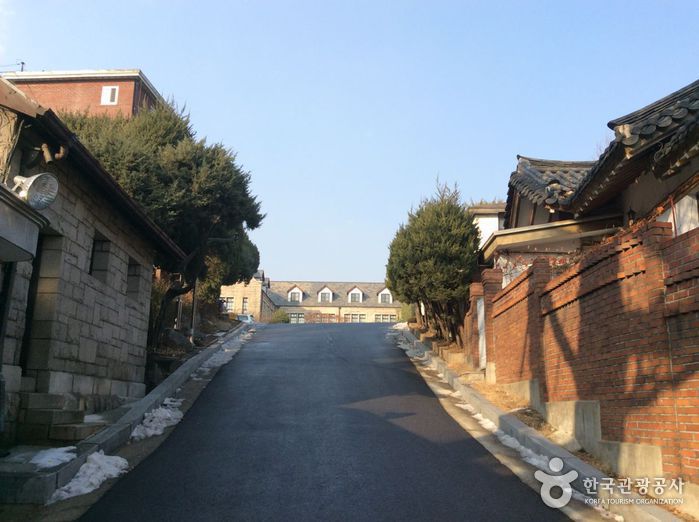
Choong Ang High School is located in Jong-ro near Samcheongdong-gil. It was built to educate the public at the beginning of the 20th century. The school’s main building was reconstructed in 1937 after the original two-story brick house was destroyed in 1934. The main building situated in front of the main gate is a two-story H-shaped granite stone building in Gothic style, with a four-story tower in the middle.
The school holds historical significance because it was designed by Park Dong Jin, one of Korea's first modern architects and the designer of Korea University’s main building, library, and the Chosun Ilbo Newspaper Company building. The main building of Choong Ang High School is designated as Historic Site No. 281. Many national leaders were educated at the gothic building during the grim period when Korea was trying to escape Japanese colonial rule.
World Jewellery Museum (세계장신구박물관)
10.3Km 2023-09-21
2, Bukchon-ro 5na-gil, Jongno-gu, Seoul
+82-2-730-1610
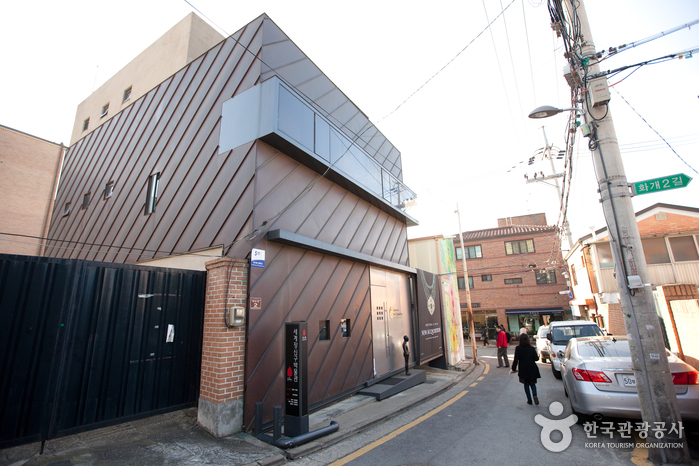
Situated in the gallery district in the back alley of Samcheong-dong (east of Gyeongbokgung Palace), the World Jewellery Museum houses 3,000 jewelry pieces from 60 countries, which have been collected over 30 years. Of which, 1,000 have been selected for display. The first floor contains an Amber Wall that goes back as far as 50 million years, the Golden Hall (El Dorado), the Necklace Hall, and the solemn Alter of the Cross. The second floor holds a mask wall, rings, beads and ivory as well as modern jewelry.
Gyeonghuigung Palace (경희궁)
10.3Km 2024-07-09
45 Saemunan-ro, Jongno-gu, Seoul
+82-2-724-0274
Gyeonghuigung Palace, a designated Historic Site, was originally called the large palace by Saemun Gate, or the Western Palace, for its location within the city. It was not until the eighth year of Gwanghaegun (1616) that the palace was used as a royal residence for the king, changing the name to Gyeongdeokgung Palace. The name later changed again to the current Gyeonghuigung Palace in 1760. The palace grounds included many halls but they were mostly all burned down in a fire in 1829. After the Japanese occupation began, all remaining buildings on the site were torn down and the palace grounds were turned into Gyeongseong Middle School (now Seoul High School). The school moved to Gangnam area in 1987, afterwhich the previous location was turned into a park. The palace grounds currently hold Seoul Museum of Art and walking paths, as well as a restoration of Heunghwamun Gate, the main gate of the palace, and Sungjeongjeon Hall, the main hall, completed in November 1994.
Seoul Mangusan Mountain (망우산(서울))
10.3Km 2021-02-10
San 69-1, Mangu-dong, Jungnang-gu, Seoul
+82-2-2094-2395
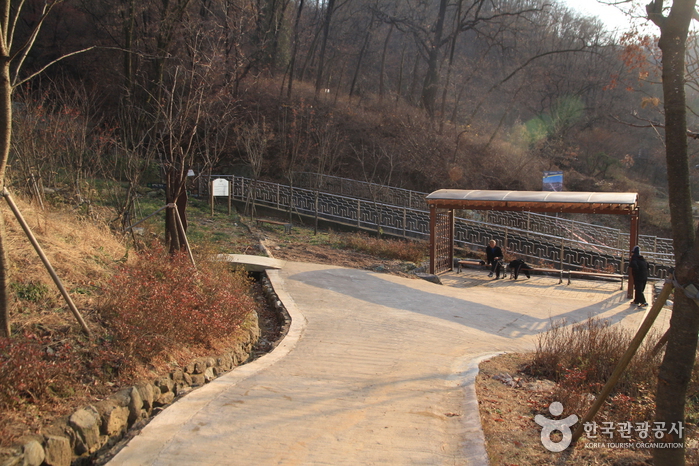
Mangusan Mountain at 281.7 meters above sea level spans across Mangu-dong and Myeonmok-dong of Seoul, and Guri-si of Gyeonggi-do. Located on the mountain is Mangu Cemetery, which was designated as a public cemetery in 1933. Since its designation, many popular people have been buried here including children’s literature author Bang Jeong-hwan (penname: Sopa), independence activists Oh Se-chang and Han Yong-un, and Ji Seok-young who pioneered the use of the smallpox vaccination in Korea and was also a Korean linguist. In addition, tombstones bearing chronological listings of seven popular poets and one educator were installed at the park, making the cemetery a venue for historical education. The park also has Sin Gyeong-jin Sindobi, a cultural asset designated as Seoul Tangible Cultural Property No. 95. It is a monument of Sin Gyeong-jin, an official scholar of the Joseon dynasty.
The park also has a 5.2-kilometer-long circular road named “The Thinking Path”. The name was selected through a public competition held in May 1998. Other facilities include the urban environment and nature observation road, a wooden gazebo, and a mineral spring. Thanks to the well managed trees and clean air, the park is visited by many citizens seeking a place to rest.
 English
 한국어
한국어 日本語
日本語 中文(简体)
 Deutsch
 Français
 Español
 Русский


