
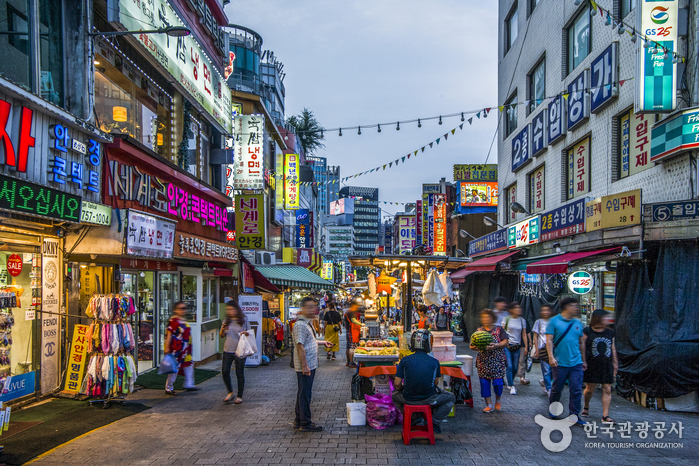
Namdaemun Market (남대문시장)
9.7Km 2024-05-17
21, Namdaemunsijang 4-gil, Jung-gu, Seoul
+82-2-753-2805
Opened in 1964, Namdaemun Market is the largest traditional market in Korea with shops selling various goods. All products are sold at affordable prices and the stores in this area also function as wholesale markets.
Most of the goods are made directly by the storeowners. Namdaemun Market is even open overnight, from 23:00 to 04:00, and is crowded with retailers from all over the country. When day breaks, the site of busy shoppers bustling around the market creates a unique scene that attracts tourists worldwide. Namdaemun Market sells a variety of clothes, glasses, kitchenware, toys, mountain gear, fishing equipment, stationery, fine arts, accessories, hats, carpets, flowers, ginseng, and imported goods.
Seoul Hyochang Park (서울 효창공원)
9.7Km 2024-07-09
177-18 Hyochangwon-ro, Yongsan-gu, Seoul
+82-2-2199-7608
Hyochang Park covers 122,245 square meters spanning across Hyochang-dong and Cheongpa 2-dong. It is a historic landmark that once contained several royal tombs, and was known at that time as Hyochangwon. The cemeteries that were originally located in Hyochangwon belonged to Crown Prince Munhyo, King Jeongjo’s first son who died at the age of five; Royal Noble Consort Uibin of the Seong Clan, King Jeongjo’s royal concubine and Crown Prince Munhyo’s mother; Royal Noble Consort Sugui of the Park Clan, King Sunjo’s royal concubine; and her daughter Princess Yeongon. The royal tombs were moved to Seooreung Tombs in the waning months of the Japanese colonial period. The Japanese empire began the development of Hyochangwon into a park in 1924, and the Japanese governor-general officially assigned the site as a park in 1940.
Presently, several of Korea’s greatest leaders are buried in Hyochang Park. The remains mostly belong to independence activists including Yoon Bong-gil, Lee Bong-chang, and Baek Jeong-gi, whose graves are collectively known as Samuisa Tomb. A statue of Lee Bong-chang has been built in the graveyard. Among the other patriotic martyrs who are interred in the park are Kim Gu and some of the key figures of the provisional government such as Lee Dong-nyeong, Cha I-seok, and Cho Seong-hwan. An ancestral shrine named Uiyeolsa has been built along the main gate and holds the portraits of the deceased independence activists.
![Wangsol Pharmacy [Tax Refund Shop] (왕솔약국)](http://tong.visitkorea.or.kr/cms/resource/27/2887827_image2_1.jpg)
Namdaemun Daeho Optic [Tax Refund Shop] (남대문대호안경)
9.8Km 2024-06-27
B1, #7, 32, Namdaemunsijang 4-gil, Jung-gu, Seoul
-
Good Morning Eyewear [Tax Refund Shop] (굿모닝안경)
9.8Km 2024-04-22
61, Namdaemunsijang-gil, Jung-gu, Seoul
-
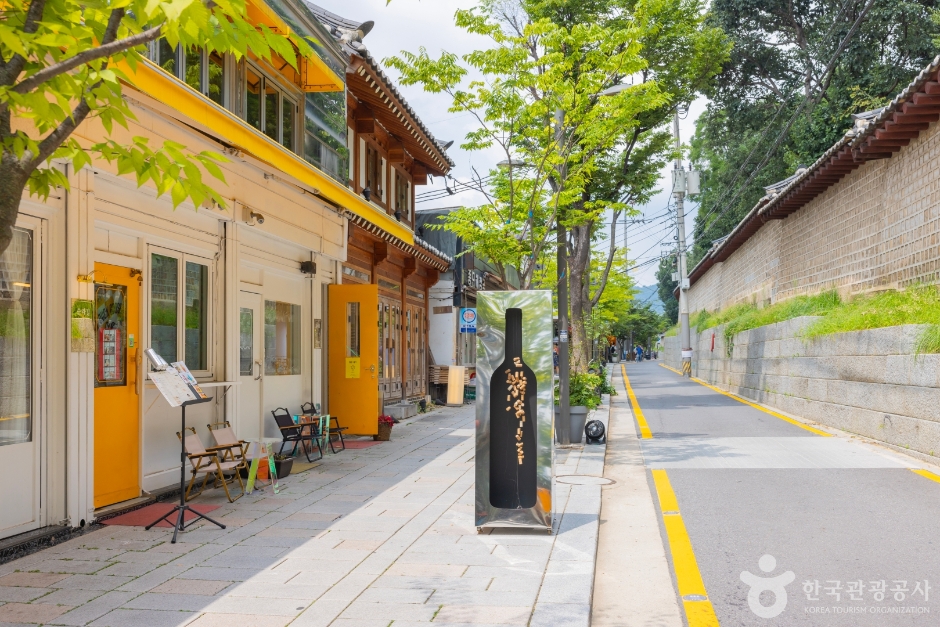
Seosulla-gil Road (서순라길)
9.8Km 2024-10-14
150-3 Jong-ro, Jongno-gu, Seoul
Seosulla-gil Road is a road that was used by the nightguards during the Joseon dynasty. The road is on the west of Jongmyo Shrine with various attractions nearby including Ikseon-dong, Insa-dong, Bukchon, and Samcheong-dong, as well as restaurants, cafes, and handicraft workshops. The road is also a beautiful date course with flowers in spring and fall foliage in autumn..
![Charles & Keith - NOON SQUARE Branch [Tax Refund Shop] (찰스앤키스 눈스퀘어)](http://tong.visitkorea.or.kr/cms/resource/15/2888615_image2_1.jpg)
Charles & Keith - NOON SQUARE Branch [Tax Refund Shop] (찰스앤키스 눈스퀘어)
9.8Km 2024-04-18
2F, 14, Myeongdong-gil, Jung-gu, Seoul
-
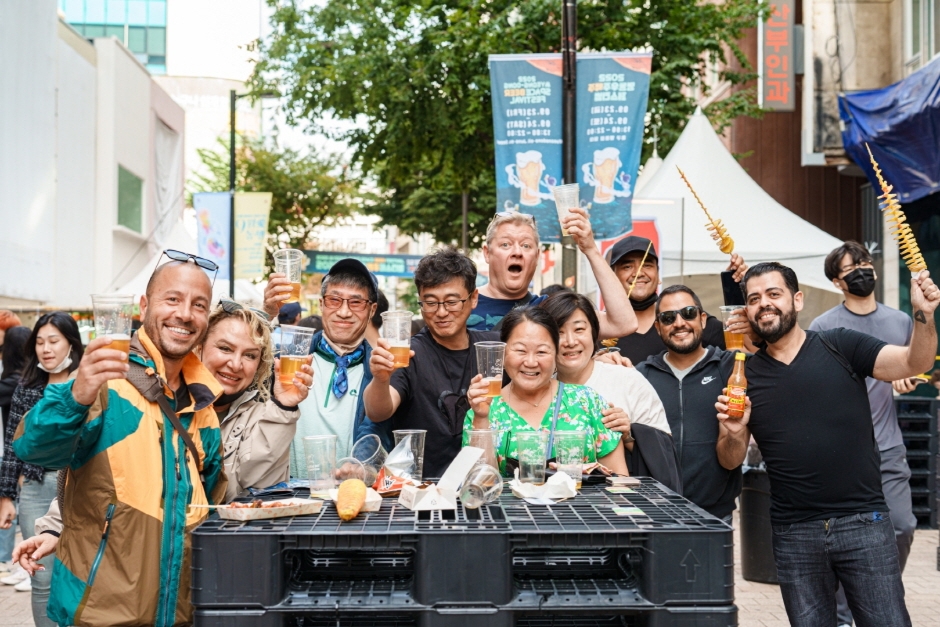
Myeongdong Beer Festival (명동맥주페스티벌)
9.8Km 2025-05-20
14, Myeongdong-gil, Jung-gu, Seoul
+82-70-8670-2182
Myeongdong Beer Festival provide a chance to find one's preference through beer. Enjoy the cool fall weather with fun people all around.
![Åland - NOON SQUARE Branch [Tax Refund Shop] (에어랜드눈스퀘어점)](http://tong.visitkorea.or.kr/cms/resource/60/2887760_image2_1.jpg)
Åland - NOON SQUARE Branch [Tax Refund Shop] (에어랜드눈스퀘어점)
9.8Km 2024-06-27
14, Myeongdong-gil, Jung-gu, Seoul
-
 English
 한국어
한국어 日本語
日本語 中文(简体)
 Deutsch
 Français
 Español
 Русский


