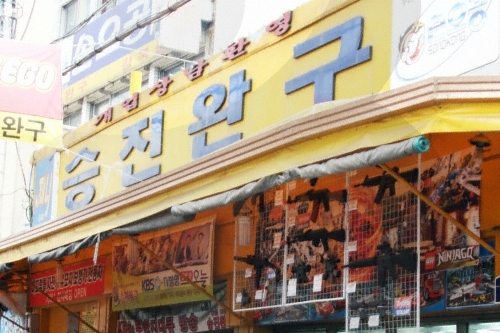
Seungjin Toy (승진완구)
7.3Km 2025-01-06
30, Jong-ro 52-gil, Jongno-gu, Seoul
Seungjin Toy is a toy store that carries almost every kind of toy imaginable from stuffed animals to character dolls and much more. What makes this store even more attractive to many customers is that their merchandise is, on average, 30% cheaper than that of their competitors.
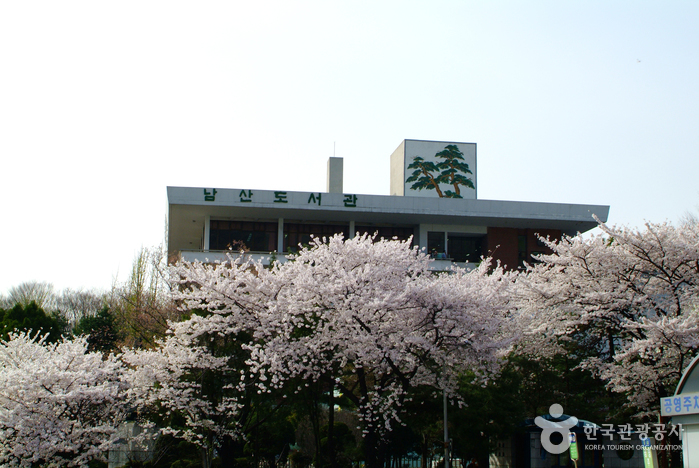
Namsan Library (서울특별시교육청 남산도서관)
7.3Km 2021-07-07
109, Sowol-ro, Yongsan-gu, Seoul
Namsan Library opened as Kyeongseong Prefectural Library in 1922 as a public library in Myeong-dong, Jung-gu, Seoul. The library was moved to the current site in 1964 with a newly built building and its name changed to Namsan Library in 1965. This concrete building was built in 1964 and was designed by architect Lee Haeseong. It was designated as Seoul Future Heritage in 2013, credited for its preservation value.
It is comprised of 19 rooms and educational areas including the Humanity and Social Science Hall, Nature Science Hall, Language and Literature Hall, Electronic Information Room and more. Since opening, the library has collected nearly 500,000 books, 16,000 non-book materials, 700 continuing resources, and other special materials like old books, oriental books (including Japanese books), and more. Namsan Library also operates a reading treatment program unique to this library that began in 2005. The program includes remodeling of reading consultation room, training for people in charge of reading treatment, workshops, programs for individuals and groups. Also, various exhibitions, lectures, shows, cultural classes and other events are available all year long to enhance lifelong education.
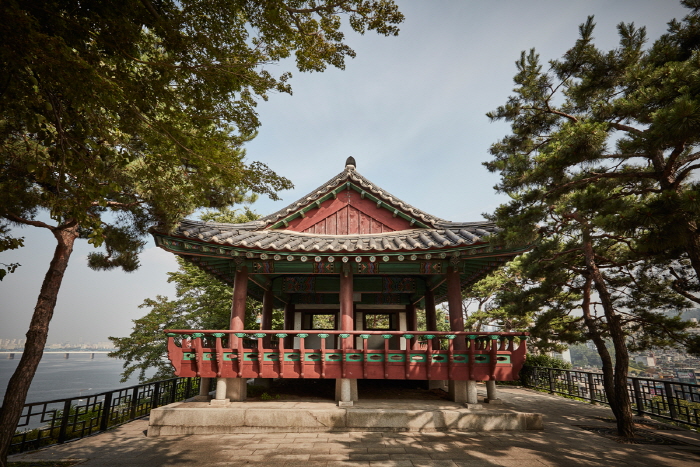
Hyosajeong Pavilion (효사정)
7.3Km 2025-01-13
55, Hyeonchung-ro, Dongjak-gu, Seoul
Hyosajeong Pavilion is where Nohan, the second vice premier of the Joseon dynasty during King Sejong and King Sejo’s reign, stayed. After he lost his mother, he built the pavilion to mourn at her grave while still being able to see his father’s grave in Gaeseong to the North. His brother-in-law, then Minister of the Interior, Gang Sa-deok named the pavilion “Hyosajeong,” which means pavilion of filial piety.
In order to find the original location of the pavilion, poems by Jeong Inji and Seo Geojeong and an old map of Korea were referenced, but the pavilion was not found because the surrounding landscape had changed too much. As a result, a location was selected and the pavilion was reconstructed at its current location. The house is 3 kan* in the front and 2 kan* on the side. The roof is a hip-and-gable roof. The pavilion has one room with under floor heating and a railing around the pavilion
(* kan: a traditional measurement that corresponds to the space between two columns)
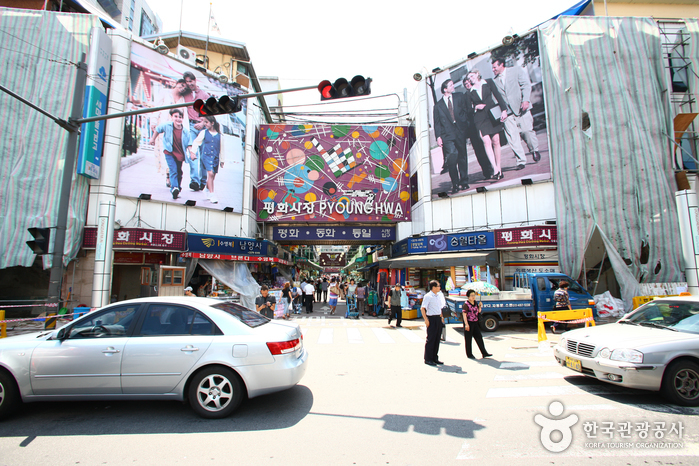
Pyounghwa (Pyeonghwa) Fashion Town (서울 평화시장)
7.3Km 2025-01-06
274, Cheonggyecheon-ro, Jung-gu, Seoul
The Pyounghwa Fashion Town market in Dongdaemun has been selling fashion clothing and accessories for over 50 years ever since the end of the Korean War. It was here that in 1953 North Korean refugees started selling clothes made from US army uniforms. Their market was then named Pyounghwa, which means peace, in the hope that no other wars would be fought on Korean soil. The Pyounghwa Fashion Town was therefore the beginning of the 30,000 stores that now make up Dongdaemun Fashion Town, which is seen as one of the global centers of the fashion industry.
Spread over a large area, this historical fashion market is divided into several districts, the ‘Gu Pyounghwa Fashion Town’ is the oldest, and there is also the ‘Shin Pyounghwa Fashion Town’, ‘Dong Pyounghwa Fashion Town’, and ‘Cheong Pyounghwa Fashion Town’.
Pungnap-dong Toseong Fortress (서울 풍납동 토성)
7.4Km 2025-01-10
Pungnap-dong, Songpa-gu, Seoul
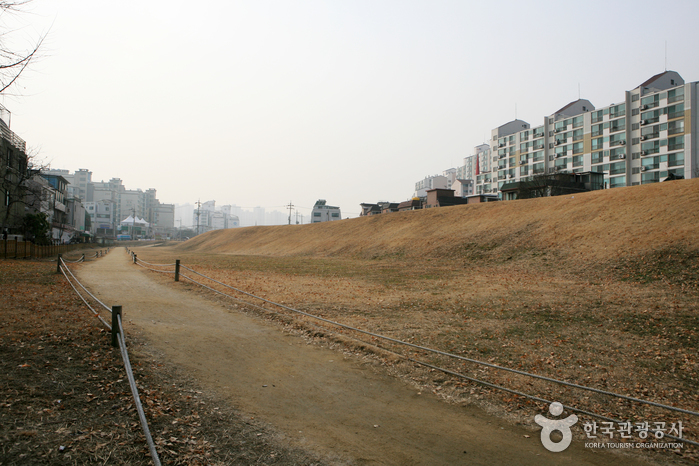
Onjo, the progenitor of Kingdom Baekje, first settled in Wiryeseong Hanam. But exact location is still unknown. One thing for sure, however, is that Pungnaptoseong Fortress, Mongchontoseong Fortress, Bangidong Ancient Tombs of Baekje, Seokchondong Stone Mound Tomb of Early Baekje are the remains of Baekje. Pungnaptoseong Fortress faces Hangang River to its west and connects to Mongchontoseong Fortress to the south. To the northwest faces Achasanseong Fortress over Hangang River and far to the southeast is Namhansanseong Fortress.
Pungnaptoseong Fortress, located at the south end of Cheonhodaegyo Bridge over Hangang River, is one of the remains of Early Baekje. Originally, the fortress was 4km in circumference, but due to massive overflowing of Hangang River during flood season in 1925, most of the fortress was lost and only 2.7km of it remains. To the east of the fortress are 4 vestiges of the fortress gates. The remains from the prehistoric era through the Samguk (Three States) era have been unearthed, indicating that this place was a residential area well before the Baekje Era. Through vigorous excavation, some people suggest that there used to be a palace located here during the Baekje Era.
Munjeong-dong Rodeo Street (문정동 로데오거리)
7.4Km 2025-03-29
10, Dongnam-ro 4-gil, Songpa-gu, Seoul
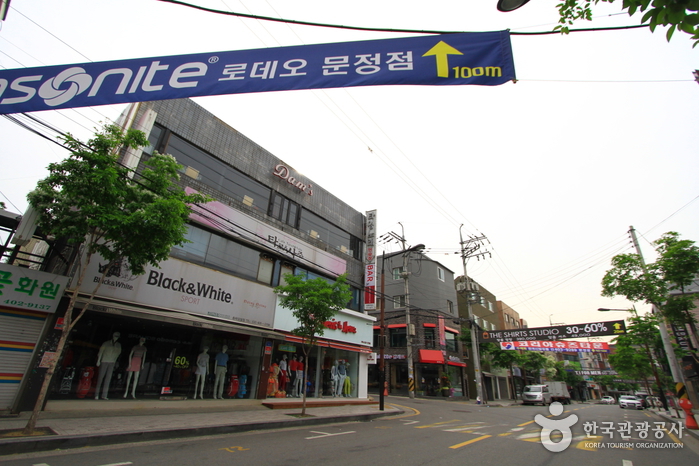
Munjeong-dong Rodeo Street is a large shopping district containing over 200 brand-name discount stores. The street is T-shaped, with a 1-kilometer-long main street connected to a 400-meter-long alley, and the Munjeong 1-dong Resident Center located at the center. For shoppers’ convenience, there is a public parking lot (if visitors purchase goods at Rodeo Street, they can park here for free) and a parking lot for foreign tourists only (free of charge). Munjeong-dong Rodeo Street is one of Korea’s major shopping streets with customers ranging from teenagers to adults, since discount stores stocking sports wear, casual wear, shoes, men’s and ladies’ suits, and golf wear are all located on this street. Moreover, this is a great place to find deals on famous brands, at prices lower than at a department store. On some items you can get discounts of up to 70-80%.
Since most of the goods are stock from previous seasons, it might be better to purchase the more classic styles rather than the trendy fashions. In some cases, the goods might have been slightly crumpled or stained during the transfer from warehouse storage, but taking them to the dry-cleaners should fix most problems. However you should be careful when looking at the sewing quality, and check for missing buttons.
One more thing to bear in mind is the shopping season. Even discount stores have periods when stock runs low. The best time to shop is immediately after the stores in Rodeo Street restock their merchandise. This is done at about the same time as department stores. There is also an enormous variety of goods to choose from during the Rodeo Festivals in May and September. The purchased goods are exchangeable but non-refundable, so check the quality of the products carefully before purchasing.
In addition, Munjeong-dong Rodeo Street has a wide selection of restaurants and entertainment facilities. There are a number of pizza places, coffee shops, and food courts, as well as internet cafes and game rooms in the alleys behind the stores. Visitors can also relax in the surrounding parks. There’s a park with a 600-year-old zelkova tree right behind the Munjeong 1-dong Resident Center.
Munjeong Rodeo Street is not just a shopping district; it’s a cultural area. The ‘Munjeong-dong Cultural Festival’ takes place every year in May, and the ‘Munjeong-dong Rodeo Festival’ takes place in May every other year. During these festivals, visitors can watch traditional Korean performances, traditional wedding ceremonies, international fashion parades, hip-hop dancing, and more.
A charity sale is held on weekends and national holidays on the open-air stage of the Munjeong 1-dong Resident Center, and merchandise is sold for even bigger discounts.
Namsan Arts Center (남산예술센터)
7.4Km 2021-08-26
138, Sopa-ro, Jung-gu, Seoul
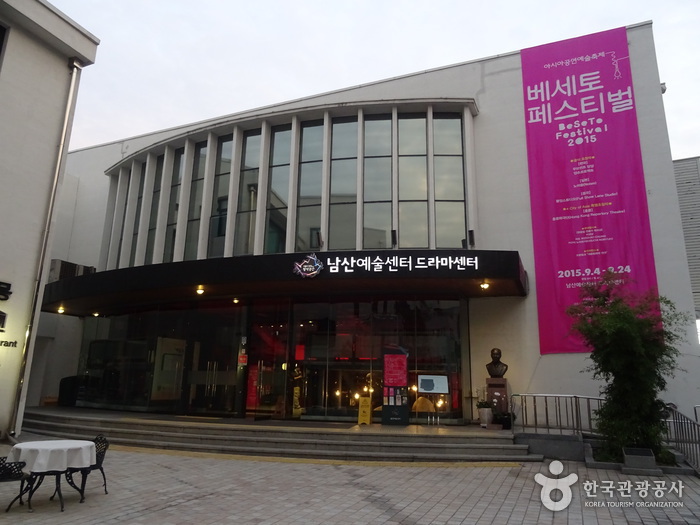
Namsan Arts Center, reopened as a creative space in Seoul in September 2009. It redefined the colors and characteristics of the theater, aiming for a modern theater production center centered on creative premieres, a contemporary performance venue where visitors can feel the pulse of the times, and a theater capable of various experiments.
Namsan Arts Center Drama Center is the first modern folk theater in Korea and the oldest performance hall in which the original architectural form has been preserved. Under the concept of "Contemporary & New Wave," the center continues to produce domestic original plays, and through active exchanges with excellent overseas theaters, build a repertoire of high-quality works that can read domestic and overseas trends, and present contemporary cultural diversity.
HOTEL QB (호텔큐비(호텔QB))
7.4Km 2024-12-23
322-10 , Jong-ro, Jongno-gu, Seoul
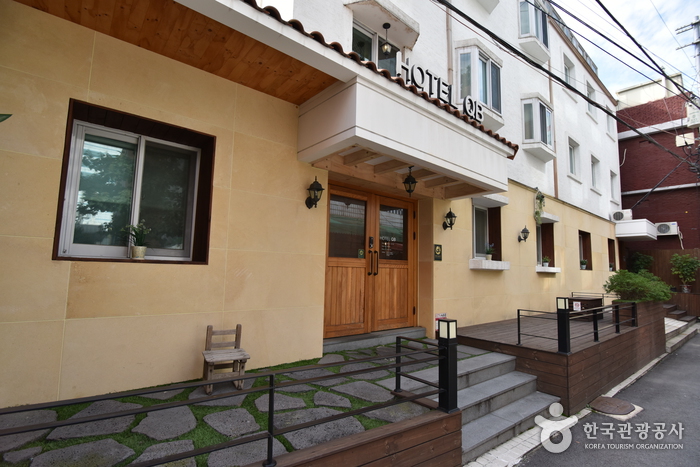
Hotel QB in Jongno-gu, Seoul, is conveniently located a 3-minute walk from Dongdaemun subway station and close to the airport bus stop. Rooms range from single rooms for individual travelers to a quad room, and there is a studio and fitting room where selfies and photos can be taken. The hotel cafe has a microwave, water purifier and refrigerator, and customized travel consulting and free luggage storage are provided in the lobby. Dongdaemun History and Culture Park, Dongmyo Flea Market and a variety of fashion wholesalers are all nearby.
Donga Stationery (동아완구)
7.4Km 2024-09-11
5 Jong-ro 52-gil, Jongno-gu, Seoul
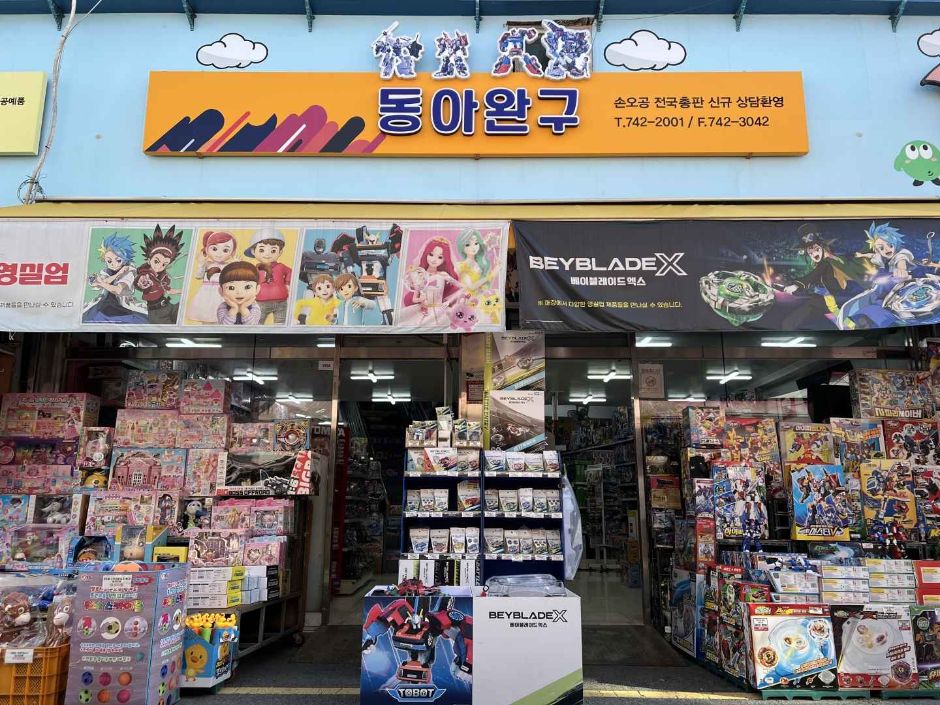
Donga Stationery is a stationery store located along Changsin-dong Stationery Street. The stop offers a full range of stationery and character goods and is popular among children and adults alike. The shop is located right by Dongdaemun Station (Seoul Subway Line 1), Exit 4, making it easily accessible.
Heunginjimun Gate - Dongdaemun Gate (흥인지문)
7.5Km 2025-10-23
288, Jong-ro, Jongno-gu, Seoul
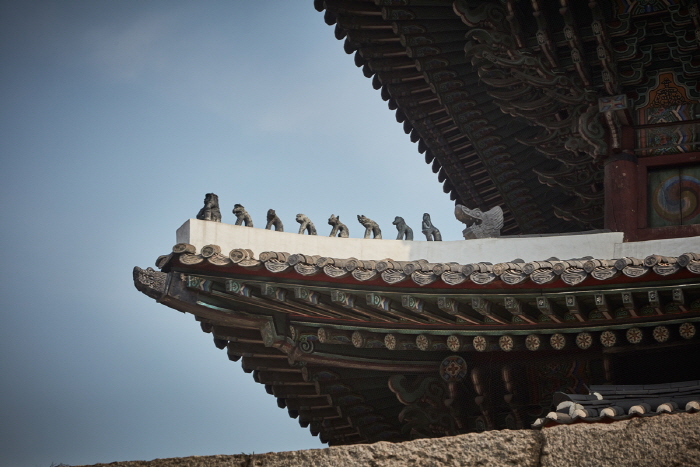
Heunginjimun Gate was built to protect Hanseongbu, which historically housed essential government facilities. Heunginjimun Gate was the gate on the east side of the outer wall of Seoul Fortress among eight gates. It is referred to as Dongdaemun Gate as well. The gate was constructed during King Taejo’s 5th year in 1396, remodeled during the reign of King Danjong in 1453, and was newly built in 1869 during the sixth year of King Gojong’s reign in 1869.
The gate features a hipped roof with five front and two side compartments on a two-storied building. The thin and weak bracket system supports the eaves and is excessively decorated, reflecting the construction features of the late Joseon period. Also, outside of the fortress is the half-circle-shaped Ongseong, a small wall, to protect the gate.
One of the unique factors of Heunginjimun Gate is that it is the only gate among Seoul’s eight to have Ongseong, further exhibiting the style of construction used during the late Joseon period.
 English
 한국어
한국어 日本語
日本語 中文(简体)
 Deutsch
 Français
 Español
 Русский


