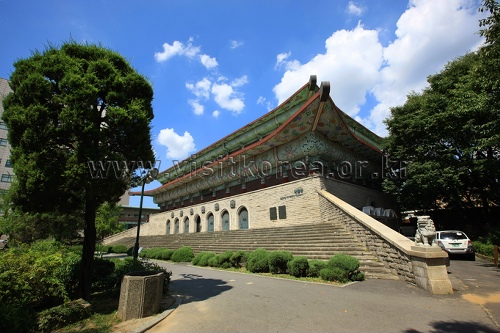
Sejong University Museum (세종대학교 박물관)
4.6Km 2022-09-16
209, Neungdong-ro, Gwangjin-gu, Seoul
Sejong University Museum exhibits folk art, wooden crafts, clothing, accessories, pottery, paintings and calligraphy collected for over 40 years by the couple who founded the present day Sejong University, Dr. Ju Young-ha and Dr. Choi Ok-ja. This museum has its origins in the Soodo Gallery, which was built in Chungmuro, the campus’ original location, in 1959. Needing more space to house additional artifacts, the museum moved to its current location, which first opened on May 5, 1973 in a four-story concrete building inspired by traditonal tower design from the Baekje era. This building was later expanded on May 20, 1977.
After the university’s name was changed to Sejong University in 1979, the museum was also renamed the Sejong University Museum. The museum showcases unique artifacts to both scholars and students from home and abroad in contribution to the research of Korea’s culture, arts, and archeology.

Seorae Village (서래마을)
4.6Km 2022-12-16
Banpo-dong, Seocho-gu, Seoul
Seorae Village is located in between Banpo 4-dong and Bangbaebon-dong in Seocho-gu, Seoul. Seorae Village took its form as a French neighborhood when French residents moved to the area after Ecole Francaise de Seoul, a school for French residents in Korea, was established here in 1985. According to 2008 census, about half of the total 1,000 French citizens residing in Korea were registered to be living in Seorae Village. The area naturally took shape as a global neighborhood as many international residents settled at Seorae Village much thanks to the strong presence of French residents. In addition to its convenient location near the central district area as well as Gangnam area and Hangang River Park, Seorae Village serves as a pleasant environment space for all.
Many shops and restaurants in Seorae Village are small in size and rather charming, resembling those in Europe. A bakery that makes traditional French baguettes using ingredients directly imported from France can be found here. In recent years, Seorae Village has undergone several changes, gaining much attention as one of the most modern and fanciest regions found in Seoul.
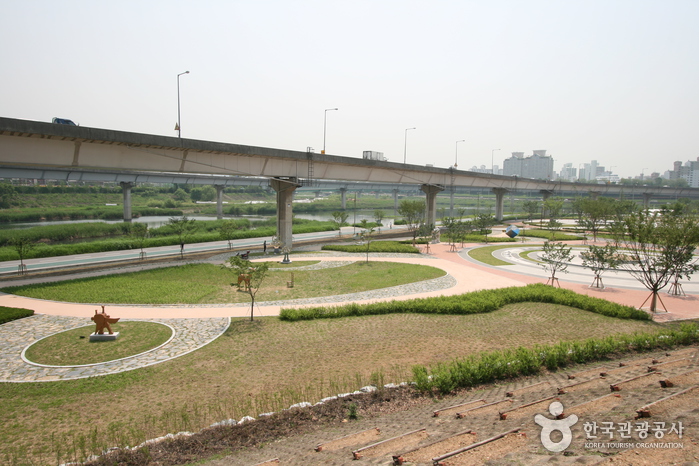
Salgoji Sports Park (살곶이 체육공원)
4.6Km 2024-03-20
16-18 Sageundong-gil, Seongdong-gu, Seoul
Salgoji Sports Park is located along the Joongnangcheon Riverside near Hanyang University. Its name "Salgoji" holds deep historical significance, meaning "the place where an arrow is shot" in Korean. The park features facilities such as an inline skating rink, soccer field, basketball court, and badminton court. There are dedicated bicycle paths and pedestrian walkways around the park. Throughout the year, walking festivals and mini marathons are organized, making it a beloved spot among cyclists. In the summer, an outdoor water playground is operated.
Seoul Upcycling Plaza (서울새활용플라자)
4.7Km 2024-01-05
49 Jadongchasijang-gil, Seongdong-gu, Seoul
Saehwaryong is a Korean term for upcycling, a process of redesigning or recycling discarded resources or materials to give them a new value or purpose. Seoul Upcycling Plaza operates upcycling-related exhibitions, upcycling practice education and experience programs, design studios, upcycling stores, workshops, and more. It is a great place to look around for ideas and inspirations on how to use products for longer periods of time. The plaza demonstrates the first step to creating a resource-recycling society.
Dong Seoul Tourist Hotel (동서울 관광호텔)
4.7Km 2025-01-07
38, Guuigangbyeon-ro, Gwangjin-gu, Seoul
Dong Seoul Tourist Hotel is a boutique hotel located close to Gangbyeon Station (Subway Line 2) and Dong Seoul Bus Terminal. The hotel offers quality service and is suitable for leisure and business travelers. The rooms on the third and fourth floor are decorated in various themes.
Riverside Spa Land (강변스파랜드)
4.7Km 2024-03-19
2nd basement level, 45, Guuigangbyeon-ro, Gwangjin-gu, Seoul
Riverside Spa Land opened in 1988. It contains a Korean-style sauna (jjimjilbang), restaurant, and a large game center. The spa facilities utilize underground mineral water rich in sulfur, which is said to be effective toward atopy and other skin disorders. Because it is located at the heart of Seoul, it is very accessible, and Riverside Spa Land’s wide range of facilities and services make it a popular destination for many.
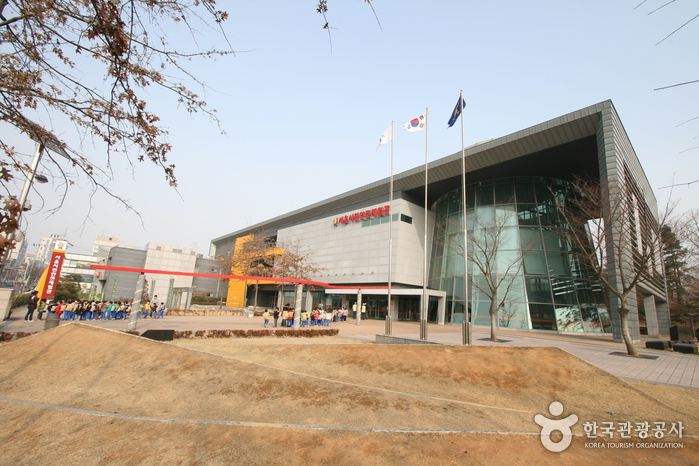
Gwangnaru Safety Experience Center (광나루안전체험관)
4.8Km 2025-03-29
238, Neungdong-ro, Gwangjin-gu, Seoul
Gwangnaru Safety Experience Center was founded in 1999 after two fire accidents in which many children lost their lives. These tragedies emphasized the necessity of establishing a disaster training center for common citizens.
Gwangnaru Safety Experience Center is a three-story building with one basement floor, covering an area of more than 5,000 m². The basement floor includes a small theater. The first floor is set up for natural disaster training and consists of an orientation hall, storm simulation training room, earthquake simulation room, computer tests on fire safety knowledge and others. The second floor is a place for artificial catastrophe training. It consists of a smoke escape training room, fire extinguisher training room, first-aid (CPR) training room and practice place for calling 119. The third floor is used for rescue training and consists of a rescue training room, screening room, training for professionals and video examples of the five biggest disasters that have occurred in Seoul. Overall there are about 20 training areas established, so citizens can experience the imitation of a disaster by themselves and learn easily and in an interesting way how to cope with a disaster.
Namsan Outdoor Botanical Garden (남산 야외식물원)
4.8Km 2022-12-16
323, Sowol-ro, Yongsan-gu, Seoul
Namsan Outdoor Botanical Garden opened its doors on February 18, 1997 in Hannam-dong, where the residential complex for foreigners once stood before it was demolished in 1994. Covering an area of around 59 ㎡, it is divided into 13 themed gardens with a total 117,132 plants from 269 species. Among this diversity, 60,912 plants from 129 species are tree types and 56,220 plants from 140 species are grass types.
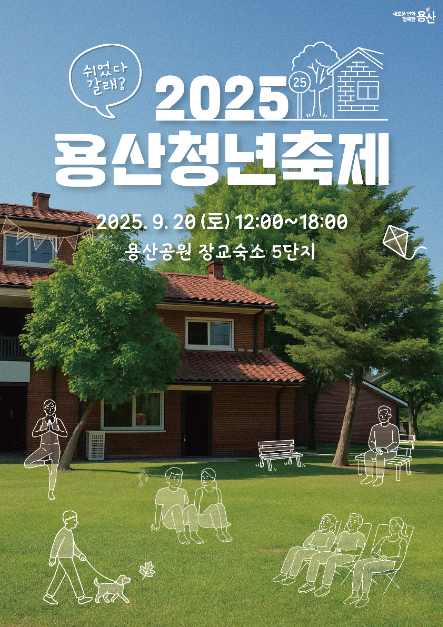
Yongsan Youth Festival (용산청년축제)
4.8Km 2025-10-23
221 Seobinggo-ro, Yongsan-gu, Seoul
+82-10-9771-2090
The Youngsan Youth Festival, a wellness-themed event, invites both youths and residents to take the initiative for their well-being by achieving a balanced state of mental, physical, and social health. During the festival, visitors can enjoy dance performances, shows by popular singers, magic shows, traditional Korean music ensembles, and a commemorative ceremony featuring congratulatory remarks.
Seoul Children's Grand Park (서울어린이대공원)
4.8Km 2024-11-28
216 Neungdong-ro, Gwangjin-gu, Seoul
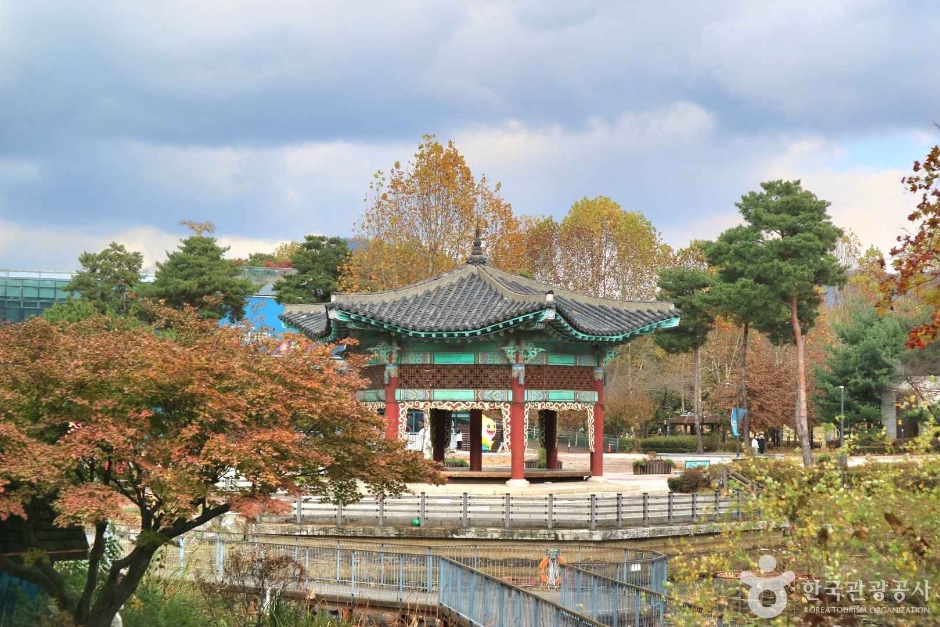
Opened in May 1973, Seoul Children’s Grand Park is a theme park situated among green forests and fields with a total area of 56,552㎡. It contains a zoo, arboretum, amusement park, and performance venues. Seoul Children’s Grand Park has been a beloved part of Seoul, a paradise for children and a living venue for education. For grown-ups, it functions as an area of refuge and culture within the city. The Grand Park offers facilities that everyone in the family can enjoy, so everyone can find their own fun in the Grand Park.
 English
 한국어
한국어 日本語
日本語 中文(简体)
 Deutsch
 Français
 Español
 Русский


