
Gaeul Terrace (개울테라스)
18.2Km 2025-01-09
212-5, Namhansanseong-ro, Namhansanseong-myeon, Gwangju-si, Gyeonggi-do
Gaeul terrace is a cozy forest café nestled beside a stream in the valley. Its interior features full-length glass walls, providing panoramic views of the natural scenery throughout all four seasons. A pathway from the café leads directly to the valley. Popular menu items include aromatic Espresso, sweet Ttalgi latte (Strawberry latte), and tender Croffles rich in buttery flavor. The outdoor seating area offers a serene ambiance, complemented by the soothing sound of the flowing water from the nearby stream.
Yuldong Park (율동공원)
18.5Km 2021-11-30
145, Munjeong-ro, Bundang-gu, Seongnam-si, Gyeonggi-do
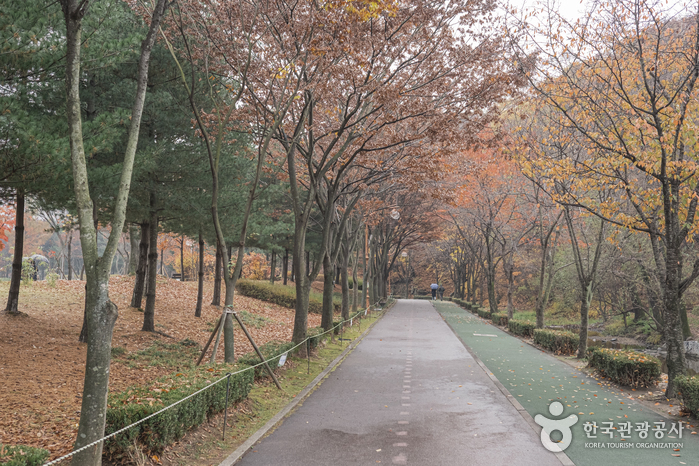
Yuldong Park is a large urban neighborhood park located in the Bundang area of Seongnam. Since its opening in 1999, the park has become a favorite weekend hangout, frequented by residents of Seongnam and Seoul. This well-equipped park has a 45-meter bungee jumping site, a large fountain and a 33-acre reservoir encircled by a 2.5 kilometer promenade/bike path. Other facilities include a 13 meter-high artificial rock climbing wall, badminton center, children’s playground, foot acupressure path, grass plaza, year-round flower garden, field of reeds and theater. The park is also a popular date course for couples at nighttime as there are many quiet cafes located near the reservoir.
Ginkgo Tree at the Fortress Well Site (성주우물터 은행나무)
18.5Km 2025-09-15
Gayang-dong, Gangseo-gu, Seoul
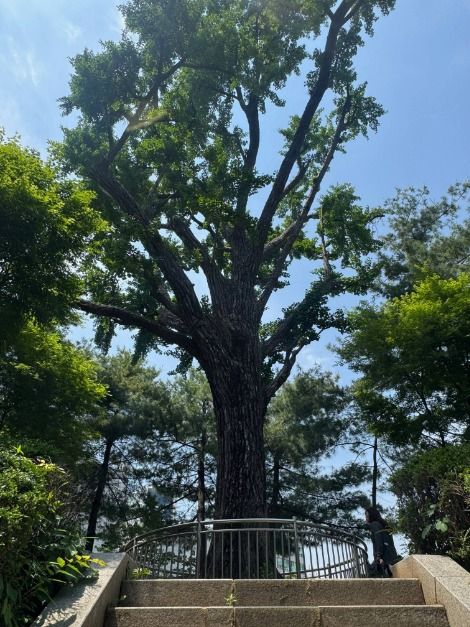
Ginkgo Tree at the Fortress Well Site refers to the old ginkgo tree, which have been designated as a protected tree in 1988, located in Gayang-dong, Gangseo-gu in Seoul. Until the Gayang apartment complex was built, the area where the ginkgo tree is located was a historic place with a beautiful landscape and many anecdotes and legends. Before the Goryeo dynasty, its location served as an important strategic point along the lower part of the Hangang River, where it had a ferry dock with boats that bypassed Haengju and Paju as a shortcut for commuting between Kaeseong and Pyongyang, and is associated with many legends of historical figures who had used the dock. The ginkgo tree also appears in a painting drawn by Gyeomjae Jeongseon, a historic painter of the Joseon dynasty.
YONSEI HEAL DENTAL CLINIC (연세힐치과의원)
18.5Km 2025-11-24
1st–2nd Floor, Ujangsan Harrington Tower, 231 Gangseo-ro, Gangseo-gu, Seoul
Yonsei Heal Dental Clinic has upheld the values of trust and healing since its founding in 2014. Guided by a patient-centered philosophy, a team of ten specialized doctors works collaboratively to deliver precise and safe treatments using world-class digital systems. With expertise spanning implants, digital restorative care, and laminates, the clinic pursues excellence in both function and aesthetics. Built on integrity and meticulous care, Yonsei Heal Dental restores not only smiles but also the quality of life.
![[Seoul Trail Course 1] Suraksan · Buramsan Mountain Course ([서울 둘레길 1코스] 수락 · 불암산 코스)](http://tong.visitkorea.or.kr/cms/resource/16/2658216_image2_1.jpg)
[Seoul Trail Course 1] Suraksan · Buramsan Mountain Course ([서울 둘레길 1코스] 수락 · 불암산 코스)
18.6Km 2025-01-06
Junggye-dong, Nowon-gu, Seoul, Republic of Korea
Seoul Trail is a walking trail that encompasses the entire city of Seoul, with a total length of 157km and 8 courses. It weaves together the history, culture, and natural ecology of Seoul through various stories. The 1st course is a gentle path from Suraksan Mountain to Buramsan Mountain, covering 18.6km and taking approximately 8 hours and 10 minutes. This trekking course around Buramsan Mountain passes through Iris Garden, Deongneung-gogae, Information Center, Taereung Royal Tomb, Suamsa Temple, and Hakdoam Temple.
Sungsam Medical Foundation, Miz Medi Hospital (성삼의료재단미즈메디병원)
18.6Km 2025-10-23
295 Gangseo-ro, Gangseo-gu, Seoul
MizMedi Hospital began as an obstetrics and gynecology center specializing in infertility treatment in 1991. In 2000, we expanded to become a general hospital for women, providing comprehensive care for infertility and a wide range of women's health issues.
- The first JCI-certified hospital in Korea specializing in women's healthcare
- An obstetrics and gynecology hospital accredited by the Ministry of Health and Welfare
- 64 specialists and 322 highly skilled employees
- Serving 390,000 patients and delivering 4,000 babies each year
- Performing over 8,000 surgeries each year, with most gynecologic conditions treated laparoscopically, and more than 1,700 in vitro fertilization procedures, frozen embryo transfers, and artificial insemination treatments— with a pregnancy success rate of over 50%
Proudly, we are MizMedi Hospital.
Ewha Womans University Seoul Hospital (이화의대부속서울병원)
18.7Km 2025-10-23
260 Gonghang-daero, Gangseo-gu, Seoul
Ewha Womans University Seoul Hospital is designed with a focus on optimizing care for infectious diseases, featuring 3-bed standard wards and single-bed rooms in all intensive care units. Building on our long history of excellence in women’s education, treatment, and research, we have established a competitive edge by specializing in women’s cancers, including breast, thyroid, uterine, and ovarian cancers. Our expertise extends beyond women’s health, offering specialized medical services for severe conditions such as bladder, stomach, and colorectal cancers, as well as cardiovascular diseases. We also provide comprehensive care for chronic adult conditions like hypertension, diabetes, and obesity.
Our recently opened Ewha Womans University Cerebrovascular Hospital and Ewha Womans University Aorta and Vascular Hospital are equipped with the latest technology to offer advanced surgery and treatment for stroke, aneurysms, heart, and aortic diseases. The Ewha Womans University Mother and Baby Hospital is dedicated to the specialized care of high-risk mothers and newborns, ensuring the best outcomes for maternal and child health. Additionally, we offer personalized health management through our specialized centers, including the Wellness Health Checkup Center and the Well-Aging Center, to support our patients’ overall well-being.
THE FIRST STAY (더퍼스트스테이 호텔)
18.8Km 2024-12-23
23 , Magokdong-ro 4-gil, Gangseo-gu, Seoul
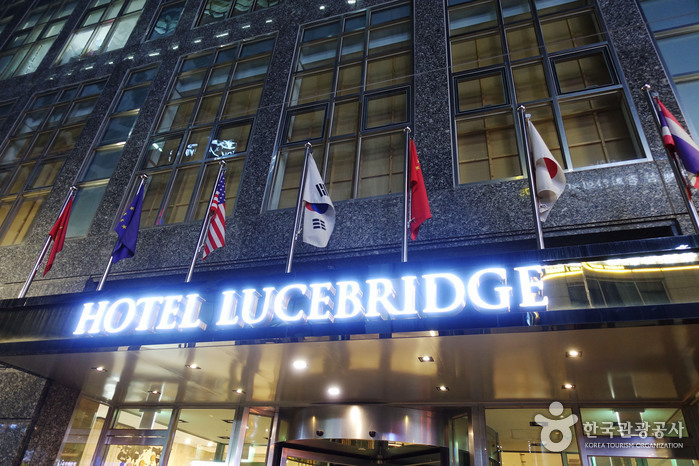
The First Stay Hotel, located in Magok-dong, Gangseo-gu, Seoul, is chosen by many frequent business trippers as well as domestic and foreign travelers because of its modern styling, practical prices, and convenient transport links. Gimpo Airport is 10 minutes and Incheon International Airport just 30 minutes away, while subway and bus stops are within a 5-minute walk. The hotel has ample parking space, and self-catering is possible in some rooms.
Seoseoul Lake Park (서서울호수공원)
18.8Km 2022-10-19
20, Nambusunhwan-ro 64-gil, Yangcheon-gu, Seoul
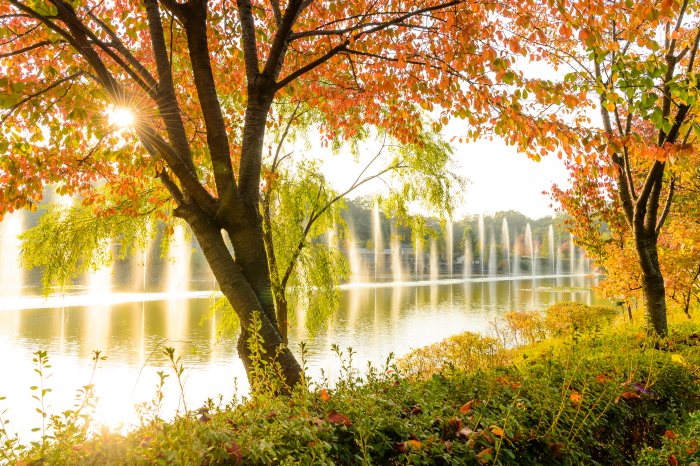
Covering over 225,000 ㎡ of land in the southwestern part of Seoul, Seoseoul Lake Park, also known as West Lake Park, was to resolve the regional imbalance in the city. The park is a eco-friendly park designed with the themes of "water" and "recycling." Before turning into a park, the area was used as a purification plant that produced approximately 120,000 tons of tap water to Seoul. The park has a children's playground, sports facilities like the soccer field, basketball court and badminton courts, and a cultural plaza. With its vast space and 24-hour operation, the park provides a relaxing ground for the citizens of Seoul.
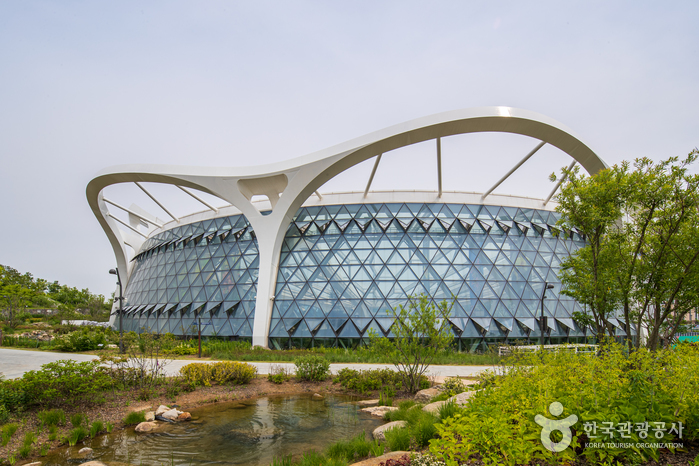
Seoul Botanic Park (서울식물원)
19.0Km 2025-06-18
161 Magokdong-ro, Gangseo-gu, Seoul
The Seoul Botanical Garden was created in Magok, the last remaining development site in Seoul, to introduce native plants and horticulture of 12 different cities from around the world and raise ecological awareness in the city. Seoul Botanic Park integrates a botanical garden and a public park, and the area is the size of 70 soccer fields. It serves as a bridgehead and lifelong education institution with the aim of spreading urban garden culture while staying true to its original role as a plant research conservation institution through expanding endangered wild plant habitats, researching the proliferation of species, and developing varieties. The botanical garden is divided into four spaces: Open Forest, Themed Garden, Lake Garden, and Wetland Garden. The main highlight is the Themed Garden that comprises the Botanic Center, Mogok Cultural Hall, and an outdoor themed garden.
 English
 한국어
한국어 日本語
日本語 中文(简体)
 Deutsch
 Français
 Español
 Русский


