![Inwoohouse [Korea Quality] / 인우하우스 [한국관광 품질인증]](http://tong.visitkorea.or.kr/cms/resource/56/3009456_image2_1.jpg)
Inwoohouse [Korea Quality] / 인우하우스 [한국관광 품질인증]
6.6Km 2023-09-12
1-9 , Gyedong 6-gil, Jongno-gu, Seoul
+82-2-742-1115
Inwoo House is a traditional hanok down an alley in Gye-dong, Jongno, Seoul. There is a swallow's nest under the eaves, and the pride of this house is that the swallow family returns every spring. Each room in the house has a private bathroom. Residents can sample Korean culture by taking part in traditional paper crafts, knot bracelet making, and fan decorating. The location is convenient for restaurants, cafes, and convenience stores, and Gyeongbokgung Palace, Changdeokgung Palace, Insadong, and Samcheong-dong are all within walking distance.
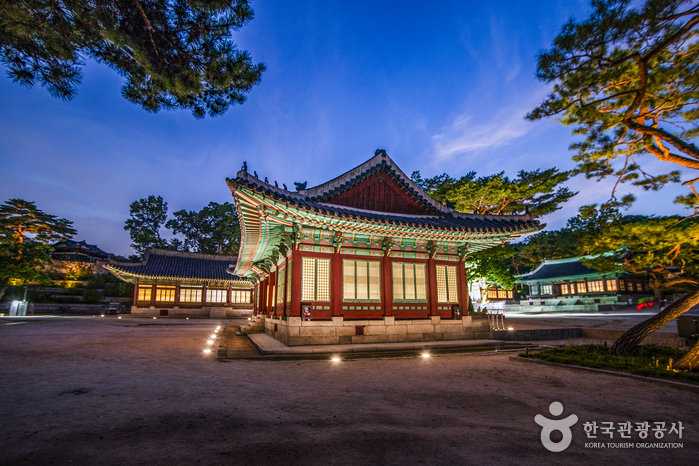
Changgyeonggung Palace (창경궁)
6.6Km 2024-10-31
185 Changgyeonggung-ro, Jongno-gu, Seoul
+82-2-762-4868
Located in the heart of Seoul, Changgyeonggung Palace was originally built as Suganggung Palace by the 4th ruler of the Joseon dynasty, King Sejong (r.1418-1450), for his retiring father, King Taejong. It often served as residential quarters for queens and concubines. During the reign of King Seongjong (r.1469-1494), the palace was renovated and renamed to Changgyeonggung Palace. It later became a park with a zoo and a botanical garden during Japanese colonial rule. The palace grounds remained this way until 1983 when restoration of its old grace was completed.
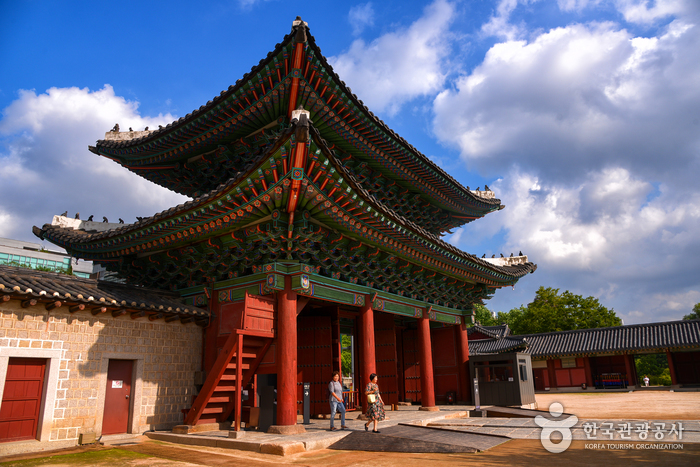
Changgyeonggung Palace Honghwamun Gate (창경궁 홍화문)
6.6Km 2021-05-27
99, Yulgok-ro, Jongno-gu, Seoul
+82-2-762-4868
Honghwamun Gate is the main gate of Changgyeonggung Palace. It has three opening gates in the front and two to the side with a sophisticated locking mechanism.

Lagidang [Korea Quality] / 락이당 [한국관광 품질인증]
6.6Km 2024-08-27
121, Gyedong-gil, Jongno-gu, Seoul
+82-507-1358-3701
Lagidang is a foreigner-only guesthouse in the heart of Bukchon Hanok Village in Jeongno-gu, Seoul. Public transportation links are good, with Exit 3 of Anguk Subway Station just a seven-minute walk away. The house has a fine view over Bukchon Hanok Village, and early-rising guests will also catch the sunrise in the south-eastern sky. The guesthouse is decorated with art works and Joseon-period antiques.
Woo Joo Yon Clinic (우주연한의원)
6.6Km 2025-10-23
(2nd Floor, Hanok), 41 Bukchon-ro 12-gil, Jongno-gu, Seoul
Woojooyon Clinic takes an integrative approach considering the patient's overall health. Rather than merely treating the affected area, we listen to the patient's story, understand their daily life, and focus on identifying and correcting the root causes of imbalances in the body. Our goal is to pursue true healing and happiness by treating with a delicate touch that connects with the patient's soul. We aim to restore the body to its original state, ensuring a holistic examination of both body and mind, as well as habits and personality. Woojooyon Clinic is committed to helping patients regain a healthy life by applying the wisdom of traditional Korean medicine. We value our relationships with patients and strive to always do our best.
![Olive Young - Hwanghak Sageori Branch [Tax Refund Shop] (올리브영 황학사거리)](http://tong.visitkorea.or.kr/cms/resource/46/2888246_image2_1.jpg)
Olive Young - Hwanghak Sageori Branch [Tax Refund Shop] (올리브영 황학사거리)
6.6Km 2024-04-17
410, Wangsimni-ro, Seongdong-gu, Seoul
-
![CheongKwanJang - Dongdaemun Market Branch [Tax Refund Shop] (정관장 동대문시장)](http://tong.visitkorea.or.kr/cms/resource/33/2878233_image2_1.jpg)
CheongKwanJang - Dongdaemun Market Branch [Tax Refund Shop] (정관장 동대문시장)
6.6Km 2024-04-19
252, Jong-ro, Jongno-gu, Seoul
-
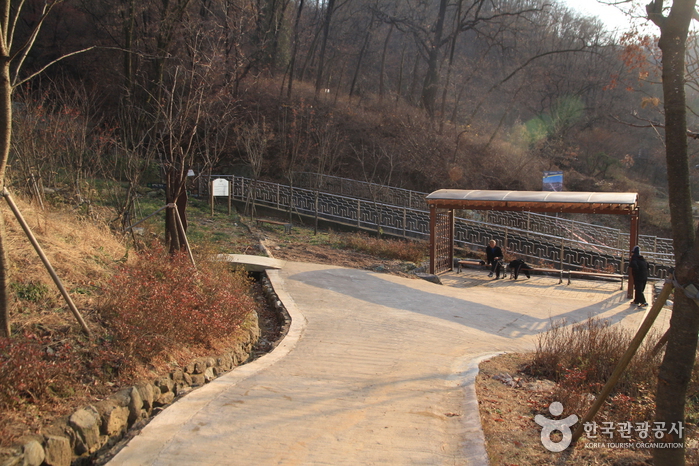
Seoul Mangusan Mountain (망우산(서울))
6.6Km 2021-02-10
San 69-1, Mangu-dong, Jungnang-gu, Seoul
+82-2-2094-2395
Mangusan Mountain at 281.7 meters above sea level spans across Mangu-dong and Myeonmok-dong of Seoul, and Guri-si of Gyeonggi-do. Located on the mountain is Mangu Cemetery, which was designated as a public cemetery in 1933. Since its designation, many popular people have been buried here including children’s literature author Bang Jeong-hwan (penname: Sopa), independence activists Oh Se-chang and Han Yong-un, and Ji Seok-young who pioneered the use of the smallpox vaccination in Korea and was also a Korean linguist. In addition, tombstones bearing chronological listings of seven popular poets and one educator were installed at the park, making the cemetery a venue for historical education. The park also has Sin Gyeong-jin Sindobi, a cultural asset designated as Seoul Tangible Cultural Property No. 95. It is a monument of Sin Gyeong-jin, an official scholar of the Joseon dynasty.
The park also has a 5.2-kilometer-long circular road named “The Thinking Path”. The name was selected through a public competition held in May 1998. Other facilities include the urban environment and nature observation road, a wooden gazebo, and a mineral spring. Thanks to the well managed trees and clean air, the park is visited by many citizens seeking a place to rest.
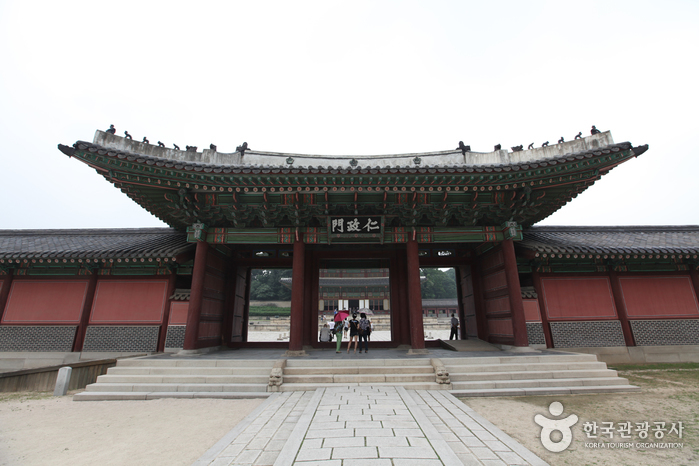
Changdeokgung Injeongmun Gate (창덕궁 인정문)
6.6Km 2025-01-14
99, Yulgok-ro, Jongno-gu, Seoul
+82-2-3668-2300
Serving as the main gate of Injeongjeon Hall, Injeongmun Gate was established in 1405 (5th year of King Taejo’s reign during the Joseon dynasty). Later on, the gate was destroyed by multiple fires during the Imjin War (Japanese invasion of Korea in 1592), therefore current form of the establishment displays designs that are more often seen in the late 19th century's. In addition, a lot
of subsidary marks and buildings are removed from the original places and relocated passing the time, however, still remains to represent prestigious ambience.
Injeongmun Gate served as the place for several coronation ceremonies of kings, prince's succession of throne, and many other national affairs celebrated by the royal members who gathered and aligned around this gate.
![Go-un [Korea Quality] 고운 [한국관광 품질인증]](http://tong.visitkorea.or.kr/cms/resource/08/2948908_image2_1.JPG)
Go-un [Korea Quality] 고운 [한국관광 품질인증]
6.6Km 2024-08-14
35-1, Bukchon-ro 12-gil, Jongno-gu, Seoul
+82-504-0904-2464
Go-un, meaning "High Cloud," is a hanok stay atop a steep hill in Gahoe-dong, Bukchon Hanok Village, Jeongno-gu, Seoul. The view from the house’s big windows takes in hanok tiled roofs, Seoul’s downtown, and Inwangsan Mountain - a vista that merges the past and the present. After enjoying Bukchon's attractions, entertainment, and food, guests can relax in the hanok’s half-body bath overlooking the yard (mugwort bath salts provided) - or enjoy a movie on the beam projector.
 English
 한국어
한국어 日本語
日本語 中文(简体)
 Deutsch
 Français
 Español
 Русский


