Uidonggyegok Valley (우이동계곡)
6.4Km 2021-06-09
Ui-dong, Gangbuk-gu, Seoul
+82-2-909-0497
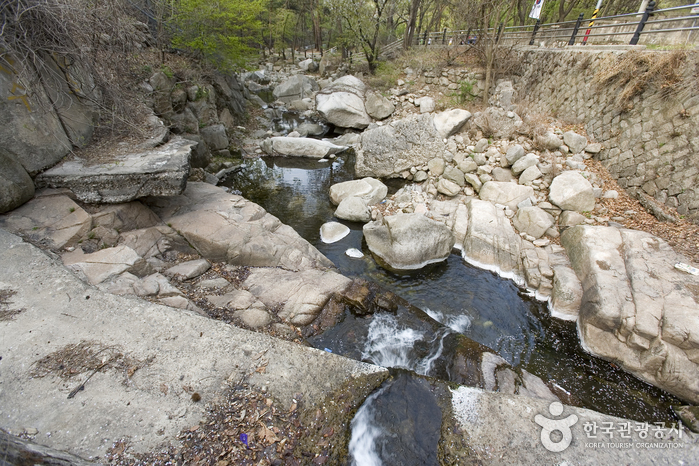
Uidonggyegok Valley is located between Bukhansan Mountain and Dobongsan Mountain, and is a popular retreat for locals. Near the entrance to the valley are accommodations, a playground, wedding hall, and other amenities. Clean water runs through the valley, and is lined with restaurants. The hiking path starting to the left of the valley entrance passes Doseonsa Temple on the way to Insubong Peak. The hiking path through the valley is quite difficult, but leads to Uiam Hermitage, and further to Dobongsan Mountain along the ridge. Additional temples in the area include Seongbulsa, Yongdeoksa, Seonunsa, and Gwangmyeongsa Temples.
Dongdaemun Jeongyuk Sikdang (동대문정육식당)
6.4Km 2024-03-15
7-3 Jong-ro 46ga-gil, Jongno-gu, Seoul
+82-2-764-1541
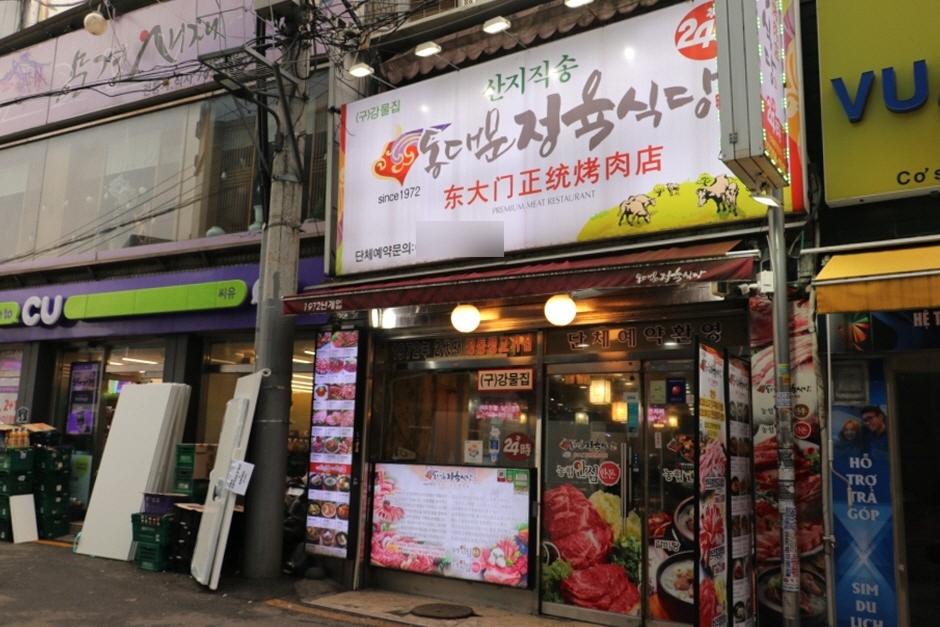
Dongdaemun Jeongyuk Sikdang is a butcher restaurant specializing in fresh meat located near Dongdaemun Fashion Town. They offer high-quality Korean beef and Korean pork sourced directly from the producers, allowing customers to choose cuts of meat according to their preferences at reasonable prices. Their savory soybean paste stew served in the center of the grill is also delicious. Customers can help themselves to additional side dishes like green onions threads and onion sauce at the self-service bar.

Samcheong Park (삼청공원)
6.4Km 2024-03-18
44, Insadong-gil, Jongno-gu, Seoul
+82-2-2148-4150
Samcheong Park is a park that blooms in cherry blossoms in spring and fall colors in fall near Gyeongbokgung Palace. The park is home to a forest library and a café, and visitors can follow the trails to find acupressure trails, exercise equipment, badminton court, tennis court, playground, and a convenience store. The area surrounding the park is home to many galleries and restaurants, so it is a popular destination for walking among the people of Seoul.
![Changdeokgung Palace Complex [UNESCO World Heritage Site] (창덕궁과 후원 [유네스코 세계유산])](http://tong.visitkorea.or.kr/cms/resource/03/3092503_image2_1.jpg)
Changdeokgung Palace Complex [UNESCO World Heritage Site] (창덕궁과 후원 [유네스코 세계유산])
6.4Km 2025-07-21
99 Yulgok-ro, Jongno-gu, Seoul
Changdeokgung Palace was the second royal villa built following the construction of Gyeongbokgung Palace in 1405. It was the principal palace for many kings of the Joseon dynasty, and is the most well-preserved of the five remaining royal Joseon palaces. The palace grounds are comprised of a public palace area, a royal family residence building, and the rear garden. Known as a place of rest for the kings, the rear garden boasts a gigantic tree that is over 300 years old, a small pond and a pavilion.
The palace gained importance starting from the time of Seongjong, the 9th king of Joseon, when a number of kings began using it as a place of residence. Unfortunately, the palace was burned down by angry citizens in 1592 when the royal family fled their abode during the Imjin War. Thanks to Gwanghaegun, the palace was restored in 1611. Even today, it houses a number of cultural treasures, such as Injeongjeon Hall, Daejojeon Hall, Seonjeongjeon Hall, and Nakseonjae Hall.
Changdeokgung Palace’s garden behind the inner hall, called the "Secret Garden," was constructed during the reign of King Taejong and served as a rest area for the royal family members. The garden had formerly been called Bugwon and Geumwon, but was renamed Biwon Garden, or Secret Garden, after King Gojong came into power. The garden was kept as natural as possible and was touched by human hands only when absolutely necessary. Buyongjeong Pavilion, Buyongji Pond, Juhamnu Pavilion, Eosumun Gate, Yeonghwadang Hall, Bullomun Gate, Aeryeonjeong Pavilion, and Yeongyeongdang Hall are some of the many attractions that occupy the garden. The most beautiful time to see the garden is during the fall when the autumn foliage is at its peak and the leaves have just started to fall.
Though it has been treasured by Koreans for centuries, Changdeokgung Palace and its complex was recognized as a World Cultural Heritage site by the UNESCO World Cultural Heritage Committee in December of 1997 during the committee meeting in Naples, Italy.
![CheongKwanJang - Jangan Branch [Tax Refund Shop] (정관장 장안)](http://tong.visitkorea.or.kr/cms/resource/35/2889535_image2_1.jpg)
CheongKwanJang - Jangan Branch [Tax Refund Shop] (정관장 장안)
6.4Km 2024-04-18
120, Janghan-ro, Dongdaemun-gu, Seoul
-
![Olive Young - Sagajeong Station Branch [Tax Refund Shop] (올리브영 사가정역)](http://tong.visitkorea.or.kr/cms/resource/19/2888019_image2_1.jpg)
Olive Young - Sagajeong Station Branch [Tax Refund Shop] (올리브영 사가정역)
6.4Km 2024-04-17
Store #103, Geukjang Bldg., 310, Myeonmok-ro, Jungnang-gu, Seoul
-
Heunginjimun Gate - Dongdaemun Gate (흥인지문)
6.4Km 2025-10-23
288, Jong-ro, Jongno-gu, Seoul
+82-2-2148-1842
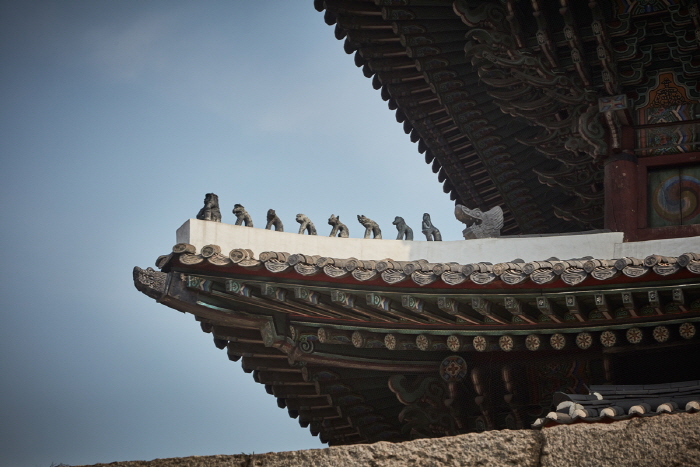
Heunginjimun Gate was built to protect Hanseongbu, which historically housed essential government facilities. Heunginjimun Gate was the gate on the east side of the outer wall of Seoul Fortress among eight gates. It is referred to as Dongdaemun Gate as well. The gate was constructed during King Taejo’s 5th year in 1396, remodeled during the reign of King Danjong in 1453, and was newly built in 1869 during the sixth year of King Gojong’s reign in 1869.
The gate features a hipped roof with five front and two side compartments on a two-storied building. The thin and weak bracket system supports the eaves and is excessively decorated, reflecting the construction features of the late Joseon period. Also, outside of the fortress is the half-circle-shaped Ongseong, a small wall, to protect the gate.
One of the unique factors of Heunginjimun Gate is that it is the only gate among Seoul’s eight to have Ongseong, further exhibiting the style of construction used during the late Joseon period.
Choong Ang High School (중앙고등학교)
6.5Km 2025-10-23
164 Changdeokgung-gil, Jongno-gu, Seoul
+82-2-742-1321
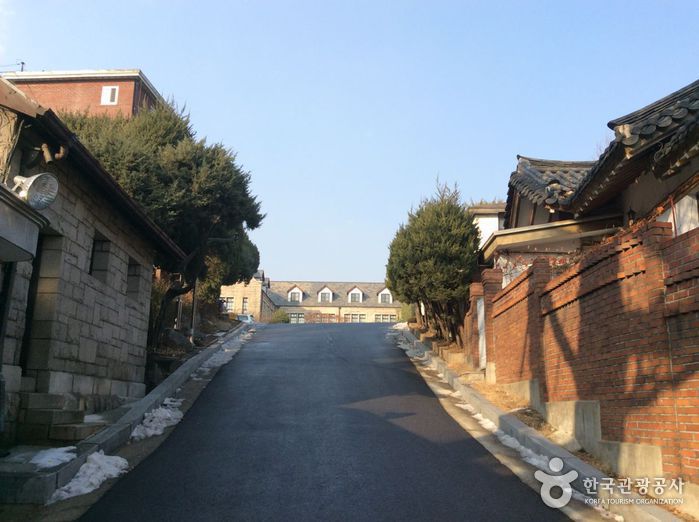
Choong Ang High School is located in Jong-ro near Samcheongdong-gil. It was built to educate the public at the beginning of the 20th century. The school’s main building was reconstructed in 1937 after the original two-story brick house was destroyed in 1934. The main building situated in front of the main gate is a two-story H-shaped granite stone building in Gothic style, with a four-story tower in the middle.
The school holds historical significance because it was designed by Park Dong Jin, one of Korea's first modern architects and the designer of Korea University’s main building, library, and the Chosun Ilbo Newspaper Company building. The main building of Choong Ang High School is designated as Historic Site No. 281. Many national leaders were educated at the gothic building during the grim period when Korea was trying to escape Japanese colonial rule.
Nakseonjae Hall (낙선재)
6.5Km 2021-09-30
99, Yulgok-ro, Jongno-gu, Seoul
+82-2-2148-1822
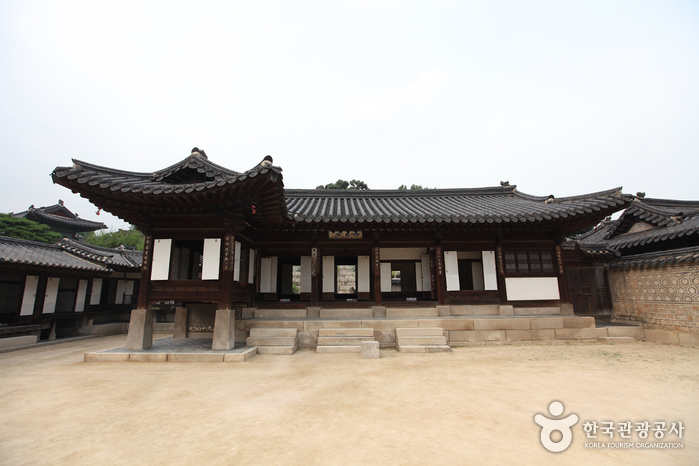
Located inside Changdeokgung Palace, Nakseonjae Hall is a one-story structure built in ikgong style (bird wing-shaped eaves placed on top of the pillars) with a hip tiled and gable roof. It has 6 kan in the front and 2 kan (traditional unit of measurement of the space between pillars) to the sides. It originally belonged to the nearby Changgyeonggung Palace, but came to be considered a part of Changdeokgung Palace in more recent years.
The hall was constructed in 1846 (12th year of King Heonjong’s reign) and it is collectively called Nakseonjae together with the adjacent Seokbokheon Hall and Sugangjae Hall.
Behind the building is a flower garden made of stacked large stones. The chimney, the flowers, and the oddly shaped stones harmoniously blend into one another to create an outstanding landscape gardening.
Yongma Land (용마랜드)
6.5Km 2025-10-28
118 Mangu-ro 70-gil, Jungnang-gu, Seoul
Yongma Land, a private amusement park, was opened at the foot of Yongmasan Mountain in 1983, and closed its doors in 2011. Having spent some time as a derelict building, it has now been repurposed as a nostalgia-filled space. It was made famous as the filming location of Crayon Pop’s "Bar Bar Bar" music video. Since then, it has become a renowned destination for photography, thanks to its unique atmosphere created by the combination of lush greenery and derelict amusement rides. Entry may be restricted in the case of filming or space rentals, so make sure to check with the management before you head to the amusement park. Yongma Land is located next to Bonghwa Middle School, at Exit 1 of Mangu Station, Gyeongui–Jungang Line.
 English
 한국어
한국어 日本語
日本語 中文(简体)
 Deutsch
 Français
 Español
 Русский


