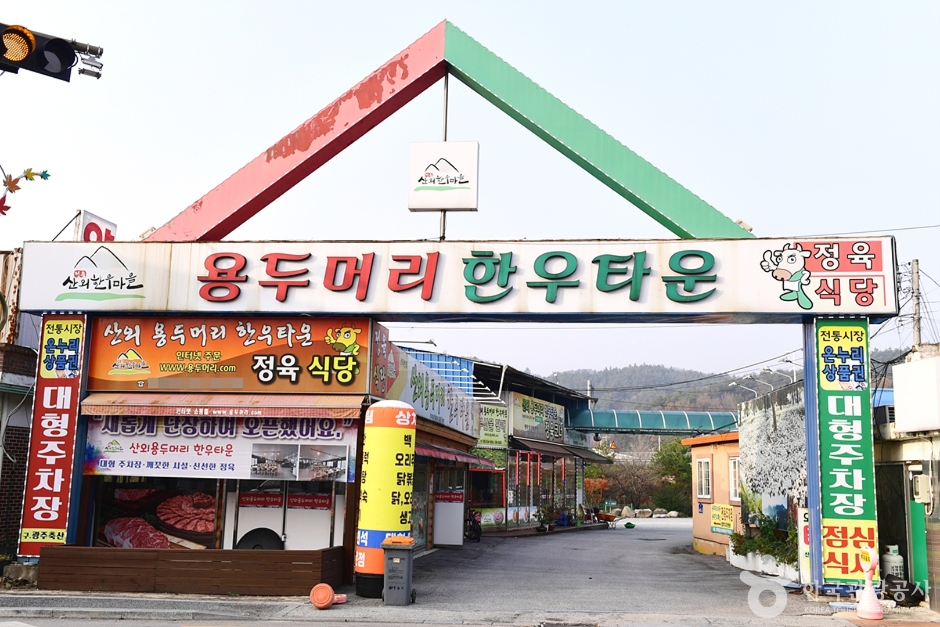
Sanoe Hanu Village (산외한우마을)
.0M 2024-04-07
450 Sanoe-ro, Sanoe-myeon, Jeongeup-si, Jeonbuk-do
Sanoe Hanu Village is situated approximately 30 minutes from downtown Jeongeup. This establishment exclusively deals in hanu (Korean beef), facilitating direct transactions between producers and businesses, which allows for lower prices due to its family-oriented business model. Here, visitors can savor delicious, nutritious, and affordably priced beef. Most shops at the village function as both butcher shops and restaurants, so one can select their preferred cut of meat. Upon ordering, guests will receive a simple table setting, which includes five to six side dishes, priced at around 5,000 won per person, and the chosen meat will be served.
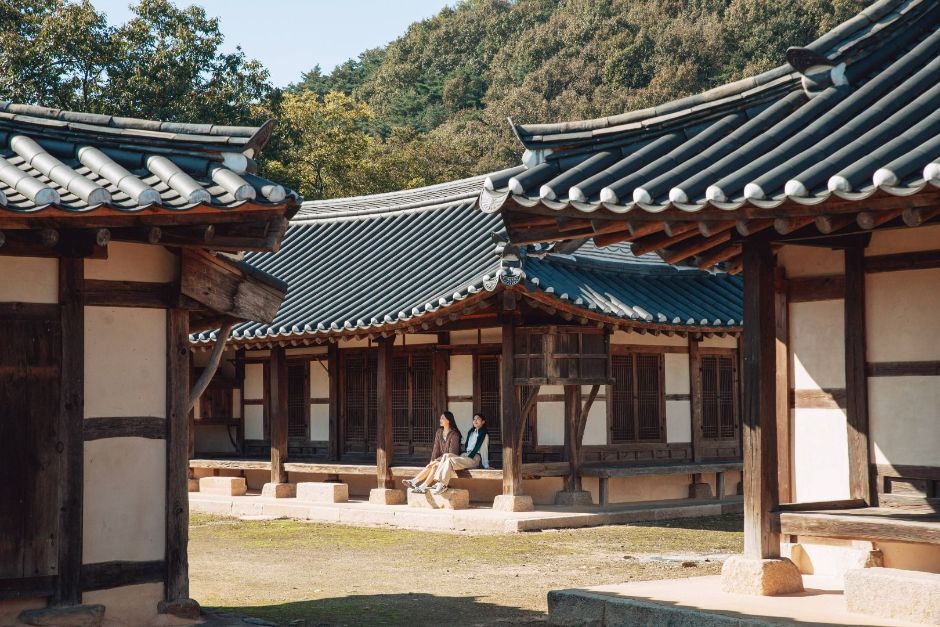
Kim Myeong-gwan's House (정읍 김명관 고택)
2.0Km 2025-01-16
72-10 Gongdong-gil, Sanoe-myeon, Jeongeup-si, Jeonbuk-do
A typical example of an aristocrat's house, this residence was built in the 8th year of King Jeongjo's reign in the Joseon dynasty by Kim Myeong-gwan, the 6th generation descendent of Kim Dong-su. Kim Myeong-gwan carefully considered the principles of geomancy when choosing the location of the house, with Cheonghasan Mountain to the back and Dongjingang River to the front, and it took ten years to complete the house. Upon entering the main gate, the house reveals a balanced symmetry with the daecheongmaru (wooden floor hall) at the center. Every component of the house was placed and designed to create a balance with the surroundings and efficient movement within the premises. Because the house contains most of its original form and displays a beautiful harmony with the natural surroundings, it is regarded as valuable research material. Although there may be limitations, viewing is generally allowed.

Museongseowon Confucian Academy [UNESCO World Heritage] (무성서원 [유네스코 세계문화유산])
5.5Km 2025-01-17
44-12 Wonchon 1-gil, Chilbo-myeon, Jeongeup-si, Jeonbuk-do
Museongseowon Confucian Academy was built in 1615 to honor Silla's scholar Choe Chiwon (857-?). An important cultural heritage for understanding the principles of Confucianism and culture of the Joseon dynasty, it is recognized as a representative example of seowon architecture and listed as a UNESCO World Heritage Site. The traditional architecture still remains, and the surrounding scenery, including old ginkgo trees, is beautiful.
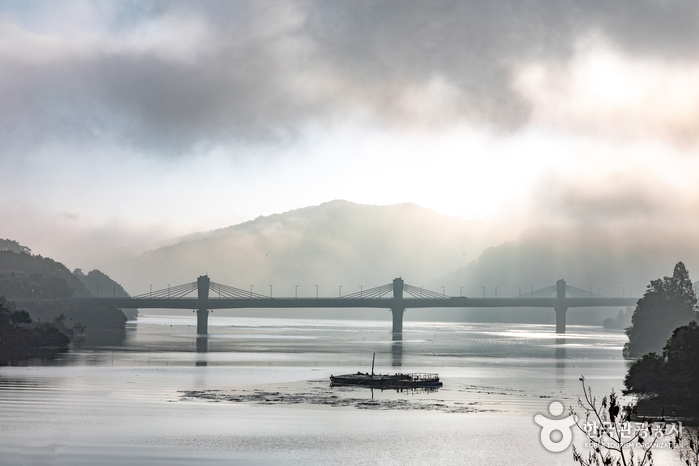
Okjeongho Lake (옥정호 (물안개길))
7.1Km 2024-04-07
Unam-myeon, Imsil-gun, Jeonbuk-do
Okjeongho Lake is a manmade lake that was formed when Seomjingang River Dam was built. The 763-square kilometer drainage area is filled with 430 million tons of water. The picturesque lake is a popular photo spot for photographers across the nation with wet fog reflected under the morning sun being one of the most beautiful sight. A lakeside walking trail is also a popular attraction.
Okjeongho Lake Gujeolcho Theme Park (옥정호 구절초테마공원)
8.1Km 2025-01-16
Maejuk-ri, Jeongeup-si, Jeonbuk-do
Okjeongho Lake Gujeolcho Theme Park was officially formed in 2006 in an area that used to be called Manggyeongdae Terrace. Out of the park’s 12 hectare of land, approximately 5 hectare of land is filled with Gujeolcho (Siberian chrysanthemum) and a pine tree forest. The park also has walking paths and rest areas for visitors to enjoy.
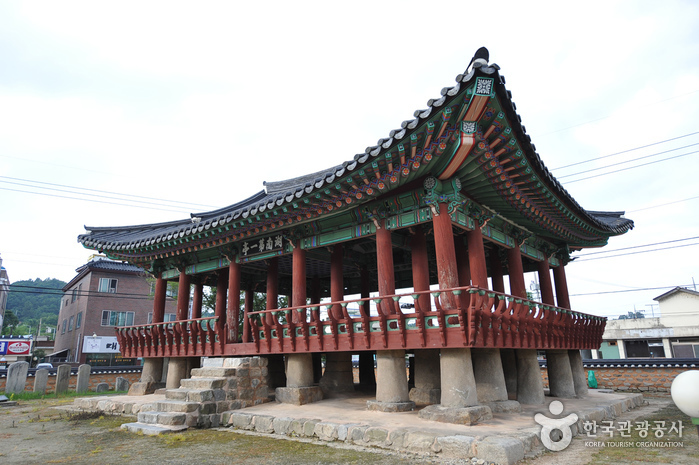
Pihyangjeong Pavilion (정읍 피향정)
9.2Km 2025-01-17
2951 Taesan-ro, Taein-myeon, Jeongeup-si, Jeonbuk-do
Pihyangjeong Pavilion is known to be the most outstanding pavilion in all of Jeolla region. Orignally, there were two ponds around the pavilion, but one of the ponds were filled up with soil during the Japanese period. The pavilion's name derived from the scent of water lilies that bloomed afloat on the ponds. The pavilion demonstrates all the basic components of a typical pavilion built during the Joseon dynasty and is valued as an historical example of a wooden architecture during the mid-Joseon dynasty.
Gimje Geumsansa Temple (금산사(김제))
11.3Km 2024-04-07
1 Moak 15-gil, Geumsan-myeon, Gimje-si, Jeonbuk-do
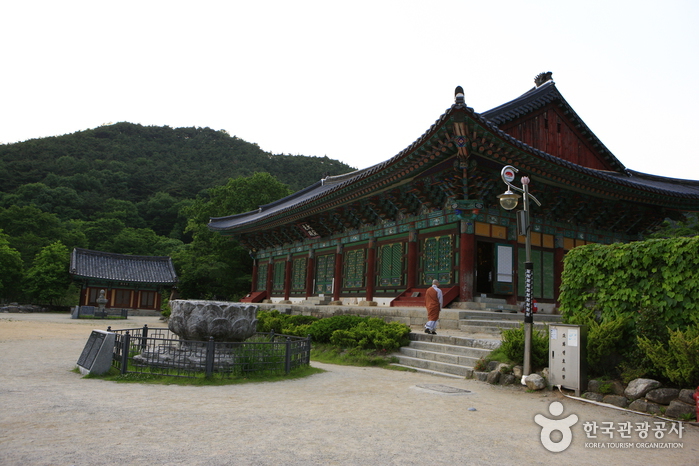
Geumsansa Temple, which stands tall at the entrance to Moaksan Provincial Park, was founded in the first year of King Beop of Baekje (599). It was rebuilt by Jinpyo in 776, leading to the appearance of a great temple. The precinct has about ten designated cultural heritages, including the Mireukjeon Hall, which is designated as a National Treasure. Many other annexed buildings make it one of the best ancient temples in the southern region. The wooden Mireukjeon Hall is Korea's only three-story Buddhist temple with a full-story interior. In spring, many tourists visit to see the spectacular sight of cherry blossom trees stretching from the mountain entrance to Geumsansa Temple. Even in the middle of winter, believers come to visit the Maitreya Bodhisattva statue in Mireukjeon Hall, bowing or circling the pagoda. The Maitreya Bodhisattva statue in Mireukjeon Hall is considered the world's largest indoor standing Buddha statue. Among the three Buddha statues, the middle Maitreya Bodhisattva statue is 11.82 meters tall, and the left and right Buddha statues are 8.8 meters tall. Various cultural events are held at the 1400th Anniversary Memorial Hall, built in 1999.
* Major cultural properties: Mireukjeon Hall (National Treasure), Stone Pillar (Treasure), Stone Lotus Pedestal (Treasure), Stele for Royal Preceptor Hyedeok at Geumsansa Temple (Treasure), Five-story Stone Pagoda of Geumsansa Temple (Treasure), Bangdeung Stairs at Geumsansa Temple (Treasure), Hexagonal Multi-story Stone Pagoda of Geumsansa Temple (Treasure), Flagpole Supports of Geumsansa Temple (Treasure), Three-story Stone Pagoda at Simwonam Hermitage of Geumsansa Temple (Treasure), Daejangjeon Hall of Geumsansa Temple (Treasure), and Stone Lantern of Geumsansa Temple (Treasure)
Moaksan Provincial Park (모악산 도립공원)
11.3Km 2024-04-07
Moak 15-gil, Geumsan-myeon, Gimje-si, Jeonbuk-do
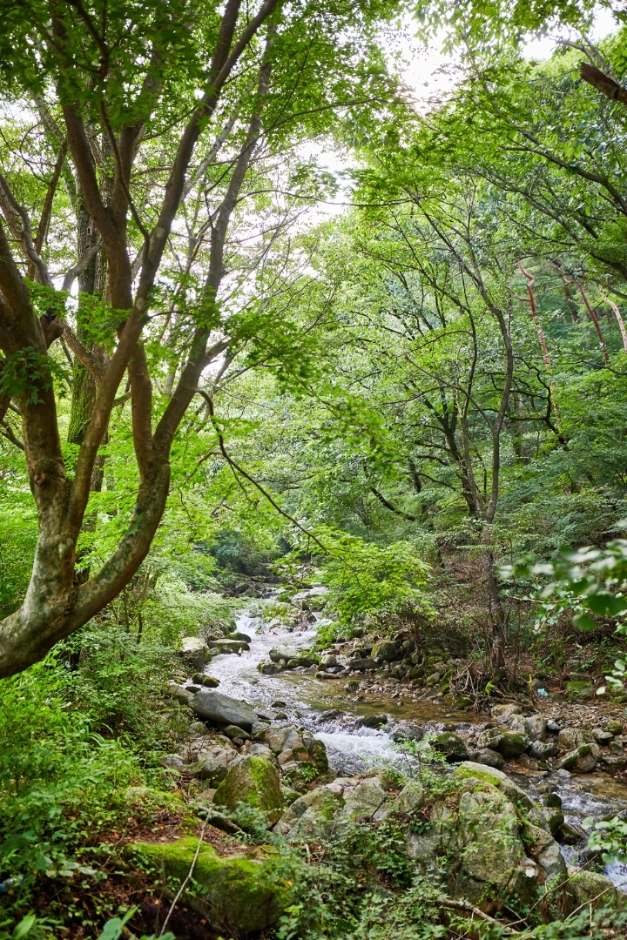
Moaksan Mountain, embracing Geumsansa Temple, Gwisinsa Temple, Suwangsa Temple, and Daewonsa Temple, is 795.2 meters high and stands tall on the east side of the Gimje Plains, offering a panoramic view of the Honam Plains. It was designated as a provincial park in 1971 and is one of the four scenic views in the southern region, with outstanding scenery and many cultural properties, including national treasures. In particular, Geumsansa Temple, built in the first year of King Beop of Baekje (599) and with about ten major cultural properties, is located here, where you can see splendid Buddhist art. If you cross Moaksan Mountain, there are temples such as Daewonsa Temple and Suwangsa Temple on the southeastern slope. Gwisinsa Temple is on the west side. Geumpyeong Reservoir, located near the Geumsansa Temple entrance, is also a suitable fishing spot.
Moaksan Mountain has been considered the home of the Maitreya beliefs since ancient times, and along with the headquarters of Jeungsangyo, it also attracted attention as a gathering place for various new religions in the 30s and 40s. According to records, as many as 80 temples are at the foot of Moaksan Mountain. To hike, leave Geumsansa Temple and climb along the ridge behind Simwonam Hermitage. In spring, azaleas are in full bloom all the way to the top. From the summit, the Gimje Plains and the Mangyeonggang River come into view, as well as Jeonju and Unjangsan Mountain. The cherry blossom tunnel from the parking lot to Iljumun Gate is also spectacular.
Moaksan Mountain (모악산)
13.4Km 2024-04-07
Gui-myeon, Wanju-gun, Jeonbuk-do
Moaksan Mountain is a mountain with an elevation of 793 meters, spanning across Gui-myeon in Wanju-gun, and Geumsan-myeon in Gimje-si, Jeollabuk-do. It overlooks the Honam Plain, a major agricultural region in Korea, and houses the precious Buddhist cultural heritage site, Geumsansa Temple, along with its subsidiary hermitages. To the north of the mountain lies the beautiful Gui Reservoir, and there are walking paths around the reservoir, providing a pleasant walking experience.
HOTEL MOAKSAN (호텔 모악산)
13.5Km 2024-08-01
104-10, Moaksan-gil, Gui-myeon, Wanju_Gun, Jeonbuk-do, Korea
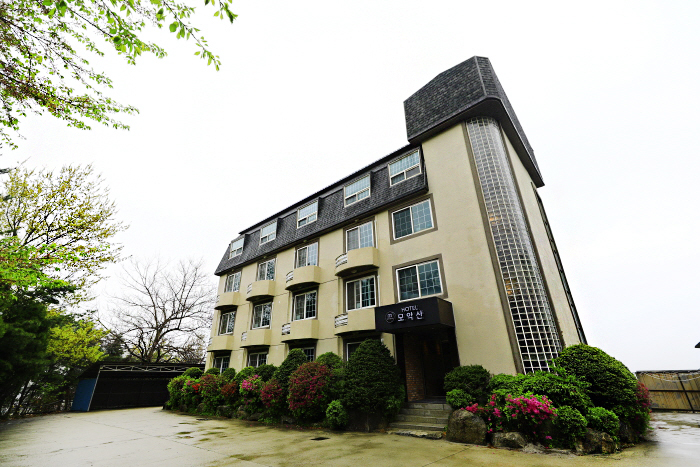
The Moaksan Motel is located in the tourism complex at Moaksan Mountain. Newly refurbished and re-opened, it is known as a clean, cozy hotel offering a high standard of customer satisfaction. The tourism complex comprises a large public parking lot, local food restaurants, and a football pitch among other facilities. Moaksan Mountain is a popular hiking destination among hikers and the people of Jeonju. In addition, the hotel is just three minutes’ walk from the Jeonbuk Province Art Museum, while Gui Reservoir, where the National Canoe Championships is held by the Korea Canoe Federation, is situated in front of the hotel. The hotel also offers easy access to public transportation as the bus stop (Bus No. 970) is situated in the tourism complex, allowing guests to travel directly to Jeonju Bus Terminal.
 English
 한국어
한국어 日本語
日本語 中文(简体)
 Deutsch
 Français
 Español
 Русский


