
Seoul Doseonsa Temple (도선사(서울))
15.5Km 2025-06-25
504 Samyang-ro 173-gil, Gangbuk-gu, Seoul
Doseonsa Temple was established 1,100 years ago during the latter part of the Silla Kingdom when the renowned Buddhist priest Doseonguksa was traveling through the mountains. After visiting the site, Doseonguksa made a prophecy that led to the construction of the temple. According to legend, he used only his walking stick to carve the large Bodhisattva that sits at the temple. Interestingly enough, the statue does not show any evidence of chisel marks, further adding to the mystery of how the statue was made.
During the 7th year of King Gwangmu of the Joseon dynasty, Doseonsa Temple was officially named the representative temple of Korea with the purpose of promoting Cheongdamdaejongsa's Korean Buddhism movement, aiming at a religious revival. Due to these special circumstances Deseonsa Temple gained a high reputation and much recognition, which have held strong to this day.
Inside the temple, visitors can view the remains and written works of Cheongdamdaejongsa in the Cheongdamdaejongsa Memorial Hall. Next to the road leading to Cheonbuljeon Hall is a pond where you can toss a coin and make a wish and just past Yongammun Gate is a hiking path connecting Baegundae Cliff and Insubong Peak. Inside the Ksitigarbha Hall are portraits of President Park Chung-hee, Yuk Yeong-su, and Hyundai Chairman Chung Ju-yung. In front of the hall is a tree that is said to have been planted by a Buddhist priest who brought it from India 200 years ago. Historical artifacts can be found throughout the temple.
Anyang Art Park (안양예술공원)
15.5Km 2025-10-23
7 Yesulgongwon-ro 131beon-gil, Manan-gu, Anyang-si, Gyeonggi-do
Anyang Art Park, formerly known as Anyang Recreational Park, is an easily accessible, well-maintained cultural space. It has been revitalized with updated features such as artificial waterfalls, an outdoor stage, a plaza, walking paths, and enhanced lighting facilities. The park promotes art projects by displaying 50 artworks from renowned Korean and international artists throughout various locations. Nearby, visitors can explore additional local attractions including hiking trails through dense forests, traditional temples such as Anyangsa Temple and Yeomburam Hermitage, the treasure-designated Flagpole Supports at Jungchosa Temple Site, and the Kimchungup Architecture Museum, all of which contribute to a rich area experience.
Seoul Hiking Tourism Center - Bukhansan Branch (서울도심등산관광센터(북한산))
15.6Km 2024-03-05
5F, 181-7 Ui-dong, Gangbuk-gu, Seoul
The Seoul Hiking Tourism Center is located 5 minutes on foot from Exit 2 of Bukhansan Ui Station and provides various services to hikers. It provides hiking course guidance and information (available in Korean, English, Chinese, and Japanese) about the mountains of Seoul, including Bukhansan, Bugaksan, and Inwangsan Mountains, as well as promotional materials such as Seoul hiking tourism guidebooks and maps. Also, it operates hiking tour programs with various themes every week for foreigners and offers hiking gear rental services such as hiking boots, hiking attire, trekking poles, gloves, and crampons for foreigners. (Koreans accompanied by foreigners can also rent the gear.) In addition, there is a storage locker and lounge for visitors, so they can pack up and rest before hiking.
![Bukhansan Dulle Trail Section 1 ([북한산 둘레길] 1 소나무숲길 )](http://tong.visitkorea.or.kr/cms/resource/30/1898430_image2_1.jpg)
Bukhansan Dulle Trail Section 1 ([북한산 둘레길] 1 소나무숲길 )
15.6Km 2024-01-04
12 Samyang-ro 173-gil, Gangbuk-gu, Seoul
Bukhansan Mountain is a mountain representing Seoul, which 5 million people visit every year. It is not easy to hike up to the top, but the dulle trail allows one to enjoy the beauty of the mountain without too much effort. Bukhansan Dulle Trail is a low-lying, horizontal walking trail created by connecting and refining existing side paths, allowing for a leisurely walk along the foot of the mountain. The Pine Forest Trail, one section of the trail consisting of 21 themes, is 2.9 kilometers long from the entrance to Uiryeong Trail to the top of Solbat Neighborhood Park. It is filled with majestic pine trees, and the road is wide and gentle, making it a perfect place to enjoy a walk. Most of the section is shaded by trees, so visitors can feel cool while walking up even on hot summer days.

Kansong House (간송옛집)
15.7Km 2025-04-01
149-18 Sirubong-ro, Dobong-gu, Seoul
The 100-year-old traditional hanok Kansong House sits by the burial mound of Kansong Jeon Hyeong-pil (1906-1962), who played a significant role in preserving the cultural heritages of Korea during the Japanese colonial period. This house was orginally built by Kansong's adoptive father Jeon Myeong-gi (1870-1919) to us as a storage facilities for harvested agriculture from the northern Gyeonggi-do and Hwanghae. After his father's death, Kansong used the house as a ritual house for his father and often stayed here. Some damages were done to the house during the Korean War, and partial repair was made after his death.
Seongnam Arts Center (성남아트센터)
15.9Km 2021-12-21
808, Seongnam-daero, Bundang-gu, Seongnam-si, Gyeonggi-do
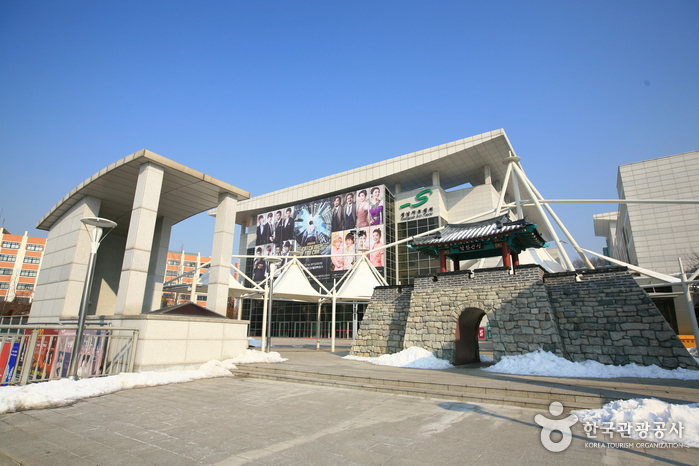
Opened on October 14, 2005 by Seongnam Cultural Foundation, Seongnam Art Center is oriented towards cutting-edge performance and exhibition art, and serves as a local-friendly cultural site. The art center operates three performance halls (Opera House, Concert Hall, and Ensemble Theater) and three exhibition halls (Cube Art Gallery & Gallery 808, Bandal Gallery, Permanent Gallery). The center has hosted a variety of cultural events, from Korea's first introduced performances, Seongnam's original performances, self-produced works, region-friendly programs and other creative cultural contents. In addition, the art center operates diverse facilities such as Seongnam Media Center, Central Park Outdoor Performance Hall, Book Theme Park, International Musical Instrument Exhibition Hall and others for the community's enjoyment. Its varied projects support culture and art, including Sarangbang Culture Club which became a famous cultural brand representing Seongnam and established the foundation to communicate and enjoy cultural arts. Anyone can participate in the creative education program at Seongnam Media Center and Academy.
Baegunhosu Lake (백운호수)
15.9Km 2023-09-05
526 , Baegun-ro, Uiwang-si, Gyeonggi-do
Baegunhosu Lake is an artificial lake that was completed in 1953. The lake is surrounded by mountains made up of Cheonggyesan Mountain in the northeast, Baegunsan Mountain in the southeast, and Moraksan Mountain in the west. The lake encompasses an area of 363,638 m². This lake was originally built to provide irrigation for nearby farmlands but it became a public recreational space due to its scenic landscape, fresh air, and spacious lot perfect for parking. Visitors to Beagunhosu Lake can enjoy music at a live cafe or water activities such as motor boating, as well as delicious foods from nearby restaurants.
Seoul Novos Hospital (서울노보스병원)
16.1Km 2025-10-23
720 Dobong-ro, Dobong-gu, Seoul
Seoul Novos Hospital which is located in Banghak-dong, Dobong-gu, Seoul has convenient transportation network.( 2 minutes from Exit 1 of Line 1 subway station)
we have more than 300 staffs. highly skilled medical professionals, and state-of-the-art equipment (latest MRI, CT). And we provide rehabilitation therapy/inpatient care, dementia & stroke testing, electromyography, electroencephalography, painless sedation endoscopy (upper and lower), ultrasound (abdominal, cardiac), osteoporosis testing, comprehensive blood tests (cancer screening), national health checkups, and personalized comprehensive health checkups.
we aim to be a comfortable and trusted hospital
Gwangmyeong Indoor Gymnasium (광명시민체육관)
16.1Km 2024-02-20
703 Ori-ro, Gwangmyeong-si, Gyeonggi-do
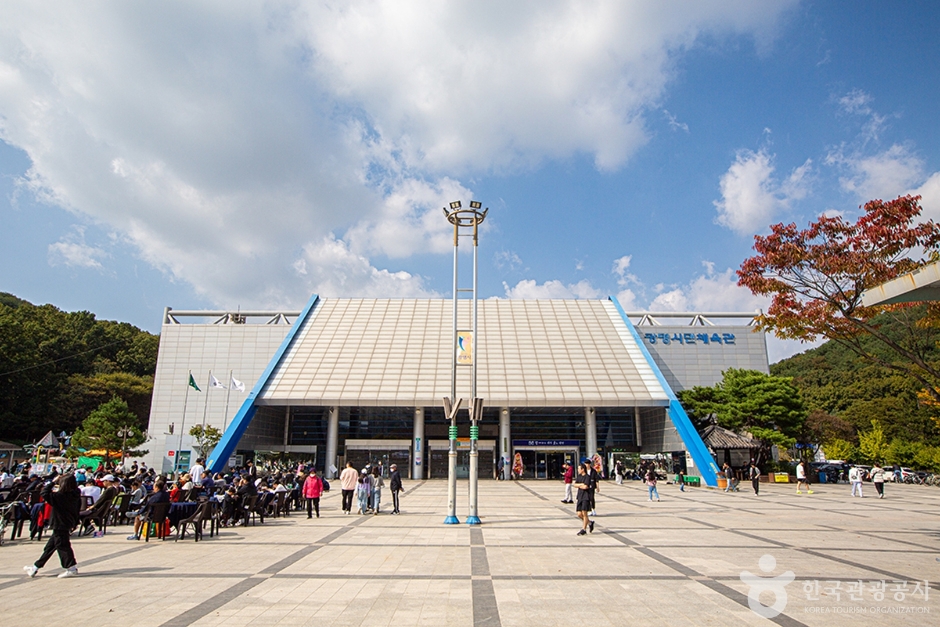
Gwangmyeong Indoor Gymnasium is a stadium equipped with seating for 3,000 spectators. It houses facilities for physical training, including golf, fitness, and table tennis. The spacious and vibrant lawn plaza immediately draws attention. This complex includes an open art hall for performances, sports facilities like an inline bicycle track and basketball courts, and amenities such as a children's playground and an outdoor water play area. Additionally, it features a 16-meter-high artificial rock-climbing wall.
Misari Speedboat Park (미사리 경정공원)
16.1Km 2021-07-05
505, Misa-daero, Hanam-si, Gyeonggi-do
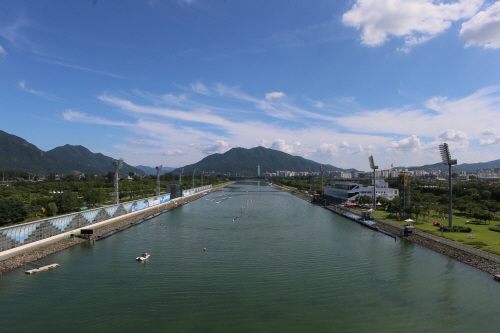
Misari Speedboat Park was created for use in rowing and sailing competition during the 1988 Seoul Olympic Games. The park features various other sports facilities around the lake, including a 5 kilometer-long bike course, soccer fields and footvolley courts. Other amenities include pavilions and snack bars, making this place loved by locals as a place to relax and play.
 English
 한국어
한국어 日本語
日本語 中文(简体)
 Deutsch
 Français
 Español
 Русский


