
Mine Plastic Surgery (마인성형외과의원)
5.0Km 2025-10-23
(3rd-6th Floors, Yeongseok Building), 813 Nonhyeon-ro, Gangnam-gu, Seoul
MINE Plastic Surgery is an integrated beauty medical center comprising plastic surgery, dermatology, and cosmetic treatments. It features cutting-edge medical facilities equivalent to the level of university and offers personalized patient care.
For international patients, it provides interpretation and airport pickup and send-off services. The facility is equipped with exclusive VIP consultation and operating rooms. Our dedicated medical staff oversees all aspects of care, from consultation and surgery to hospitalization and postoperative management.
Also, we have observation rooms where, with prior consent, guardians of patients can monitor the surgical process. This ensures that the procedure is performed by the designated surgeon, preventing concerns about any substitution of the performing physician, contributing to achieving a safe and satisfactory outcome.
Deoksugung Stone Wall Path (덕수궁 돌담길)
5.0Km 2025-01-10
24 Sejong-daero 19-gil, Jung-gu, Seoul
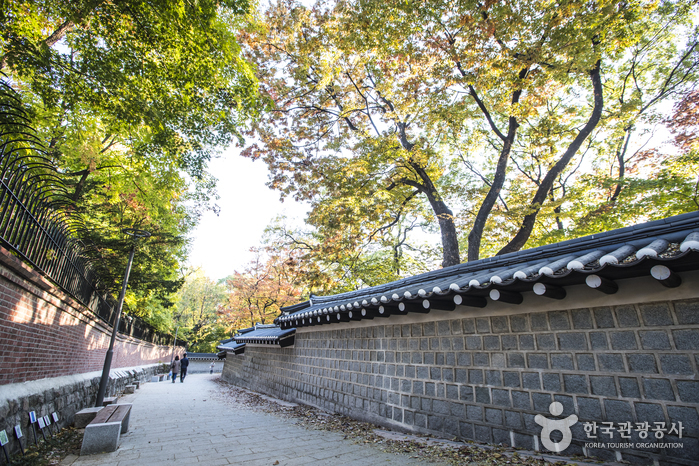
The Deoksugung Stone Wall Path runs along the wall of Deoksugung Palace. It is beautifully lit and landscaped, giving it a romantic atmosphere even at night. There are street performances and flea markets, and the area boasts many famous cafes and restaurants along Jeongdong street. In autumn, the ginkgo trees and walls form a stunning scene. Close to major cultural facilities such as the Seoul Museum of Art and Seoul Museum of History, it attracts numerous visitors come for a stroll.
Aēsop - Garosu Branch [Tax Refund Shop] (이솝 가로수)
5.0Km 2024-04-18
1F, 54, Garosu-gil, Gangnam-gu, Seoul
-
Gyeongbokgung Palace (경복궁)
5.0Km 2025-10-23
161 Sajik-ro, Jongno-gu, Seoul
+82-2-3700-3900
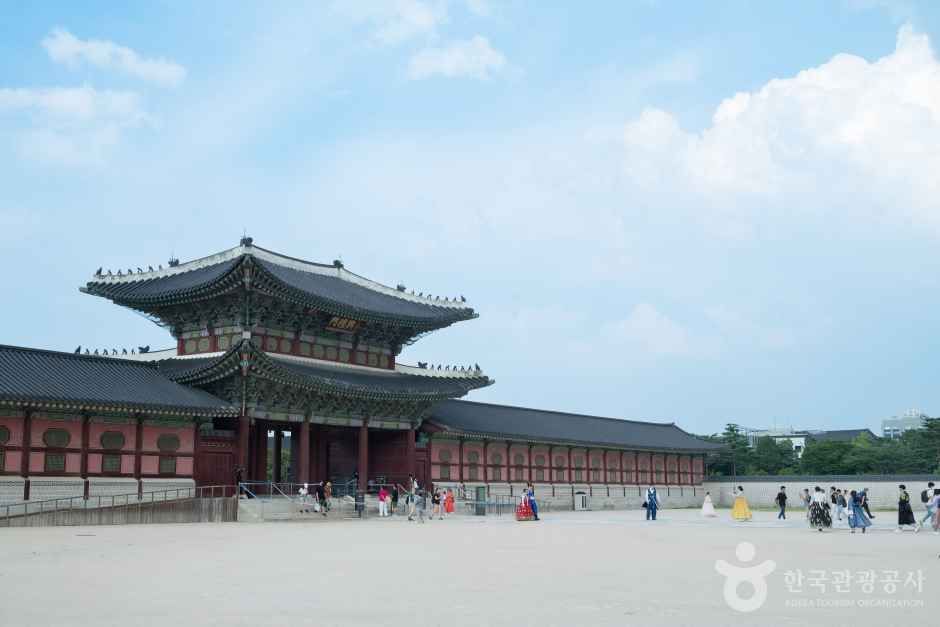
Gyeongbokgung Palace was built in 1395 as the official palace of the Joseon dynasty by Yi Seong-gye, the future King Taejo and founder of the new regime. Gyeongbokgung Palace is commonly referred to as the Northern Palace because of its location to the north, comparied to Changdeokgung Palace in the east and Gyeonghuigung Palace in the west. Gyeongbokgung Palace is arguably the most beautiful and is the largest of all five palaces. Many Joseon kings were crowned here. The premises were once destroyed by fire during the Imjin War (1592-1598). However, all of the palace buildings were later restored under the leadership of Heungseondaewongun during the reign of King Gojong. The assassination of Empress Myeongseong, however, resulted in Gyeongbokgung Palace losing its function as a royal palace, eventually witnessing the downfall of the Joseon dynasty. Gyeongbokgung Palace retains the original Gyeonghoeru Pavilion, a prime example of Joseon architecture, and the Hyangwonjeong Pavilion and pond. The sculptures in the Geunjeongjeon Hall exemplify Joseon-era sculpture techniques. The west side of the area outside Heungnyemun Gate is occupied by the National Palace Museum of Korea, while the eastern side of Hyangwonjeong Pavilion within the Gyeongbokgung Palace is occupied by the National Folk Museum of Korea.
K-Royal Culture Festival (궁중문화축전)
5.0Km 2025-07-29
161 Sajik-ro, Jongno-gu, Seoul
+82-1522-2295
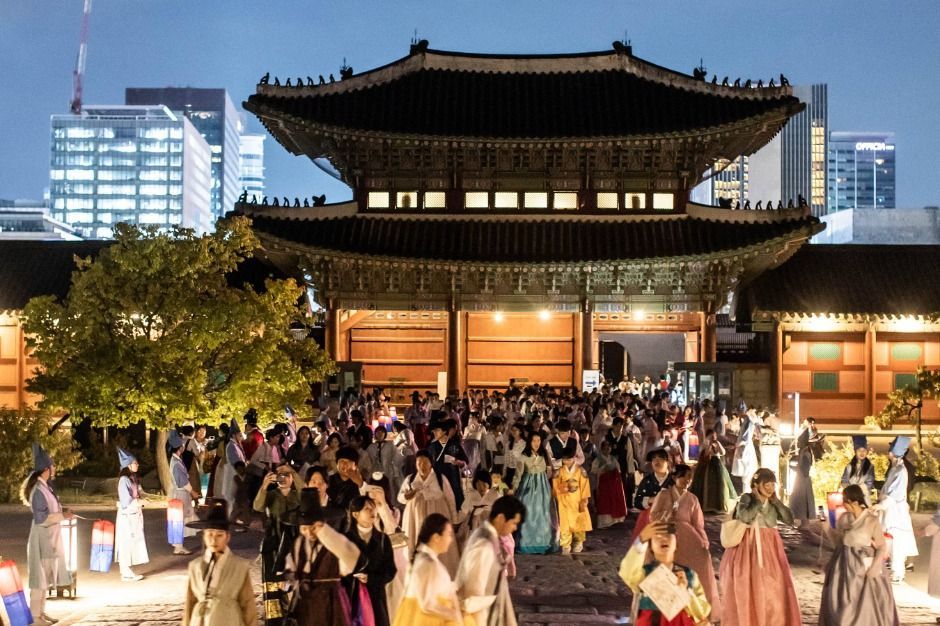
The K-Royal Culture Festival is held at the five Royal Palaces and Jongmyo Shrine. The festival first began in 2014 and provides visitors with first-hand knowledge of these important cultural heritages through unique performances, exhibitions, experiences and programs. The festival expanded in 2021 to be hosted twice a year, in spring and in fall.
![National Museum of Modern and Contemporary Art, Deoksugung [MMCA Deoksugung] (국립현대미술관 덕수궁)](http://tong.visitkorea.or.kr/cms/resource/09/2991509_image2_1.jpg)
National Museum of Modern and Contemporary Art, Deoksugung [MMCA Deoksugung] (국립현대미술관 덕수궁)
5.0Km 2023-06-23
99, Sejong-daero, Jung-gu, Seoul
+82-2-2022-0600
The National Museum of Modern and Contemporary Art, Deoksugung [MMCA Deoksugung] was originally built as an annex to the National Museum of Contemporary Art. The museum specializes in seeking out and researching modern art, exhibiting and preserving it, supporting and developing educational programs, and furthering publications and international exchanges. Located within Deoksugung Palace, the center maintains a unique traditional atmosphere. The museum planned and showcased a total of 38 unique exhibitions from 1998 to 2005. Besides the exhibitions, the center has various performances such as music and mime, as well as lectures or seminars on artists' works.
Korea Furniture Museum (한국가구박물관)
5.0Km 2025-10-24
121 Daesagwan-ro, Seongbuk-gu, Seoul
The Korea Furniture Museum, located on a hill in Seongbuk-dong, Seoul, is a special museum that displays items related to Korea's traditional living culture. The museum exhibits wooden furniture made in the late Joseon dynasty by material (persimmon tree, maple tree, paulownia tree, zelkova tree, pine tree, papers, etc.), by the type of space (men’s quarters, women’s quarters, kitchen, etc.), and by regional characteristics. It also exhibits interior decorations, flower walls, chimneys, and yards, as well as ten traditional Korean houses.
This museum operates through a guided tour (maximum of 20 people per group) only, suitable for showing Korea's housing culture that harmonizes furniture and nature. The old household items, “furniture,” are displayed in rooms outside glass storage boxes, allowing visitors to experience a beautiful traditional culture.
Since it was selected as the official luncheon venue for the spouses of leaders of 20 countries at the 2010 G20 Seoul Summit, there has been a steady stream of state guests and worldwide celebrities, including Chinese President Xi Jinping and his wife, the German President, the Prime Minister of Hungary, the Prime Minister of Singapore, the King and Queen of Belgium, the King of Sweden, the head of the IMF, and movie stars Brad Pitt, and Victoria Beckham.
In addition, it was selected as the "most beautiful museum in Seoul” by CNN in 2011. The museum also served as an interview location for BTS members, who are receiving global attention. As such, it is attracting attention as a representative tourist destination in Seoul and a cultural space preferred by government ministries and companies. Tours require reservations, which can be made through the website.
Sinsa-dong Garosu-gil Road (신사동 가로수길)
5.1Km 2024-12-02
Sinsa-dong, Gangnam-gu, Seoul
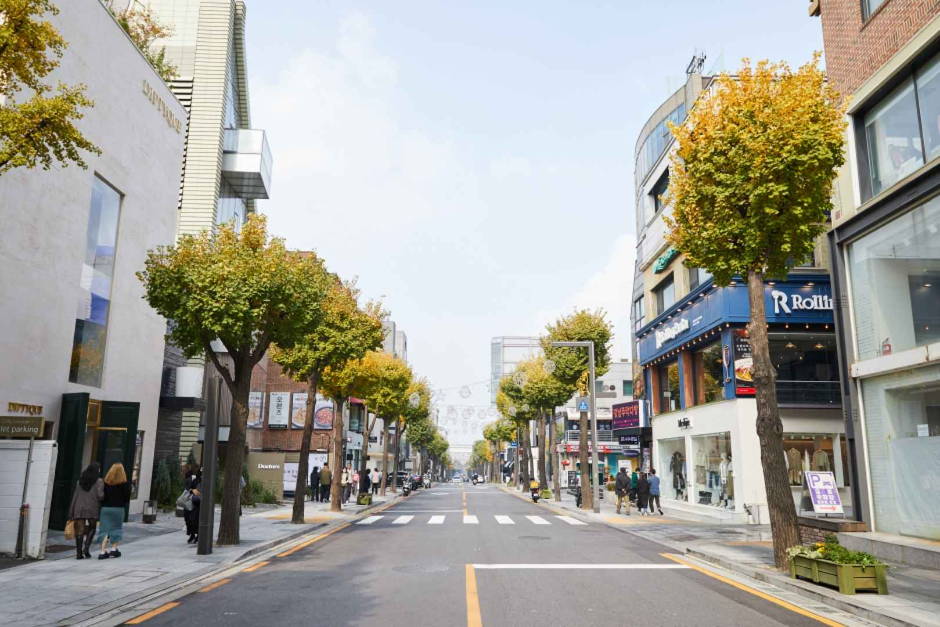
The ginkgo tree-lined street (Sinsa-dong Garosu-gil) that runs from Sinsa Station (Subway Line 3) to Hyeondae High School is a popular, upscale street in Seoul. The street (also known as ‘artists' street’) has an eccentric flair thanks to its variety of charmingly decorated coffee shops, and designer stores. Garosu-gil is particularly popular in autumn when the golden ginkgo leaves begin to fall. Furthermore, with continous popularity, it has become one of the most attractive film locations in the city.
Sungnyemun Gate (숭례문)
5.1Km 2024-11-27
40 Sejong-daero, Jung-gu, Seoul
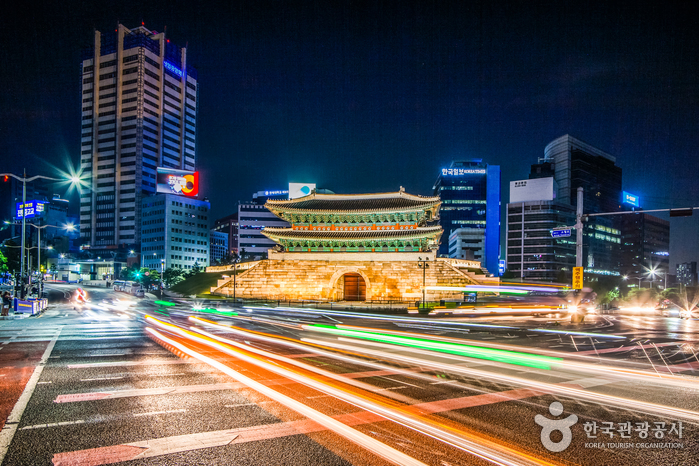
Sungnyemun Gate is Korea’s National Treasure No. 1, and its unofficial name is Namdaemun Gate. Sungnyemun Gate is the largest castle gate stone structure with an arched entrance in the middle. There’s a column on top of a platform, raising the roof, distinguishing the upper stories and lower stories of the building. Passageways for traffic are located at the east and west ends of the gate. Different from the other gates, Sungnyemun Gate’s tablet has its name written vertically.
On February 10, 2008, Sungnyemun was destroyed by fire. After a 5-year reconstruction work, the gate was re-opened to the public again on May 4, 2013.
Myeong-dong, Namdaemun, Bukchang-dong, Da-dong and Mugyo-dong Special Tourist Zone (명동 남대문 북창동 다동무교동 관광특구)
5.1Km 2021-12-30
40, Sejong-daero, Jung-gu, Seoul
+82-2-3396-4622
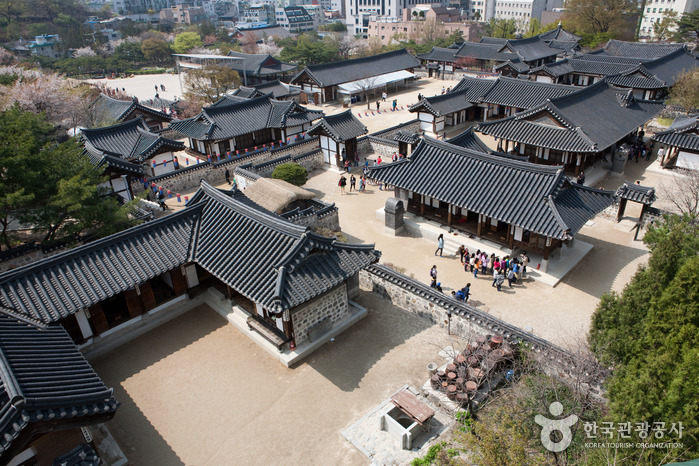
Myeong-dong, Namdaemun, Bukchang-dong and Da-dong are widely known among international visitors as hot spots for shopping and food.
Myeong-dong is a popular destination for shopping, culture, arts and fashion. Major shopping malls such as Lotte Department Store, Shinsegae Department Store, Myeong-dong Migliore and Samik Fashion Town are located here. Shoppers can find a variety of products here from high-end items to relatively inexpensive clothes. There’s also no shortage of street food, traditional restaurants, coffee shops and fancy cafes.
Namdaemun Market is the biggest traditional market in Korea. Visitors can purchase souvenirs and local produce at an affordable price in the shopping complex crowded with stores and street stalls. The market sells a variety of clothes, kitchenware, toys, accessories, food, flowers and imported goods.
Bukchang-dong and Sogong-dong have high-end accommodations including Lotte Hotel Seoul and Westin Chosun Seoul, duty-free shops, and restaurants serving traditional dishes.
[Myeong-dong, Namdaemun Market and Bukchang-dong Special Tourist Zone]
Areas included: Myeong-dong, Bukchang-dong, Mugyo-dong and Da-dong, Seoul
Area size: 872,809 ㎡
Tourist attractions: Myeong-dong, Namdaemun Market and Bukchang-dong, Department Stores (Lotte Department and Shinsegae Department Store, etc.), Traditional Market, Duty-free Shop, Hanok Village, N Seoul Tower, etc.
 English
 한국어
한국어 日本語
日本語 中文(简体)
 Deutsch
 Français
 Español
 Русский


