![Kim Han Sung Plastic Surgery [Tax Refund Shop] (김한성성형외과)](http://tong.visitkorea.or.kr/cms/resource/43/2890643_image2_1.jpg)
Kim Han Sung Plastic Surgery [Tax Refund Shop] (김한성성형외과)
6.7Km 2024-04-23
11F, 590, Gangnam-daero, Gangnam-gu, Seoul
-
![Willbe Plastic Surgery [Tax Refund Shop] (윌비성형외과의원)](http://tong.visitkorea.or.kr/cms/resource/58/3314358_image2_1.jpg)
Willbe Plastic Surgery [Tax Refund Shop] (윌비성형외과의원)
6.7Km 2024-06-27
590, Gangnam-daero, Gangnam-gu, Seoul
-

Dongnimmun Gate (독립문)
6.7Km 2022-12-15
251, Tongil-ro, Seodaemun-gu, Seoul
Dongnimmun stands at the location originally known as Yeongeun, where envoys were once treated. When a Chinese envoy visited, the King would go out through this door to greet. In 1898, to announce the independence from Japan, Dongnimun was constructed with the fund collected by the citizens. The traces of the past still remain on Dongnimmun with two pillars in front of Dongnimmun being the remains of Yeongeunmun.
The Arc de Triomphe in France can be recalled in comparison to Dongnimmun. Dongnimmun was built using granite with a passageway x_height of 14.28 meters. On the top it is written ‘Dongnimmun’ in Korean with the national flag drawn on each side. On the inner-left side there are stone stairs leading to the attic. The national flower Mugunghwa are planted around Dongnimmun. Now it is surrounded by roads and it is eye-catching to view when passing by.
Olive Young - Sinsa Seocho Branch [Tax Refund Shop] (올리브영 신사서초점)
6.7Km 2024-06-26
1F, #106~#108, 589, Gangnam-daero, Seocho-gu, Seoul
-
Soonplus Plastic Surgery · Dermatology (순플러스성형외과의원)
6.7Km 2026-01-02
(12th-13th Floors, Mulberry Hills Medical Building), 589 Gangnam-daero, Seocho-gu, Seoul
At Soonplus Plastic Surgery · Dermatology, we are dedicated to enhancing the unique beauty of each individual through meticulous diagnoses and ongoing research.
For 25 years, we have quietly pursued the path of true beauty, and now, we are reaffirming our commitment to the principles that have guided us since the beginning.
Our focus is on natural beauty, helping you discover and embrace your own distinctive charm—one that is authentic and not influenced by fleeting trends.
This unwavering dedication to preserving individuality has been our hallmark for over two decades.
At Soonplus Plastic Surgery · Dermatology, we are committed to continuing this journey with you, bringing out the pure beauty that is uniquely yours.
Seodaemun Independence Park (서대문독립공원)
6.7Km 2022-12-15
251, Tongil-ro, Seodaemun-gu, Seoul
+82-2-3140-8305
Seodaemun Independence Park was built on the former Seoul Detention Camp. It was used to imprison thousands of Korean independence activists until the liberation from the Japanese occupation on August 15, 1945, as well as the political prisoners during the political turmoil in the 1960s. When the prison was moved to Uiwang-si, Gyeonggi-do in November 1987, the area was restored and turned into a memorial park in August 15, 1992 to honor the sacrifices of the martyrs. The park preserves seven prison buildings, an execution ground, underground women’s prison, and the March 1st Movement Monument that has been moved from Tapgol Park in Jongno.
One of the most significant monuments of the Seodaemun Independence Park is Dongnimmun Gate (Independence Gate), which has been designated a Historic Site. Nearby is Dongnipgwan (Independence Hall), originally called Mohwagwan, which was used to greet Chinese envoys during the Joseon dynasty. Today, the hall enshrines 2,327 tablets inscribed with the names of Koreans who died for the cause of national independence. Standing right next to Dongnimmun Gate are the remnants of Yeongeunmun Gate, another Historic Site. Other sights inside the park include the Patriotic Martyr Monument, Declaration of Independence Monument, and Statue of Dr. Seo Jae-pil, who was an independence activist and publisher of Korea’s first independent newspaper. The main highlight of the park is the Seodaemun Prison History Hall, a former prison building that was renovated into a history museum.
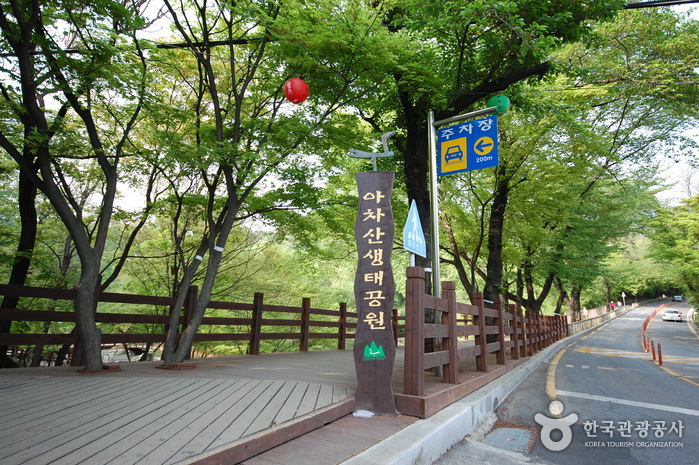
Achasan Ecological Park (아차산생태공원)
6.7Km 2021-05-14
127, Walkerhill-ro, Gwangjin-gu, Seoul
+82-2-450-1655
Achasan Ecological Park was established under the Seoul Metropolitan Government's Five Year Plan for Urban Green Expansion. Through various events and activities, the park provides opportunities to experience and learn about nature and its ecology. Major facilities include Eco Park, Rendezvous Square, Red Clay Road, Barefoot Path, Pine Forest, Mineral Spring, Eco Trail and pergolas.
GS25 - Samseong Hanul Branch [Tax Refund Shop] (GS25삼성한울점)
6.7Km 2024-06-27
37, Samseong-ro 119-gil, Gangnam-gu, Seoul,
-
Seodaemun Prison History Museum (서대문형무소역사관)
6.7Km 2024-12-02
251 Tongil-ro, Seodaemun-gu, Seoul
Seodaemun Prison was built under the Japanese administration to imprison independence movement activists. It first opened on October 21, 1908 under the name Gyeongseong Prison. Eventually, so many activists were imprisoned that the building had to be expanded. At that time, the name changed to Seodaemun Prison on September 3, 1912. Eighty years later, the prison was turned into Seodaemun Independence Park on August 15, 1992 to commemorate the Korean patriots who were tortured in prison, giving their lives for freedom. Of the many buildings, only seven were preserved for their historical significance, among which three prison buildings and the execution site were designated as a Historic Site. In 1998, the park underwent another transformation into today's Seodaemun Prison History Hall to educate the public on the importance of Korea's independence and the sacrifices of those who fought to achieve it.
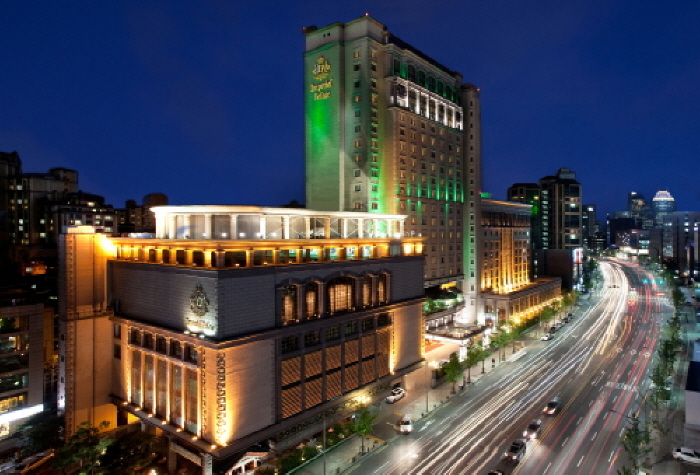
Imperial Palace Hotel (임피리얼 팰리스 호텔)
6.7Km 2025-08-22
640 Eonju-ro, Gangnam-gu, Seoul
+82-2-3440-8000
Imperial Palace Hotel first opened on September 18, 1989, starting as a deluxe hotel and becoming a superior deluxe hotel after 10 years in June 1999. The hotel has remained the pride of the Korean hotel industry thanks to its effective management and improving domestic capital. In 2005, it carried out a large-scale remodeling project to enlarge its size to resemble luxurious European hotels, including a large-sized lobby, convention center that can accommodate over 1,000 visitors, classical wedding hall, and 405 guestrooms. The hotel is part of a chain, along with Imperial Palace Boutique Hotel in Itaewon and Imperial Palace Hotel – Fukuoka in Japan.
 English
 한국어
한국어 日本語
日本語 中文(简体)
 Deutsch
 Français
 Español
 Русский


