![Hottracks - Hapjeong Branch [Tax Refund Shop] (핫트랙스 합정점)](http://tong.visitkorea.or.kr/cms/resource/12/2878312_image2_1.jpg)
Hottracks - Hapjeong Branch [Tax Refund Shop] (핫트랙스 합정점)
10.3Km 2024-04-22
14, World Cup-ro 1-gil, Mapo-gu, Seoul
-
![Olive Young - KYOBO BOOK CENTRE Hapjeong Branch [Tax Refund Shop] (올리브영 합정교보)](http://tong.visitkorea.or.kr/cms/resource/24/2888424_image2_1.jpg)
Olive Young - KYOBO BOOK CENTRE Hapjeong Branch [Tax Refund Shop] (올리브영 합정교보)
10.3Km 2024-04-22
14, World Cup-ro 1-gil, Mapo-gu, Seoul
-

4CUS - Lotte Yeongdeungpo Branch [Tax Refund Shop] (4CUS 롯데 영등포점)
10.3Km 2024-04-23
846, Gyeongin-ro, Yeongdeungpo-gu, Seoul
-
![LOTTE Department Store - Yeongdeungpo Store [Tax Refund Shop] (롯데백화점 영등포점)](http://tong.visitkorea.or.kr/cms/resource/60/3007960_image2_1.jpg)
LOTTE Department Store - Yeongdeungpo Store [Tax Refund Shop] (롯데백화점 영등포점)
10.3Km 2024-04-18
846, Gyeongin-ro, Yeongdeungpo-gu, Seoul
Gyeongui Line Forest Park (Yeontral Park) (경의선숲길(연트럴파크))
10.3Km 2023-08-11
133, Donggyo-ro 51-gil, Mapo-gu, Seoul
Gyeongui Line Forest Park is a linear city park located in Mapo-gu and is also called Yeontral Park. It includes Daeheung-dong, Yeonnam-dong, Saechanggogae Pass, Changjeon-dong, Sinsu-dong, and Wonhyo-ro, which were opened in this order. Gyeongui Line Forest Park is established atop the Gyeongui railroad line and the Gyeongui Line and Airport Railroad Express are constructed as a double track underground. Gyeongui Line Forest Park was designed to be incomplete on purpose to invite the citizens in completing the park. The area which could have been left empty and neglected has turned into a meaningful green park for the citizens by the citizens.
Amsa-dong Prehistoric Site Museum (암사동선사유적박물관)
10.3Km 2023-12-22
875 Olympic-ro, Gangdong-gu, Seoul
The archaeological sites in Amsa-dong, Seoul, were a collective settlement where people lived during the Neolithic Age about 6,000 years ago and became known to the world after the sand dunes along the Hangang River caved in during the great flood of 1925, exposing numerous pieces of comb-patterned pottery. The area designated as a historic site in 1979, and excavation of the site took place from 1981 to 1988. The cultural heritage protection area was expanded to a total area of 78,133㎡. Currently, nine Neolithic dugout huts and one experiential dugout hut have been restored. The exhibitions currently open to the public are Exhibition Hall 1, which displays a restoration of a Neolithic Age dugout, and Exhibition Hall 2, which displays various panels and models to help understand the prehistoric era as a whole.
![LG Best Shop - Gangdong Main Branch [Tax Refund Shop] (엘지베스트샵 강동 본점)](http://tong.visitkorea.or.kr/cms/resource/84/2878884_image2_1.jpg)
LG Best Shop - Gangdong Main Branch [Tax Refund Shop] (엘지베스트샵 강동 본점)
10.3Km 2024-04-19
1449, Yangjae-daero, Gangdong-gu, Seoul
-
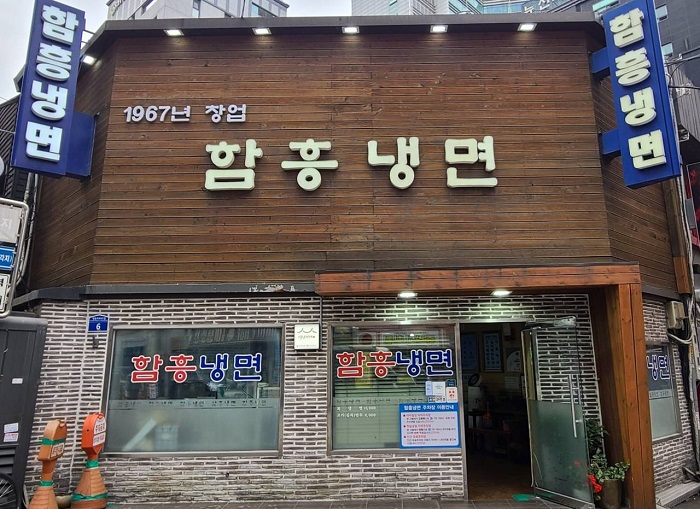
Hamheung Naengmyeon (함흥냉면)
10.4Km 2024-02-29
6, Yeongdeungpo-ro, 42-gil, Yeongdeungpo-gu, Seoul
+82-2-2678-2722
Hamheung Naengmyeon has served its namesake dish, Hamheung naengmyeon (Hamheung cold buckwheat noodles), since 1967. The second generation of the restaurant’s owners has kept the flavors the same throughout the ages. The restaurant’s signature menus include the hoenaengmyeon (cold buckwheat noodles with raw fish), bibim naengmyeon (spicy buckwheat noodles), and mullaengmyeon (cold buckwheat noodles). In particular, the hoenaengmyeon (cold buckwheat noodles with raw fish) impresses with the topping of ganjaemi seoneo (sliced aged raw red stingray), as well as the broth served with naengmyeon (cold buckwheat noodles), made with vegetables and sauce.
![National Museum of Modern and Contemporary Art, Gwacheon [MMCA Gwacheon] (국립현대미술관 (과천관))](http://tong.visitkorea.or.kr/cms/resource/85/620985_image2_1.jpg)
National Museum of Modern and Contemporary Art, Gwacheon [MMCA Gwacheon] (국립현대미술관 (과천관))
10.4Km 2021-05-21
313, Gwangmyeong-ro, Gwacheon-si, Gyeonggi-do
+82-2-2188-6000
Located in beautiful Gwacheon, the National Museum of Modern and Contemporary Art, Gwacheon displays works by Korean and international modern artists, as well as works by contemporary artists currently making waves in the art world. As well as its permanent collection, the museum generally presents several special exhibitions. The museum also provides various programs and events for visitors to enjoy.
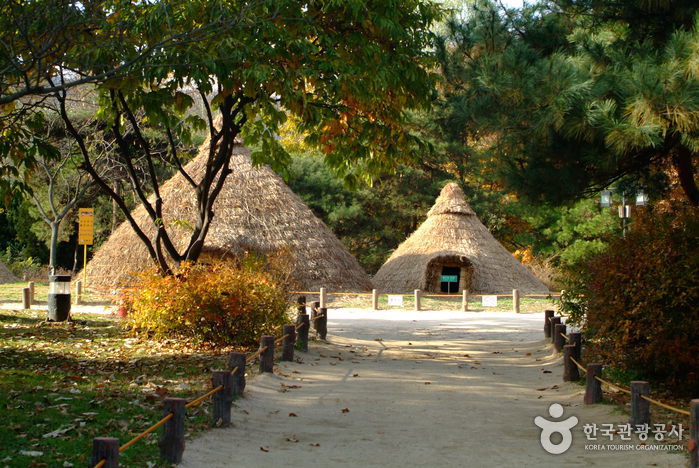
Archaeological Site in Amsa-dong, Seoul (서울 암사동 유적)
10.4Km 2021-07-27
875, Olympic-ro, Gangdong-gu, Seoul
+82-2-3425-6520
The Archaeological Site in Amsa-dong reproduces the lifestyle of the Neolithic Era. Even the entrance gate is shaped like a huge dolmen and the trash cans are ancient diagonal-line patterned earthenware. Archaeological Site in Amsa-dong was excavated in 1925 when a flood washed away the soil on the banks of the Hangang River and exposed a large number of diagonal-line patterned earthenware. After several excavations, the Archaeological Site in Amsa-dong was established.
The site was a location for a massive colony, thus many ancient buildings, stone axes and stone arrows have been uncovered as well as countless diagonal-line patterned earthenware. The housing site is round with a spot in the center for fire. The site is colossal and possesses nine mud huts, two exhibition halls displaying ancient artifacts and an open mud hut where visitors can experience life in the Neolithic Era. The site offers many attractions such as mud huts and promenades. Archaeological Site in Amsa-dong is also very educational for children and families who want to learn and experience the Neolithic Age.
 English
 한국어
한국어 日本語
日本語 中文(简体)
 Deutsch
 Français
 Español
 Русский


