
Hangaram Art Museum in Seoul Arts Center (예술의전당 한가람미술관)
10.3Km 2022-12-16
2406, Nambusunhwan-ro, Seocho-gu, Seoul
+82-2-580-1300
Hangaram Art Museum, located in the left wing of the Seoul Arts Center, displays a unique exhibition of formative arts. Established in 1990, the museum has a total area of 15,540 ㎡ and contains 6 exhibition halls (including one for oversized artwork), a storage area, and an art shop. The building features a lighting system that controls the humidity and temperature and is equipped with a luminous ceiling system that captures natural sunlight and feeds it into the museum, allowing visitors to enjoy a brightly lit viewing area.
The Art Square in front of the museum houses a wide range of exclusive artwork and serves as a venue for various events such as the Cloz Art Market. Visitors may also enjoy the open-air café right in front of the building or dine at “Yehyang,” a traditional Korean restaurant right down the stairs.
Black Yak - Yangjae Branch [Tax Refund Shop] (블랙야크 양재)
10.3Km 2024-04-18
201, Baumoe-ro, Seocho-gu, Seoul
-
![Olive Young - Yeonsinnae Beomseo Branch [Tax Refund Shop] (올리브영 연신내범서)](http://tong.visitkorea.or.kr/cms/resource/83/2889383_image2_1.jpg)
Olive Young - Yeonsinnae Beomseo Branch [Tax Refund Shop] (올리브영 연신내범서)
10.3Km 2024-04-18
842, Tongil-ro, Eunpyeong-gu, Seoul
-
Olive Young - Soongsil Univ. Station Branch [Tax Refund Shop] (올리브영 숭실대입구역)
10.3Km 2024-04-18
358, Sangdo-ro, Dongjak-gu, Seoul
-
![Olive Young - Jangseungbaegi Station Branch [Tax Refund Shop] (올리브영 장승배기역)](http://tong.visitkorea.or.kr/cms/resource/22/2880022_image2_1.jpg)
Olive Young - Jangseungbaegi Station Branch [Tax Refund Shop] (올리브영 장승배기역)
10.3Km 2024-04-22
#106, 11, Jangseungbaegi-ro 11ga-gil, Dongjak-gu, Seoul
-
Youth Clinic (유스의원)
10.3Km 2025-10-23
(4th Floor, Islex), 108 Uisadang-daero, Yeongdeungpo-gu, Seoul
Youth Clinic is a single-room dermatology practice that sees only 20 patients per day. We offer dermatology care, obesity care, and petit plastic surgery. We operate at two locations in Cheongdam and Yeouido. Our staff consist of family medicine and dermatology specialists providing high-quality medical services, and our flagship procedures include 5G Lifting, which is a non-surgical anti-wrinkle and lifting procedure, Youth Double Skinny lipolysis, which treats partial obesity without surgery, Youth Fill collagen filler, which increases skin elasticity and volume at the same time, and Atos laser treatment, which improves pores and skin elasticity. Our signature procedures have won the 2014 and 2016 Medical Korea Awards, No. 1 in 2015 and 2016 Consumer Satisfaction Index, and the 2014 Beauty Industry Award. We have trademarks registered for all procedures.
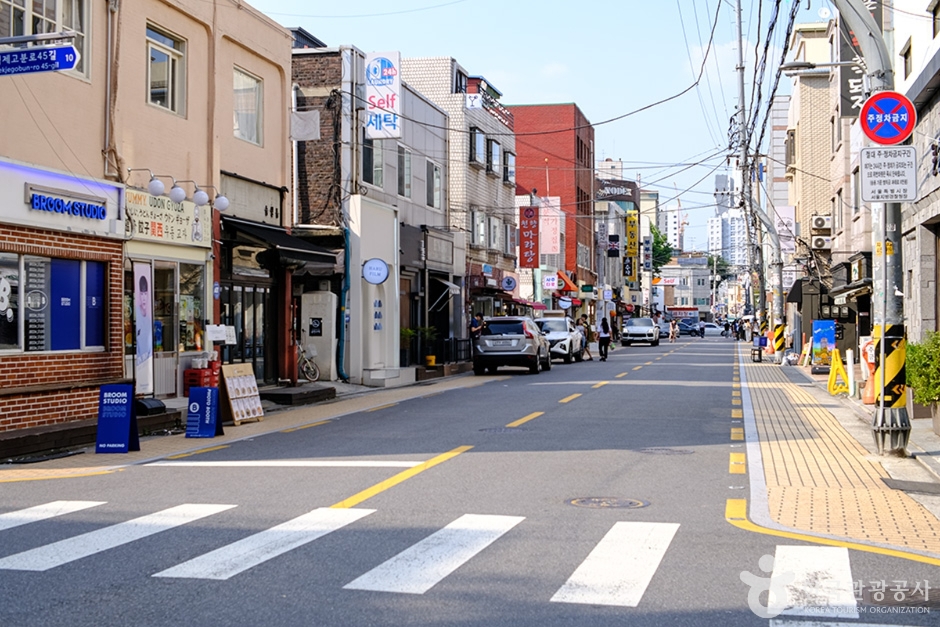
Songnidan-gil Street (송리단길)
10.3Km 2025-01-23
Baekjegobun-ro 43-gil, Songpa-gu, Seoul, and surrounding areas
Located south of the eastern side of Seokchon Lake, this street is home to numerous restaurants and cafes. Its name comes from the combination of Songpa-dong and Gyeongnidan-gil Street in Itaewon, Seoul, meaning the “Gyeongnidan-gil Street of Songpa-dong.” This street began as an otherwise unremarkable street that faced the eastern side of Seokchon Lake. Today’s “Songnidan-gil Street” came to be as cafes moved into the neighborhood, followed by restaurants and photography studios. Songnidan-gil Street is a popular hangout for young Seoulites in the southeastern side of Seoul, so on weekends, one can often find them conversing in cafes, going for drinks in bars, or waiting in line for the hottest restaurants in the neighborhood.
Yeouido Park (여의도공원)
10.4Km 2024-04-08
68, Yeouigongwon-ro, Yeongdeungpo-gu, Seoul
Yeouido Park is a large recreational area located on Yeouido Island in the central part of Seoul. It was once originally covered with black asphalt, and people frequented the place for bicycling and roller-skating. The construction began in 1997 and opened officially in February 1999. It is now the place where many people in the city come to rest and enjoy strolling around, playing sports, and cultural events.
Seoul Arts Center (예술의전당)
10.4Km 2025-01-17
2406 Nambusunhwan-ro, Seocho-gu, Seoul
The Seoul Arts Center is the representative art complex of Korea. It is comprised of the Opera House, Concert Hall, Art Gallery, Calligraphy Museum, Art Material Hall, and an outdoor stage. You can enjoy various performances and exhibitions all in one site.
The Opera House and Concert Hall consist of a total of five performance halls offering an average of 800 performances ever year, whereas the Art Gallery and Calligraphy Museum has seven exhibition halls providing various exhibitions throughout the year. The outdoor stage also provides various genres of performances all year round.

Kansong House (간송옛집)
10.4Km 2025-04-01
149-18 Sirubong-ro, Dobong-gu, Seoul
The 100-year-old traditional hanok Kansong House sits by the burial mound of Kansong Jeon Hyeong-pil (1906-1962), who played a significant role in preserving the cultural heritages of Korea during the Japanese colonial period. This house was orginally built by Kansong's adoptive father Jeon Myeong-gi (1870-1919) to us as a storage facilities for harvested agriculture from the northern Gyeonggi-do and Hwanghae. After his father's death, Kansong used the house as a ritual house for his father and often stayed here. Some damages were done to the house during the Korean War, and partial repair was made after his death.
 English
 한국어
한국어 日本語
日本語 中文(简体)
 Deutsch
 Français
 Español
 Русский


