![Olive Young - Twin City Branch [Tax Refund Shop] (올리브영 트윈시티)](http://tong.visitkorea.or.kr/cms/resource/04/2889104_image2_1.jpg)
Olive Young - Twin City Branch [Tax Refund Shop] (올리브영 트윈시티)
3.7Km 2024-04-18
Store #B109, #B110, GF Twin City Bldg., 366, Hangang-daero, Yongsan-gu, Seoul
-
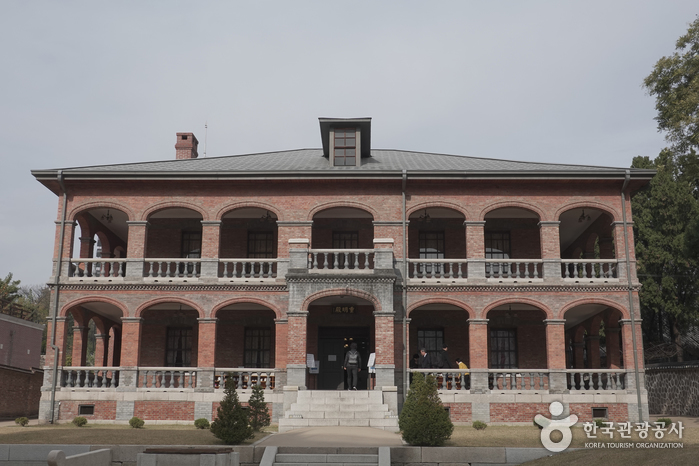
Jungmyeongjeon Hall (중명전)
3.7Km 2025-01-09
41-11, Jeongdong-gil, Jung-gu, Seoul
+82-2-752-7525
Located near Deoksugung Palace, Jungmyeongjeon Hall is a red-brick modern Western-style building. It was built in 1899 as the imperial library of the Korean Empire. After Deoksugung Palace caught on fire in 1904, the place became the temporary residence of Emperor Gojong. It also witnessed the tragic part of history in which the infamous Eulsa Treaty (Japan-Korea Protectorate Treaty), an illegal treaty forced by Japan, was signed in 1905. Its exhibition hall serves as a place for historical education.
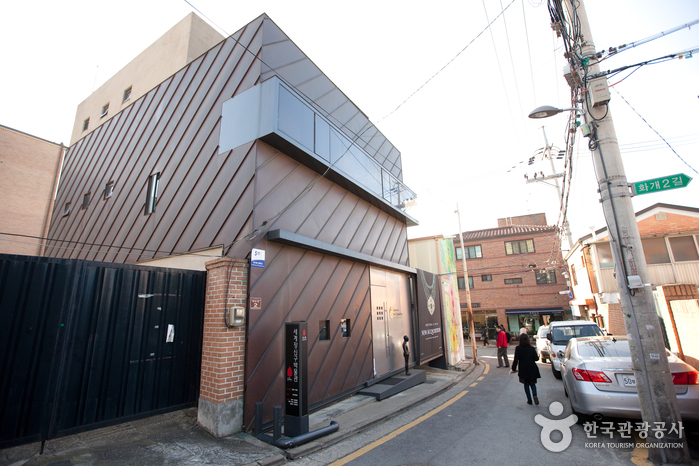
World Jewellery Museum (세계장신구박물관)
3.7Km 2023-09-21
2, Bukchon-ro 5na-gil, Jongno-gu, Seoul
+82-2-730-1610
Situated in the gallery district in the back alley of Samcheong-dong (east of Gyeongbokgung Palace), the World Jewellery Museum houses 3,000 jewelry pieces from 60 countries, which have been collected over 30 years. Of which, 1,000 have been selected for display. The first floor contains an Amber Wall that goes back as far as 50 million years, the Golden Hall (El Dorado), the Necklace Hall, and the solemn Alter of the Cross. The second floor holds a mask wall, rings, beads and ivory as well as modern jewelry.
![Mo & Bless Hair Transplantation [Tax Refund Shop] (모앤블레스의원)](http://tong.visitkorea.or.kr/cms/resource/13/3314813_image2_1.jpg)
Mo & Bless Hair Transplantation [Tax Refund Shop] (모앤블레스의원)
3.7Km 2024-06-27
208, Apgujeong-ro, Gangnam-gu, Seoul
-

Mo & Bless Clinic (모앤블레스의원)
3.7Km 2025-10-23
2nd Floor, 208 Apgujeong-ro, Gangnam-gu, Seoul
We provide meticulous care services for each person based on the principle of 'polarity' of Mo & Bless.
It is a reliable hospital with a high introduction rate that introduces people around them as well as their families because they are moved by the treatment.
As such, it is a reliable hospital with high satisfaction from patients who have visited the hospital proven through constant introduction.
Hwangsaengga Kalguksu (황생가칼국수)
3.7Km 2024-03-18
78 Bukchon-ro 5-gil, Jongno-gu, Seoul
+82-2-739-6334
Hwangsaengga Kalguksu is a specialty restaurant located near Gyeongbokgung Palace, known for its kalguksu (noodle soup). Kalguksu is a type of noodle soup made by thinly slicing dough into noodles with a knife and boiling them in a broth made from beef bones, clams, or seafood. Their menu includes options like wang mandu (jumbo mandu), hanu suyuk (boiled Korean beef slices), kongguksu (noodles in cold soybean soup), beoseot jeongol (mushroom hot pot), and mandutguk (mandu soup). It was selected as a Michelin Guide Seoul 2023 restaurant.
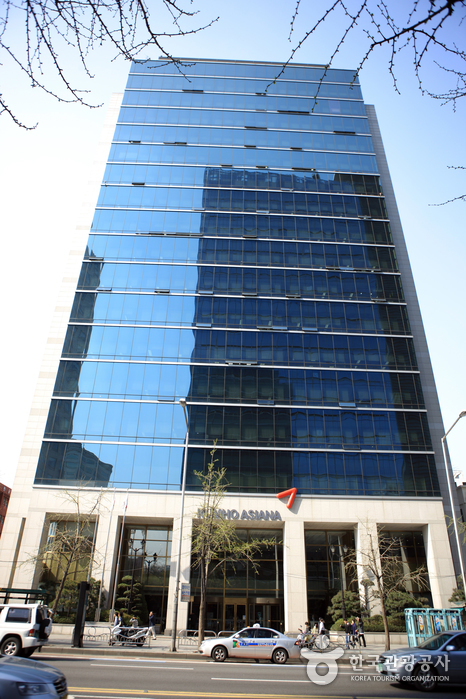
Kumho Art Hall (금호아트홀)
3.8Km 2021-05-28
76, Saemunan-ro, Jongno-gu, Seoul
+82-2-6303-1977
Kumho Art Hall was built in 2000 exclusively for classical music concerts, with 390 seats, the perfect structure for chamber concerts. All seats are recital hall chairs and the wide spacing between rows of chairs helps the audience to have a pleasant time. Upon entering the theater, all cell phones will turn off automatically. This helps all visitors to enjoy the concert without being interrupted by ringing cell phones. The interior is cozy and luxurious, and the stage is made of maple.
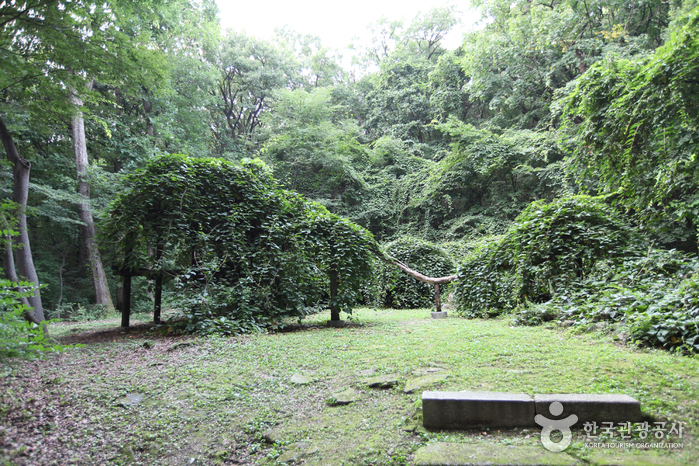
Daraenamu Tree in Changdeokgung Palace (창덕궁 다래나무)
3.8Km 2025-01-13
99, Yulgok-ro, Jongno-gu, Seoul
+82-2-3668-2300
Daraenamu Tree in Changdeokgung Palace is estimated to be 600 years old, meaning it had likely been planted before the palace was built. The tree stands 19m in x_height, and has six separate trunks sprawling in all directions. It is the biggest and the oldest in Korea. It is designated and protected as a National Natural Monument.
![Olive Young - Apgujeong Station Branch [Tax Refund Shop] (올리브영 압구정역)](http://tong.visitkorea.or.kr/cms/resource/97/2879597_image2_1.jpg)
Olive Young - Apgujeong Station Branch [Tax Refund Shop] (올리브영 압구정역)
3.8Km 2024-04-22
878, Nonhyeon-ro, Gangnam-gu, Seoul
-
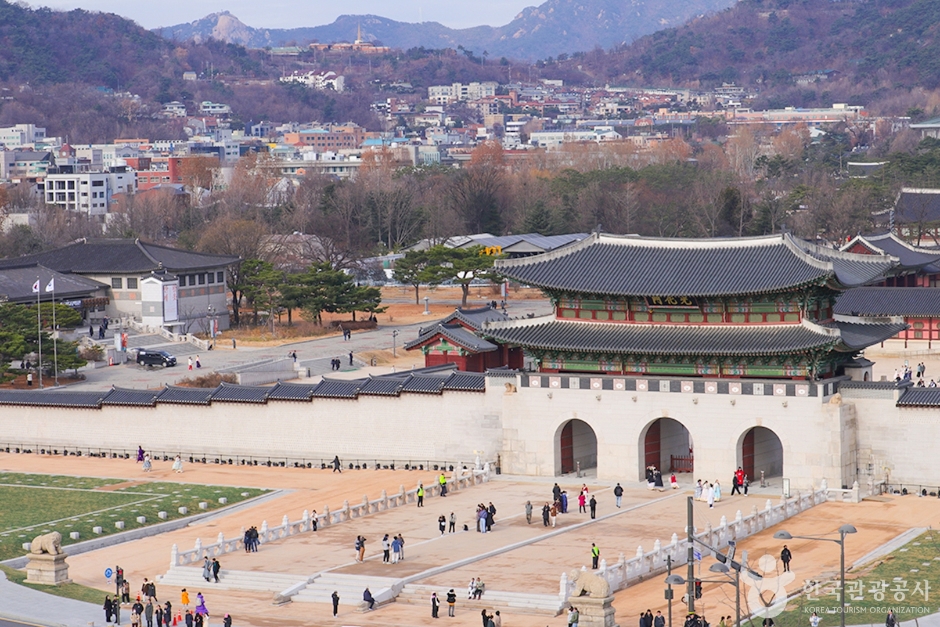
Gwanghwamun Gate (광화문)
3.8Km 2024-12-04
161 Sajik-ro, Jongno-gu, Seoul
+82-2-3700-3900
Built in 1395 under the reign of King Taejo, the first king of the Joseon dynasty, Gwanghwamun Gate is the southern gate of Gyeongbokgung Palace. It is also the main gate of the palace, therefore larger and fancier in comparison to the other gates. Gwanghwamun Gate consists of three arched gates; the center gate was used by the king, while the other two were used by the crown prince and royal officials. The tall granite walls of the gate serve as a platform for the wooden gate tower that watches over the city. The gate has a sign with its name written at the top center of the gate tower.
Gwanghwamun Gate went through several damages and restorations over the course of history. It was first severely damaged during the Imjin War (1592-1598) and was not restored until the reconstruction of Gyeongbokgung Palace in 1864. Under the Japanese administration, the gate was demolished and relocated to the north of the palace's eastern gate, followed by series of damages during the Korean War (1950-1953). In 1968, Gwanghwamun Gate was relocated back to the south of the palace and was rebuilt using concrete; however, the gate’s position was shifted a few meters away from its original location. In 2006, a major reconstruction project took place to restore Gwanghwamun Gate to its original state and location, disassembling the structure completely and replacing concrete with granite and wood. After three years and eight months of construction, Gwanghwamun Gate was fully restored to its original form and was open to the public on August 15, 2010.
 English
 한국어
한국어 日本語
日本語 中文(简体)
 Deutsch
 Français
 Español
 Русский


