
Cheongun Literature Library (청운문학도서관)
4.9Km 2023-08-16
40 , Jahamun-ro 36-gil, Jongno-gu, Seoul
Cheongun Literature Library is located at the foot of Inwangsan Mountain and can be reached by following the mountain's walking trail starting from Changuimun Gate along the fortress wall. This public hanok library is designed in consideration of the sloped topography and the natural scenery of Inwangsan Mountain. The library consists of two floors: an underground floor and a ground floor. While the ground floor is designed as a traditional hanok, the underground floor is made of concrete to support the hanok building and the spacious outdoor yard. By implementing the natural slope in the library's design, the underground southern entrance is exposed, allowing sunlight to enter. The underground floor features a wide collection of books while the ground floor serves as a place for reading. The natural environment surrounding the library adds to the hanok building's traditional and peaceful charms.
SNU Eye Clinic (에스앤유안과의원)
4.9Km 2025-10-23
(3rd,12th Floors, ICT Tower), 624 Gangnam-daero, Gangnam-gu, Seoul
SNU EYECLINIC provides personalized medical care, tried and true surgical expertise, and customer satisfaction.
We specialize in vision correction, presbyopia and cataract surgery, and our doctors personally diagnose and treat patients to manage the entire process of examination, surgery, and aftercare accurately.
Considering various factors such as the patient's eye condition and lifestyle, we provide treatment consulting catering to individual needs. Director Chung Ui-sang is the first doctor to introduce SMILE LASIK in Korea. He has led various surgeries and is a worldwide SMILE LASIK key doctor. With more than 20 years of clinical experience, he has been performing Implantable Collamer Lens (ICL) surgery since its introduction in Korea in 2002. He has also led clinical research projects and introduced ICL surgery for astigmatism correction in Korea.
SNU EYECLINIC offers years of experience and know-how to help you get your vision corrected in a way that is just right for you.
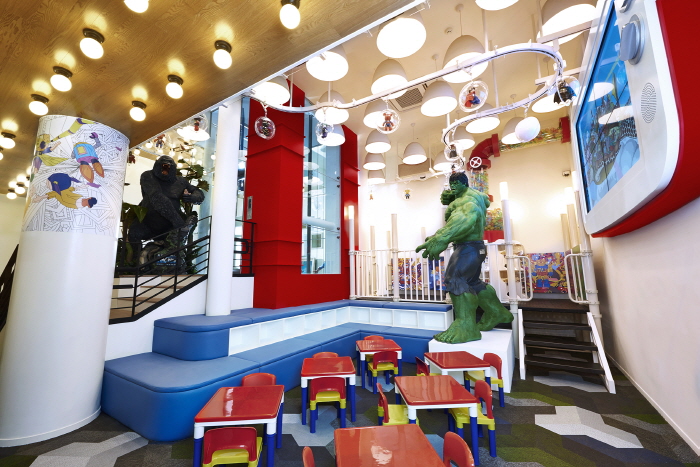
Figure Museum W (피규어뮤지엄W)
4.9Km 2024-03-18
3, Seolleung-ro 158-gil, Gangnam-gu, Seoul
The Figure Museum W is a new concept museum that combines the appeal of figurines with Enter-Tour-Ment. It integrates some functions of theme parks to create a space for a new play culture and healthy hobbies. In Figure Museum W, visitors can meet special figurines, experience the appeal of figurines, and trace the history and the world of figurines.
Daelim Changgo Gallery (성수동 대림창고 갤러리)
4.9Km 2025-03-18
78 Seongsui-ro, Seongdong-gu, Seoul
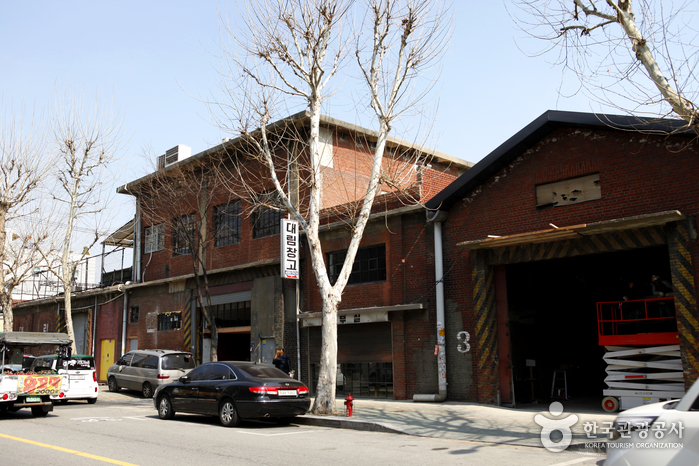
Daelim Changgo Gallery, which is a landmark in Seongsu-dong, is a red-brick building that was once used as a rice mill in the 1970s. It is now a cafe and art gellery that preserves as much of the original rice mill atmosphere as possible so it exudes fascinatingly vintage vibes, widely loved by young couples.
National Hangeul Museum (국립한글박물관)
4.9Km 2022-12-15
139, Seobinggo-ro, Yongsan-gu, Seoul
The National Hangeul Museum was established to preserve, spread, and develop the Korean alphabet, Hangeul. The museum showcases the history and value of Korean orthography, Korean’s most-valued cultural asset, through exhibitions, activities, and education. Occupying over 11,322 ㎡, the museum has one basement level and three ground levels, along with an outdoor grass field and rest area perfect for cultural events, exhibits, and education.
The museum is comprised of the Hangeul library on the first floor, a permanent exhibition hall, ㅎ Café, and cultural product shop on the second floor, and a planned exhibition hall and Hangeul playground for children and foreigners on the third floor.
10 Corso Como Cheongdam Branch (10꼬르소꼬모 청담점)
4.9Km 2025-10-28
416, Apgujeong-ro, Gangnam-gu, Seoul
A trendy select shop frequented by celebrities
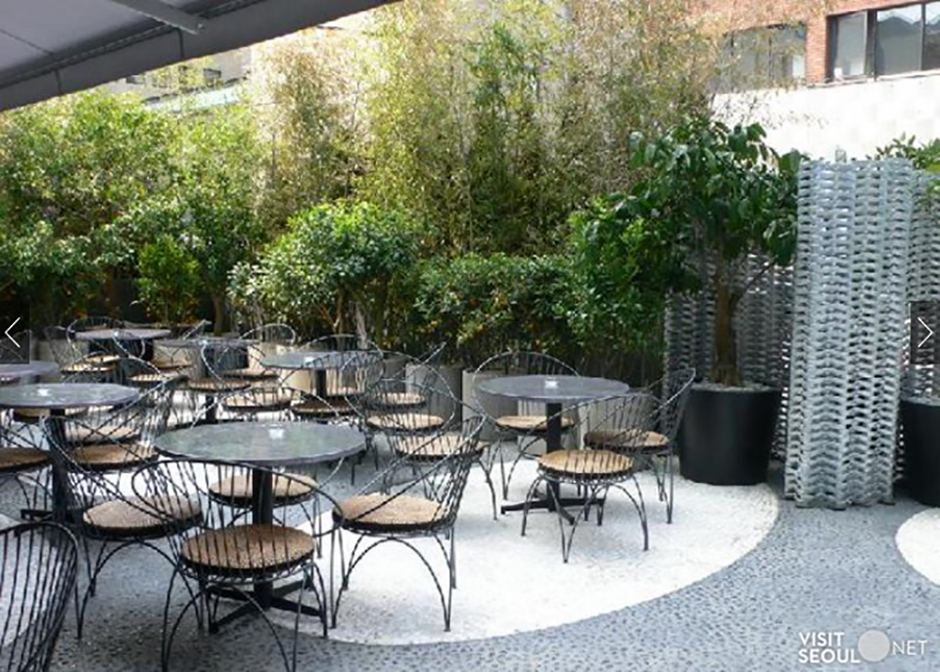
It is a trendy select shop with a restaurant and cafe. BLACKPINK JENNIE uploaded a restaurant on Instagram, which became a hot topic. It is a place where colorful ceiling decorations and sensuous interiors stand out, and the photo point is the wall decorations that are said to have been made by hand. There are a variety of products from books to interior accessories and clothes, and pop-up stores of various brands are often opened. Thanks to this, it is known as a sacred place for celebrities and fashion people who are sensitive to trends.
National Memorial of Korean Provisional Government (국립대한민국임시정부기념관)
4.9Km 2023-01-16
279-24, Tongil-ro, Seodaemun-gu, Seoul
The National Memorial of Korean Provisional Government was established to shine a light on the proud history of the Korean Provisional Government's independence and the spirit of a democratic republic and to pass it on to future generations. The four-story memorial building with three underground floors houses three permanent exhibits, one special exhibit, Larchiveum, Symbol Plaza, storage, multi-purpose hall, and rooftop garden over a total area of 3,656 square meters, a total floor area of 9,703 square meters and a total exhibition space of 2,240 square meters. The permanent exhibits consist of a series of historic events from the March 1st Movement, which served as a turning point for the formation of the Provisional Government, to the foundation of the Korean Government that succeeded the mantle of the provisional government, while the special exhibit on the 1st floor currently hosts a special opening exhibition under the title of 『The Return of the Provisional Government of the Republic of Korea』. Moreover, a symbolic wall installation under the theme of "Waves of History" is displayed in the outdoor plaza on the 1st floor of the memorial expressing the Provisional Government’s desire for independence and the dynamics of the past, present, and future of Korea.
Riz Laser Center (리즈산부인과)
4.9Km 2025-10-23
(3th-4th Floors, Gyeongseo Building), 127 Dosan-daero, Gangnam-gu, Seoul
We are the first hospital to use lasers in female genital plastic surgery, naming it "Laser Vaginoplasty" and introducing it to the Korean obstetrics and gynecology community.
Our practice encompasses a wide range of procedures, including vaginoplasty, labiaplasty, vaginal tightening, hymenorrhaphy, and treatments of gynecologic disorders and sexually transmitted diseases, and cancer.
As a surgery center with equipment tailored to various needs of customers, we pride ourselves on our state-of-the-art surgical system, which cannot be found in other Korean obstetrics and gynecology clinics. In addition, we have an advanced network system to provide expert medical care to patients at all centers in the Riz’ obstetrics and gynecology network through our attending and referred systems for laser female plastic surgery.
SEVEN LUCK CASINO - Seoul Dragon City Branch (세븐럭카지노(서울드래곤시티점))
4.9Km 2023-07-21
95, Cheongpa-ro 20-gil, Yongsan-gu, Seoul
A special experience at the center of Seoul
Seven Luck Casino in Seoul Dragon City is located in Yongsan, Seoul, the center of Korean tradition and culture. This casino branch presents a grand x_height and wide space, decorated with a sensual interior design for elegance and comfort on a site of 3,146.96 m2. It is full of up-to-date casino facilities, such as Baccarat, Blackjack, Roulette, Tai-Sai, Seven Luck Poker, Casino War, Electronic Table Games (ETG), and slot machines. There are many famous hotels, tourist sites, and cultural heritage sites nearby Seven Luck Casino in Seoul Dragon City. Besides the casino, visitors can experience various traditional and contemporary cultures of South Korea.
* Seven Luck Casino is exclusively for the use of foreigners.
* Must be 19 years of age or older to enter.
* Passports are required to verify the age and nationality of patrons.
* Metal detectors are used as an added safety precaution.
High Eye Center (하이안과)
5.0Km 2025-10-23
3F, 119 Dosan-daero, Gangnam-gu, Seoul
High Eye Center puts priority on patients, rather than diseases. The clinic treats patients, not diseases.
Patients with the same diseases have different levels of discomfort, and how to treat patients differs depending on their lifestyle and circumstances.
High Eye Center tries to solve inconveniences that patients have through customized solutions. With skilled medical staff boasting abundant experience and customized treatment systems, the clinic provides reliable eye disease treatments as well as surgeries. Furthermore, the clinic owns university hospital-level medical equipment.
Through ceaseless research, High Eye Center developed and obtained a patent on a surgical retinal illuminator from the Korean Intellectual Property Office, the only case of its kind in Korea.
 English
 한국어
한국어 日本語
日本語 中文(简体)
 Deutsch
 Français
 Español
 Русский


