
Syncverse (주식회사 싱크버스)
11.6Km 2025-12-09
(B103, Bethel Building), 875 Tongil-ro, Eunpyeong-gu, Seoul
SYNCVERSE is a combination of the words “synchronize,” which means happening at the same time, and “universe,” representing the vast world we live in.
Syncverse serves as a central hub, connecting people and facilitate seamless beginnings for success in various fields. We cater not only to medical tourism and medical research and development, but also provide a global network to meet the needs of our valued customers and partners.
Amsa-dong Prehistoric Site Museum (암사동선사유적박물관)
11.6Km 2023-12-22
875 Olympic-ro, Gangdong-gu, Seoul
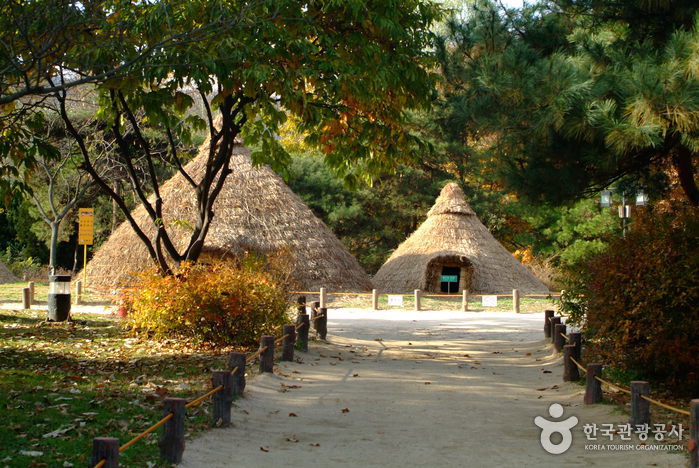
The archaeological sites in Amsa-dong, Seoul, were a collective settlement where people lived during the Neolithic Age about 6,000 years ago and became known to the world after the sand dunes along the Hangang River caved in during the great flood of 1925, exposing numerous pieces of comb-patterned pottery. The area designated as a historic site in 1979, and excavation of the site took place from 1981 to 1988. The cultural heritage protection area was expanded to a total area of 78,133㎡. Currently, nine Neolithic dugout huts and one experiential dugout hut have been restored. The exhibitions currently open to the public are Exhibition Hall 1, which displays a restoration of a Neolithic Age dugout, and Exhibition Hall 2, which displays various panels and models to help understand the prehistoric era as a whole.
Archaeological Site in Amsa-dong, Seoul (서울 암사동 유적)
11.6Km 2021-07-27
875, Olympic-ro, Gangdong-gu, Seoul
+82-2-3425-6520
The Archaeological Site in Amsa-dong reproduces the lifestyle of the Neolithic Era. Even the entrance gate is shaped like a huge dolmen and the trash cans are ancient diagonal-line patterned earthenware. Archaeological Site in Amsa-dong was excavated in 1925 when a flood washed away the soil on the banks of the Hangang River and exposed a large number of diagonal-line patterned earthenware. After several excavations, the Archaeological Site in Amsa-dong was established.
The site was a location for a massive colony, thus many ancient buildings, stone axes and stone arrows have been uncovered as well as countless diagonal-line patterned earthenware. The housing site is round with a spot in the center for fire. The site is colossal and possesses nine mud huts, two exhibition halls displaying ancient artifacts and an open mud hut where visitors can experience life in the Neolithic Era. The site offers many attractions such as mud huts and promenades. Archaeological Site in Amsa-dong is also very educational for children and families who want to learn and experience the Neolithic Age.
Skylift (스카이리프트)
11.6Km 2025-11-11
102 Daegongwongwangjang-ro, Gwacheon-si, Gyeonggi-do
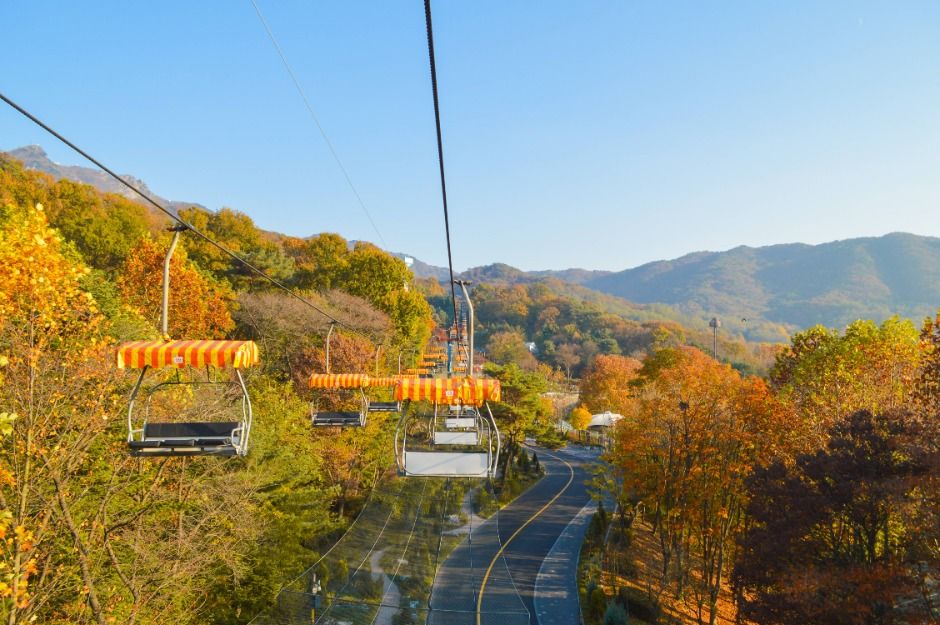
The Seoul Grand Park Skylift is an experiential transportation and tourist facility that operates within Seoul Grand Park. It consists of two lines, Line 1 and Line 2, and operates from the entrance of Seoul Grand Park to the north gate of the zoo, and from the north gate of the zoo to the top of the carnivore animals zone, respectively. It serves to connect major tourist destinations such as the zoo, themed gardens, and children's zoo, allowing visitors to move around efficiently. Visitors can also enjoy the natural scenery of Seoul Grand Park's lakes, forests, and flower paths while traveling on the lift. Available all year round, visitors can enjoy seasonal scenery such as cherry blossoms in spring, greenery in summer, autumn leaves in fall, and snowy landscapes in winter.
Ononsa Guesthouse (온온사)
11.7Km 2023-07-17
58 Gwanaksan-gil, Gwacheon-si, Gyeonggi-do
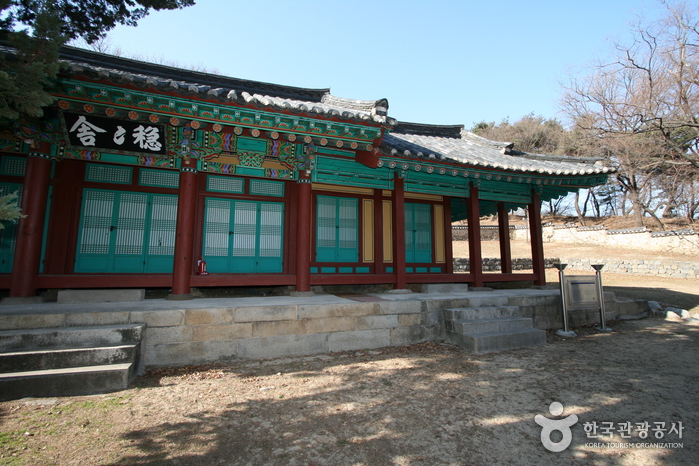
Though Ononsa, which was a guesthouse in Gwacheon, was constructed in the 27th year of King Injo's reign in the Joseon dynasty (1649), the name, "Ononsa," was given to this area during the reign of King Jeongjo. On February 11, 1790 during his royal procession to the tomb of his father, Crown Prince Sado, stayed at an inn in Gwacheon and, as he felt that it "has nice views and provides a comfortable stay," he bestowed upon the place plaques that he wrote himself - "Ononsa" to Seoheon and "Burimheon," which was the old nickname of Gwacheon, to Dongheon. This is how this place began to be called Ononsa.
It was designated as a Tangible Cultural Heritage of Gyeonggi-do on June 2, 1980, and it was restored on December 2, 1986 after being torn down.
Netmarble Game Museum (넷마블게임박물관)
11.7Km 2025-05-14
38 Digital-ro 26-gil, Guro-gu, Seoul
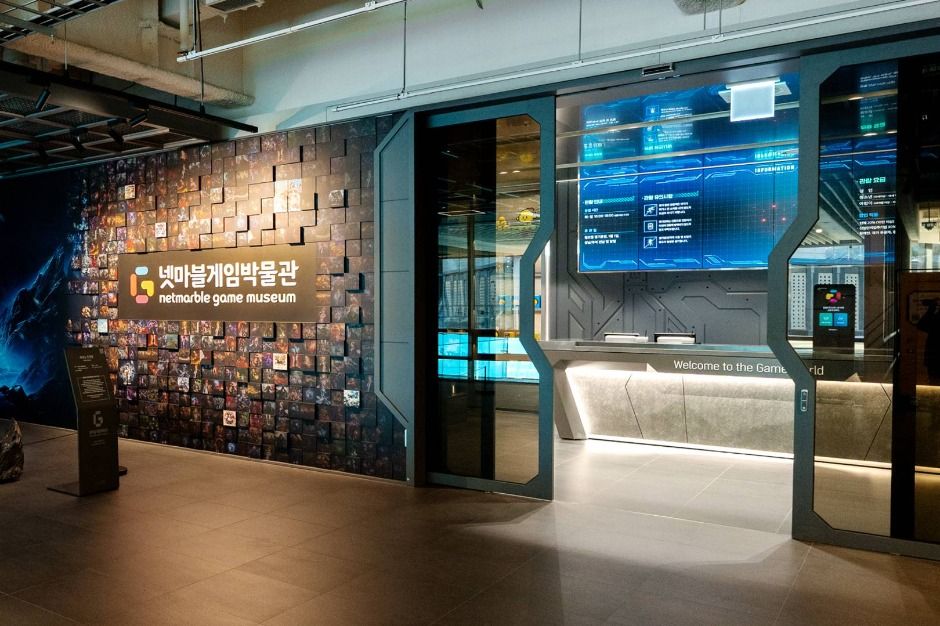
The Netmarble Game Museum offers visitors an opportunity to explore the history and culture of games and discover their social and cultural values. The museum features an exhibition space showcasing a diverse collection of domestic and international, a learning space with various gaming education materials, and a gaming space where visitors can enjoy playing different types of games. The exhibition space is organized around three main themes: game history, game world, and gaming culture. In particular, the Play Collection zone includes classic arcade games, console games, and PC games, allowing children to have fun and adults to reminisce about their memories.

Seoulland Sledding Hills (서울랜드 눈썰매장)
11.8Km 2022-11-22
Makgye-dong, Gwacheon-si, Gyeonggi-do
+82-2-509-6000
Seoulland Sledding Hills offers two slopes, one for children (50 meters long) and another for adults (120 meters long). Amenities include food stands that sell various foods, including eomuk (fish cake) soup, resting lounge and medical office. Various performances are also prepared to entertain visitors at the main stage nearby the sledding hill.
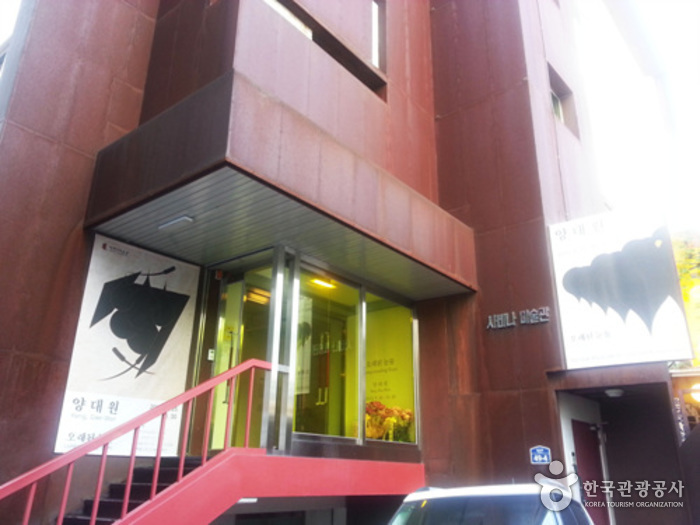
Savina Museum of Contemporary Art (사비나 미술관)
11.9Km 2022-10-20
93 , Jingwan 1-ro, Eunpyeong-gu, Seoul
+82-2-736-4371
The Savina Museum provides visitors with fresh and exciting pieces that reflect the diverse and dynamic aspects of Korean modern art. Museum organizers actively focus on developing the museum’s exhibitions, educational programs, publications, and art collections, continually working to transform the museum into a living, breathing center of arts. The museum not only supports the development of artists from a more traditional list of fields like painting, sculpture, photography and media arts, but also introduces exhibits highlighting new trends in the art world.
![Jingwansa Temple (Seoul) [진관사(서울)]](http://tong.visitkorea.or.kr/cms/resource/33/3429433_image2_1.JPG)
Jingwansa Temple (Seoul) [진관사(서울)]
11.9Km 2025-06-30
73 Jingwan-gil, Eunpyeong-gu, Seoul
Jingwansa Temple is one of the four Buddhist temples that surround Seoul. It was known as the center of Buddhism and academics. Jingwansa Temple is home to a variety of buildings, such as Daeungjeon Hall, Myeongbujeon Hall, and Nahanjeon Hall, all surrounded by the beautiful nature of Bukhansan Mountain. In fact, the temple complex is a popular fall destination for its fall colors. Visitors can also visit the nearby Eunpyeong Hanok Village.
Korea University Guro Hospital (고려대학교의과대학부속 구로병원)
11.9Km 2025-10-23
148 Gurodong-ro, Guro-gu, Seoul
Korea University Guro Hospital is the region's leading medical institution, excelling as a comprehensive general hospital equipped to handle the most critically ill patients.
We have firmly established ourselves as a cornerstone of Korean healthcare by operating a premier cancer hospital, Seoul's top regional emergency medical center, the nation's sole major trauma specialist training center, a Ministry of Health and Welfare-designated high-risk maternal and neonatal care center, and the only regional drug safety center in western Seoul.
Notably, we were the first in Korea to integrate multidisciplinary treatment into cancer care, achieving a remarkable success rate. Our expertise in cancer treatment is unparalleled, with robotic surgeries at the highest standard nationwide. We have established and operated the Robot Epicenter in recognition of our advanced capabilities.
Korea University Guro Hospital remains committed to advancing medical technology and fulfilling its mission as a top-tier general hospital, providing trustworthy and dedicated care with a patient-centered focus.
 English
 한국어
한국어 日本語
日本語 中文(简体)
 Deutsch
 Français
 Español
 Русский


