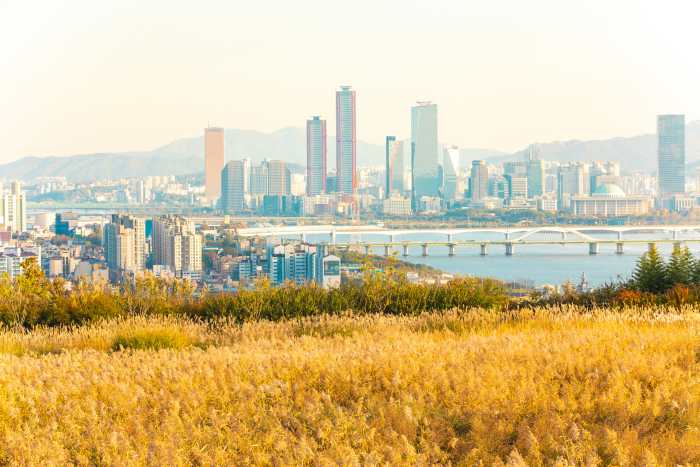
Haneul Park (하늘공원)
10.8Km 2024-11-28
95 Haneulgongwon-ro, Mapo-gu, Seoul
Haneul Park is one of five parks that make up World Cup Park, together with Peace Park, Nanjicheon Park, Nanji Hangang Park, and Noeul Park. It was established for the purpose of restoring the ecological environment so operates its facilities by using natural energy. It features a silver grass field, mixed grassland, rock garden, sunflower field, observatory rest area, and wind power generator. Among the various parts of the World Cup Park, it is located the closest to the sky and shows the transformation from a barren landfill restored to nature. In fall, silver grass forms a spectacle, and, here, visitors can get a clear, panoramic view of Seoul including Bukhansan Mountain and the Hangang River. It is also known as a place for beautiful sunsets and nightscapes.

Yongma Land (용마랜드)
10.9Km 2025-10-28
118 Mangu-ro 70-gil, Jungnang-gu, Seoul
Yongma Land, a private amusement park, was opened at the foot of Yongmasan Mountain in 1983, and closed its doors in 2011. Having spent some time as a derelict building, it has now been repurposed as a nostalgia-filled space. It was made famous as the filming location of Crayon Pop’s "Bar Bar Bar" music video. Since then, it has become a renowned destination for photography, thanks to its unique atmosphere created by the combination of lush greenery and derelict amusement rides. Entry may be restricted in the case of filming or space rentals, so make sure to check with the management before you head to the amusement park. Yongma Land is located next to Bonghwa Middle School, at Exit 1 of Mangu Station, Gyeongui–Jungang Line.
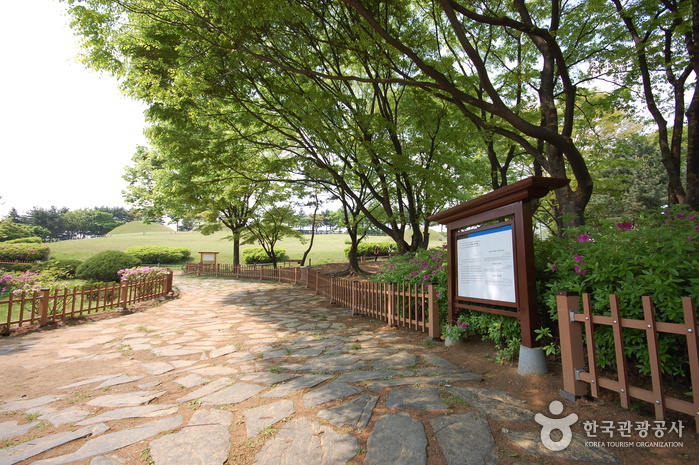
Seoul Bangidong Ancient Tombs (서울 방이동 고분군)
10.9Km 2022-12-29
219, Ogeum-ro, Songpa-gu, Seoul
+82-2-2147-2800
The ancient tombs in Bangi-dong were discovered during the land readjustment project of Jamsil-jigu District in 1975. A total of eight ancient tombs were excavated until 1976, and the site was restored into a park in 1983. The Bangi-dong area was originally a low line of hills with an altitude of 30-50 meters above sea level, but it has been made into flatland for urban development purposes. Tomb numbers 1 to 6 lie on the same hill, while tomb no. 7 and 8 are located on another hill a short distance away.
All eight tombs have circular burial mounds. The insides of the a tomb feature a square or rectangular-shaped burial chamber with earthen ground and stone walls, and a passage leading from the tomb entrance to the chamber. However, details of the burial chambers vary by tomb. Most of the tombs had been robbed before the investigation, but a few relics such as plates and pots have been excavated. At the time of excavation, the relics were presumed to have come from the Baekje dynasty (18 BC-660 AD), but it is now estimated that they date back to the Unified Silla Period (676-935 AD).
Korea Global Culture Exchange Center (KGCEC) ((주)케이지문화교류센터)
10.9Km 2025-10-23
#1404, 3 Gongwon-ro, Guro-gu, Seoul
Established in 2018, the Korea Global Culture Exchange Center (KGCEC) runs programs related to studying, tourism, and medical tourism in Korea. The company has attracted over 1,000 medical tourism customers, and approximately 700 international students were accepted by Korean universities with the help of the center. Additionally, the center has organized more than 20 large conferences and hosted over 2,000 FITs (Free Independent Travelers).
The center provides consultations and reservation services in Chinese. Interpretation and post-surgery caregiver services are available upon request. The center also provides comprehensive services from arrival to departure (e.g., pick-up, vehicle, tours, guides, hotel, interpretation, hospital, duty-free shopping, etc.)
The center has partner travel agencies in China who handle applications for Korean visas and medical tourism visas. The center is highly valued by its customers for its promotional efforts and its expansive network of partner hospitals, with its highest priority being service quality.
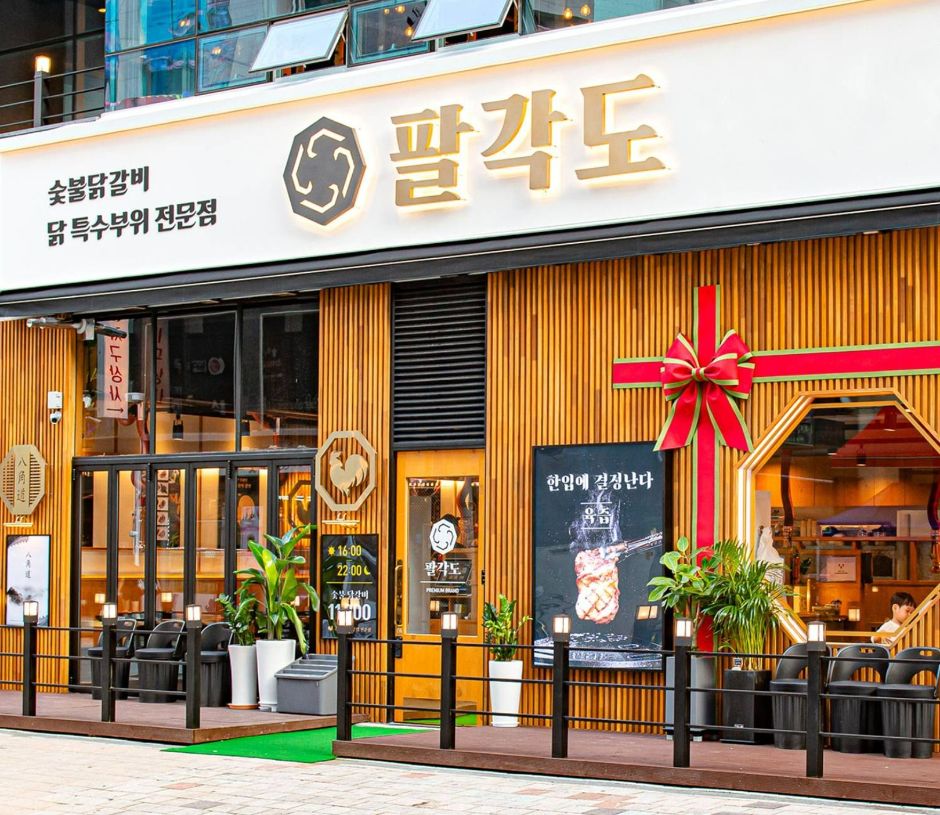
Palgakdo Main Branch (팔각도 본점)
10.9Km 2025-01-23
643 Gyeongin-ro, Guro-gu, Seoul
Palgakdo is a restaurant specializing in charcoal-grilled chicken cuts. The chicken is cooked over charcoal, making it tender and juicy. Visitors can try various chicken parts paired with delicious side dishes and sauces. The store’s unique interior, inspired by a pentagon theme, makes it a great place for dates and group gatherings.

Olympic Park (올림픽공원)
10.9Km 2023-10-19
424 Olympic-ro, Songpa-gu, Seoul
+82-2-410-1114
Olympic Park is an impressive leisure facility in which historic remains from the Baekje era share space with modern, state-of-the-art sports stadiums, an eco-friendly forest, and spacious grass fields. The legacy of the 1988 Seoul Olympics, the park not only houses the country’s largest sports arena, but has also become a place where Seoul residents come to relax and unwind.
Spread across approximately 1.45 million square meters, Olympic Park encompasses the land that was once Mongchontoseong Fortress and Mongchonhaeja (manmade lake) from the early Baekje period. The park is divided into several zones, including a leisure sports park, a cultural art park, an eco-park, and the History Experience Park dedicated to the area’s rich historic heritage.
Because Olympic Park is so large and takes over three hours to explore, visitors are advised to familiarize themselves with entrances and exits and travel routes before they start. To further save time, visitors can ride the Road Train (“Hodori Train”) located next to Peace Square.
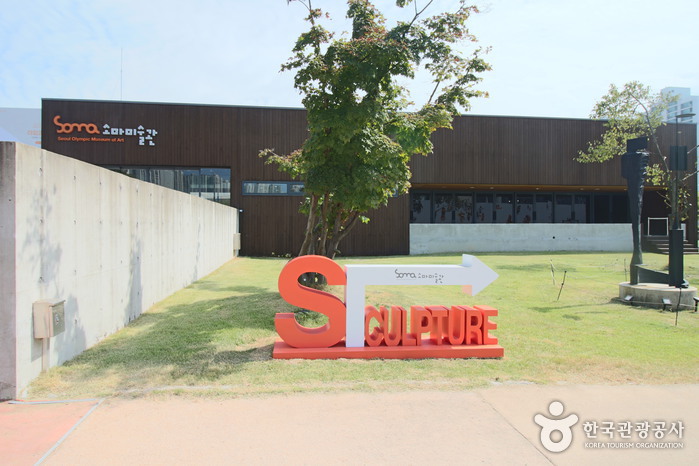
Soma Museum of Art (소마미술관)
10.9Km 2023-04-13
424, Olympic-ro, Songpa-gu, Seoul
+82-2-425-1077
Soma Museum of Art was opened in September 2004 as a cultural space amid the nature of Seoul Olympic Park. The museum displays over 222 sculptures, and offers a variety of cultural and educational programs, including the nation's first drawing center and archive.
Olympic Park Stadium (올림픽공원 경기장)
10.9Km 2021-06-11
424, Olympic-ro, Songpa-gu, Seoul
+82-2-410-1114
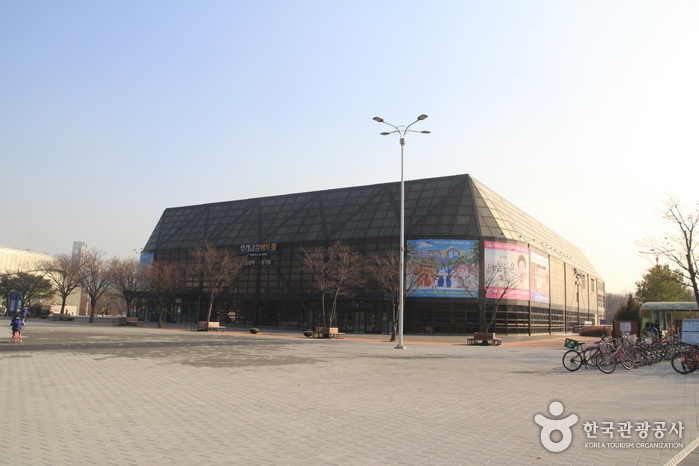
Olympic Park is an expansive outdoor area for Seoul residents to enjoy, offering facilities and venues for a range of events including athletic competitions, concerts and other performances. The park houses athletic facilities including the gymnasium of the ’88 Seoul Olympic Games, a fencing stadium, weightlifting stadium, swimming pool and tennis courts. Moreover, those venues are multi-purpose facilities that can host a wide range of events and performances.
Seoul Mongchontoseong Earthen Fortification (서울 몽촌토성)
10.9Km 2024-03-12
424, Olympic-ro, Songpa-gu, Seoul
+82-2-2147-2814
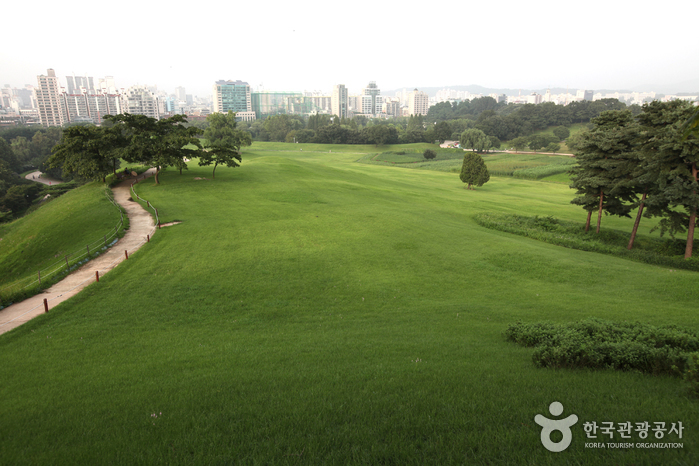
Mongchontoseong Earthen Fortification is an ancient earthen fortress built during the Hanseong period of the ancient Korean kingdom of Baekje (BC 18-AD 660). It is believed to have been constructed in the 3rd to 4th centuries. Utilizing the natural advantages of the Hangang River, it served defensive purposes with its trench and log barrier. Excavated relics from the Baekje era are on display at the Seoul Baekje Museum. The site is situated within the Olympic Park in Songpa, Seoul.
Mongchon Museum of History (몽촌역사관)
11.0Km 2021-08-13
424, Olympic-ro, Songpa-gu, Seoul
+82-2-2152-5900
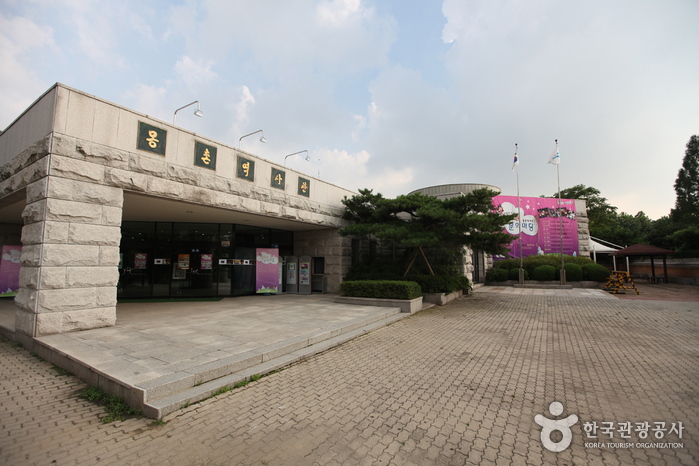
The Mongchon Museum of History, located within Olympic Park, displays artifacts from the excavations of Mongchontoseong Fortress, such as earthen fortifications as well as other artifacts of the Baekje Kingdom period, offering a glimpse into Baekje culture. A model of a Baekje dugout hut site reveals ancient dwelling patterns. Also, the facility displays a perfectly preserved model of ancient houses and tombs, giving visitors the feel of traveling back to prehistoric ages.
 English
 한국어
한국어 日本語
日本語 中文(简体)
 Deutsch
 Français
 Español
 Русский


