
Seoul Hyochang Park (서울 효창공원)
3.5Km 2024-07-09
177-18 Hyochangwon-ro, Yongsan-gu, Seoul
Hyochang Park covers 122,245 square meters spanning across Hyochang-dong and Cheongpa 2-dong. It is a historic landmark that once contained several royal tombs, and was known at that time as Hyochangwon. The cemeteries that were originally located in Hyochangwon belonged to Crown Prince Munhyo, King Jeongjo’s first son who died at the age of five; Royal Noble Consort Uibin of the Seong Clan, King Jeongjo’s royal concubine and Crown Prince Munhyo’s mother; Royal Noble Consort Sugui of the Park Clan, King Sunjo’s royal concubine; and her daughter Princess Yeongon. The royal tombs were moved to Seooreung Tombs in the waning months of the Japanese colonial period. The Japanese empire began the development of Hyochangwon into a park in 1924, and the Japanese governor-general officially assigned the site as a park in 1940.
Presently, several of Korea’s greatest leaders are buried in Hyochang Park. The remains mostly belong to independence activists including Yoon Bong-gil, Lee Bong-chang, and Baek Jeong-gi, whose graves are collectively known as Samuisa Tomb. A statue of Lee Bong-chang has been built in the graveyard. Among the other patriotic martyrs who are interred in the park are Kim Gu and some of the key figures of the provisional government such as Lee Dong-nyeong, Cha I-seok, and Cho Seong-hwan. An ancestral shrine named Uiyeolsa has been built along the main gate and holds the portraits of the deceased independence activists.
Minish Dental Hospital (미니쉬치과병원)
3.5Km 2025-10-23
728 Eonju-ro, Gangnam-gu, 728 Eonju-ro, Gangnam-gu, Seoul
Minish Dental Hospital opened in 2007 under the name Today Dental. In December 2018, it became a hospital-grade medical institution after passing the Ministry of Health and Welfare's strict assessments for facilities, medical quality, etc. The hospital has 13 dental specialists with abundant clinical experience, who prioritize no harm, no pain, and no excessive treatments.
Since 2009, Minish Dental Hospital has secured 150,000 clinical cases. Approximately 500 patients who are entertainers, businessmen, or celebrities have visited the hospital.
Designated by the Ministry of Health and Welfare as a medical institution for international patients, Minish Dental Hospital has transformed itself into an excellent medical institution attracting foreign patients from various countries, such as the US, Japan, China, and the Middle East.
CMC Confidence (씨엠씨 컨피던스)
3.5Km 2025-10-23
#207, Ra-dong, 14 Eonju-ro 148-gil, Gangnam-gu, Seoul
CMC Confidence combines medicine and tours to offer optimized services. It provides special tour services beyond simple medical services. Instead of simply attracting patients, CMC Confidence provides topping tours where patients can experience treatments while traveling with family and friends. The patient's next medical visit becomes an opportunity for joyful travels, rather than treatments. CMC Confidence offers customers new experiences through specialized services in the Gangnam area of Seoul.
Central City (센트럴시티)
3.5Km 2025-03-28
176, Sinbanpo-ro, Seocho-gu, Seoul
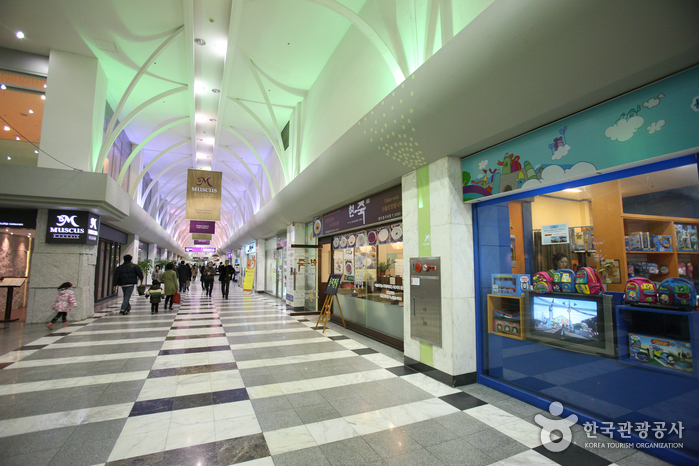
Connected to the Express Bus Terminal Station, Central City is a large lifestyle cultural complex. With in the City are a department store, movie theater, bus terminal, hotel, and shopping malls. Especially, Familie Station & Garden is home to beauty salons, restaurants and coffe shops that are famous and unique. One can also explore attractions such as the Express Bus Terminal Underground Shopping Mall and Banpo Wholesale Flower Market, enriching the experience of the area.
Liz on with Yonsei Slimline Clinic (리즈온위드 연세슬림라인의원)
3.5Km 2025-10-23
(3rd Floor, Postam Building), 12 Seolleung-ro 153-gil, Gangnam-gu, Seoul
Liz on with Yonsei Slimline Clinic, renowned for its expertise in liposuction, has made its mark across the globe with patients from Korea, Singapore, Mongolia, Vietnam, China, Japan, France, Finland, and Australia. We (Apgujeong Dermatology Clinic and Apgujeong Rodeo Dermatology Clinic) take pride in offering more than just liposuction. Our services also include advanced laser treatments, and we ensure the use of only genuine, precisely measured doses in all procedures.
What sets us apart is our:
Warm, family-like atmosphere
Friendly, highly trained staff
Medical team with doctoral degrees, dedicated to ongoing research and innovation
Our patients particularly appreciate the expertise of Dr. Park Geon-chae, a distinguished figure in skin and obesity treatment with 25 years of experience in Apgujeong, and Dr. Park Ha-yeon.
At Liz on with Yonsei Slimline Clinic, our top priority is helping patients achieve their beauty goals while maintaining a healthy body. Our doctors are deeply committed to research, attending academic conferences regularly, and publishing papers to advance the field. This dedication has attracted doctors from around the world who come to learn from our experts.
Cheonggyecheon Old Books Street (청계천헌책방거리)
3.5Km 2023-12-22
20 Jangchungdan-ro 13-gil, Jung-gu, Seoul
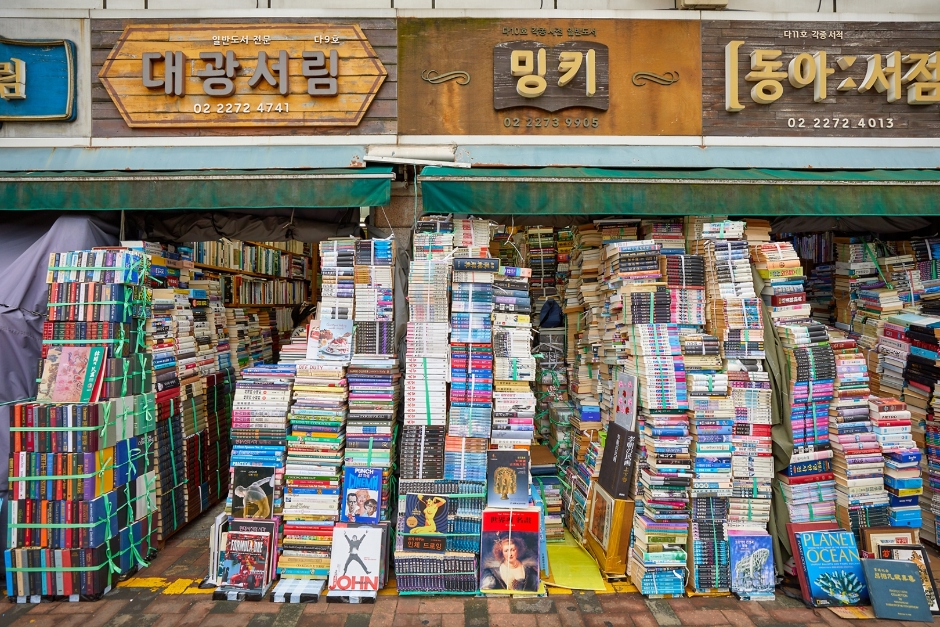
Walking east along Cheonggyecheon Stream, which flows near Sewoon Plaza, you will see a cluster of small bookstores. Books published 30 to 50 years ago, and various out-of-date magazines are piled up in about ten bookstores. You can indirectly experience the old culture and history that formed the basis of K-content, and sometimes you can also find foreign books. Nearby is Dongdaemun Market, a wholesale market selling various subsidiary materials, and Pyounghwa Market (open from night to early morning), where you can browse clothing fabrics, which are excellent places to visit together.
Hangang River (한강)
3.5Km 2024-10-29
257 Gangbyeonbuk-ro, Seongdong-gu, Seoul
The Hangang River is a iconic river in Korea that crosses Seoul from north to south. Various parks and cultural facilities are located along the river, attracting numerous people to enjoy leisure and relaxation. Many people enjoy walking, biking, and jogging along the river. Water sports such as fishing, kayaking, and sailing are also popular, and the night view of the river from a cruise ship makes it even more beautiful. Events such as concerts, drone festivals, and fireworks displays are also a must-see.
Doota Mall (두타몰)
3.6Km 2025-10-23
275, Jangchungdan-ro, Jung-gu, Seoul
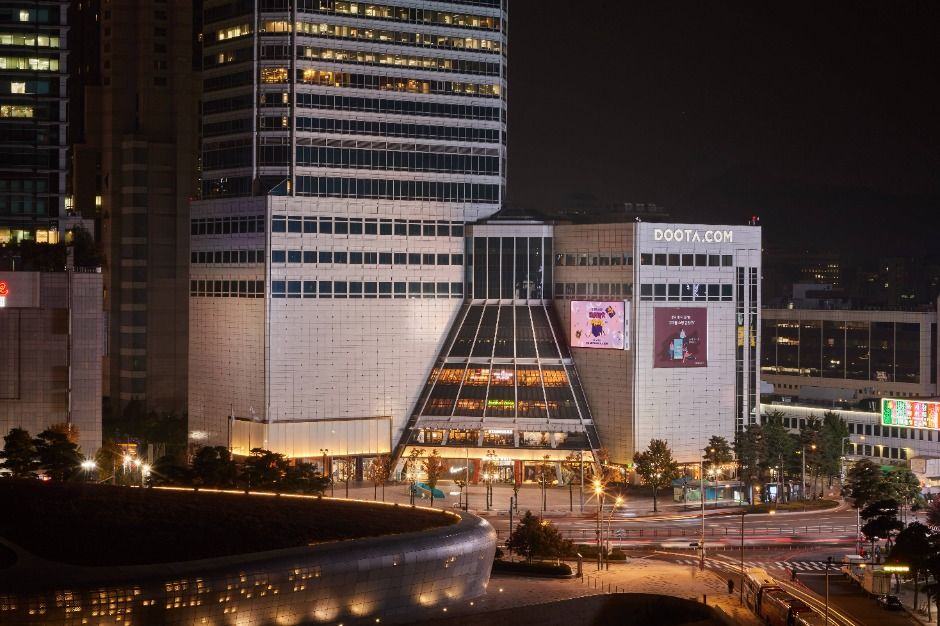
Doota Mall is a must-visit shopping destination that represents Dongdaemun-the center of K-fashion and culture in Seoul. Doota offers a true one-stop shopping experience across fashion, beauty, lifestyle, and dining-from K-designers, sportswear, women and men's apparel to a wide variety of cafes and restaurents. Open until midnight, Doota welcomes intenational travelers with special gifts and exclusive benefits.
Redtable Inc (주식회사 레드테이블)
3.6Km 2025-10-23
10F, SIGNATURE TOWER(WEST),100,Cheonggyecheon-ro, Jung-gu, Seoul
We are a Google partner in Korea that provides services for searching, inquiries, consultations, bookings, and payments related to hospitals, wellness centers, and aesthetic services on Google.
We focus on attracting global tourists from English-speaking countries, Japan, and other Asian regions.
Additionally, Redtable Inc is an official agency of Meituan-Dianping (the largest integrated platform in China), specializing in marketing and promotions for the Chinese market.
Seoul BGSS Eye Clinic (서울밝은세상안과)
3.6Km 2025-10-23
2F & 5F-7F, 823 Seolleung-ro, Gangnam-gu, Seoul
BGSS Eye Clinic has specialized in vision correction since its establishment in 1997. It is the first-generation eye clinic that introduced LASIK and LASEK surgeries in Korea.
The clinic consists of the Vision Correction Precision Examination Center, General Surgery Center, General Consultation Center, and the Vision Correction Research Center perched over four floors. The Vision Correction Precision Examination Center is divided into the LASIK Precision Examination Center and the Post-surgery Consultation Center. The Vision Correction Precision Examination Center conducts approximately 50 types of precision examinations and a 10-phase special diagnostic examination, leveraging the largest number of examination devices in Korea.
The clinic's DNA Genetic Testing Lab conducts the Avellino Lab Universal Test for all surgical patients to ensure safer surgeries. It is the only clinic in Korea capable of handling the entire process in-house, from collecting DNA to in-house analysis and result confirmation, so patients can get surgery on the day of the test.
 English
 한국어
한국어 日本語
日本語 中文(简体)
 Deutsch
 Français
 Español
 Русский


