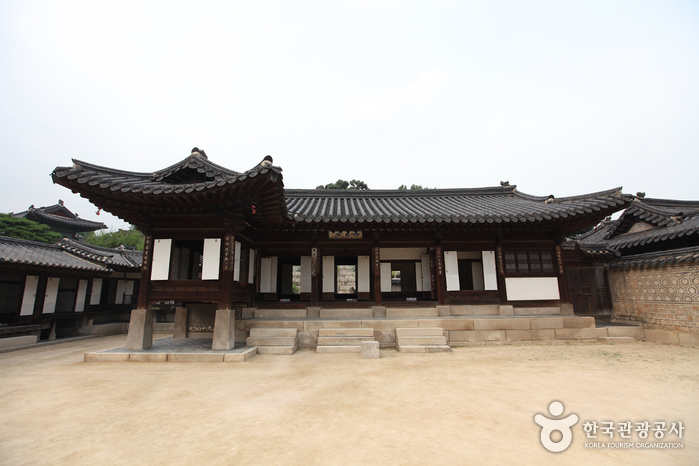
Nakseonjae Hall (낙선재)
1.7Km 2021-09-30
99, Yulgok-ro, Jongno-gu, Seoul
+82-2-2148-1822
Located inside Changdeokgung Palace, Nakseonjae Hall is a one-story structure built in ikgong style (bird wing-shaped eaves placed on top of the pillars) with a hip tiled and gable roof. It has 6 kan in the front and 2 kan (traditional unit of measurement of the space between pillars) to the sides. It originally belonged to the nearby Changgyeonggung Palace, but came to be considered a part of Changdeokgung Palace in more recent years.
The hall was constructed in 1846 (12th year of King Heonjong’s reign) and it is collectively called Nakseonjae together with the adjacent Seokbokheon Hall and Sugangjae Hall.
Behind the building is a flower garden made of stacked large stones. The chimney, the flowers, and the oddly shaped stones harmoniously blend into one another to create an outstanding landscape gardening.
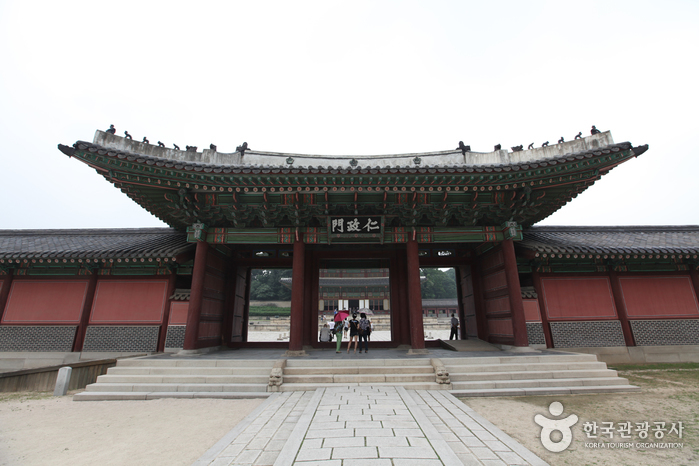
Changdeokgung Injeongmun Gate (창덕궁 인정문)
1.8Km 2025-01-14
99, Yulgok-ro, Jongno-gu, Seoul
+82-2-3668-2300
Serving as the main gate of Injeongjeon Hall, Injeongmun Gate was established in 1405 (5th year of King Taejo’s reign during the Joseon dynasty). Later on, the gate was destroyed by multiple fires during the Imjin War (Japanese invasion of Korea in 1592), therefore current form of the establishment displays designs that are more often seen in the late 19th century's. In addition, a lot
of subsidary marks and buildings are removed from the original places and relocated passing the time, however, still remains to represent prestigious ambience.
Injeongmun Gate served as the place for several coronation ceremonies of kings, prince's succession of throne, and many other national affairs celebrated by the royal members who gathered and aligned around this gate.
![Yeonwoohouse [Korea Quality] / 연우하우스 [한국관광 품질인증]](http://tong.visitkorea.or.kr/cms/resource/52/3009452_image2_1.jpg)
Yeonwoohouse [Korea Quality] / 연우하우스 [한국관광 품질인증]
1.8Km 2023-09-12
5-13 , Bukchon-ro 12-gil, Jongno-gu, Seoul
+82-2-742-1115
Yeonoo House is a quiet and cozy traditional hanok in Bukchon Hanok Village, Jongno, Seoul. There are two small rooms, each with its own bathroom. Residents can access a superb panoramic view of Bukchon Hanok Village by mounting a ladder up to the roof. As Yeonoo is an old building, careful attention is paid to hygiene management. Gyeongbokgung Palace, Cheonggyeonggung Palace, and Changdeokgung Palace are all nearby.

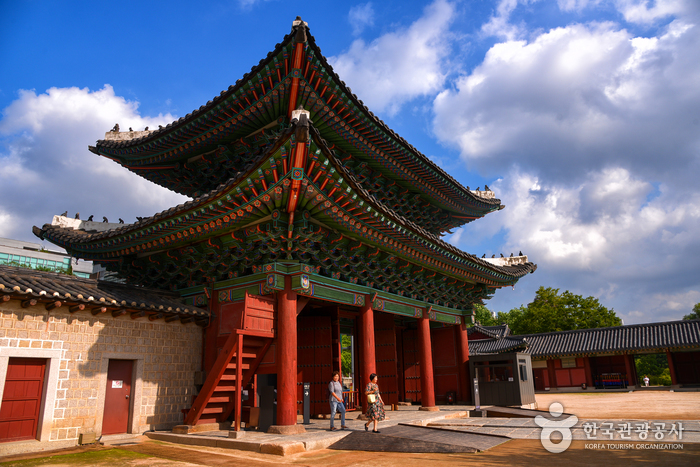
Changgyeonggung Palace Honghwamun Gate (창경궁 홍화문)
1.8Km 2021-05-27
99, Yulgok-ro, Jongno-gu, Seoul
+82-2-762-4868
Honghwamun Gate is the main gate of Changgyeonggung Palace. It has three opening gates in the front and two to the side with a sophisticated locking mechanism.

Leather Craft Shop (손놀림공방)
1.8Km 2025-10-30
19-1 Naksanseonggwakseo 1-gil, Jongno-gu, Seoul
The leather workshop featured in the drama 'Boyfriend'
It is a leather workshop that appeared in the scene where Cha Soohyeon (Song Hyekyo) and Kim Jinhyeok (Park Bogum) reunite in the drama 'Boyfriend'. It is run by leather craft artist Kim Yeongae and is known for its many cute items. You can experience making leather knotted string bracelets and rings at a low cost.
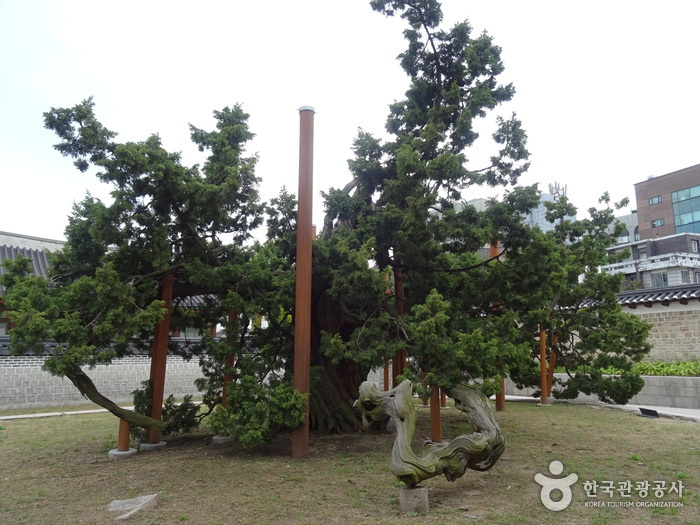
Hyangnamu Tree in Changdeokgung Palace (창덕궁 향나무)
1.8Km 2025-01-13
99, Yulgok-ro, Jongno-gu, Seoul
+82-2-3668-2300
Hyangnamu or 'Aromatic Tree' in Changdeokgung Palace is estimated to be about 700 years old, meaning it had likely been planted before the palace was built. It stands 12m in x_height, measures 5.9m in girth around the roots, and has branches spreading in all four directions. It is designated and protected as a National Natural Monument.
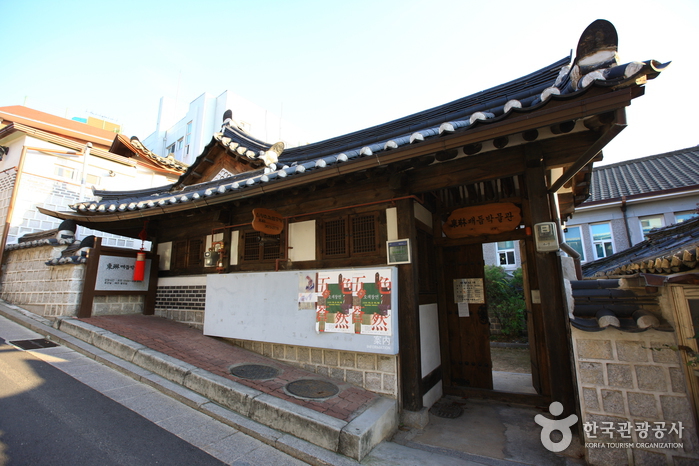
Dong-Lim Knot Museum (동림매듭박물관)
1.8Km 2021-12-21
10, Bukchon-ro 12-gil, Jongno-gu, Seoul
+82-2-3673-2778
Opened in April 2004, Dong-Lim Knot Museum exhibits a variety of decorative traditional Korean maedeup (knots): norigae for hanbok, belts, pouches, as well as materials like thread, cord, and accessories. Housed in a hanok, a traditional Korean house, the gallery has a variety of exhibits, including old and new artwork, and creations that reflect modern trends.
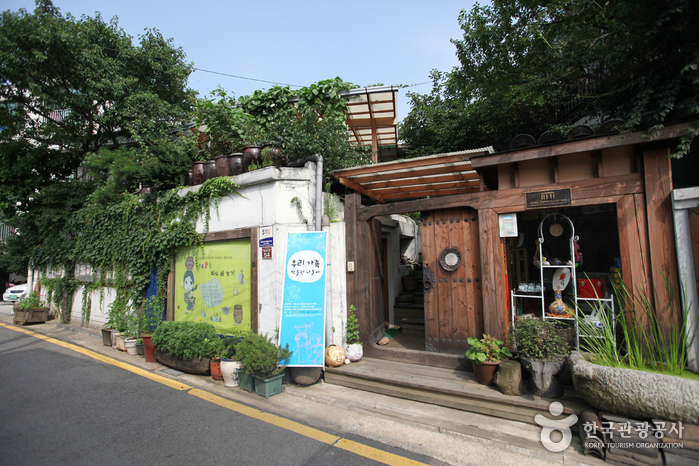
Bukchon Museum (북촌생활사박물관)
1.8Km 2022-08-30
90, Bukchon-ro 5na-gil, Jongno-gu, Seoul
+82-2-736-3957
The Bukchon Museum displays items that have been collected from Bukchon, a historical village that was once home to the nation’s nobility. The museum was founded to observe urban development that took place in the recent decades through collected and preserved veryday household items that were used by Bukchon residents. Visitors are even allowed to touch items on display to better be able to imagine life in Korea before industrialization.
 English
 한국어
한국어 日本語
日本語 中文(简体)
 Deutsch
 Français
 Español
 Русский


