
HANILKWAN - Gwanghwamun Branch (한일관 광화문)
2.5Km 2024-03-18
50, Jong-ro 1-gil, Jongno-gu, Seoul
+82-2-722-7557
It is a store that has been operating with a long tradition since 1939. This Korean dishes restaurant is located in Jongno-gu, Seoul. The most famous menu is bulgogi.
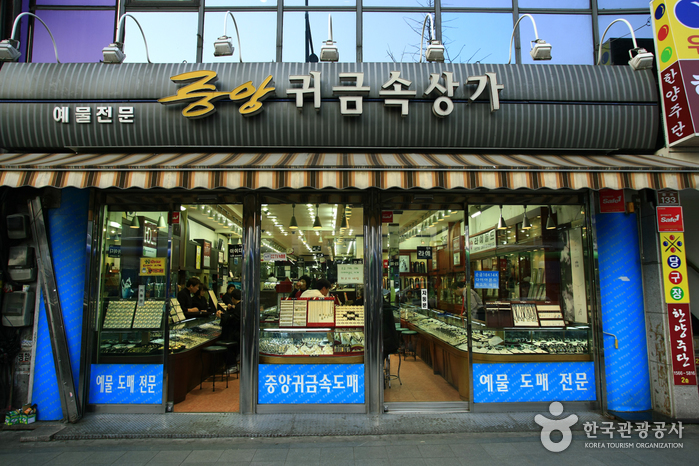
Jongno 3(sam)-ga Jewelry District (종로3가 귀금속 전문상가)
2.6Km 2025-06-30
Jongno3-ga, Jongno-gu, Seoul-si
There is an enormous selection of wholesalers and retail jewelry stores in this district, spread throughout Jongno 3(sam)-ga and 4(sa)-ga. The glittering showcases here are especially popular amongst young people and foreign tourists looking to find fine jewelry at affordable prices. Stores in the jewelry district have a selection of designs that are extraordinarily diverse and prices that are 20 to 40% lower than at other jewelry outlets in Korea.
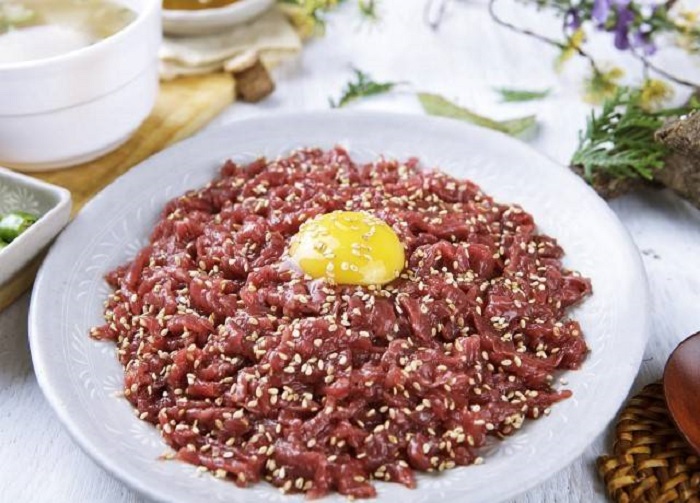
Buchon Yukhoe (부촌육회)
2.6Km 2024-03-04
200-12 Jong-ro, Jongno-gu, Seoul
Buchon Yukhoe is a renowned restaurant located in Gwangjang Market's Beef Tartare Street, selected by the Michelin Guide in 2023. It specializes in yukhoe (beef tartare), a Korean-style raw beef dish marinated with sesame oil and pear. The restaurant uses fresh Korean beef supplied daily, ensuring a delightful and nutty flavor. The simple seasoning enhances the natural taste of the ingredients, and the yolk-topped yukhoe adds visual appeal to the dish.
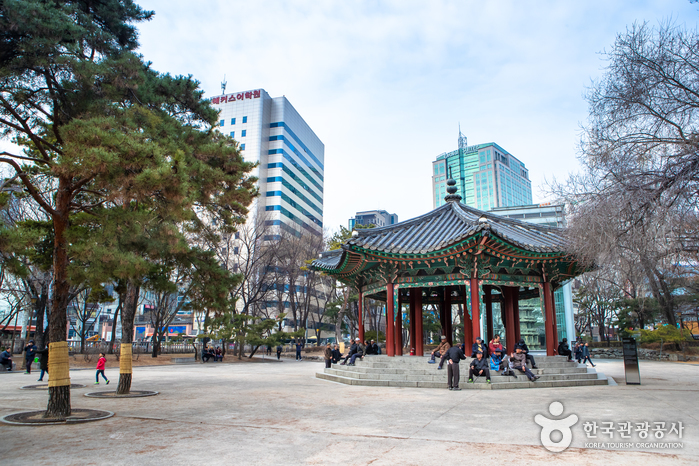
Tapgol Park (탑골공원)
2.6Km 2024-03-04
99, Jong-ro, Jongno-gu, Seoul
+82-2-731-0534
Tapgol Park is the first modern park in Seoul. Having been the site of the Buddhist temple of Wongaksa Temple since 1467, the land was turned into a park in 1897. The park has a significant presence in Korean history, being the place where the March 1 Independence Movement began in 1919. One can find historical sites that hearken back to the struggle, such as the Palgakjeong Pavilion, the center of the movement; cultural heritage sites such as the Ten-story Stone Pagoda of Wongaksa Temple Site and the Stele for the Construction of Daewongaksa Temple at Wongaksa Temple Site; and monuments such as the independence movement relief plate, murals, the statue of Son Byeong-hee, and the statue of Han Yong-un.
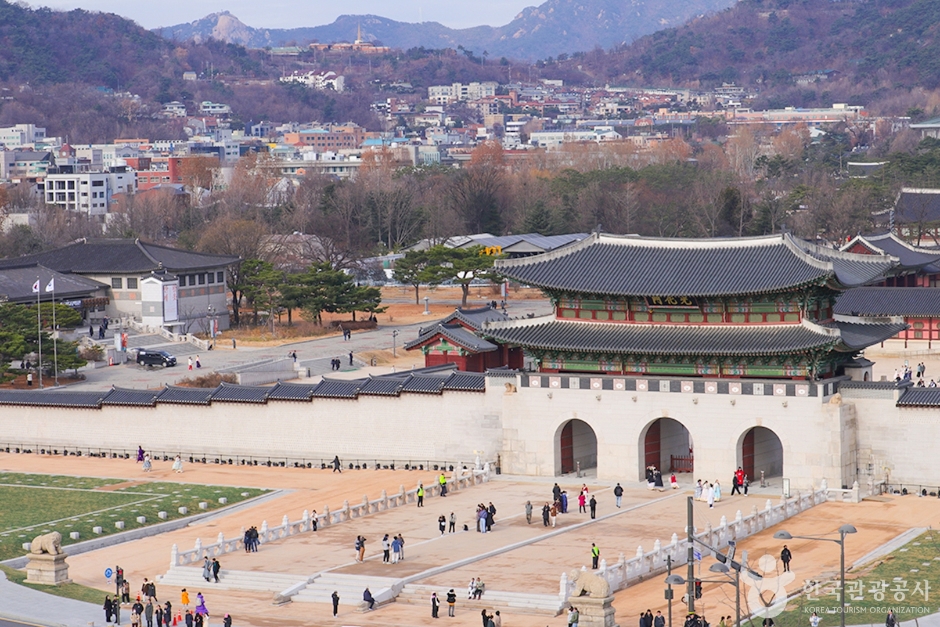
Gwanghwamun Gate (광화문)
2.6Km 2024-12-04
161 Sajik-ro, Jongno-gu, Seoul
+82-2-3700-3900
Built in 1395 under the reign of King Taejo, the first king of the Joseon dynasty, Gwanghwamun Gate is the southern gate of Gyeongbokgung Palace. It is also the main gate of the palace, therefore larger and fancier in comparison to the other gates. Gwanghwamun Gate consists of three arched gates; the center gate was used by the king, while the other two were used by the crown prince and royal officials. The tall granite walls of the gate serve as a platform for the wooden gate tower that watches over the city. The gate has a sign with its name written at the top center of the gate tower.
Gwanghwamun Gate went through several damages and restorations over the course of history. It was first severely damaged during the Imjin War (1592-1598) and was not restored until the reconstruction of Gyeongbokgung Palace in 1864. Under the Japanese administration, the gate was demolished and relocated to the north of the palace's eastern gate, followed by series of damages during the Korean War (1950-1953). In 1968, Gwanghwamun Gate was relocated back to the south of the palace and was rebuilt using concrete; however, the gate’s position was shifted a few meters away from its original location. In 2006, a major reconstruction project took place to restore Gwanghwamun Gate to its original state and location, disassembling the structure completely and replacing concrete with granite and wood. After three years and eight months of construction, Gwanghwamun Gate was fully restored to its original form and was open to the public on August 15, 2010.
![Rawrow - Kwangjang Market Branch [Tax Refund Shop] (로우로우 광장시장)](http://tong.visitkorea.or.kr/cms/resource/29/2878229_image2_1.jpg)
Rawrow - Kwangjang Market Branch [Tax Refund Shop] (로우로우 광장시장)
2.6Km 2024-04-19
Store #239, Gwangjang Market, 88, Changgyeonggung-ro, Jongno-gu, Seoul
-
Vestis - Gyeongbokgung Branch [Tax Refund Shop] (베스티스 경복궁)
2.6Km 2024-04-18
1F, 17, Jahamun-ro 12-gil, Jongno-gu, Seoul
-
JDX - Jongno Branch [Tax Refund Shop] (JDX 종로)
2.6Km 2024-04-19
1F, 236-1, Jong-ro, Jongno-gu, Seoul
-
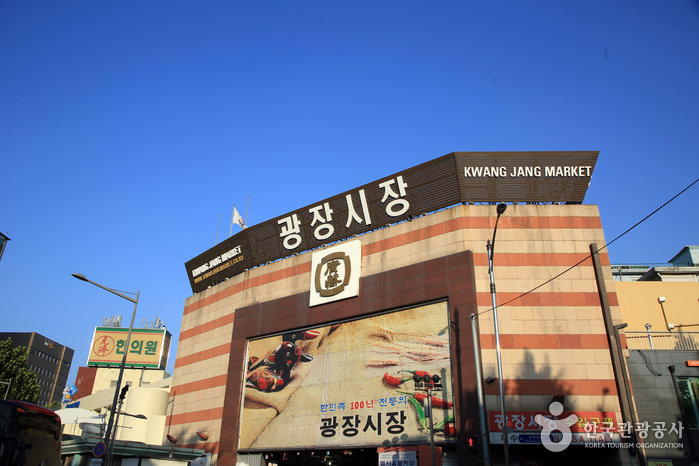
Gwangjang Market (광장시장)
2.6Km 2024-07-08
88, Changgyeonggung-ro, Jongno-gu, Seoul
+82-2-2267-0291
Gwangjang Market was the first permanent market in Korea and continues to thrive as a popular tourist destination today. The name Gwangjang means "to gather from afar and keep altogether." The market began as a small trading center that brought in goods from nearby regions, but has now grown into a large wholesale market selling a variety of goods, including upholstery, imported goods, groceries, dried fish, traditional goods, and more. The most popular section of the market is the food street connected to the East Gate, North Gate 2, and South Gate 1. The food street caters to a wide range of patrons due to the plethora of menus available. It is also one of the most recommended tourist attraction for international travelers.
 English
 한국어
한국어 日本語
日本語 中文(简体)
 Deutsch
 Français
 Español
 Русский


