BBQ CHICKEN Myeong-dong Star(BBQ치킨 명동스타)
4.1Km 2024-03-07
2F, 2 Myeongdong 4-gil, Jung-gu, Seoul
+82-507-1363-8810
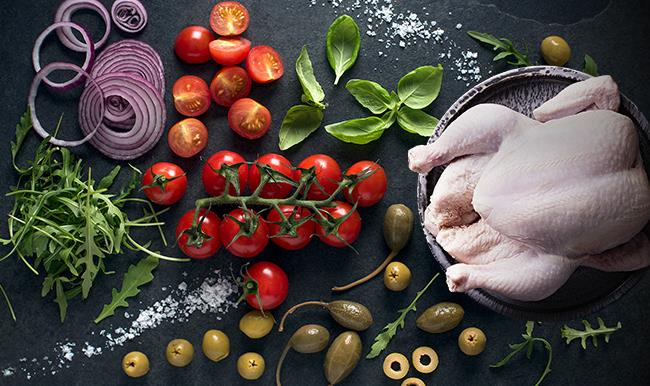
BBQ CHICKEN Myeong-dong Star's signature dish is the Golden Olive Fried Chicken, which is fried in savory olive oil. The crispy batter and tender, savory meat are excellent. Patrons have other option to yangnyeom chicken (seasoned fried chicken), basak garlic chicken, or half and half. Ordering chicken legs and wings by cut is also a favorite. The best combination is with a cold beer.
Baekje Samgyetang (백제삼계탕)
4.1Km 2024-03-11
8-10, Myeongdong 8-gil, Jung-gu, Seoul
+82-2-776-3267
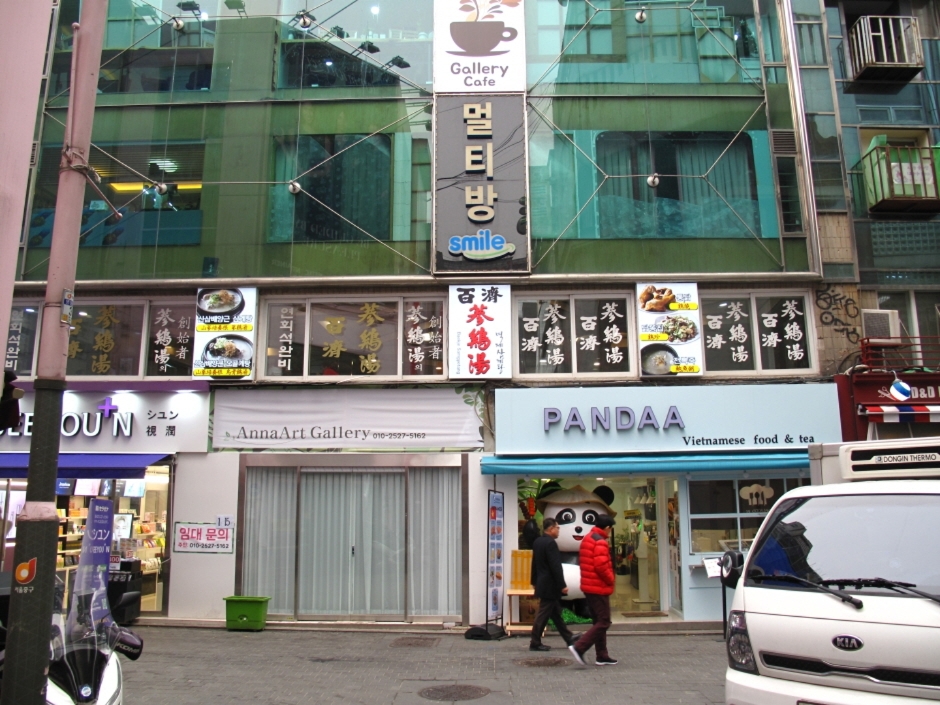
Located in Myeongdong Street, Baekje Samgyetang is renowned for samgye tang (ginseng chicken soup). This long-standing establishment has been in business for two generations since 1971 so it has been featured on TV in Korea and other countries. In addition to samgye tang, they also serve chicken dishes such as dakdori tang (spicy braised chicken), roasted chicken, and jeonbok juk (abalone porridge), attracting numerous patrons.

Nolbu Budaejjigae Myeongdong (놀부부대찌개 명동)
4.1Km 2024-03-11
16-1, Myeongdong, 10-gil, Jung-gu, Seoul
+82-2-3789-0110
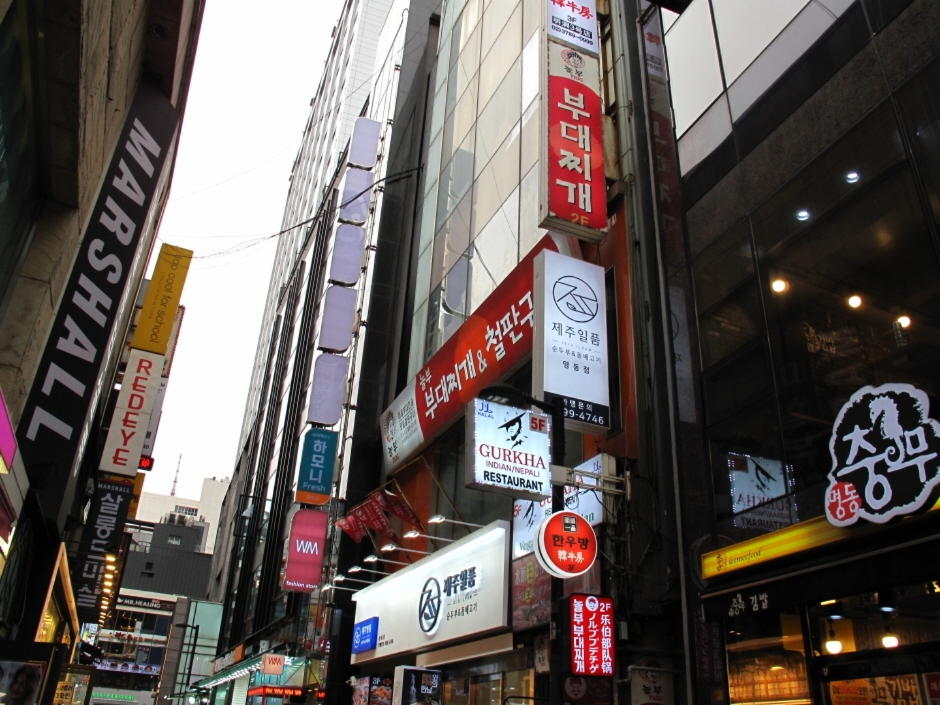
Situated in Myeongdong, Nolbu Budaejjigae in Myeongdong is exclusively dedicated to budae jjigae (sausage jjigae). Budae jjigae is a typical Korean fusion food consisting of ham, sausage, kimchi, extra instant noodles, tiny rice cakes, glass noodles, and spicy seasonings. They use selected ham and sausage in a bone broth, and fresh noodles that are not fried, giving the dish a light and refreshing flavor. Patrons have the option to spicy stir-fried small intestine and shrimp hot pot. The seasoned spicy stir-fried webfoot octopus or spicy stir-fried chicken cooked on an iron plate is also a must-try.
Gwanghuimun Gate (광희문)
4.1Km 2021-02-24
344, Toegye-ro, Jung-gu, Seoul
+82-2-3700-3900
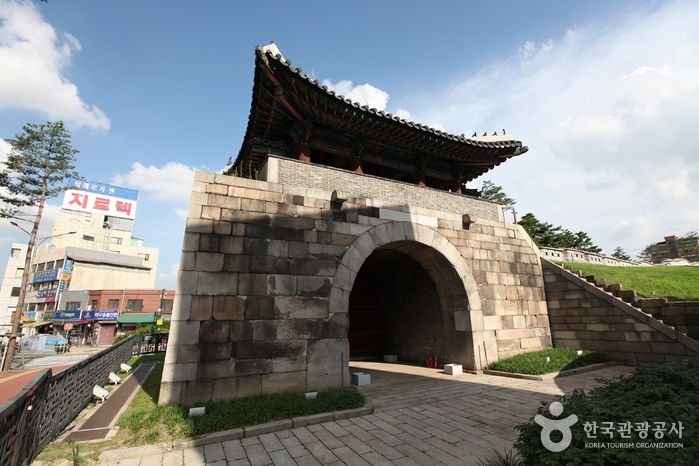
Gwanghuimun Gate is said to have been originally constructed in 1396, the 5th year of King Taejo, at the southeast of the capital city. It was often referred to as Sugumun Gate (water channel gate) and was actually used as a Sigumun, literally meaning “corpse gate,” as funeral processions passed through this gate when exiting to the east.
During the Imjin War (1592-1598), the fortress gate was destroyed to such a degree that it made finding the original location close to impossible. Nevertheless, reconstruction efforts were started in 1711 (37th year of King Sukjong) and the gate was restored together with the gate's watchtower. Gwanghuimun Gate remained intact even when the fortress walls were demolished to build tram tracks during the Japanese occupation, but it was later damaged during the Korean War and left neglected. In 1975, restoration work was carried out to relocate Gwanghuimun Gate to a site 15 meters south of its original location since it stood in the middle of the road.
![Myeong-dong Myeong Pharmacy [Tax Refund Shop] (명동명약국)](http://tong.visitkorea.or.kr/cms/resource/87/2878587_image2_1.jpg)
Myeong-dong Myeong Pharmacy [Tax Refund Shop] (명동명약국)
4.1Km 2024-04-19
#102, 11, Namdaemun-ro 7-gil, Jung-gu, Seoul
-
Nature Republic - Homeplus Wolgok Branch [Tax Refund Shop] (네이쳐리퍼블릭 홈플러스월곡점)
4.1Km 2024-04-23
76, Hwarang-ro, Seongbuk-gu, Seoul
-
Olive Young - Homeplus Wolgok Branch [Tax Refund Shop] (올리브영 홈플러스월곡)
4.1Km 2024-04-17
Home Plus Wolgok Branch, 76, Hwarang-ro, Seongbuk-gu, Seoul
-
Homeplus - Wolgok Branch [Tax Refund Shop] (홈플러스 월곡)
4.1Km 2024-04-22
76, Hwarang-ro, Seongbuk-gu, Seoul
-
![Charles & Keith - NOON SQUARE Branch [Tax Refund Shop] (찰스앤키스 눈스퀘어)](http://tong.visitkorea.or.kr/cms/resource/15/2888615_image2_1.jpg)
Charles & Keith - NOON SQUARE Branch [Tax Refund Shop] (찰스앤키스 눈스퀘어)
4.1Km 2024-04-18
2F, 14, Myeongdong-gil, Jung-gu, Seoul
-
 English
 한국어
한국어 日本語
日本語 中文(简体)
 Deutsch
 Français
 Español
 Русский


