Pungnap-dong Toseong Fortress (서울 풍납동 토성)
12.2Km 2025-01-10
Pungnap-dong, Songpa-gu, Seoul
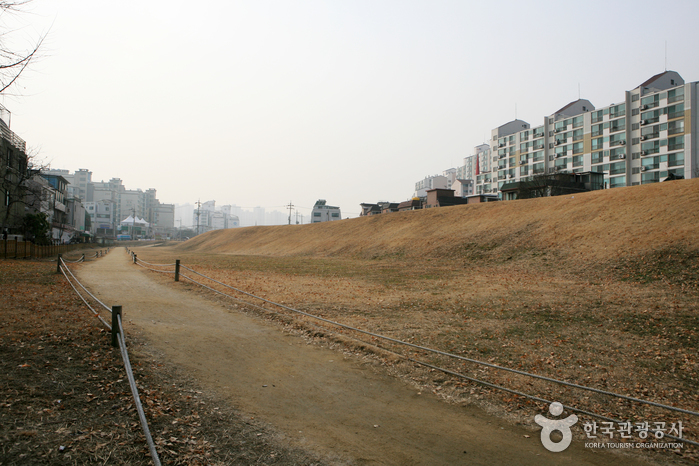
Onjo, the progenitor of Kingdom Baekje, first settled in Wiryeseong Hanam. But exact location is still unknown. One thing for sure, however, is that Pungnaptoseong Fortress, Mongchontoseong Fortress, Bangidong Ancient Tombs of Baekje, Seokchondong Stone Mound Tomb of Early Baekje are the remains of Baekje. Pungnaptoseong Fortress faces Hangang River to its west and connects to Mongchontoseong Fortress to the south. To the northwest faces Achasanseong Fortress over Hangang River and far to the southeast is Namhansanseong Fortress.
Pungnaptoseong Fortress, located at the south end of Cheonhodaegyo Bridge over Hangang River, is one of the remains of Early Baekje. Originally, the fortress was 4km in circumference, but due to massive overflowing of Hangang River during flood season in 1925, most of the fortress was lost and only 2.7km of it remains. To the east of the fortress are 4 vestiges of the fortress gates. The remains from the prehistoric era through the Samguk (Three States) era have been unearthed, indicating that this place was a residential area well before the Baekje Era. Through vigorous excavation, some people suggest that there used to be a palace located here during the Baekje Era.

Korea Global Culture Exchange Center (KGCEC) ((주)케이지문화교류센터)
12.3Km 2025-10-23
#1404, 3 Gongwon-ro, Guro-gu, Seoul
Established in 2018, the Korea Global Culture Exchange Center (KGCEC) runs programs related to studying, tourism, and medical tourism in Korea. The company has attracted over 1,000 medical tourism customers, and approximately 700 international students were accepted by Korean universities with the help of the center. Additionally, the center has organized more than 20 large conferences and hosted over 2,000 FITs (Free Independent Travelers).
The center provides consultations and reservation services in Chinese. Interpretation and post-surgery caregiver services are available upon request. The center also provides comprehensive services from arrival to departure (e.g., pick-up, vehicle, tours, guides, hotel, interpretation, hospital, duty-free shopping, etc.)
The center has partner travel agencies in China who handle applications for Korean visas and medical tourism visas. The center is highly valued by its customers for its promotional efforts and its expansive network of partner hospitals, with its highest priority being service quality.
Amsa-dong Prehistoric Site Museum (암사동선사유적박물관)
12.4Km 2023-12-22
875 Olympic-ro, Gangdong-gu, Seoul
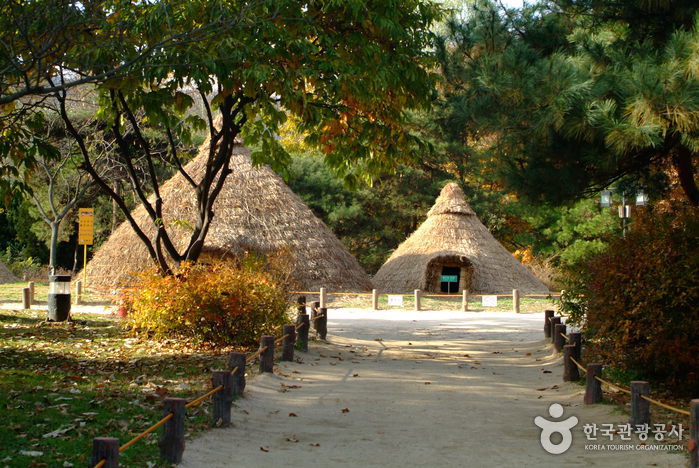
The archaeological sites in Amsa-dong, Seoul, were a collective settlement where people lived during the Neolithic Age about 6,000 years ago and became known to the world after the sand dunes along the Hangang River caved in during the great flood of 1925, exposing numerous pieces of comb-patterned pottery. The area designated as a historic site in 1979, and excavation of the site took place from 1981 to 1988. The cultural heritage protection area was expanded to a total area of 78,133㎡. Currently, nine Neolithic dugout huts and one experiential dugout hut have been restored. The exhibitions currently open to the public are Exhibition Hall 1, which displays a restoration of a Neolithic Age dugout, and Exhibition Hall 2, which displays various panels and models to help understand the prehistoric era as a whole.
Archaeological Site in Amsa-dong, Seoul (서울 암사동 유적)
12.5Km 2021-07-27
875, Olympic-ro, Gangdong-gu, Seoul
The Archaeological Site in Amsa-dong reproduces the lifestyle of the Neolithic Era. Even the entrance gate is shaped like a huge dolmen and the trash cans are ancient diagonal-line patterned earthenware. Archaeological Site in Amsa-dong was excavated in 1925 when a flood washed away the soil on the banks of the Hangang River and exposed a large number of diagonal-line patterned earthenware. After several excavations, the Archaeological Site in Amsa-dong was established.
The site was a location for a massive colony, thus many ancient buildings, stone axes and stone arrows have been uncovered as well as countless diagonal-line patterned earthenware. The housing site is round with a spot in the center for fire. The site is colossal and possesses nine mud huts, two exhibition halls displaying ancient artifacts and an open mud hut where visitors can experience life in the Neolithic Era. The site offers many attractions such as mud huts and promenades. Archaeological Site in Amsa-dong is also very educational for children and families who want to learn and experience the Neolithic Age.
KSPO Dome (Olympic Gymnastics Arena) (올림픽공원체조경기장)
12.5Km 2025-06-30
424 Olympic-ro, Songpa-gu, Seoul
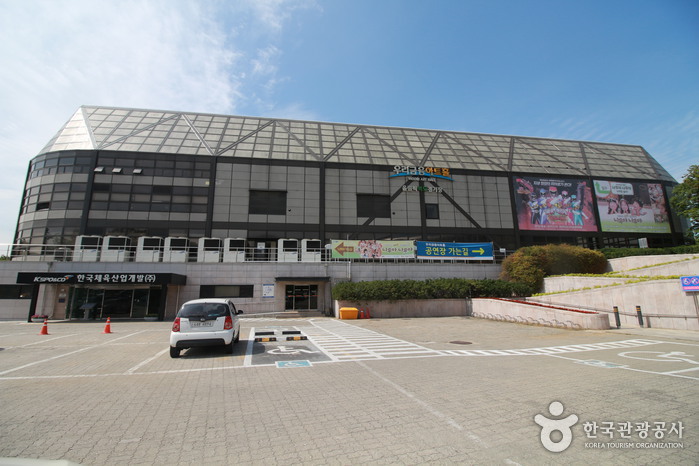
The KSPO Dome was the arena built for gymnastic events during the 1988 Seoul Summer Olympics, but has been remodeled to host concerts, including for many K-pop stars and international pop stars. The dome can also serve as venue to a range of other events, including showcases, exhibitions, and business events. It is accessible via public transit using Olympic Park Station on Seoul Subway Lines 5 and 9.
Woori Art Hall (우리금융아트홀)
12.5Km 2025-04-01
424 Olympic-ro, Songpa-gu, Seoul
Woori Art Hall is a cultural art space located within Olympic Park, opened in November 2009 after a two-year renovation project from the previous Yeokdo Stadium. The 1,184-seat hall is primarily for musicals, but can also host a range of performances including plays, dance, classical, and modern music.
Heojun Museum (허준박물관)
12.5Km 2021-08-13
87, Heojun-ro, Gangseo-gu, Seoul
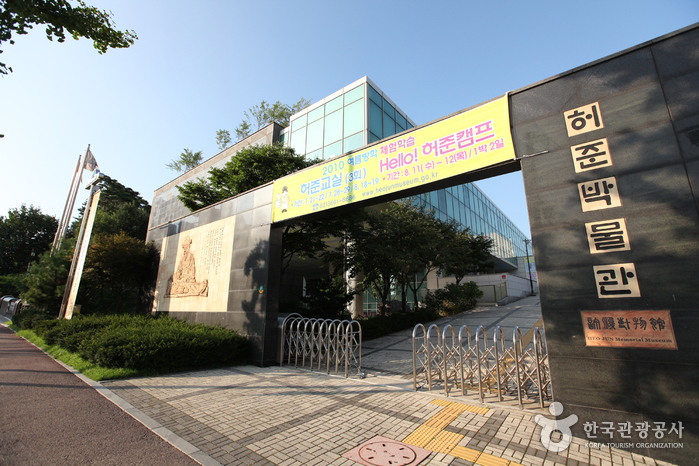
The Heojun Museum opened in honor of the academic accomplishments and charitable deeds of the renowned medical scientist, Heojun of the Joseon dynasty. Located next to Heojun Neighborhood Park, the museum collects and displays Heojun related materials.
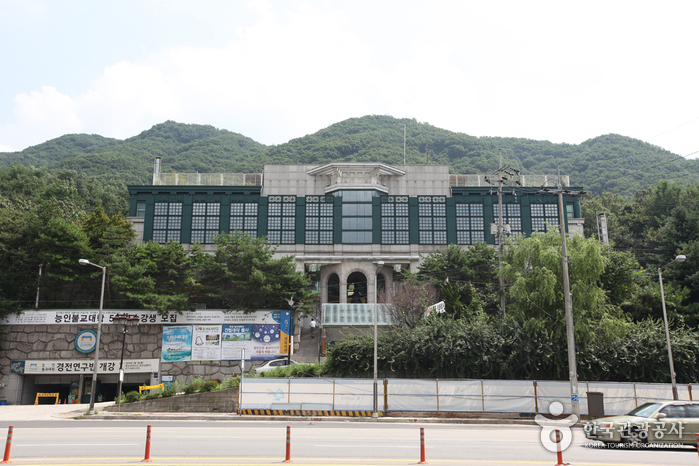
Nungin Sunwon (능인선원)
12.6Km 2024-03-20
340 Yangjae-daero, Gangnam-gu, Seoul
Nungin Sunwon, nestled at the base of Guryongsan Mountain, is named after another name of Buddha, Sakyamuni, signifying "the one who skillfully educates and benefits others." This temple complex includes several key structures: the Daeungjeon Hall, the Dharma Hall, the Gwaneumjeon Hall, and the resplendent Great Bhaisajyaguru, known for its golden glow. Additionally, the site houses a Buddhist university, providing a range of programs that cover basic to advanced Buddhist studies.
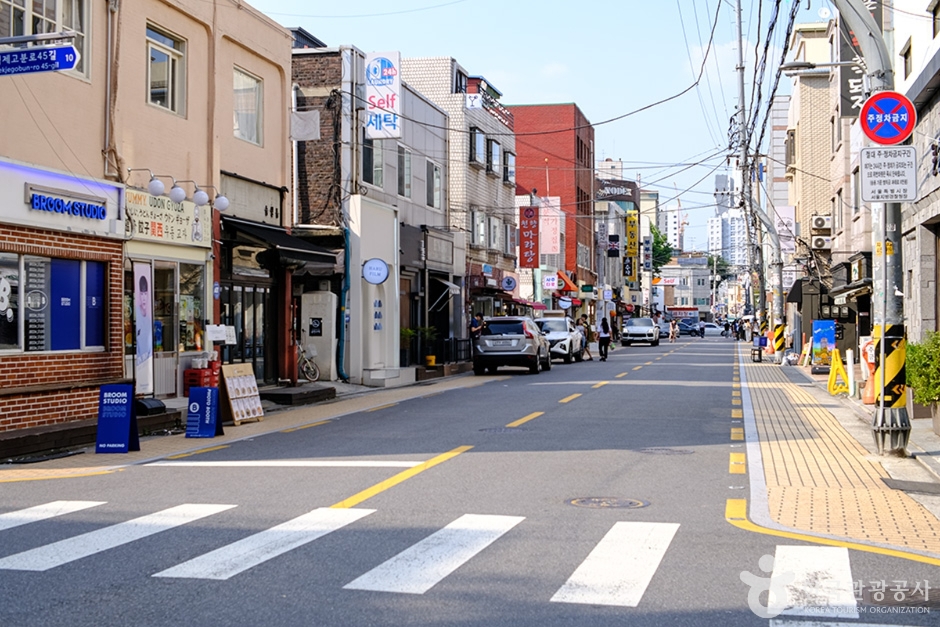
Songnidan-gil Street (송리단길)
12.6Km 2025-01-23
Baekjegobun-ro 43-gil, Songpa-gu, Seoul, and surrounding areas
Located south of the eastern side of Seokchon Lake, this street is home to numerous restaurants and cafes. Its name comes from the combination of Songpa-dong and Gyeongnidan-gil Street in Itaewon, Seoul, meaning the “Gyeongnidan-gil Street of Songpa-dong.” This street began as an otherwise unremarkable street that faced the eastern side of Seokchon Lake. Today’s “Songnidan-gil Street” came to be as cafes moved into the neighborhood, followed by restaurants and photography studios. Songnidan-gil Street is a popular hangout for young Seoulites in the southeastern side of Seoul, so on weekends, one can often find them conversing in cafes, going for drinks in bars, or waiting in line for the hottest restaurants in the neighborhood.
 English
 한국어
한국어 日本語
日本語 中文(简体)
 Deutsch
 Français
 Español
 Русский


